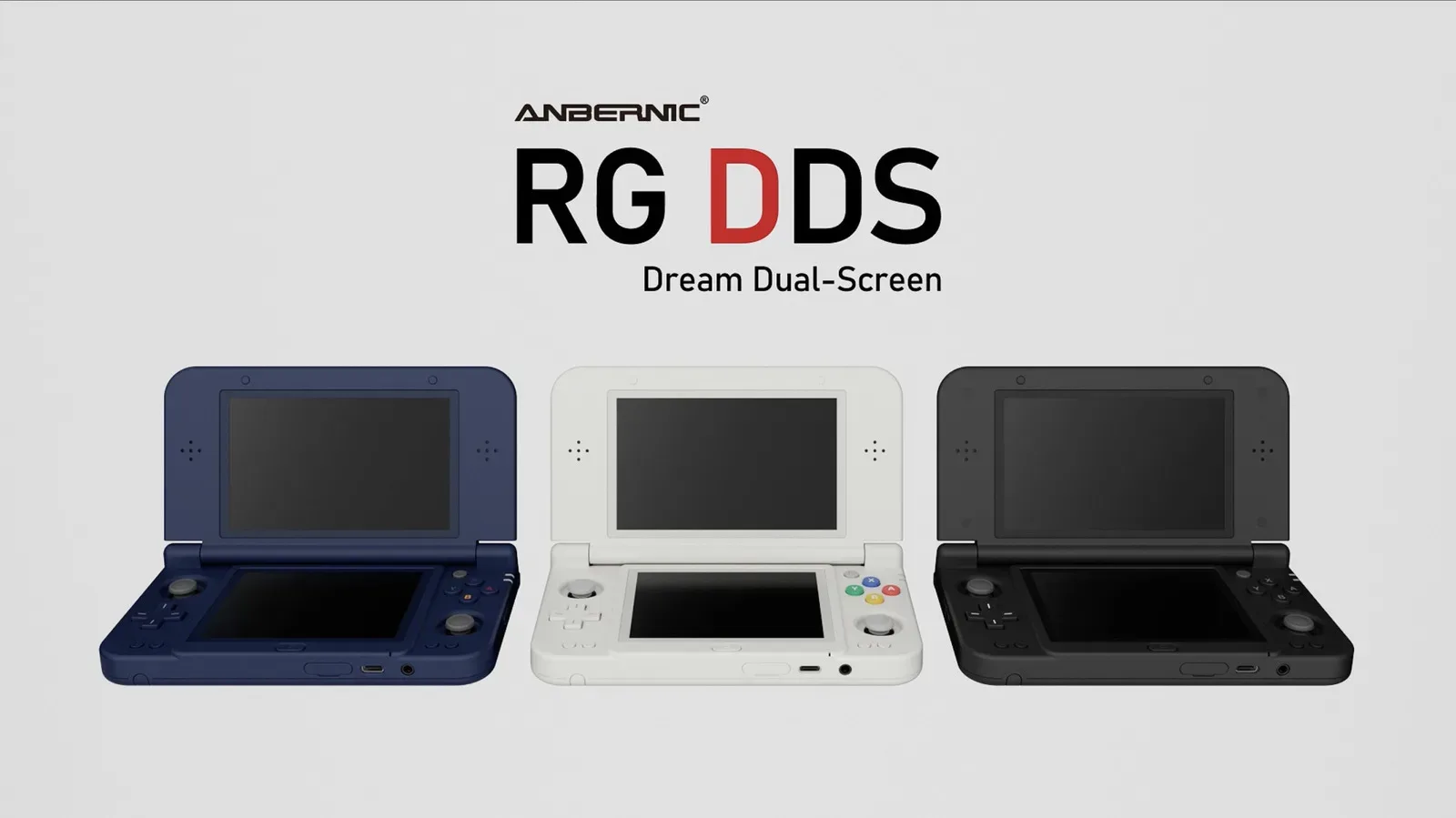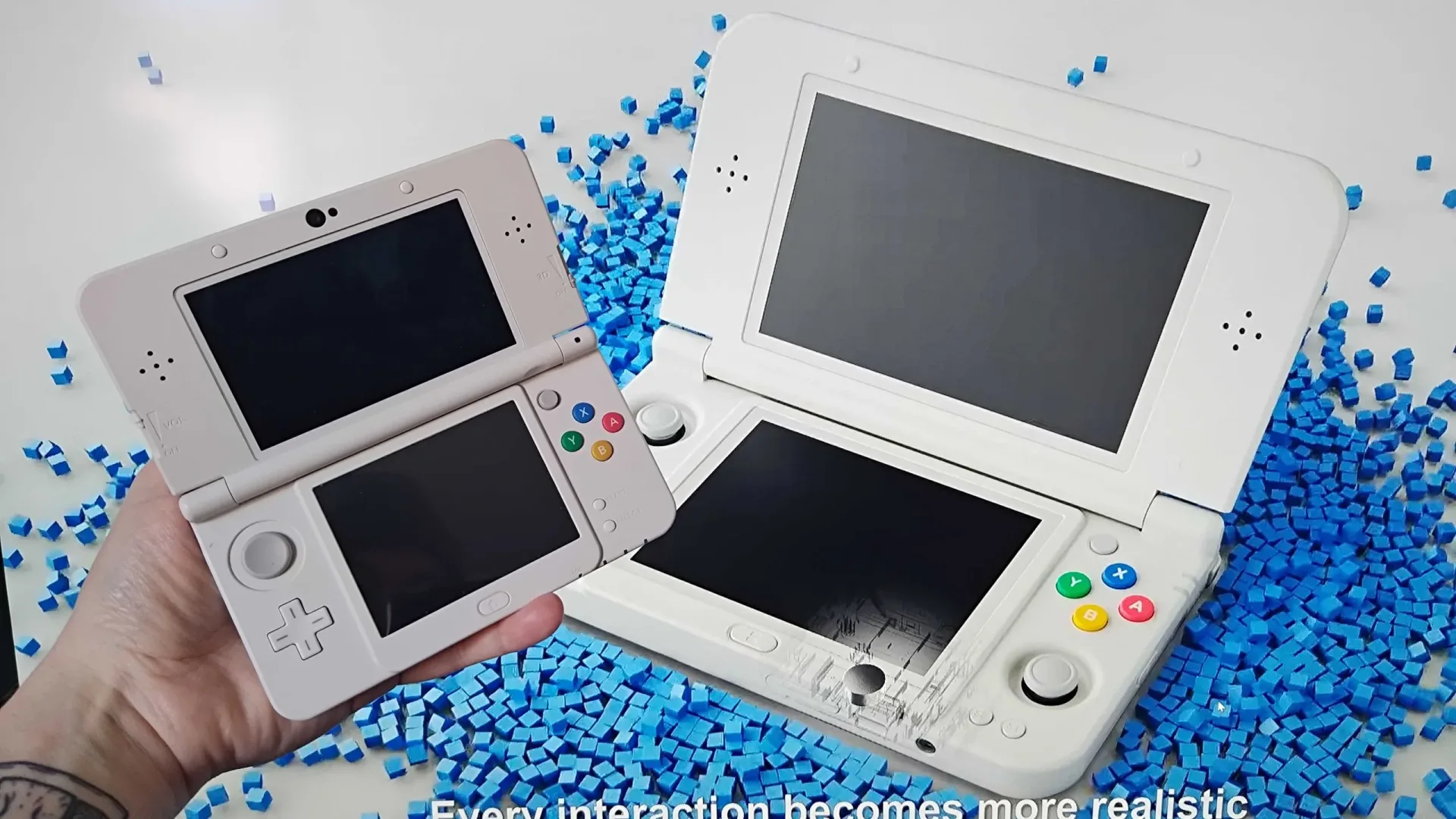
ANBERNIC has offered its clearest indication yet that the forthcoming RG DDS is intended as a high-end dual-screen emulation handheld. New gameplay footage highlights Nintendo 3DS titles, a brief PlayStation 3 demonstration and Xbox footage, positioning the device as a more ambitious follow-up to the company’s other recent dual-screen hardware.
The important caveat is as large as the promise: the RG DDS has no officially confirmed specification sheet, price or release details at this point. A polished promotional video can establish that software ran in a particular setup, but it does not answer the practical questions prospective buyers need answered: which settings were used, whether performance holds up beyond selected scenes, how broadly compatible each emulator is, or what the machine will cost.
What the RG DDS footage actually shows
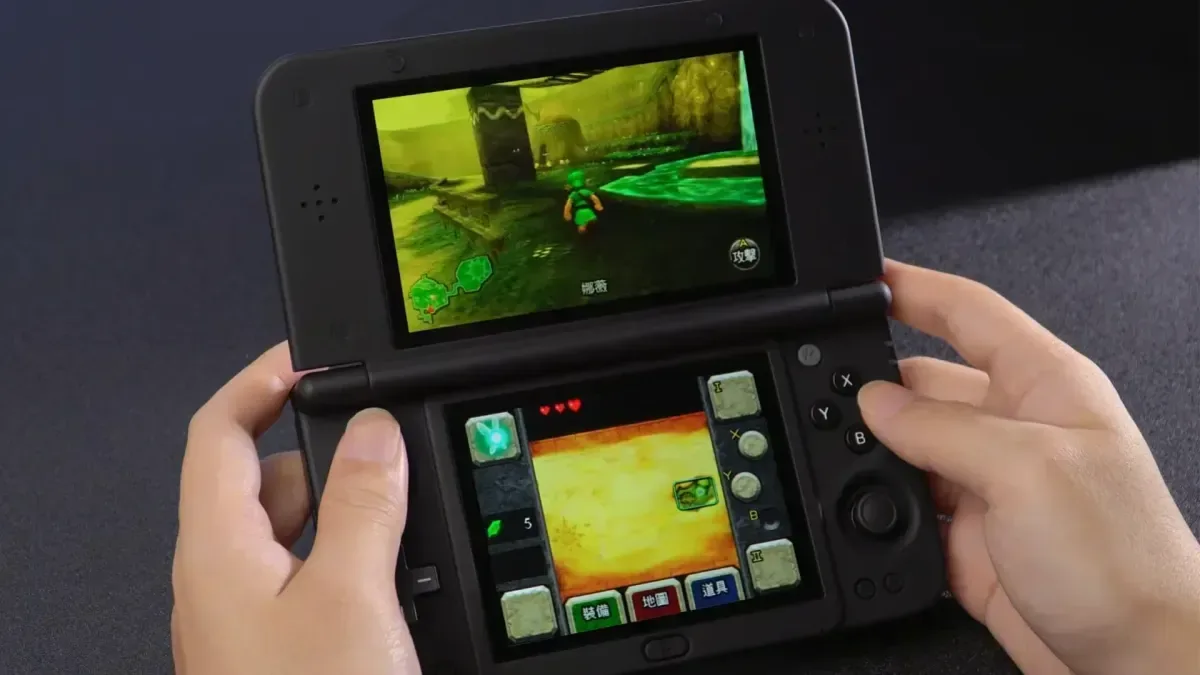
The most substantial showcase is for Nintendo 3DS emulation. ANBERNIC’s footage includes The Legend of Zelda: Ocarina of Time 3D running at a stated 5x native resolution. In emulation terminology, native resolution means the original output resolution a game was designed to render at. Running at five times that level means the emulator is being asked to draw a much sharper image than the original handheld output.
That is notable because increasing rendering resolution is not simply a visual switch. It can demand considerably more graphics processing power, and results can differ from one game to another. The footage therefore suggests meaningful headroom for at least the showcased 3DS scenario, but it should not yet be read as a guarantee that every 3DS game will run equally well at the same multiplier.
For a system shaped around two screens, 3DS emulation is also a natural target. The original hardware’s software frequently divides information between its upper and lower displays, whether that is a map, inventory, touch interface or a second viewpoint. A dual-screen device can potentially preserve that layout more directly than a conventional single-screen handheld. The video, however, does not establish the RG DDS screen specifications, control arrangement, operating system or the exact options available for arranging and interacting with those displays.
There is a useful current point of reference in ANBERNIC’s lineup. Its recently released RG DS Plus is a lower-cost dual-screen handheld priced below $100, but it does not support Nintendo 3DS emulation and does not use Android. The RG DDS appears aimed at a clearly different performance tier rather than a small revision of that device. It is also described as ANBERNIC’s third dual-screen handheld released within a year.
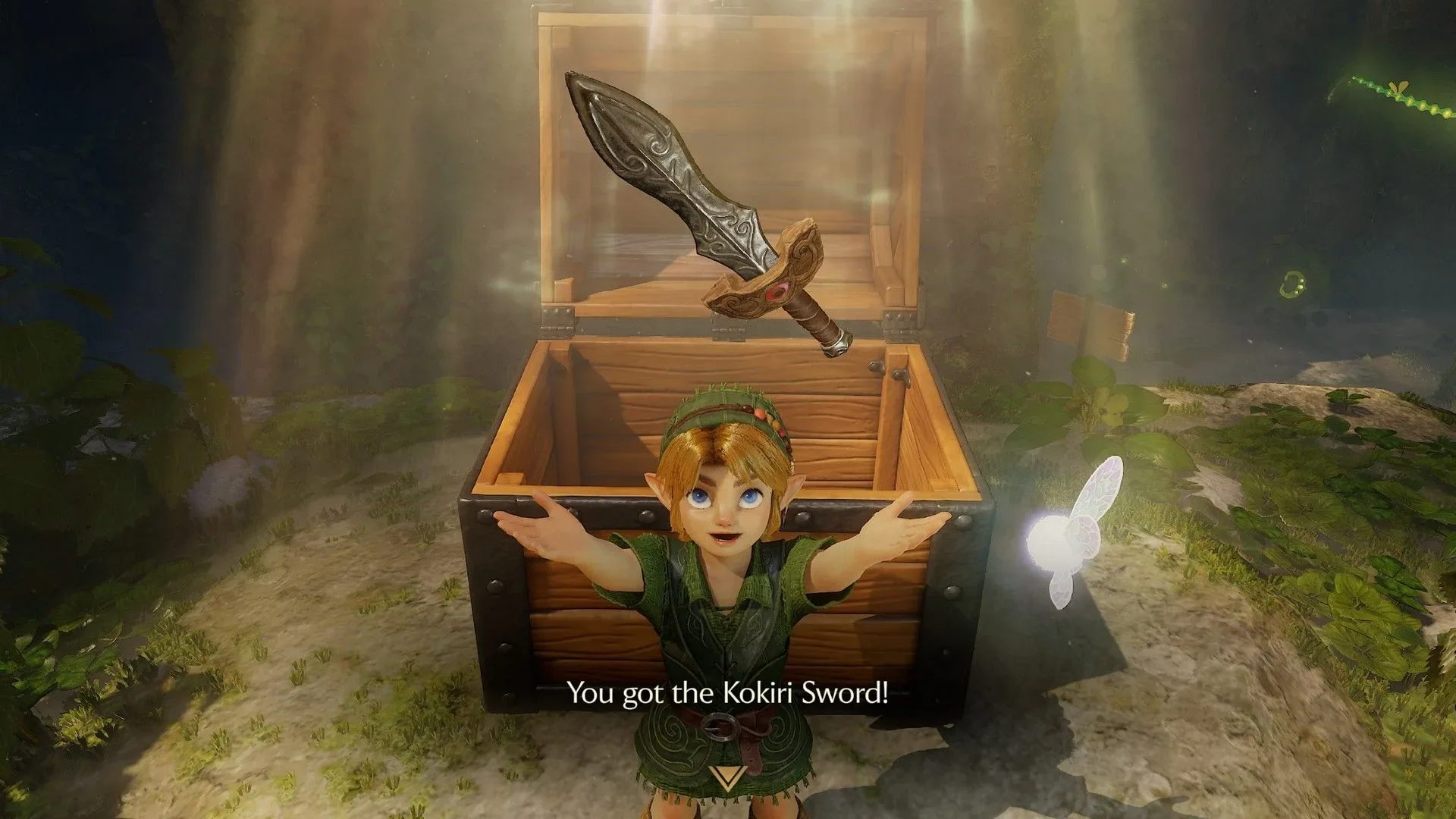
For readers following Nintendo’s older handheld catalog, the company’s choice of Ocarina of Time 3D is especially recognizable. It is the Nintendo 3DS version of a defining Nintendo 64 game, and it remains a useful shorthand for the kinds of titles players may hope to revisit on modern portable hardware. Our look at an Ocarina of Time remake preview also shows how durable interest in Hyrule’s different reinterpretations remains.
PS3 and Xbox clips raise the performance stakes
The more attention-grabbing portion of the video arrives around the 2:39 mark, where it shows PlayStation 3 emulation through ARMSX3. The footage also teases Xbox material using X1 BOX, described as a newer Android emulator that remains somewhat unreliable.
Related coverage includes ANBERNIC RG DDS Footage Teases 3DS, PS3 and Xbox Emulation.
Those demonstrations matter less as a confirmed compatibility list than as a statement of intent. PS3 and Xbox emulation are being used to suggest that the RG DDS may have substantially more processing power than entry-level retro-focused devices. But they are also the portions of the reveal that deserve the most caution.
Emulation is software recreating the behavior of another system so that software written for the original machine can run elsewhere. It is not a single, uniform benchmark. Performance depends on the game, the emulator version, the processor and graphics hardware, driver behavior, settings and the maturity of the emulator itself. A game booting in a video is different from sustained performance across a library; a smooth short sequence is different from a stable experience from beginning to end.
That distinction is particularly relevant to the Xbox clip because the emulator used is characterized as unreliable. The teaser indicates that ANBERNIC is willing to show the category, not that purchasers should assume dependable Xbox support at launch. Likewise, the ARMSX3 clip is a reason to watch for further detail, rather than evidence that the RG DDS will offer broad, trouble-free PS3 compatibility.
Why a settings disclosure would matter
More complete technical information would make these demonstrations easier to assess. For the 3DS footage, helpful details would include whether 5x resolution is sustained in ordinary play, whether it is a per-game setting, and whether the listed result applies across the device’s display configurations. For PS3 and Xbox footage, the key questions are the game names, emulator builds, frame pacing, in-game settings and whether the shown sequences represent repeatable performance.
Frame pacing refers to how evenly frames are delivered over time. It can matter as much as an average performance number: a game may appear fast enough on paper yet feel uneven if frames arrive in irregular bursts. None of those details has been confirmed for the RG DDS, so it would be premature to judge the system on performance claims alone.
A crowded premium dual-screen conversation
The device is being framed as a possible competitor to the Retroid Pocket Duo and AYN Thor. That comparison places the RG DDS in a segment where prospective buyers will likely weigh more than just raw emulator footage. Price will be central, as will software maturity, the comfort of the hardware, screen behavior, controls and the reliability of the experience across the systems they actually intend to use.
ANBERNIC has not announced a price, and nothing in the footage establishes one. The RG DS Plus offers a useful indication that the company has already pursued a budget-minded dual-screen design, but its limitations also underline why the RG DDS may command a different position. If the latter genuinely offers the greater performance suggested by its 3DS, PS3 and Xbox clips, it is reasonable to expect buyers to scrutinize the price against those competing devices particularly closely. The actual figure, though, remains unknown.
There is also a practical difference between a device being powerful enough to run an emulator and it being a good fit for the games in question. Dual screens can make 3DS software more intuitive to manage, but PS3 and Xbox libraries were designed around different display and controller expectations. The video provides a glimpse of technical possibility; it does not yet demonstrate how the RG DDS handles every interface, game-specific control demand or compatibility edge case.
What remains unconfirmed
At present, the RG DDS is a teaser-driven product story. The footage supplies encouraging signs for people who want a dual-screen machine capable of tackling 3DS software at high internal resolution, while the PS3 and Xbox appearances signal more aggressive aspirations. Yet the information needed to turn interest into a buying decision is still absent.
- Hardware specifications: No official processor, graphics, memory, display or battery details have been provided.
- Price: ANBERNIC has not announced a cost.
- Availability: No release timing has been confirmed.
- 3DS consistency: The video shows Ocarina of Time 3D at 5x native resolution, not a comprehensive game-by-game compatibility result.
- PS3 and Xbox scope: Brief demonstrations do not establish library-wide support, stable frame pacing or the reliability of the relevant emulators.
- Software experience: The footage does not confirm the RG DDS operating system or detail its user interface and configuration options.
Until those gaps are filled, the sensible reading of the reveal is measured optimism. ANBERNIC is showing a dual-screen handheld that appears designed to reach beyond simple retro systems, with 3DS rendering as its strongest visible case and PS3/Xbox footage as a more speculative show of ambition. The next meaningful update needs to be the specification and price announcement, followed by evidence of repeatable performance rather than selected demonstrations.