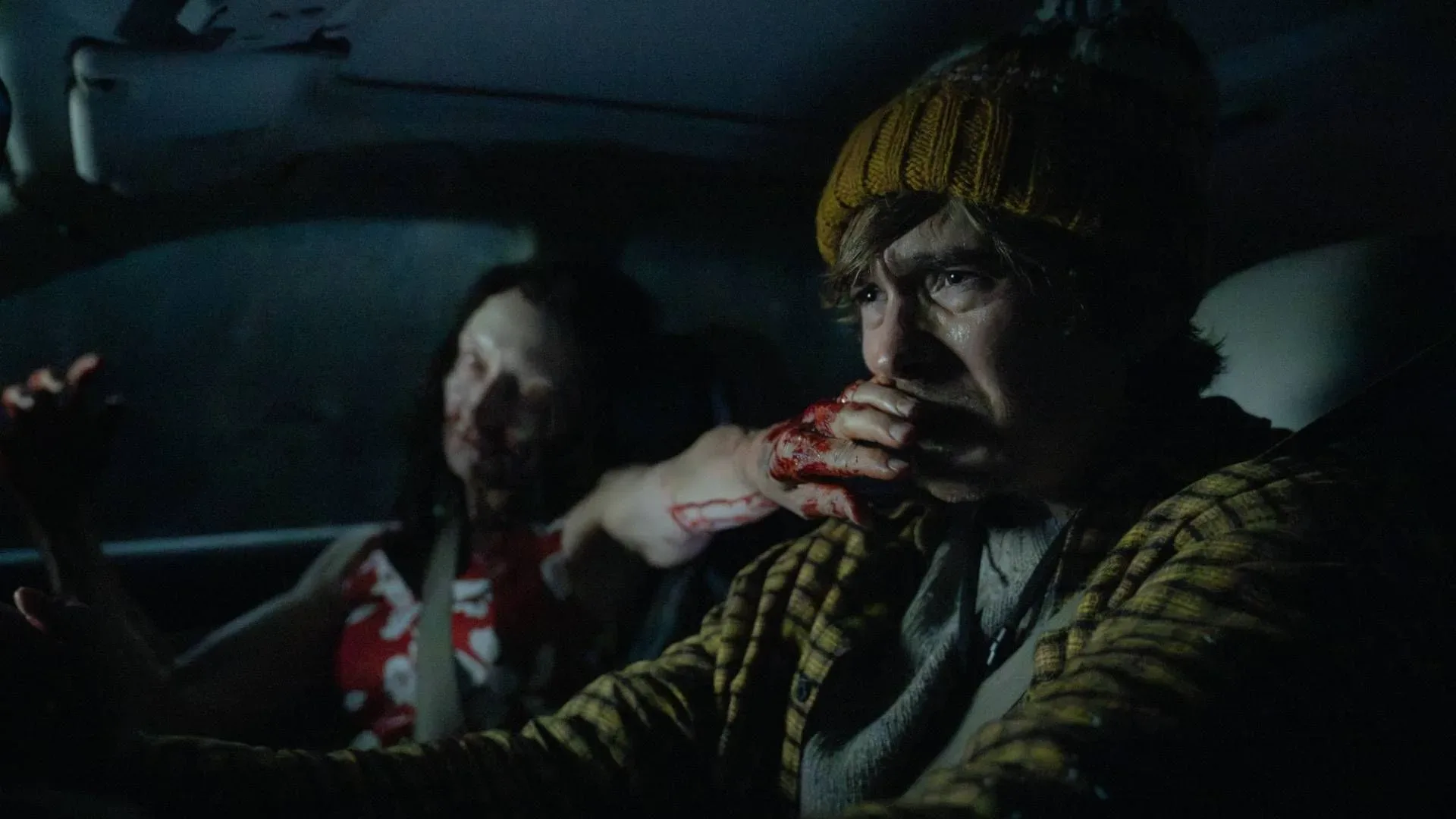
Resident Evil reached theaters on a remarkably tight post-production schedule, and director Zach Cregger has confirmed that audiences in different territories may not be seeing precisely the same finished images.
Cregger said the film was completed “maybe” two weeks before its release after he made Weapons and Resident Evil back-to-back. More notably, he explained that the international delivery deadline arrived while he was still making changes. The result is an international theatrical version containing shots he was not fully satisfied with, while the domestic version includes improved versions of at least some of those images.
“It was pencils down at 11:59, Saturday night because the DCP had to ship,” Cregger said. “There’s actually… the international version is different than the domestic version because I was still needing to make changes and like we missed our international finish line time, you know? So there are shots I’m not stoked on in the international version that like are better in the domestic. That’s how down to the wire it was.”
What is different between the two Resident Evil cuts?
The important qualification is that Cregger has not identified the affected scenes or specified the number of changed shots. There is no confirmation of alternate plot beats, revised performances, added sequences, removed scenes, or a fundamentally different ending. His comments concern shots that he wanted to improve, not a wholesale recut of the movie.
That distinction matters. A film can have multiple delivery versions without viewers receiving materially different stories. In this case, the available information supports the narrower conclusion: some images in the international version were left at a stage Cregger considered less successful than their domestic counterparts.
The film’s final lab sequence is especially effects-heavy, making visual-effects work one possible area for late changes. Color grading is another common late-stage process that can change how an existing shot looks without changing its content. Neither possibility has been confirmed as the specific source of the differences, however. Until Cregger or the production identifies the altered material, details beyond his broad description remain speculation.
Why the DCP deadline matters
DCP means Digital Cinema Package, the file package prepared for theatrical exhibition. A major release must be delivered on time so theaters in each market can receive and screen it. Cregger’s account points to a practical scheduling divide: the international package needed to ship before he had finished every change he wanted to make, whereas domestic delivery allowed later improvements.
That does not mean the overseas release is an unfinished movie in the ordinary sense. The film was still ready for theatrical release, and Cregger’s remarks focus on his own dissatisfaction with particular shots. Filmmakers often retain a sharper awareness of minute visual compromises than an audience watching the story for the first time. The differences may be difficult to notice without a direct comparison, particularly if they involve effects polish or image finishing rather than narrative edits.
Related coverage includes Resident Evil Director Says International Cut Included Shots He Wanted to Improve.
Still, the disclosure is useful for viewers trying to understand why two theatrical runs of the same release could technically differ. It also highlights the pressure behind a large-scale release: finishing creative work, preparing distribution materials, and meeting hard delivery deadlines can all collide in the final days.
A compressed path to the screen
Cregger’s schedule helps explain the squeeze. He released two movies in a little more than 12 months, having shot Weapons and Resident Evil consecutively. He described the latter as being finished only around two weeks before it opened. That is a short window for a movie that includes major effects work, especially when the final lab material demands a more elaborate visual finish.
The filmmaker’s comments also show that late changes were not limited to purely technical adjustments. He has discussed rethinking the final sequence during production, saying he initially failed to make Bryan’s need for a cure sufficiently clear. The production reorganized the chain of events, drawing on coverage Cregger had filmed as a backup option.
“One of the missteps I made early on was not [showing Bryan’s desperation for a cure],” Cregger said. “We reorganized the chain of events. Thank god I shot for this as a contingency plan; it was my plan B.”
That is a separate issue from the international DCP timing, but it illustrates the kind of late-stage decision-making involved in shaping the finished movie. Cregger had alternative footage available, recognized a storytelling problem, and used that contingency material to clarify the character’s motivation.
Analysis: a quality gap is not necessarily a story gap
For people deciding whether they need to seek out a different screening, the confirmed information does not establish a major reason to do so. Cregger has said certain shots are better in the domestic version, but there is no evidence that international audiences received a different narrative experience or missed essential context. The safe reading is that the domestic print represents the director’s preferred final polish on a limited set of images.
It is also worth separating three terms that can get blurred together in discussions of “different cuts.”
- Shot: one uninterrupted piece of filmed or digitally created imagery. Improving a shot might involve visual-effects refinement, color work, compositing, or another presentational change.
- Scene: a story unit made up of one or more shots. Nothing in Cregger’s description confirms different scenes between markets.
- Cut: a complete arranged version of a film. A different delivery version can be described as a different cut even when the change is very small.
That vocabulary is relevant here because “international version” can sound more dramatic than the known facts warrant. Cregger’s own phrasing conveys frustration with a few images rather than a warning that overseas viewers saw an incomplete plot. His emphasis is on standards and timing: he knew improvements were possible, but the international shipping deadline ended the opportunity to incorporate them.
The response has stayed strong despite the crunch
The rushed finish has not stopped Resident Evil from becoming a major theatrical performer. The film brought in more than $100 million worldwide during its opening weekend and set a new benchmark for big-screen video-game adaptations. It has also drawn a positive critical and audience response, even as debate over Cregger’s approach to adapting the games—and the movie’s emphatic ending—has intensified.
That debate is likely to continue, particularly now that viewers know there are small regional differences in the theatrical release. But no verified shot-by-shot breakdown has been provided, so claims about particular effects, colors, edits, or story moments should be treated cautiously. A close online comparison may eventually reveal something measurable; at present, the confirmed record is simply that the domestic release contains improvements Cregger did not have time to apply to the international DCP.
The news also arrives amid continuing attention on how games and their technology reach audiences across platforms. For a separate example of how display-focused processing can become a major talking point on the console side, see the recent PS5 Pro Enhanced PSSR update.
Resident Evil is now playing in theaters. For viewers outside the domestic market, Cregger’s remarks are not a reason to assume they have missed a crucial story development. They are, instead, a candid look at a release that crossed the finish line with the director still looking at a handful of frames and wishing he had a little more time.