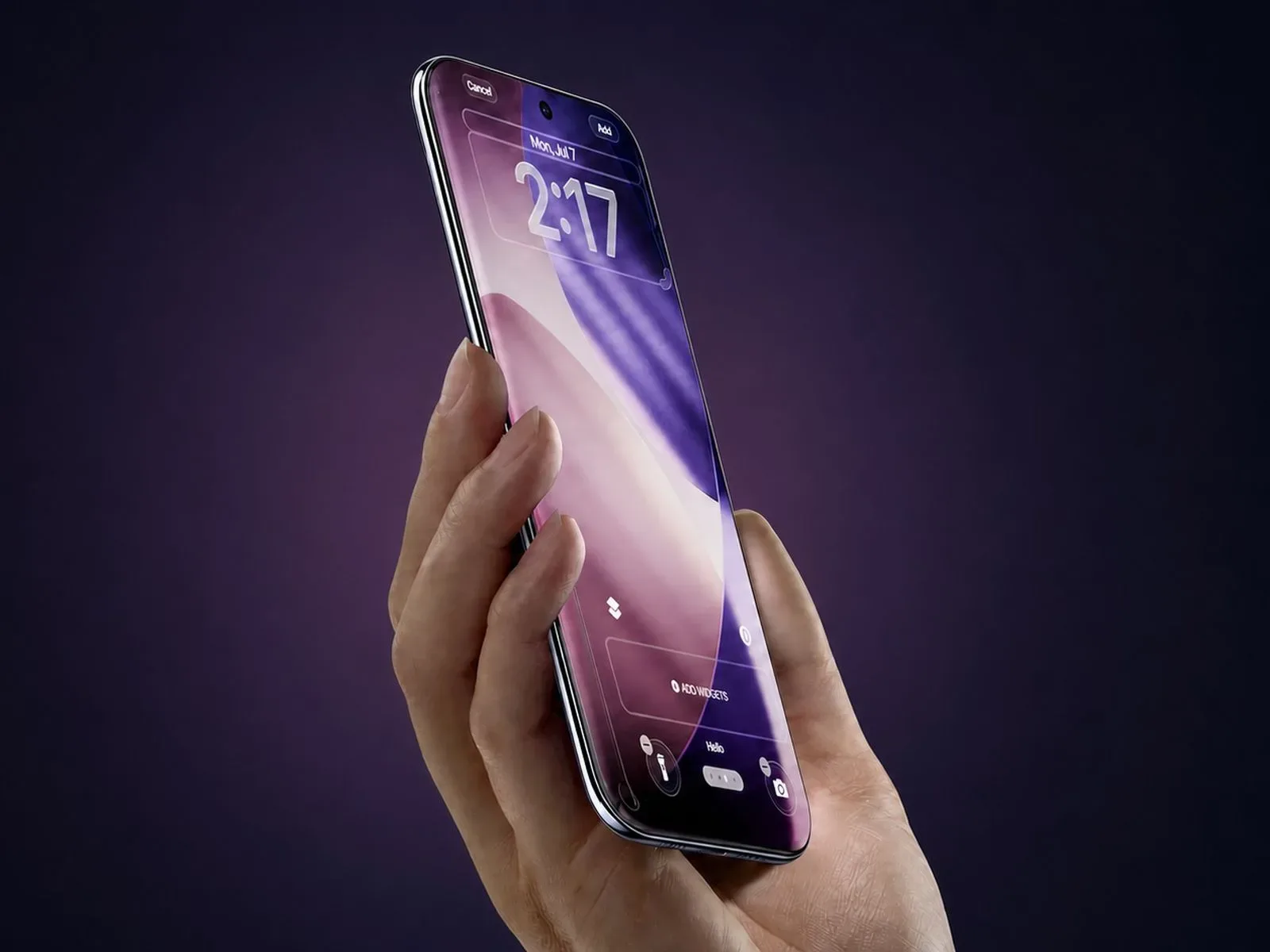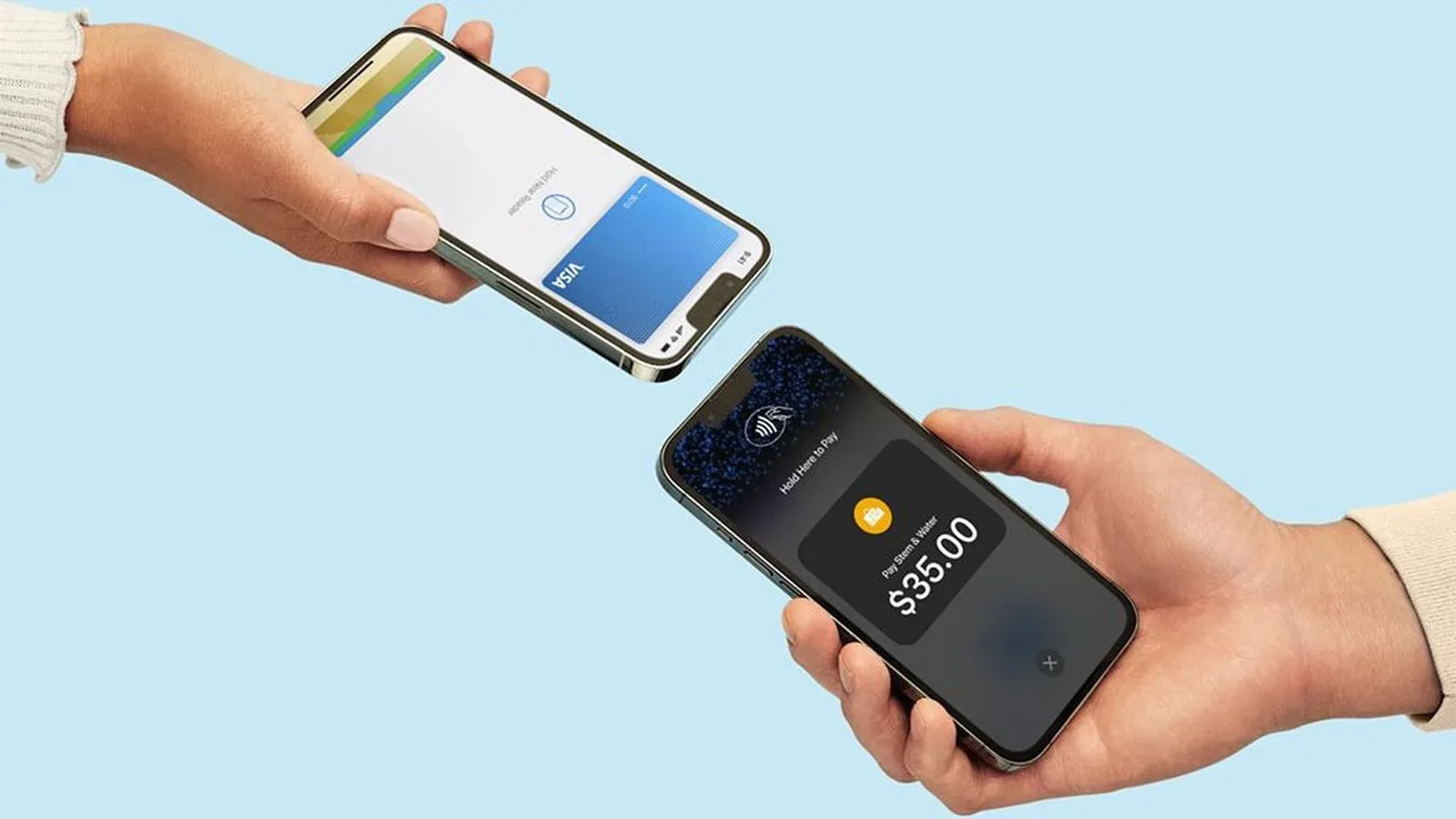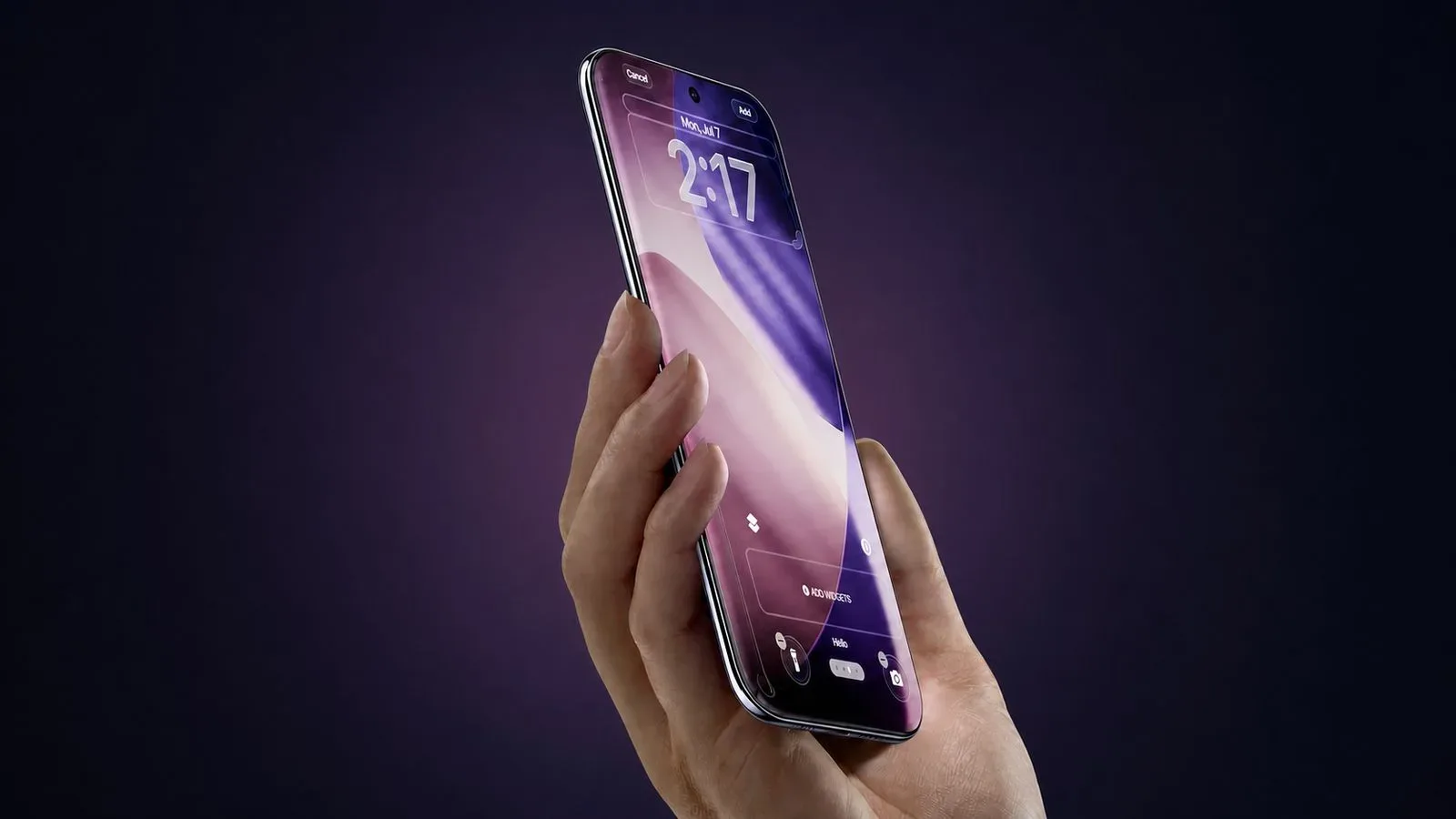
Apple’s Pro iPhones could adopt a different kind of OLED display in 2029: one that removes a conventional polarizer to make the panel thinner and potentially more power-efficient. The forecast comes from UBI Research, which expects Apple to use Color Filter on Encapsulation, or CoE, technology in its high-volume Pro models after an apparent stepping stone in the iPhone Duo’s folding display.
For phone owners, this is not a simple case of “new screen equals brighter screen.” CoE changes the optical stack—the layers through which a display’s light travels before it reaches the viewer. The possible upside is meaningful: a panel could potentially produce more brightness for the same energy use, or hold the same brightness while consuming less power. It could also be physically thinner, a small design change with consequences for the room available inside a phone.
But the report also points to why this is a long-range possibility rather than a near-term certainty. Removing the polarizer creates real challenges around reflections, outdoor visibility, viewing angles, contrast, and color accuracy. Solving those issues consistently at the scale of tens of millions of flagship phones is a much larger task than placing the same technology in a foldable product.
What CoE OLED changes
OLED, short for organic light-emitting diode, is a display technology in which pixels generate their own light. A conventional OLED panel uses a polarizer, an optical layer that helps reduce reflections from ambient light. That job matters whenever a phone is used outdoors or under bright indoor lighting: uncontrolled reflections can make the on-screen image harder to see.
The drawback is that a polarizer also absorbs a considerable amount of light produced by the OLED panel itself. In other words, the display must generate light that the panel’s own optical layers then partly block.
CoE removes that conventional polarizer. Its color filter sits directly on the display’s encapsulation layer instead. Encapsulation is the protective structure associated with the OLED components; in this design, it becomes part of the path used to integrate the filter arrangement. The aim is to simplify the stack and let more of the display’s emitted light make it through.
That basic change creates two potential directions for a device maker:
- Greater brightness at similar power use: More transmitted light could allow a screen to reach a higher brightness level without requiring additional display power.
- Lower power use at similar brightness: A screen could maintain a target brightness while drawing less power, potentially helping overall battery efficiency.
- A thinner display assembly: Eliminating a separate layer may reduce the thickness of the panel stack.
These are potential benefits, not specifications for an Apple product. The forecast does not provide a claimed brightness figure, battery-life gain, panel thickness, or other final metric for a 2029 iPhone. Any eventual implementation would depend on Apple’s chosen panel design and the degree to which suppliers can meet its requirements.
Why a thinner panel can matter beyond the screen
Phone design is an exercise in packing tightly constrained space. If the display assembly becomes thinner, some of the volume saved could be assigned elsewhere. The report identifies components such as the battery and cameras as possible beneficiaries.
That does not mean a thinner OLED layer automatically translates to a larger battery or changed camera hardware. It means designers would have more flexibility in how they allocate internal space. They could pursue a slimmer device, keep the exterior dimensions similar while redistributing room internally, or make compromises between several components. The source material does not establish which route Apple would take.
Power efficiency is similarly useful because it gives engineers options rather than dictating a single visible feature. A company could prioritize higher display output, reduce display energy draw, or balance the two. Brightness is particularly important for games, video, maps, and other content used away from controlled indoor lighting, but a brighter panel is only helpful if it remains readable and accurate in the conditions where it is used.
The hard part is controlling reflections without a polarizer
A polarizer performs an important anti-reflection function, so taking it away requires other measures to control ambient light. UBI Research says manufacturers must manage this through a combination of color filters, black pixel-defining layers, low-reflection coatings, and other optical techniques.
Each of those elements serves the broader purpose of preserving an image’s legibility and quality. A black pixel-defining layer helps separate pixel areas and manage unwanted light effects. Low-reflection coatings are designed to limit reflected light. The color filter arrangement, meanwhile, has to contribute to the display’s intended color presentation while working within the altered panel structure.
The key point is that CoE does not simply remove a component and leave an equivalent result behind. It shifts work to the remaining parts of the optical system. The resulting display still has to deliver strong outdoor visibility, stable viewing angles, convincing contrast, and accurate color. Those requirements can pull in different directions, which is why large-scale implementation is difficult.
For gamers and other media-heavy users, those details are more tangible than the name of the panel technology. A display can look excellent in one lighting condition yet be compromised by glare outside. It can appear vivid from directly in front but vary when viewed at an angle. It can be bright while failing to preserve the intended balance of dark areas and colors. CoE’s value therefore rests on whether the finished optical system can protect those fundamentals while retaining its efficiency advantages.
Samsung has already used the approach in a foldable
Samsung first commercialized the technology under the Eco² OLED name with the Galaxy Z Fold3. Samsung’s internal testing of that original implementation reported 33% better light transmission and up to 25% lower power consumption versus an OLED panel using a conventional polarizer.
Those figures help illustrate why display makers are interested in avoiding a polarizer. Still, they should not be read as a prediction of identical gains for a future iPhone. They refer to Samsung’s original implementation and its own comparison, while panel architecture and product goals can differ from one device to another.
Foldables also offer a different proving ground from conventional phones. The source material positions CoE’s prior use in foldable devices as relatively limited compared with the potential volume of Apple’s Pro iPhone line. A solution that is viable in a specialized product has to be manufactured and calibrated at much greater scale before it can serve a mainstream flagship range.
The iPhone Duo may be the intermediate step
Reports before the iPhone Duo’s unveiling indicated that its Samsung-supplied folding OLED display would use CoE. Apple has not described the panel’s internal construction, so that detail remains unconfirmed by Apple itself. UBI Research nevertheless views the foldable device as a possible first move toward polarizer-free OLED screens throughout the Pro iPhone lineup.
That proposed sequence makes practical sense as an industry trajectory, though it is still a forecast. A folding device can establish supplier experience with an advanced display approach before the technology is asked to meet the volume, uniformity, and quality demands of more conventional flagship phones.
The suggested 2029 timing also reflects the unresolved optical trade-offs. UBI Research believes the difficulty of maintaining visibility outside, viewing-angle performance, contrast, and color accuracy may be why Apple is reportedly waiting to apply the technology to standard high-volume iPhone models. The year should be treated as a reported target, not a product commitment or confirmed release plan.
Scale is the real test for Pro iPhone panels
UBI Research estimates annual panel demand for the two Pro models could stay between 90 million and 100 million units. At that level, a transition to CoE would be vastly bigger than the technology’s use in foldables.
High volume changes the challenge from an interesting component design to a manufacturing and supply-chain test. Suppliers would need to build enough panels while satisfying Apple’s standards for optical performance. In the forecast, Samsung Display and LG Display are expected to lead the initial supply effort. BOE could compete for orders if it meets Apple’s requirements.
That supplier picture underscores why the story is more than a speculative bullet point about a thinner phone. Panel technologies reach consumer products only when the full chain—from materials and optical layers to yields and quality control—can support the required numbers. With a possible 90 million to 100 million panels a year across two models, even small consistency issues would matter.
Until Apple provides its own details, the practical takeaway is cautious. CoE is an established OLED approach with demonstrated potential for better light transmission, lower power use, and a thinner assembly. Applying it to the Pro iPhone range in 2029 remains a research-firm projection, with visual quality under real-world light and industrial-scale supply among the key hurdles still implied by that timeline.
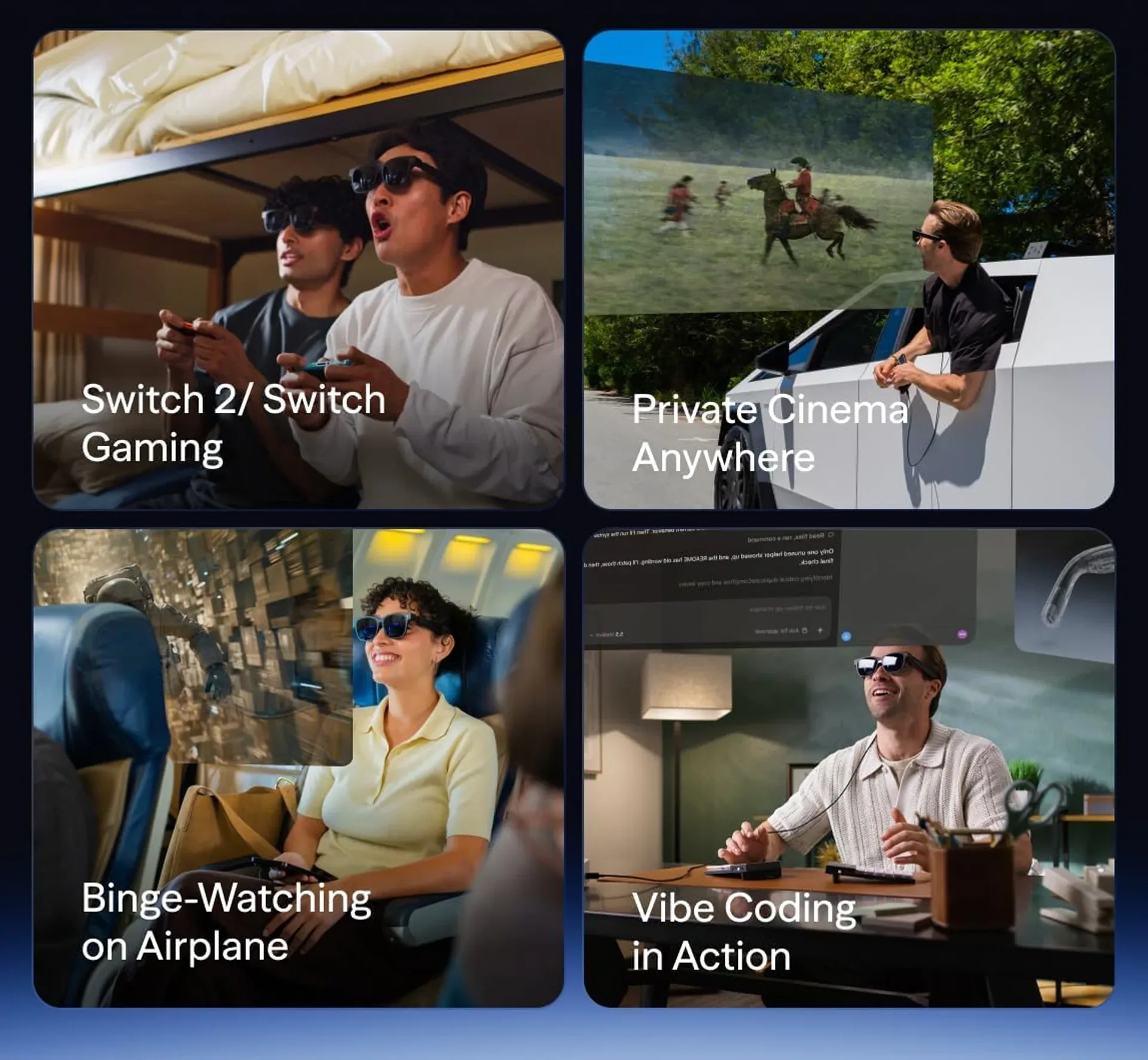
Display efficiency is also becoming relevant across devices that put screens closer to a user’s face, including the gaming-oriented hardware discussed in this look at Viture Pro 2 XR/AR glasses. The technologies and products are different, but the common design pressure is clear: deliver a view that stays bright, efficient, and comfortable without wasting scarce space or battery capacity.