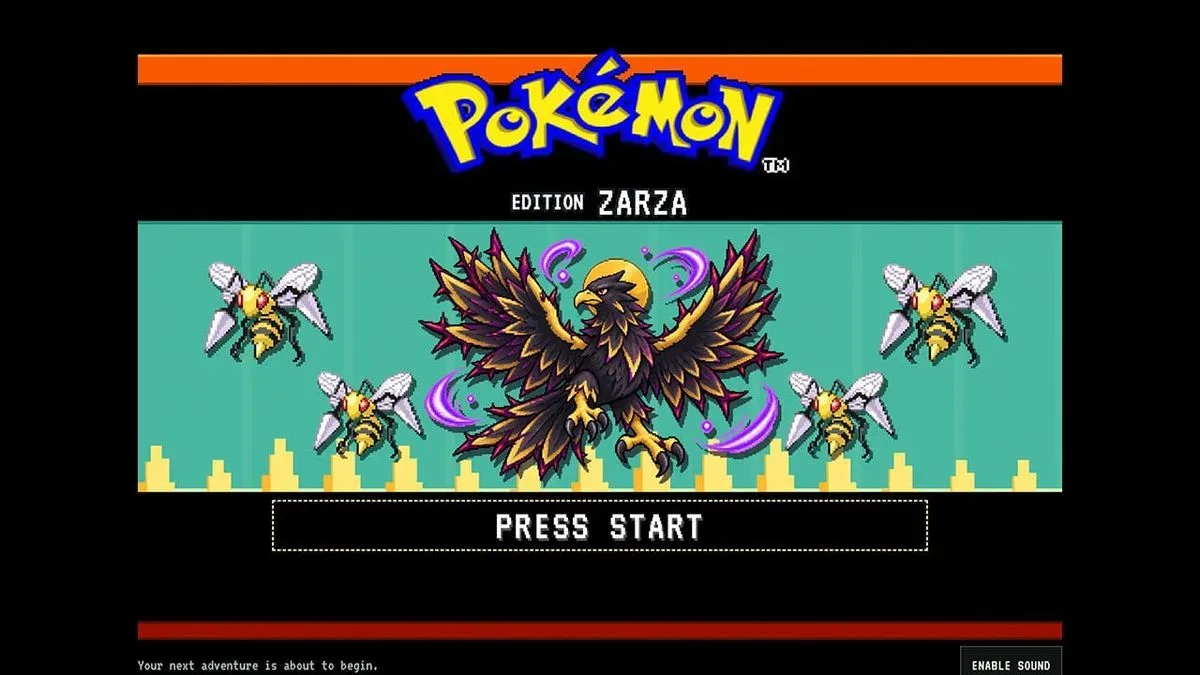
Pokémon Zarza is a browser-based arcade hub built around short Pokémon-themed minigames, including a one-on-one real-time battle mode, platforming, sports games, racing and competitive party-game variations. Its appeal is straightforward: it puts a collection of quick sessions in one place, with no emulator setup described and with private rooms available for playing with a friend.
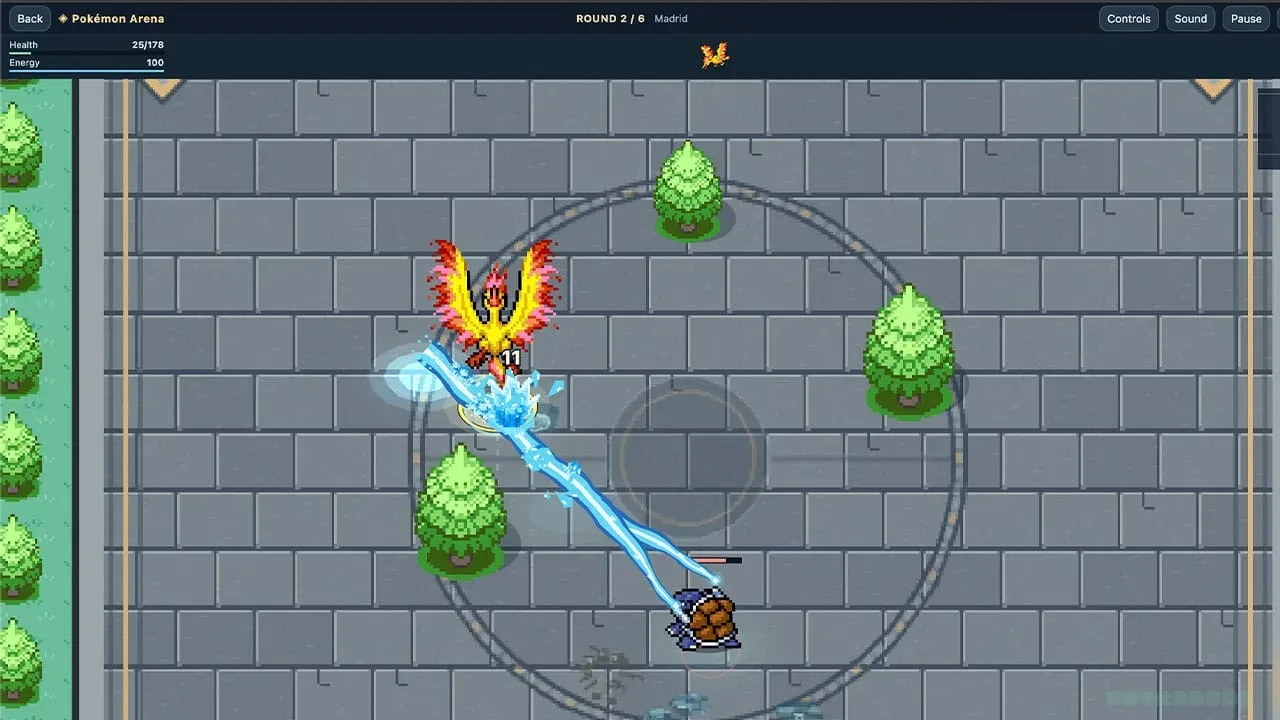
The project is presented as a set of snack-sized games rather than a traditional monster-collecting RPG. That makes the battle arena its most immediately notable mode. Players can select from the original Kanto Pokémon and face another Pokémon in real-time, one-on-one combat. The listed controls are A, S, D and F for moves, while the space bar is used to dodge.
That control scheme matters because it points to a different kind of Pokémon game rhythm. Rather than choosing an attack from a turn-based menu and waiting for the next exchange, players must input moves and react to danger as it happens. In plain terms, real-time combat means both sides can act within the same ongoing match instead of taking alternating turns. Dodging also suggests positioning and timing are part of the exchange, even in a deliberately accessible browser format.
An arcade cabinet’s worth of formats
The wider Zarza lineup jumps between recognisable arcade and casual-game templates. Several games use Pokémon characters and imagery in formats associated with platformers, slingshot games, air hockey, volleyball, football, wrestling and obstacle courses. The available list describes the following modes:
- Pokémon Arena — a real-time battle arena.
- Jumps — a jumping game involving coins and avoiding Pokémon.
- Bubbles — a bubble-clearing game in which Pokémon are removed from levels.
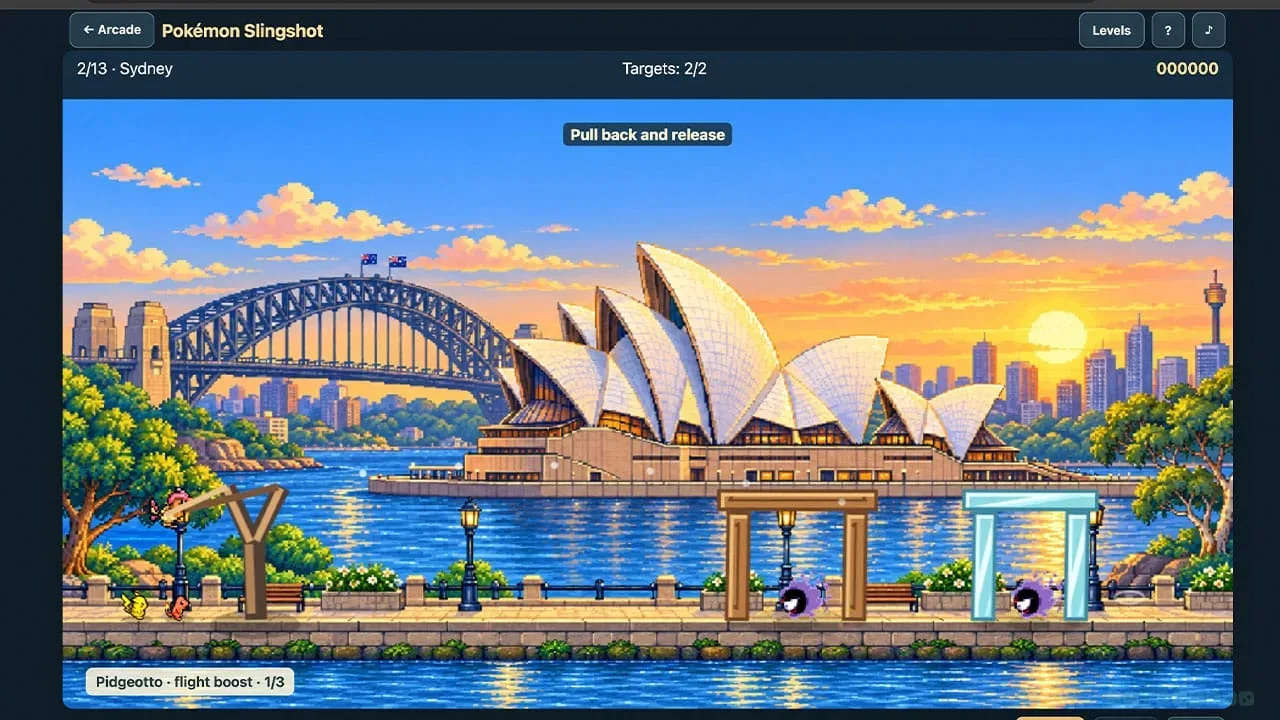
- Pokémon Slingshot — a Pokémon spin on the projectile-launching format.
- City Race — bicycle racing.
- Shove Off — sumo-wrestling-style contests.
- Balls — four-player air hockey featuring Voltorbs.
- Crates — a crate-bashing contest against opponents.
- Pokémon Volley — Pokémon volleyball.
- Head Soccer — score goals by heading balls.
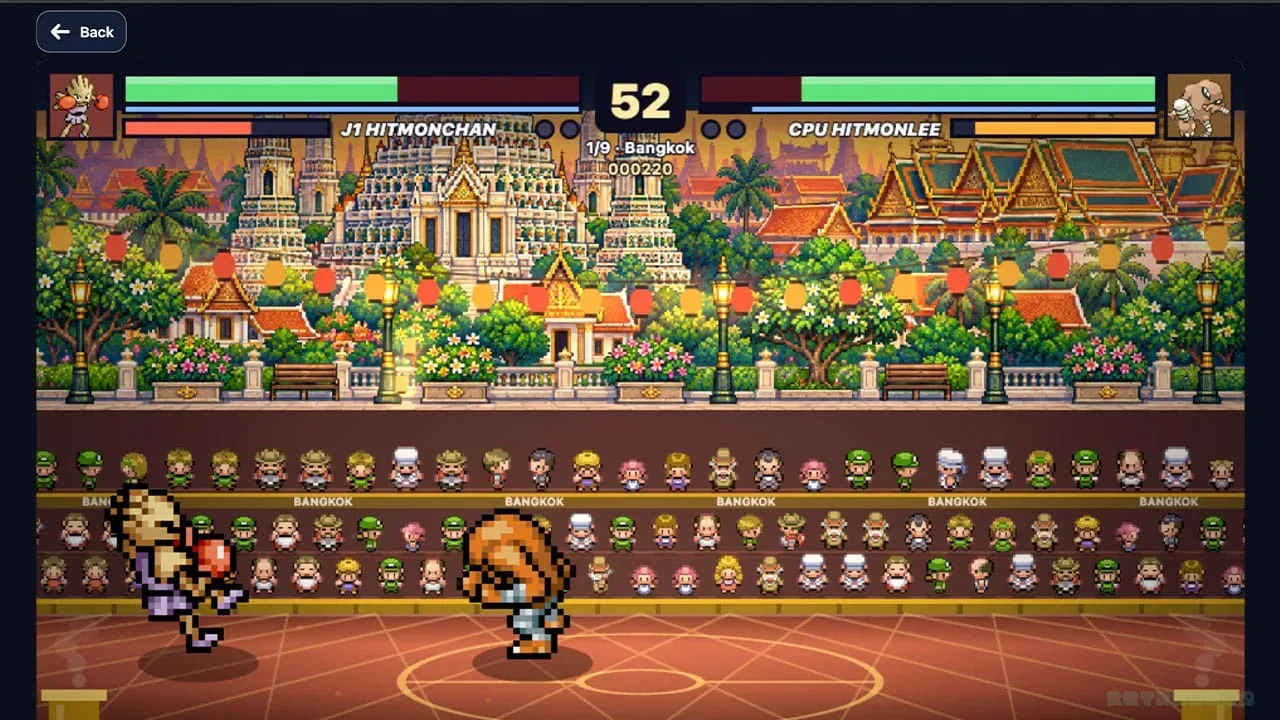
- Pokémon Fight — fighting-game-style action.
- Moles — a Diglett-themed whack-a-mole game.
- Onix — a version of the classic snake format using Onix.
- Zarza Jetpack — a trainer-focused flying/obstacle game.
- Cloudbound — vertical tower jumping.
- Take Cover — berry throwing.
One small point of clarification: descriptions of Zarza have referred to 15 minigames, but the supplied mode list names 16. It is not clear whether one mode is counted differently, whether the headline total is outdated, or whether the list includes an extra entry. Players looking for a precise count should treat the named game list as the more useful guide for now.
What the individual games suggest
The selection appears designed to minimise the learning curve between games. A player who does not want a combat match can pivot to coin collecting in Jumps, a familiar obstacle-and-height challenge in Cloudbound, or the concise reaction test of Moles. Meanwhile, Onix uses a concept that needs virtually no introduction: guide an ever-growing line without crashing into its path. Replacing the line with Onix gives the old structure a Pokémon-themed visual hook.
Other games lean more directly into head-to-head competition. Shove Off frames its action around sumo-style pushing; Crates asks players to knock out opponents; and Balls turns air hockey into a four-player Voltorb game. These are useful formats for private-room play because their objectives can be read quickly. A friend does not need to learn a long campaign system or build a team before a match can begin.
Pokémon Volley and Head Soccer broaden that competitive side into sports-game territory. The latter’s stated hook is heading the ball into the goal, which implies a simplified, deliberately cartoonish interpretation of football rather than a simulation. City Race, meanwhile, puts players on bicycles, giving the hub a racing option alongside combat and score-chasing.
Related coverage includes Pokémon Zarza Turns Browser Battles Into a 15-Game Arcade Hub.
The lineup also contains games whose descriptions evoke established arcade traditions. Bubbles is described as a bubble-clearing game, while Pokémon Slingshot centres on launching Pokémon characters at targets. In the latter, Pikachu, Pidgey and Charmander are used against Gastlys. These comparisons are useful shorthand for prospective players, but the important practical detail is that Zarza is not built around one genre. It is a multi-format hub where a few minutes of platforming can sit beside a versus fight or a target game.
The battle modes are the clearest draw
There are two especially prominent fighting-game directions in the collection. Pokémon Arena is the real-time one-on-one battle mode with the stated keyboard controls and a dodge action. Pokémon Fight is described as fighting-game-style gameplay, with Hitmonchan and Hitmonlee among the examples associated with it. The two modes may appeal to players for different reasons, but the available information does not establish their precise mechanical differences beyond those descriptions.
It is worth keeping that distinction intact. A game being described as “fighting-game-style” does not, on its own, confirm the presence of features such as combos, rounds, ranked matchmaking, character balance systems, online public matchmaking or tournament support. Likewise, a real-time arena battle should not be confused with the mainline Pokémon series’ familiar turn-based format. Zarza’s pitch is speed and immediacy, not a replacement for a full-scale Pokémon RPG.
The Kanto focus in the arena is another clear signal of what the game is aiming for: instantly recognisable choices rather than an overwhelming roster. The supplied details say players can take any of the original Kanto Pokémon into the arena, but do not provide a full character list, move list or explanation of how individual Pokémon differ. That leaves open important questions about selection and balance, and it is better not to assume systems that have not been detailed.
Private rooms make the hub more than a solo distraction
Pokémon Zarza supports playing with a friend in a private room. A private room generally means a separate game session intended for invited participants rather than a public lobby. Here, that feature is especially compatible with short competitive games such as air hockey, volleyball, wrestling-style shoving and real-time battles.
The practical benefit is convenience. A pair of players can choose a game, share a room and move between brief challenges without needing a larger group or a long-term progression commitment. It is the kind of structure that works for an impromptu match, a break between other games or an informal remote hangout. That interest in low-friction shared sessions also shows up elsewhere in games, including the online co-op focus of this recent Cozy Builder launch, though Zarza is operating at a much smaller, arcade-oriented scale.
There is no supplied information establishing whether every minigame supports private-room multiplayer, how many people each game allows, or whether public matchmaking is available. Balls is explicitly described as a four-player air-hockey game, but that should not be read as confirmation that all modes accommodate four players.
Language support and unanswered questions
The games are available in Spanish, English, Thai and Chinese. For a browser project based around concise instructions and simple game loops, multilingual availability can make the hub easier to approach across a wider group of players. The information provided does not specify whether all text, menus and gameplay instructions are translated to the same extent, or whether language settings apply uniformly to every mode.
There is also very little confirmed information about the people or team behind the site. That absence is important when discussing claims about its production. There has been speculation that artificial intelligence may have been used, but there is no confirmation of how much, if any, AI was involved. AI-assisted development can refer to many different processes, from generating ideas or code to producing artwork, text, translation or audio; without a statement from the developers, it would be inaccurate to assign any particular use to Zarza.
Similarly, the available details do not establish the project’s ownership, licensing status, monetisation, privacy practices, account requirements, device compatibility or long-term update plans. Those gaps do not change the basic description of what is playable, but they are relevant context for anyone deciding whether to spend time in a browser-based service.
A deliberately lightweight Pokémon diversion
Pokémon Zarza’s strongest idea is not any one imitation of a platformer, sports game or arcade classic. It is the decision to make a browser hub where Pokémon-themed matches can be started quickly and where the format changes often. One moment can be a Kanto arena duel using keyboard inputs; the next can be an Onix snake game, berry throwing, Diglett bopping or a four-player Voltorb air-hockey match.
For players, the value proposition is variety and brevity. The collection’s games are described in clear, compact terms, and private rooms give some of that variety a social angle. The uncertainty around the developers and production methods should remain just that—uncertainty—but the playable premise itself is easy to understand: a Pokémon-styled browser arcade designed for quick rounds rather than a single sprawling adventure.