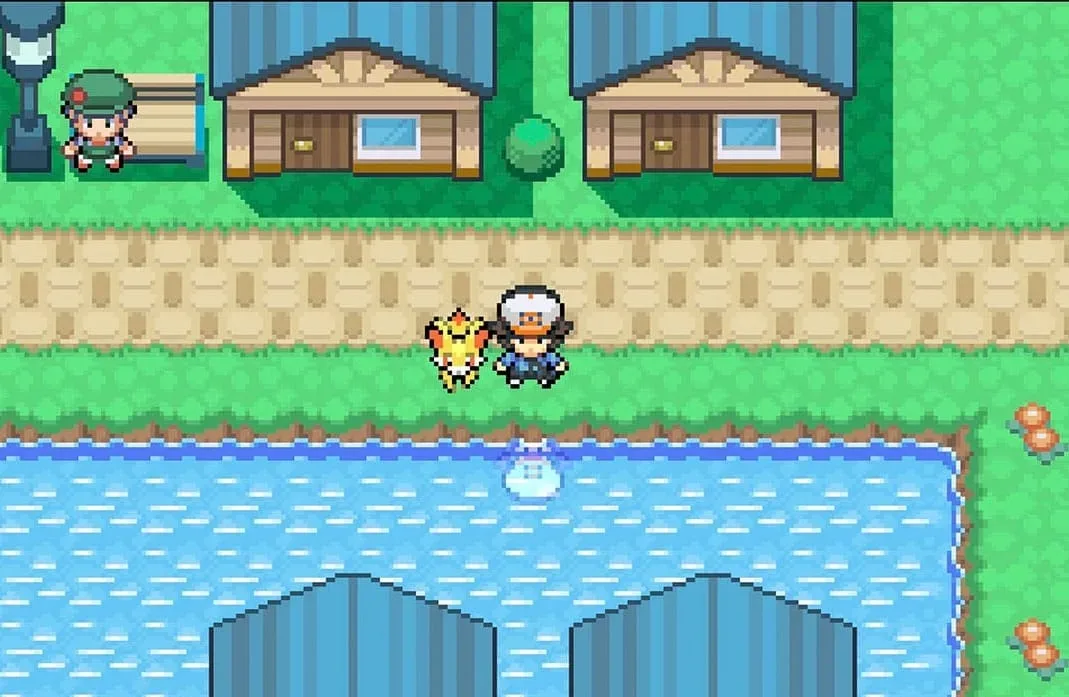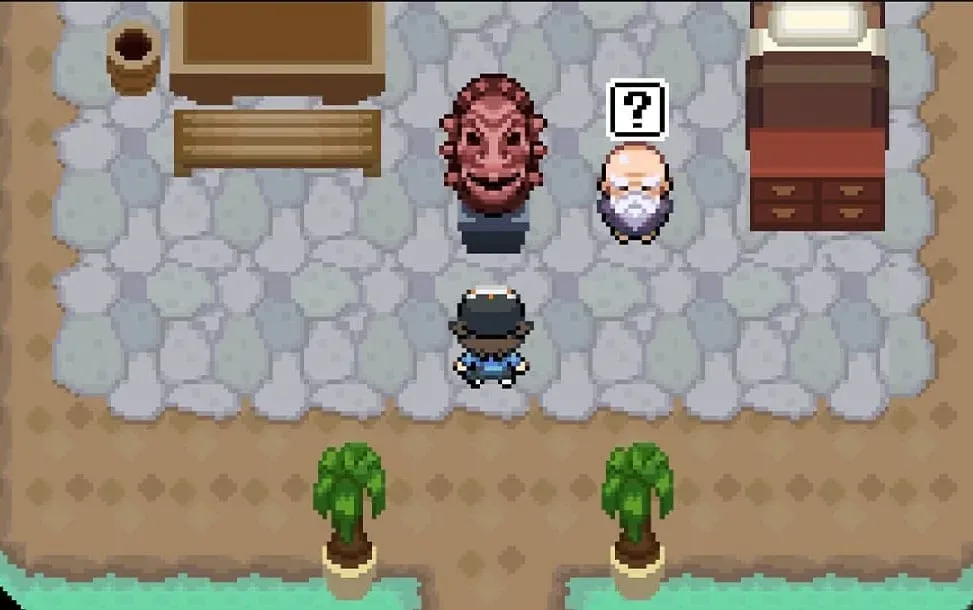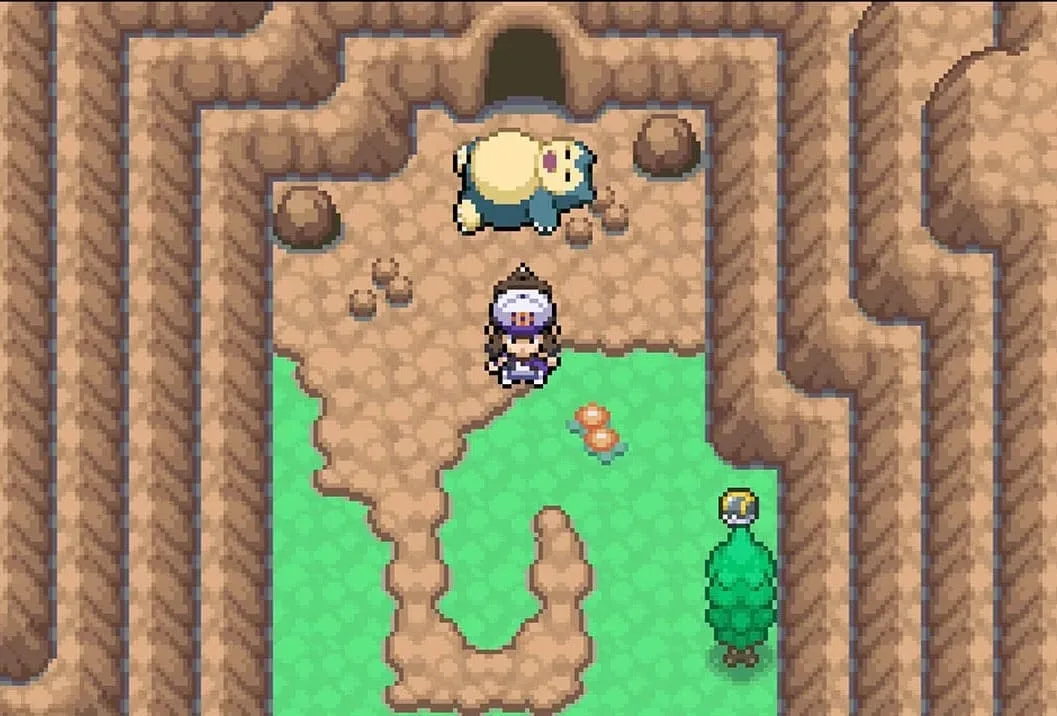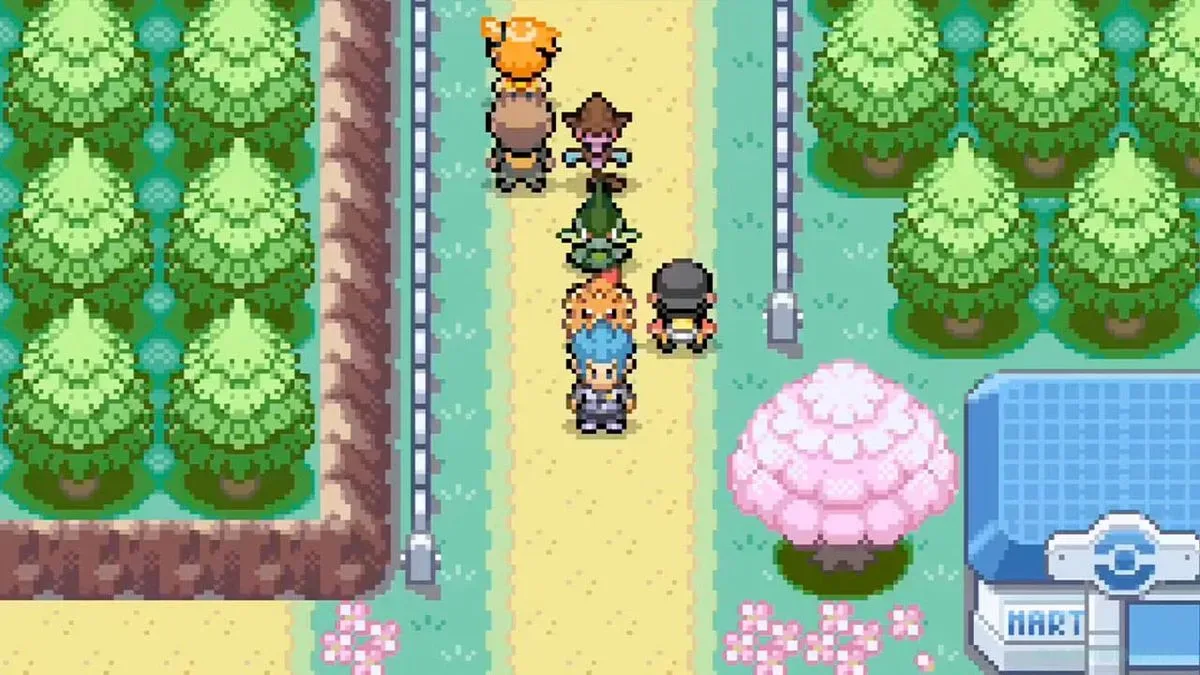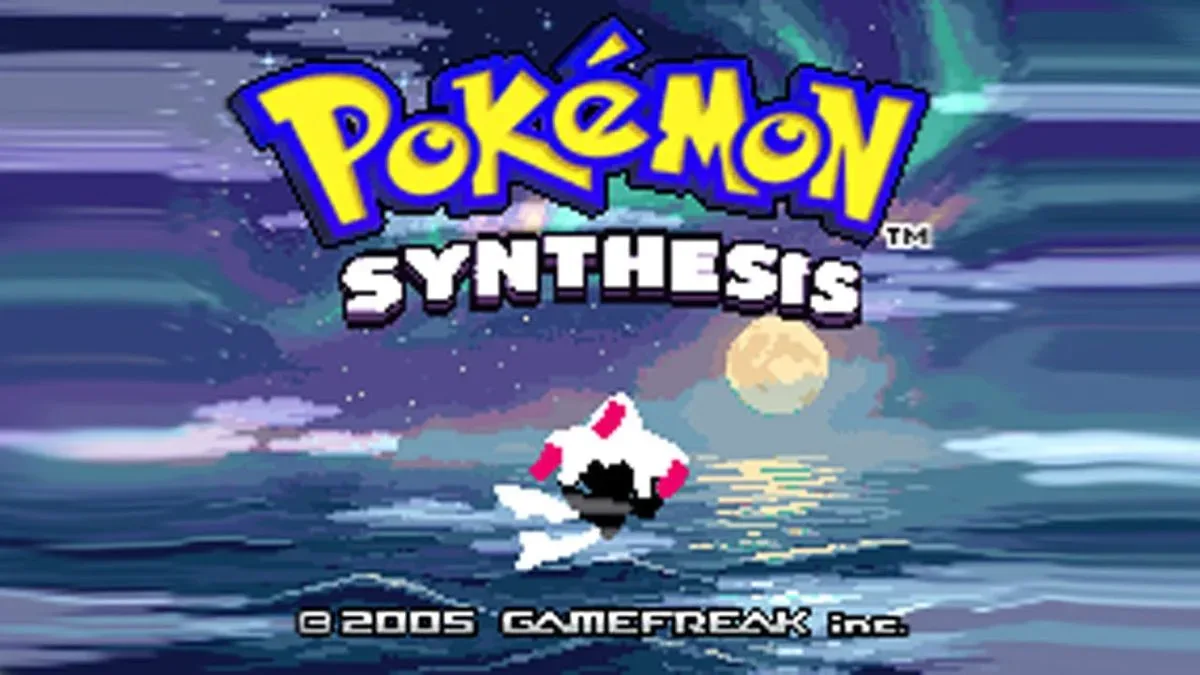
A new Pokémon Emerald ROM hack called Pokémon Synthesis is inviting players into Veldan, an original region built around a more flexible adventure structure than the traditional route-to-town-to-Gym march. Created by lethesis, the project currently has a demo estimated at roughly five to eight hours, depending on how thoroughly players explore its available content.
That time range is meaningful because the demo represents only the first of four planned major areas in Veldan. It is not simply a short opening sequence designed to show off a starter choice and then send everyone home before dinner. The available section is intended to introduce the region’s free-roaming, quest-led format, including optional dungeons and a reputation system that affects access to further places.
Pokémon Synthesis uses Pokémon Emerald as its base, placing it firmly in the long-running tradition of Game Boy Advance-era fan projects. The completed hack is planned to include Pokémon from all nine generations, while retaining the familiar top-down visual language associated with the Hoenn original. That combination is one reason projects of this kind remain compelling: the sprite-based format is immediately readable, but creators can use it to construct an entirely new geography, progression rhythm and collection goal.
Veldan is designed around four explorable areas
Veldan’s premise is semi-open rather than completely unrestricted. Players can explore the region’s four large areas with considerable freedom, but the overarching destination remains a confrontation with the local Champion. In practice, that sounds less like a conventional linear Pokémon journey and more like an adventure where deciding what to pursue first is part of the experience.
The distinction matters. “Open world” can be a broad and sometimes misleading label, especially for a ROM hack developed on a handheld RPG foundation. Pokémon Synthesis appears to be aiming for structured openness: each area offers room to roam, discover points of interest and choose activities, while the game continues to guide players toward its larger objective. It is an approach that can preserve the satisfaction of discovery without abandoning the deliberate pacing that makes old-school Pokémon campaigns work.
For a series whose core loop has historically leaned on ordered milestones, quest flexibility is a notable feature. Pokémon Synthesis allows main quests and side quests to be tackled in the order a player prefers. One person may focus on advancing the central story; another may go looking for side content, resources and out-of-the-way encounters before committing to the next major goal. The important point is that the game’s structure is planned to accommodate both approaches.
The Champion serves as the eventual focal point of the region, but getting there is not presented as a single narrow corridor. That is a potentially strong fit for Pokémon’s fundamentals. Catching, training and building a team already encourage individual priorities, whether someone wants a balanced party, a favorite creature carried through the entire campaign, or a team assembled from unusual encounters. A less prescriptive map can give those choices more room to matter.
The demo includes optional dungeons and quests
The first Veldan area includes self-contained dungeons that players may choose to enter rather than being required to clear. Optional dungeons are especially useful in a demo because they offer more than one way to measure its scope. A player moving straight through key objectives may land closer to the five-hour estimate, while someone searching for every detour and tackling extra challenges could approach eight hours.
Related coverage includes Pokémon Synthesis Demo Opens the New Veldan Region for Up to Eight Hours.
More importantly, optional content gives the setting texture. A dungeon is not merely a container for battles or treasure when it is something the player discovers and elects to investigate. It becomes part of a region that feels as though it has activities beyond the immediate next plot marker. That sense of a world having its own corners, secrets and local problems is often what separates a memorable fan-made region from a sequence of maps.
Pokémon Synthesis also includes a reputation system. Higher reputation unlocks additional areas, creating another layer between exploration and progression. The exact rewards and thresholds have not been detailed here, so it is best not to assume how rapidly reputation rises or which choices affect it. Still, the broad concept suggests that time spent engaging with Veldan’s quests can expand the space available to the player.
Reputation systems can help a semi-open design feel purposeful. Rather than using only story flags or a single badge count as gates, they can connect access to participation in the region itself. If implemented clearly, this kind of structure can answer an important question for exploratory RPGs: why is a particular route, settlement or dungeon now available? The answer becomes linked to the player’s standing and activity rather than an arbitrary invisible switch.
A Game Boy Advance foundation with a broader Pokédex
Emerald remains a popular base for fan-made Pokémon projects because its visual style, battle presentation and map-driven exploration are durable. The game’s pixel-art identity carries immediate nostalgia, but it is also practical for designers building new towns, wilderness zones and encounter tables. Pokémon Synthesis is using that foundation to introduce a new region rather than revisiting Hoenn, which gives Veldan the chance to establish its own landmarks and travel logic.
The plan to make Pokémon from all nine generations catchable in the full release broadens the project’s ambitions considerably. A large Pokédex can mean more variety in team-building and more opportunities for players to seek out familiar favorites. It also raises the question of how encounters will be distributed across Veldan, an aspect that will be clearer as more of the game becomes available. For now, the confirmed point is the intended generational coverage, not a final roster or location guide.
The project is also described as incorporating modern battle mechanics while maintaining a familiar feel. That is a careful balancing act for any retro-styled Pokémon game. Players may want the comfort of a Game Boy Advance presentation, yet still expect systems that make battle and team management feel less dated. Specific mechanics are not outlined, so expectations should remain measured until more details are provided or the full game arrives.
There is a wider appeal to that blend. Current Pokémon conversation often returns to the value of the series’ turn-based foundation, including the debate around how its central combat should evolve. For another perspective on that continuing subject, see the discussion around preserving turn-based Pokémon battles. Pokémon Synthesis is not positioned as a substitute for an official release; it is a community-made project exploring different possibilities inside a classic framework.
What prospective players should know
The demo covers Veldan’s first major area and is expected to offer approximately five to eight hours of play. Its featured elements include flexible ordering for main and side quests, optional dungeons, a reputation-based unlock system and an adventure format built around semi-open exploration. The full project is planned around four major areas and Pokémon spanning nine generations.
As with other ROM hacks, Pokémon Synthesis requires players to apply a patch to their own legally obtained copy of the appropriate base game rather than distributing the original game itself. Prospective players should use the project’s stated patching destination and follow its instructions carefully. It is also wise to keep an untouched backup of any original file before patching, and to remember that fan projects may change during development.
For now, the demo’s role is straightforward: it offers a substantial first look at Veldan’s direction rather than the whole journey. The strongest hook is not merely the promise of a huge selection of Pokémon, although that will understandably draw attention. It is the prospect of navigating an original region with more agency over quest order, detours and progression. If the later three areas build effectively on that opening, Pokémon Synthesis could become a particularly interesting entry in the enduring Game Boy Advance ROM-hack scene.