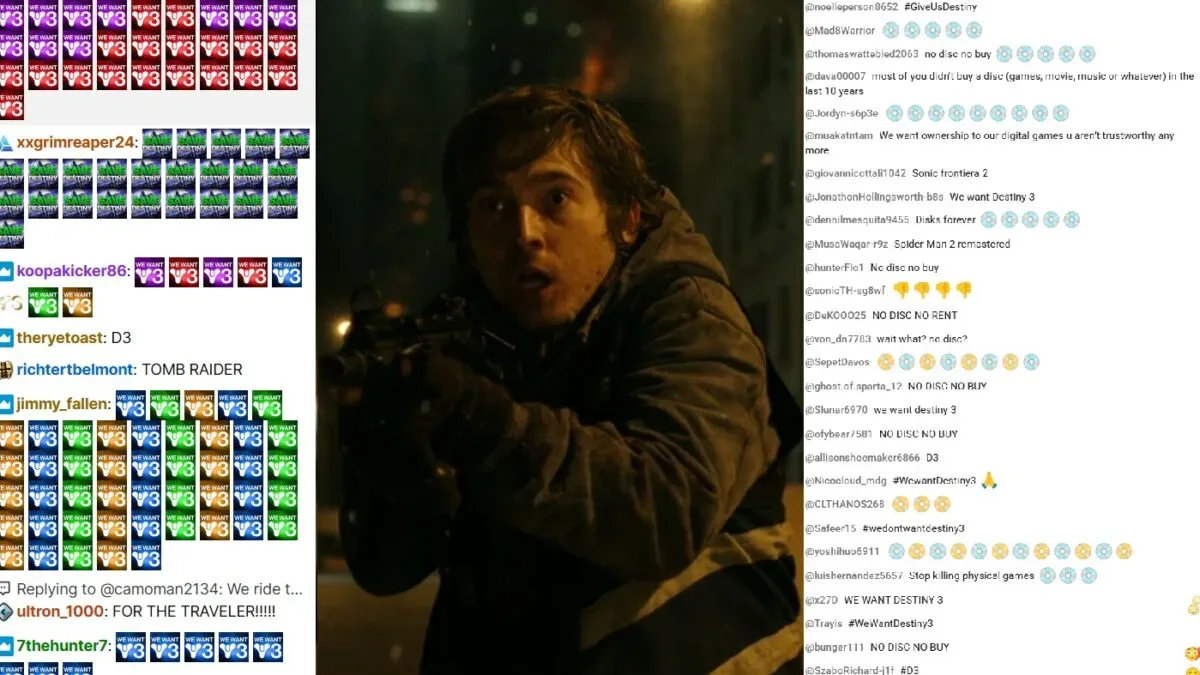
PlayStation’s latest State of Play had the familiar ingredients of a major platform showcase: trailers, upcoming games and a running conversation on YouTube and Twitch. But the loudest recurring message in the live chats was not necessarily about what appeared on screen. Viewers instead rallied around two blunt demands: “D3” and “no disc, no buy.”
The shorthand reflects two separate but increasingly connected frustrations among parts of the PlayStation audience. One centers on Bungie and the future of Destiny, with fans asking for a full Destiny 3. The other is a direct objection to Sony’s stated plan to stop producing new PlayStation game discs when the PS6 generation begins. Put together, they became a relentless bit of chat-room punctuation during the presentation.
It was the first major PlayStation event since the July decision on physical media, so the outburst was not especially mysterious. A livestream chat is rarely a calm focus group—asking one to be one is a little like asking a boss battle to file its taxes—but it is an immediate place for organized disappointment to surface. On Twitch, the demand often appeared as D3 emotes. On YouTube, viewers repeatedly posted the physical-media slogan. The messages were simple enough to be copied, recognized and amplified at speed.
Why “no disc, no buy” carries more than one meaning
The chant is, first and foremost, a buying threat: players who prefer discs are saying they may refuse to purchase into a future hardware ecosystem that does not offer them. Yet the slogan also wraps several concerns into four quick words. Physical editions give players something tangible to lend, trade, display, resell or keep on a shelf. For collectors, the disc, case and artwork can be part of the appeal rather than a disposable delivery method for a download.
There is also a preservation anxiety. A disc is not a perfect permanent archive; modern games can rely heavily on updates, servers, patches and account systems. Still, physical releases provide a degree of independence from a storefront listing, a licensing change or a publisher’s decision to alter access. They are a visible record that a game existed in a particular form. For players who already feel that ownership has been narrowed by digital storefronts and online requirements, the proposed end of newly printed discs reads as another step away from control.
That helps explain why the chat response went beyond a routine complaint about a single console feature. The physical-disc issue has become a container for broader discontent with this console generation. Some participants tied it to higher prices, while others pointed to Sony’s investment of money and studio effort in the pursuit of live-service games. Those criticisms do not all describe the same problem, and they do not all have the same remedy. But a fast-moving chat does not need a policy white paper. It needs a phrase that signals a side.
In that sense, “no disc, no buy” is both a consumer preference and a rallying banner. It tells Sony that physical games matter to a portion of the audience, while also giving unhappy fans a common way to register their unease about the direction of PlayStation.
The Destiny 3 call is about Bungie’s future
The repeated push for Destiny 3 has a similarly larger context. Sony has made no public indication that it intends to reverse course on changes affecting Bungie or on the sunset of Destiny 2. For fans, a sequel request is therefore not just wish-listing for the next numbered entry. It is a demand for a clearer future for a series and community that have been built around years of continued play, expansions and shared routines.
Related coverage includes PlayStation State of Play Chat Fills With Destiny 3 and Physical Media Protests.
Live-service games create especially intense attachments because the game is not merely completed and set aside. Players return with friends, follow seasonal changes, collect gear, learn encounters and spend years participating in an evolving world. When that future appears uncertain—or when a company changes its plans—the reaction can be more personal than the response to a standard sequel gap.
That does not mean a chat full of D3 emotes establishes what Sony or Bungie will make next. It does demonstrate a vocal audience asking for a more decisive commitment than it believes it has received. The demand is concise because it has to be. “Please provide an ambitious, durable successor with an understandable long-term plan” does not fit nearly as neatly between a trailer premiere and several hundred rocket emojis.
There is an important overlap between the Destiny and disc campaigns, too. Both are responses to a sense that players have less certainty about the things they invest in. One concerns the future of a long-running online game; the other concerns the ability to own a physical copy of new releases. They are distinct issues, but they meet at the same question: how much agency will players retain as PlayStation’s ecosystem becomes more digital and its plans evolve?
A boycott attempt and a highly visible venue for dissent
The State of Play chat surge came roughly a week after some players attempted to organize a seven-day boycott of the platform. Public boycotts are notoriously difficult to measure. Participation is hard to verify, goals can vary and a campaign’s online visibility does not automatically reveal its financial effect. But the effort showed that the frustration had moved beyond scattered replies and comment threads.
A showcase then provided a more prominent stage. People already watching a PlayStation broadcast were gathered in one location, and each repeated message made the campaign easier for the next participant to notice. This is how online slogans become sticky: not because every person posting one has identical priorities, but because repetition makes a mood impossible to miss.
It can also complicate the experience for viewers who came strictly for game news. A chat window overwhelmed by any single topic can obscure reactions to trailers and announcements. Yet that disruption is part of the point for protest-minded participants. If the company’s showcase is designed to direct attention toward its future, dissenters want the unresolved issues to share that spotlight.
Sony acknowledges the feeling, not a reversal
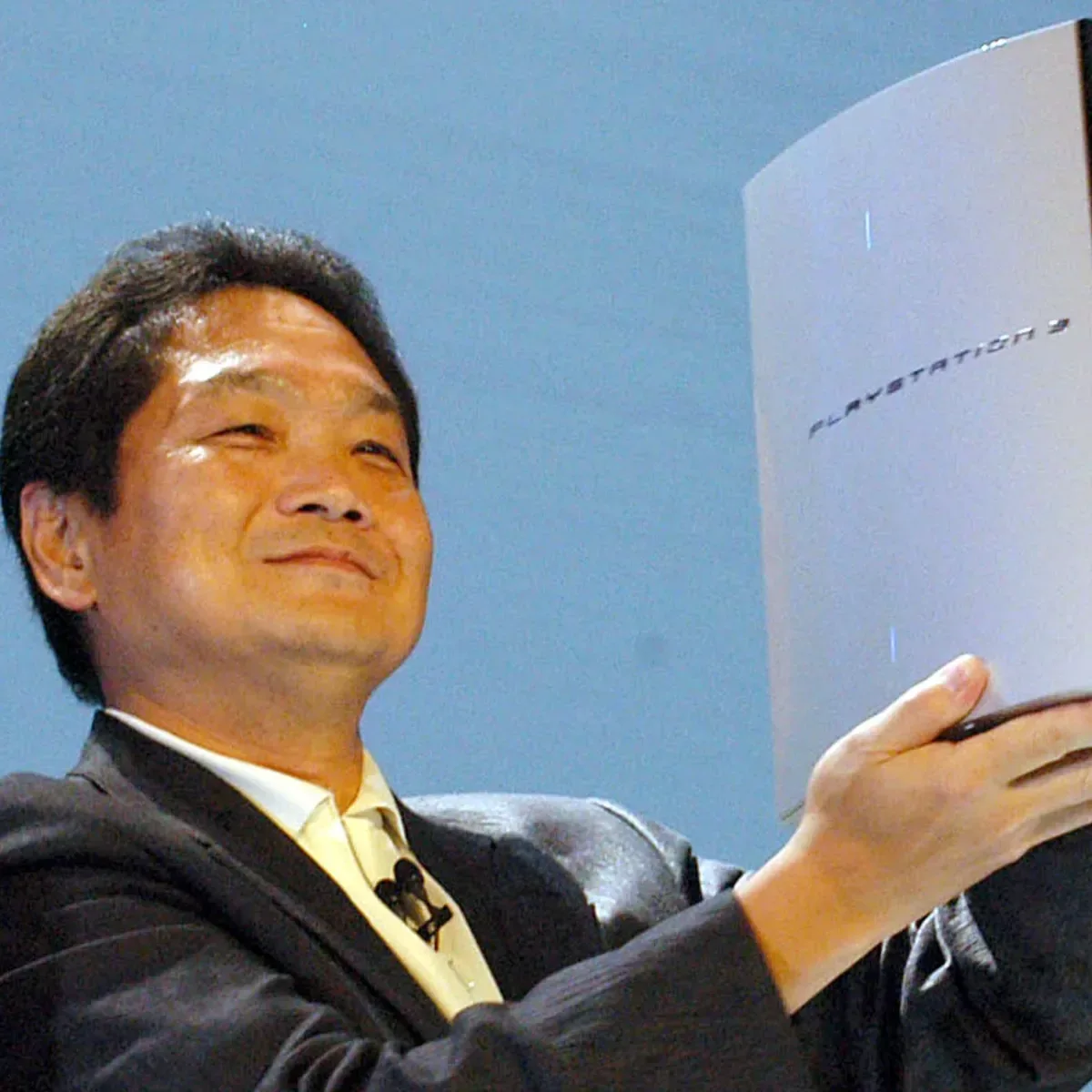
Sony chief financial officer Lin Tao addressed the physical-media decision during the company’s most recent earnings call. Tao said the decision had been carefully considered and that Sony intended to proceed cautiously. She also acknowledged that the company had received many opinions and that people held strong views.
“Games are loved by many people,” Tao said, describing gaming as entertainment connected to fond memories and saying Sony understood those emotions.
Her comments also pointed toward an ongoing question for Sony: how it will engage players in a future digital ecosystem. That recognizes that the dispute is not just technical. Games carry memories, rituals and collections. A wall of boxed PlayStation games can represent years of birthdays, weekend trips to stores, friends borrowing favorites and a personal timeline of what someone played.
Still, acknowledgement is not a policy change. A month after Tao’s remarks, there had been no public sign that Sony planned to restore new-disc production for the PS6 era, nor had it publicly shifted its direction on Bungie and Destiny 2. The State of Play response suggests that many viewers noticed that distinction. Being heard and getting the requested outcome are very different things.
What the chat can and cannot tell us
Livestream chat should not be mistaken for a representative survey of all PlayStation owners. It favors people who are online during the event, motivated to post and inclined to use a shared slogan. Bots, joke posts and ordinary chat chaos can further distort the picture. A flood of messages cannot tell us how many potential PS6 buyers will truly decline a disc-free system, or whether a hypothetical Destiny 3 would satisfy the people asking for it.
But it would be equally mistaken to dismiss the response merely because it happened in chat. The messages arrived across YouTube and Twitch, used recognizable calls to action and followed the July physical-media announcement and the attempted boycott. That sequence gives the reaction context. It is evidence of a mobilized, dissatisfied segment of the audience, even if it cannot establish the size of that segment.
For now, Sony’s public posture remains unchanged. Fans who want physical games and a new numbered Destiny have, however, found language that is hard to overlook. Every major broadcast offers another venue, every scrolling chat another chance to repeat it, and every trailer premiere another reminder that platform strategy can become the story even when the company would rather the games take center stage.
For collectors weighing why physical formats still matter in an increasingly digital market, our look at the collector’s five stages of buying one small thing captures how quickly a purchase can become something more lasting than its original transaction.