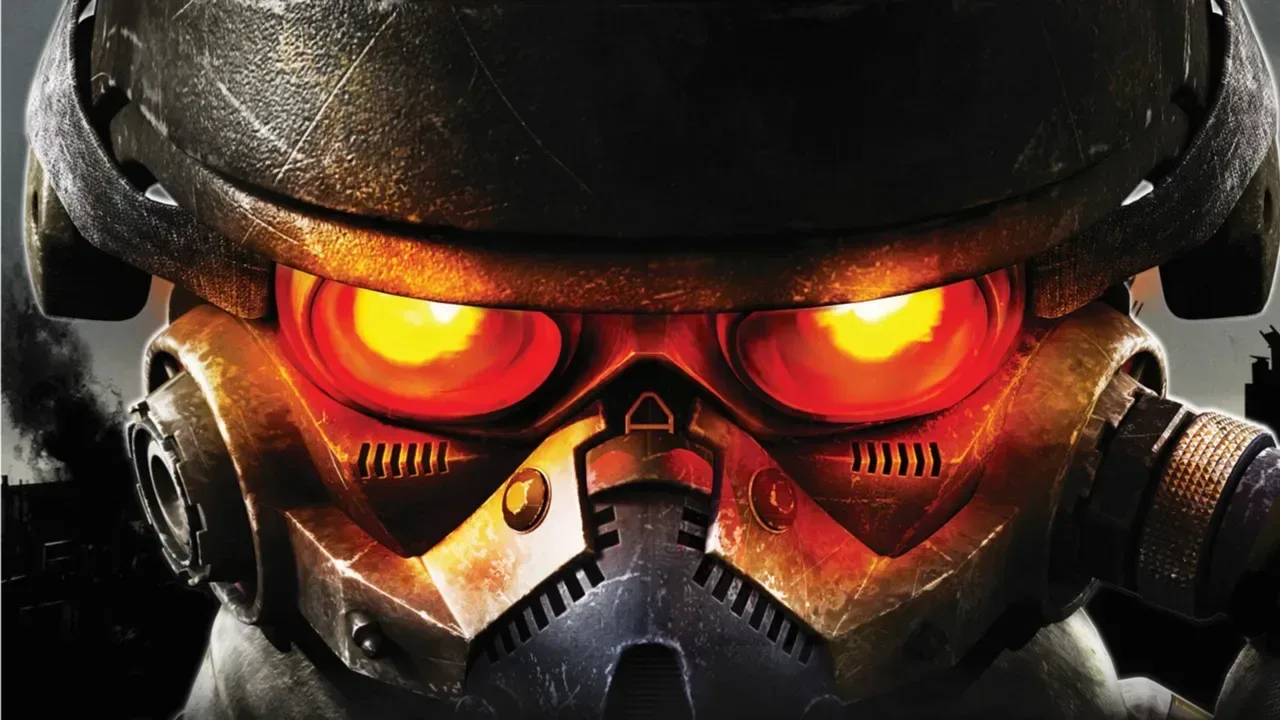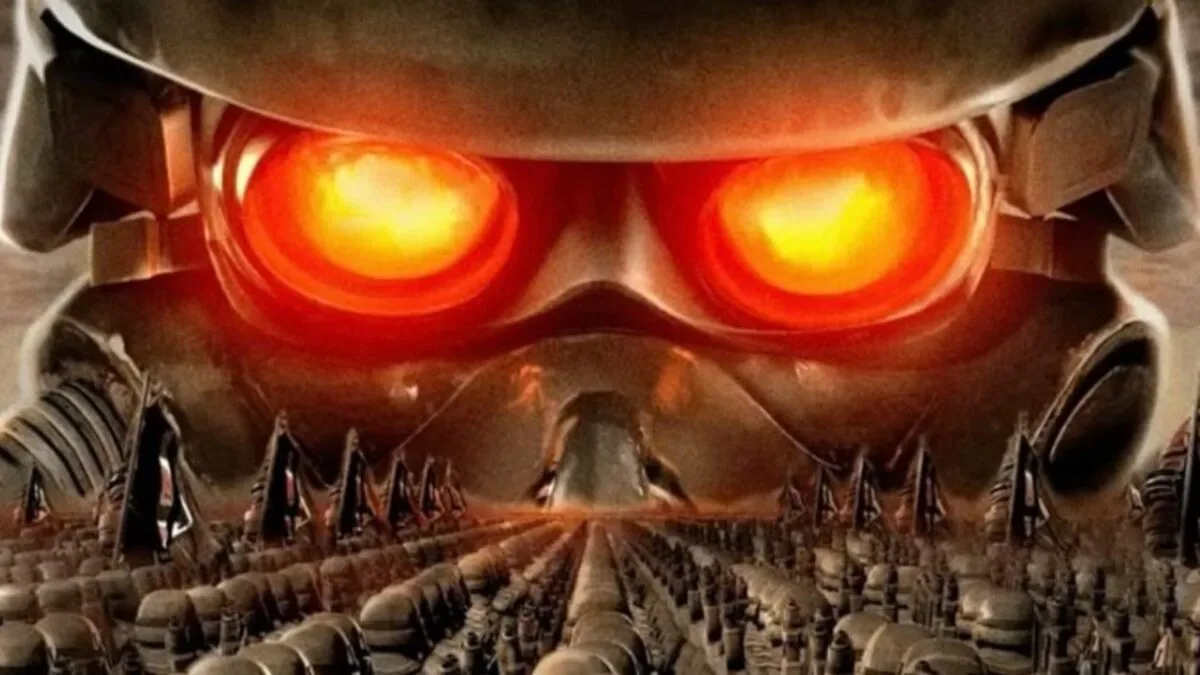
There may be movement at last in the long-silent war zone of Killzone. A new report claims PlayStation is exploring a return for its sci-fi first-person shooter series, with franchise steward Guerrilla Games potentially working alongside an external developer. The idea is tantalizing for fans who have spent more than a decade watching the Helghast stay put, but the important qualifier is also the biggest one: nothing has been officially announced.
The reported project is said to be in a very early stage. That means its eventual form may not yet be settled, assuming it exists as described. A remaster or remake of an older entry is among the possibilities, with the original Killzone from 2004 presented as a plausible candidate. The same report leaves room for a much bigger pivot: a reboot that could reintroduce the setting, its conflict, and its famously red-eyed antagonists to a new PlayStation audience.
For now, that range of outcomes is a reminder not to treat “Killzone is back” as a finished fact. There is no named game, no platform confirmation, no release window, no trailer, and no indication of which of the series’ established mechanics or stories would survive a modern revival. There is only a report pointing to early work and an intriguing possibility that PlayStation’s former shooter mainstay could once again be on the board.
Why a Killzone return would matter
For a period spanning the PlayStation 2 through PlayStation 4 eras, Killzone occupied a distinctive place in Sony’s first-party lineup. It was PlayStation’s hard-edged, military sci-fi shooter: smoke-choked battlefields, weighty weapons, crumbling industrial spaces, and a conflict between the ISA and the Helghast. The series was never simply a one-for-one counterpart to any other console shooter, but it filled an important genre role inside the broader PlayStation catalog.
That role became less visible as PlayStation’s major internal studios increasingly became associated with expansive action adventures and open-world games. Guerrilla itself made one of the most dramatic transitions. After building its reputation on Killzone, the studio moved into the vibrant post-apocalyptic world of Horizon. Horizon Zero Dawn and Horizon Forbidden West established a very different identity for the developer—one built around robotic creatures, exploration, and Aloy rather than ISA troops and Helghast soldiers.
Yet the two series do not have to compete for the same space. A remaster, remake, or externally developed reboot could give PlayStation a way to revisit an older pillar without asking Guerrilla to abandon Horizon. It could also answer a basic preservation and access problem: many of the franchise’s older games are not easily available to people playing on current PlayStation hardware.
That gap has been conspicuous. The last new mainline release was Killzone: Shadow Fall, a PlayStation 4 launch title released in 2013. The first three principal games did receive a PlayStation 3 anthology collection, but those releases remain unavailable on PlayStation 5. Even the 2004 PlayStation 2 original has not been added through the PlayStation Plus classic-game offerings. For a franchise with a recognizable visual identity and several generations of history, it is remarkably difficult for newcomers to trace that history on the current console.
Remaster, remake, or reboot: three very different missions
Those labels are often used interchangeably in casual conversation, but they would imply very different projects for Killzone.
Related coverage includes Killzone Reportedly Set for a PlayStation Revival After 13 Years.
- A remaster would generally preserve an existing game’s structure while improving presentation and making it workable on modern hardware. If the goal is straightforward access to the original games, this would be the least disruptive route.
- A remake could retain the foundation of an earlier entry while rebuilding its visuals, controls, level design, and systems more substantially. The original 2004 Killzone would be a natural candidate if PlayStation wanted to revisit the franchise’s starting point.
- A reboot would offer the broadest latitude. It could reshape the tone, combat, characters, continuity, or multiplayer direction to establish Killzone for players who have no attachment to its earlier chapters.
Each option comes with a trade-off. A remaster would appeal to preservation-minded fans and lower the barrier to experiencing the series, but it might not be the most dramatic way to restore Killzone’s profile. A remake carries the challenge of updating a PlayStation 2-era shooter without sanding away the qualities that made its world memorable. A reboot could be more inviting to a contemporary audience, but it risks becoming so unrecognizable that longtime supporters wonder why it needed the Killzone name at all.
The reported early status makes it entirely possible that the team has not chosen between those paths. Early game development can involve prototypes, concept work, scope discussions, and changing partnerships long before a project takes a publicly recognizable shape. The fact that a report entertains both an older-game remake and a broader reboot should be read as evidence of uncertainty, not as a promise that multiple Killzone games are underway.
The external-studio question and the People Can Fly connection
One part of the report is especially interesting: Guerrilla Games is said to be collaborating with an outside studio rather than necessarily making the prospective Killzone project alone. That arrangement would make strategic sense on paper. Guerrilla has clear historical knowledge of the universe, while a partner could carry much of the production load or supply a particular type of shooter expertise.
People Can Fly is an obvious name in the conversation, but it is important to keep the distinction between known information and speculation clear. PlayStation signed a co-development agreement with the studio in March 2025 for a project codenamed Delta, which is based on an existing PlayStation intellectual property. People Can Fly is also known for Outriders, making it a studio that could seem compatible with a large-scale action shooter.
However, there is no confirmation that Delta is Killzone, and there is no confirmation that People Can Fly is the external partner mentioned in the report. The connection is conjecture based on timing, genre experience, and the fact that Delta uses an existing PlayStation property. Those details make the theory understandable; they do not make it established.
It is also possible that an outside collaborator, if one is involved, would have a role much narrower or broader than fans expect. Co-development can mean anything from leading a full game to sharing technology, art, multiplayer work, or other production responsibilities. Until PlayStation or the studios identify a project and its developers, attaching any specific arrangement to Killzone is premature.
Guerrilla’s busy Horizon future complicates the picture
Guerrilla’s current priorities are another reason to be cautious about expectations. The studio is focused on Horizon Hunter’s Gathering, a live-service Horizon spin-off. Reporting has indicated that the project was rebooted following an unsuccessful recent playtest. Meanwhile, a direct follow-up to Horizon Forbidden West is reportedly still many years away, with much of the studio’s attention directed toward the multiplayer game.
That workload helps explain why an external collaboration would be believable, but it also raises practical questions. Where would a Killzone effort sit amid a major multiplayer Horizon project and a future single-player Horizon sequel? Would Guerrilla provide oversight and world expertise while another team handles development? Would a revived Killzone be a smaller-scale restoration project rather than a massive new flagship? At present, the answers are unknown.
There is a useful precedent in the broader idea, though: studios and publishers regularly look for ways to keep important series alive while their principal teams pursue their largest commitments. The exact model matters enormously, especially for a game that would need to satisfy fans of a dormant shooter while proving it has a reason to exist in a crowded modern market.
A franchise with an identity worth preserving
If Killzone does return, the appeal should not rest solely on nostalgia for a PlayStation logo from a previous console cycle. The series has a visual and tonal identity that remains immediately recognizable: the harsh contrast between the ISA’s military force and the Helghast, the authoritarian imagery, the brutal futuristic environments, and combat designed to feel denser and heavier than a breezy arcade shooter.
A thoughtful revival could revisit that identity while recognizing how much the FPS genre has changed since 2013. It would need to decide whether its future is primarily a campaign, a competitive multiplayer arena, a cooperative experience, or some blend of all three. It would also need to navigate the tension between honoring a legacy and making a clear case to players who were not around for the PS2, PS3, or PS4 entries.
Until more concrete evidence arrives, the sensible position is hopeful restraint. Killzone has reportedly been discussed as a potential comeback project, and the possibility of Guerrilla working with an outside studio gives the rumor a plausible production logic. But the project’s format, partner, scope, platform, and timing are all unresolved. For now, PlayStation fans can reasonably keep an eye on the horizon—just avoid treating the red glow as a confirmed deployment order.
For another look at how a classic game world can retain its atmosphere long after its original release, revisit why Xenogears’ Solaris remains such a chilling JRPG city.