Major spoilers for Xenogears follow, including the end of Disc 1.
Some RPG locations are memorable because they offer comfort: a bustling town theme, a dependable inn, an eccentric shopkeeper with a suspiciously good inventory. Solaris, the floating society at the center of Xenogears, makes an impression by doing nearly the opposite. It is clean, technologically advanced, bright with advertising, and positioned literally above the world’s conflicts. It also feels profoundly unsafe.
That contradiction is why Solaris remains one of the PlayStation era’s most potent settings. In a game already packed with ancient machines, religious symbolism, fractured identities, competing conspiracies, and a protagonist who can turn a bad day into a geological event, Solaris focuses all those enormous ideas into a city people can walk through. Its horror is not initially a monster jumping from a ventilation shaft. It is a system that has made exploitation look routine.
Xenogears begins with the wreck of the Eldridge and eventually follows Fei through the wars between Aveh and Kislev, the maneuvering of Ethos and Gebler, the mysteries surrounding Shevat, Grahf, Krelian, and the Anima Relics. It can be an intimidatingly dense game, but the Solaris chapter gives much of that complexity a human-scale frame. Fei, Elly, and their allies enter a place that claims to be civilization perfected, then find that its order rests on hierarchy, surveillance, and the ability to erase people with bureaucratic language.
A city built upside down
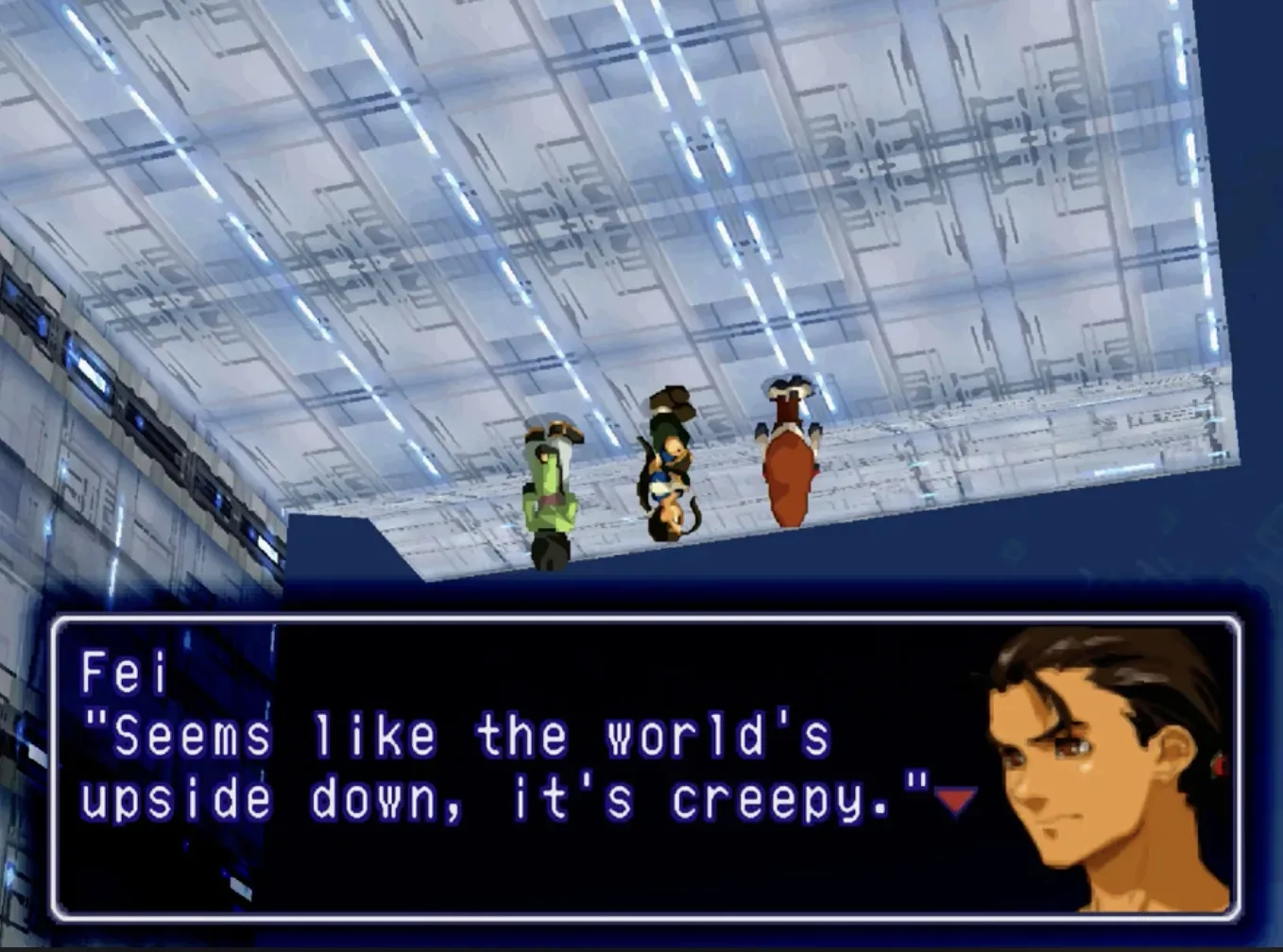
The party’s arrival in Solaris is an inspired piece of visual storytelling. They land on the city while physically inverted, walking across an underside before reaching the familiar orientation of its streets. It is an immediately strange image, and it works as a warning: the assumptions that guided the characters, and perhaps the player, are about to be overturned.
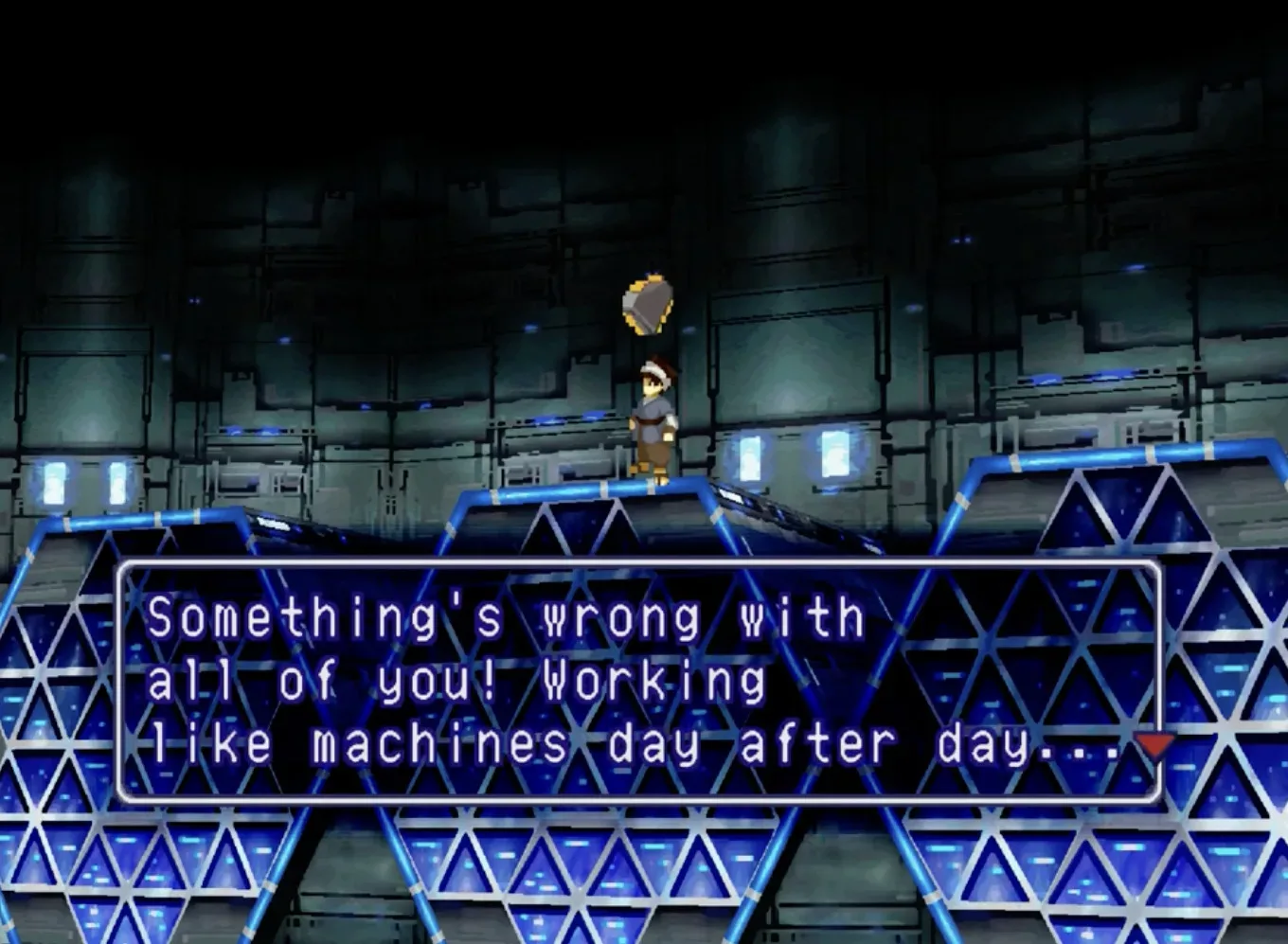
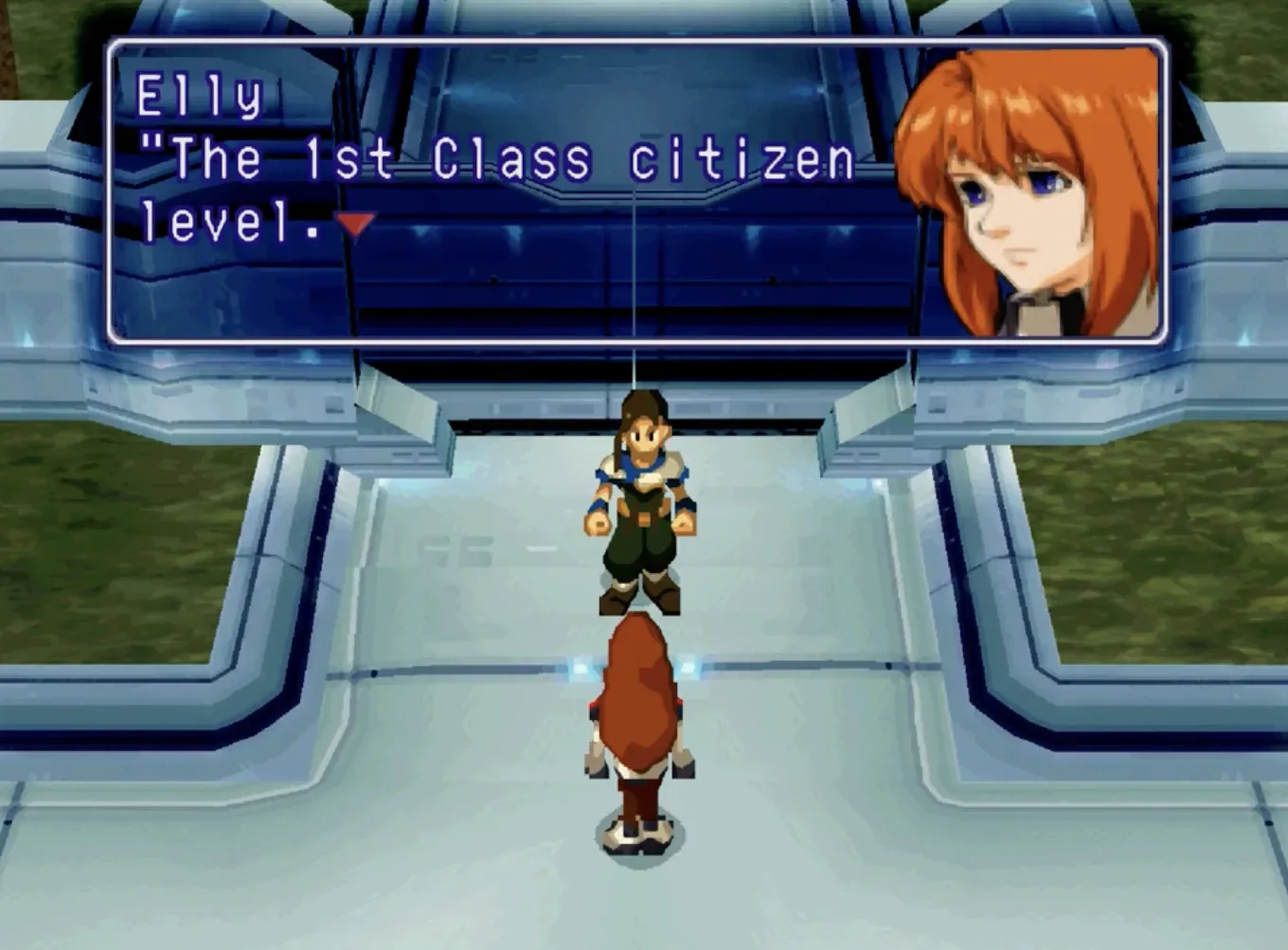
Fei is separated from the group and sent into the Honeycomb, the third-class district. Solaris divides citizens into tiers, but this is not merely a social label. Each class occupies a different vertical level of the city. Advancement is ascent; punishment means being cast downward. Architecture itself becomes propaganda. The city does not simply tell residents where they stand. It lets them inhabit that status every day.
Third-class residents, called Worker Bees, perform labor necessary to keep Solaris functioning. They are promised the possibility of promotion, an incentive that turns survival into obedience and encourages competition among people who share the same precarious position. Meanwhile, surface people are reduced to the insulting category of “lambs,” allowing Solaris citizens with little power of their own to still feel superior to somebody.
That makes the Honeycomb more disturbing than a straightforward dystopian slum. Its inhabitants have been taught that compliance is a kind of civic virtue and that someone challenging the system threatens everyone else’s fragile chance of advancement. When authorities seize a dissenter, the surrounding citizens do not create a united resistance. Their concern is that his behavior may damage their block’s rank. Solaris has successfully converted fear into peer enforcement.
Related coverage includes Why Xenogears' Solaris Still Stands as One of Gaming's Most Unsettling Cities.
“Rearrangement” and the violence of a euphemism
The city’s vocabulary is as important as its weapons. Citizens are not always described as arrested, imprisoned, or executed. They are “rearranged.” The word sounds administrative, almost tidy, as if a troublesome file were being moved into a better folder. In practice, rearrangement involves brainwashing and amnesia, particularly for people who attempt escape.
That euphemism is among the sharpest details in the Solaris sequence because it reveals how the city hides brutality in plain sight. If an atrocity can be reframed as maintenance, then the people watching can treat it as someone else’s unpleasant but necessary job. Security Cubes carry out the immediate violence with almost no visible legal process. A person can be taken, dropped, or otherwise removed by a machine, and the rest of the city carries on.
Solaris does have human guards, but their deployment underscores the inequality. At the upper levels, Elly’s father Erich is met with warning and procedure when he resists the authorities. The terror facing him is not principally a conventional prison sentence; it is the prospect of demotion to third class. Even privileged citizens are controlled by the possibility that the protections of their own status can disappear.
There is something especially unsettling about the lack of obvious human oversight over the Security Cubes. The machines appear to judge, punish, and kill, while ordinary citizens accept their decisions as the background condition of life. Xenogears does not need a lengthy lecture about automation to make its point. It simply asks players to notice the people who have stopped demanding that power explain itself.
Consumer comfort above, human cost below
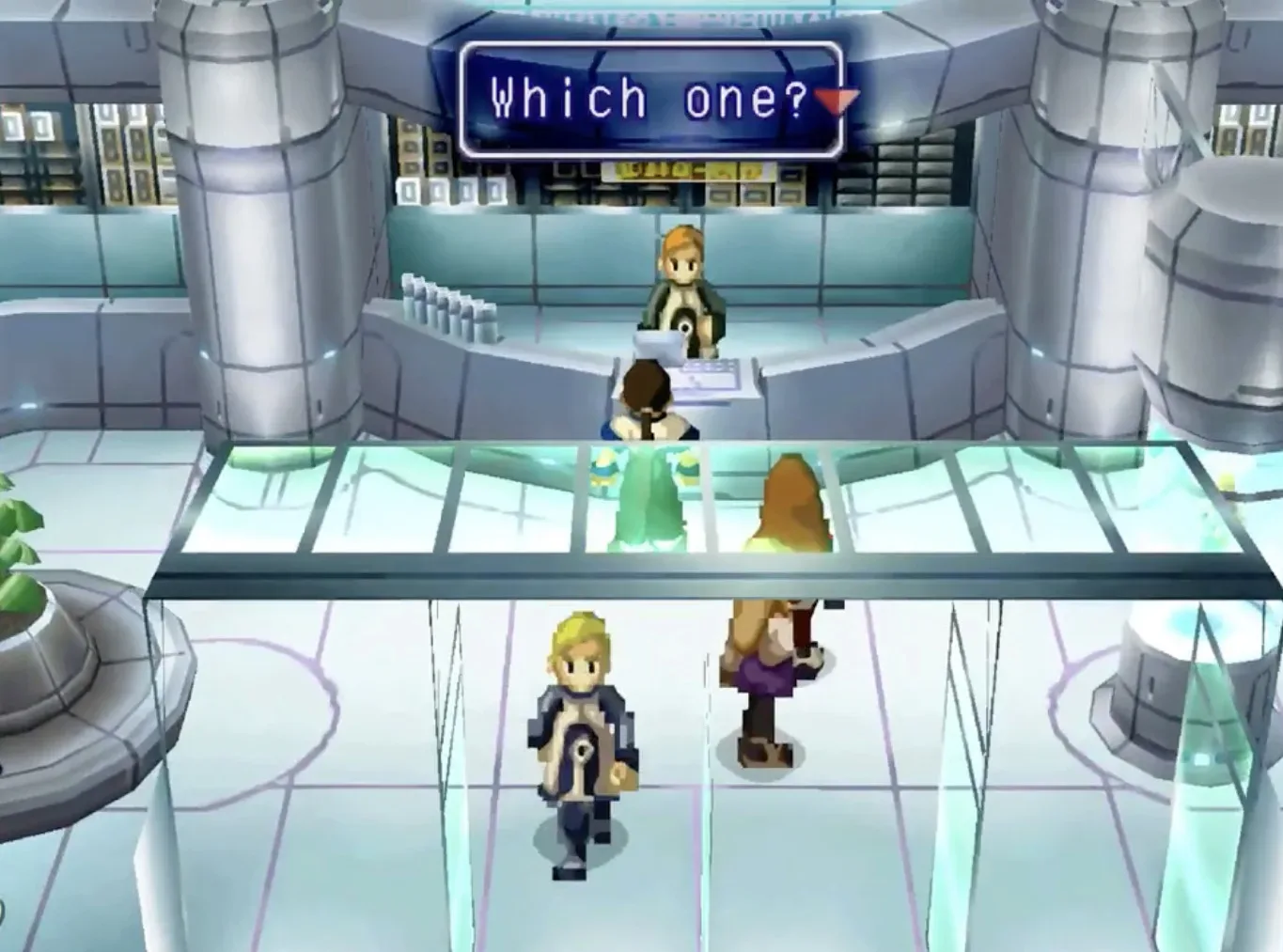
Once Fei uses Elly’s credentials to reach the second-class district of Etrenank, Solaris changes tone without becoming less menacing. There are shops, holographic displays, recreational routines, and residents whose concerns are comfortably distant from the turmoil beneath them. The city looks prosperous. It even allows a cheeky nod to the wider PlayStation moment through a resident who admires Tifa from Final Fantasy VII.
That detail is a small reminder of the hardware generation that produced both games; players curious about later PlayStation preservation efforts can also read about RPCS3’s direct PS3 disc playback support. Solaris, however, uses its own cultural distractions much more cynically. Its commercial polish and managed leisure make it easy for citizens to believe the system works because their personal routines still work.
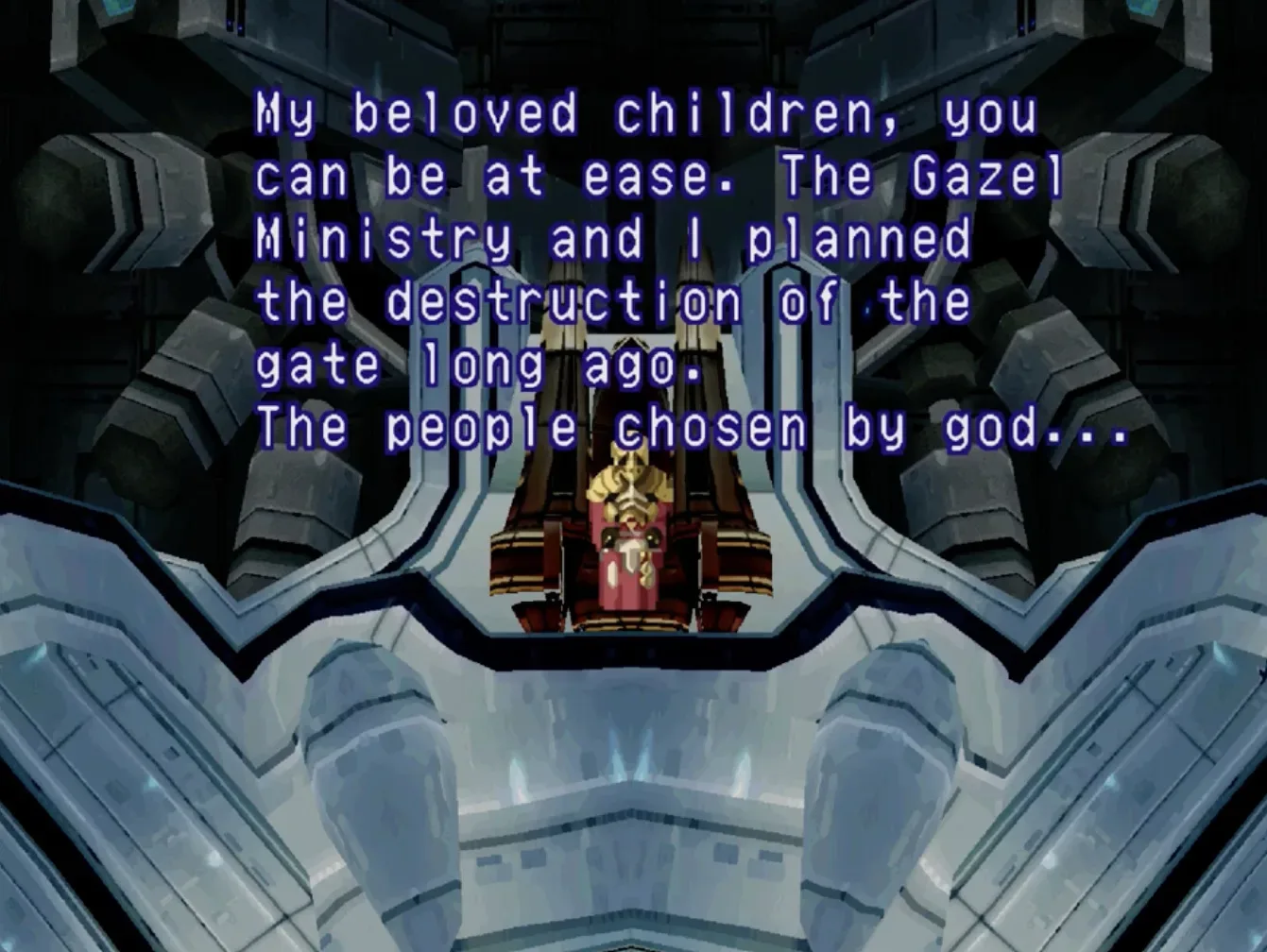
The Central Control Bureau also oversees marriage arrangements, making reproduction another resource managed for the state. During the Dedication ceremony, the Emperor presents himself as a paternal figure and addresses the population as his children. The combination is chillingly deliberate: government authority is offered as a replacement for family, individuality, and uncertainty.
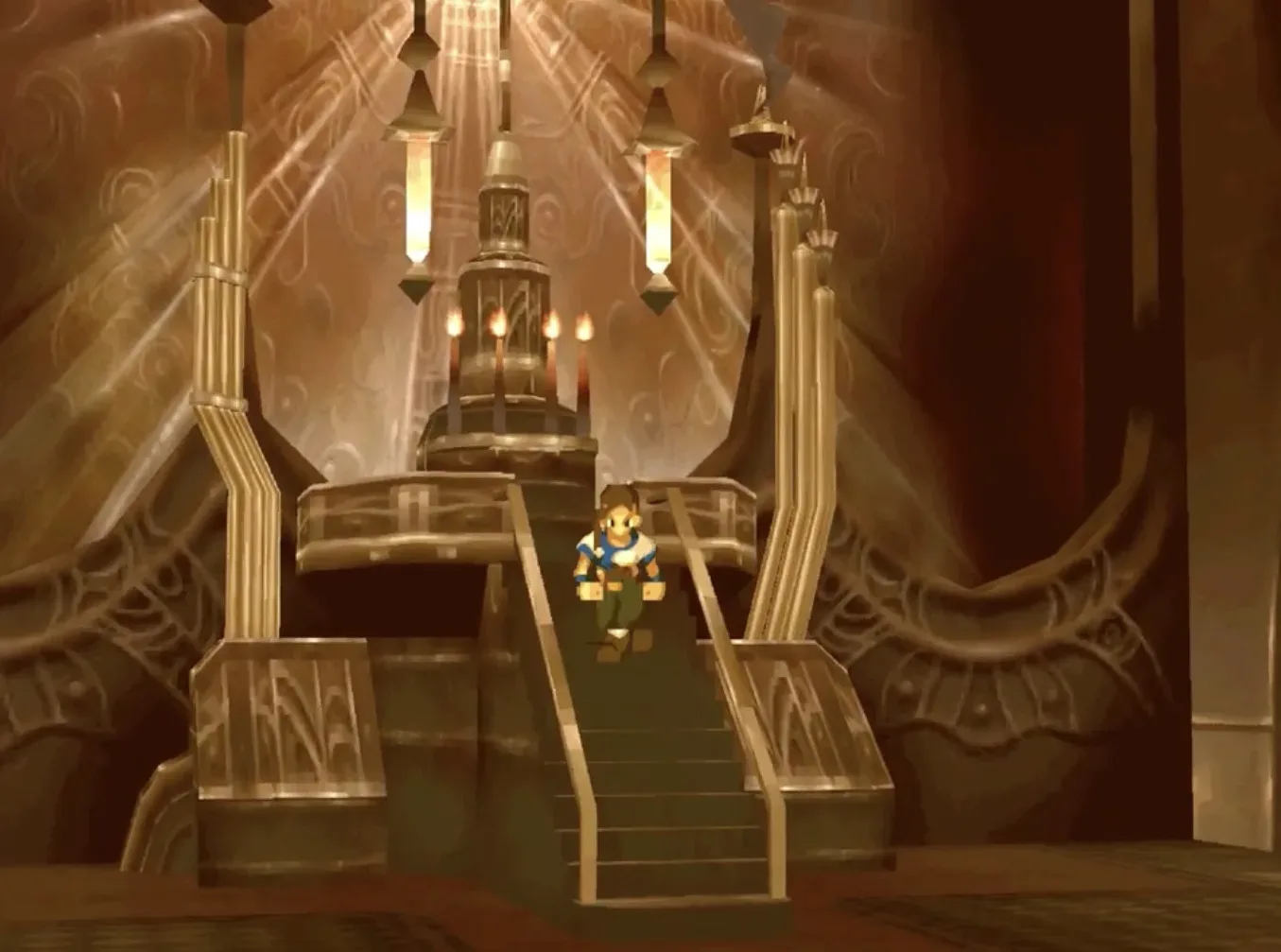
The celebration is staged after the destruction of the Surface Gates threatens Solaris’ secrecy. Instead of admitting instability, the Emperor recasts events as part of a triumphant plan, promises a glorious future, invokes Mahanon, and wraps the whole performance in military spectacle and fireworks. The city’s residents are not only being lied to. They are being given a grand occasion to participate in the lie.
Solaris understands that domination is easier when it can feel festive. National pride, contempt for the “lambs,” technological faith, religious language, and entertainment all become tools to keep the crowd invested in the system that confines it.
The Soylent System turns metaphor into nightmare
The chapter’s most notorious revelation arrives at the Soylent System. Fei, Elly, and Citan are searching for their captured companions when they find food supplies and eat. Soon afterward, they discover the facility’s actual function: human bodies and Wels are processed into food. The scene is deliberately revolting, yet Solaris makes the horror serve several functions at once.
The processed substance is not only sustenance. It includes chemicals intended to keep surface populations docile and maintain their Limiters. The facility also creates Wels through experimentation. In one cruel industrial loop, Solaris turns people into raw material, produces monsters, feeds its victims, and regulates their behavior. A society that boasts of stability has built that stability on an assembly line of dehumanization.
The name “Soylent System” plainly evokes Soylent Green, and the reference makes the reveal easy to anticipate for viewers familiar with that film. Even so, the sequence lands because Xenogears goes beyond a single shock. The important question is not simply what people are eating. It is how many layers of the city’s comfort depend on people never learning the answer.
Deep within the facility, the party encounters captives being transformed, the enormous Omnigear, and the Gazel Ministry’s plans. The Ministry exists as stored data after its physical destruction and seeks resurrection, using the world below as a disposable means toward a cosmic ambition. Save points, ordinarily among the most reassuring objects in an RPG, gain a darker implication here: data transmitted through Memory Cubes can be exploited by the hidden rulers.
It is a striking reversal of an ordinary game mechanic. Saving is usually a moment of control for the player. In Solaris, the act is folded into the machinery of control exerted over the characters.
Why the fall of Solaris matters
As revelations accelerate, Citan’s loyalties prove more complicated than they first seem, Krelian’s agenda diverges from the Ministry’s, and Fei’s buried identity becomes impossible to contain. The events involving Hammer, Elly’s parents, Grahf, Miang, and Weltall push Fei toward the release of Id. Solaris is ultimately destroyed, ending Disc 1 with a catastrophe that is both spectacular and horribly wasteful.
That destruction does not play as a simple victory. Solaris is oppressive, but it is also full of people shaped, frightened, and trapped by its structures. Its downfall exposes the failure of leaders who possessed extraordinary technology and chose extraction over cooperation. They regarded everyone else as components in a plan to regain godhood and return to the stars. Their belief in their own superiority ensured that their system could only manufacture resentment, terror, and eventual collapse.
The transition to Disc 2’s more text-heavy, visual-novel-like structure remains one of the game’s most discussed choices. The format shift came from a production constrained by time and budget, with Tetsuya Takahashi proposing the approach to complete the story rather than stopping at Solaris’ destruction. However uneven that transition may feel to different players, Disc 1 ends at a point of remarkable force: Fei’s personal fracture and Solaris’ political violence erupt together.
Solaris endures because it refuses to offer one easy reading. It can be understood through class, surveillance, religion, consumerism, data collection, psychology, Gnostic imagery, or the simple human temptation to exchange freedom for security. Its citizens are not portrayed as cartoonishly eager for cruelty; many have been taught that accepting the system is the only imaginable way to live.
That is the city’s lasting sting. Beneath the mechs, mysteries, and enormous mythology, Xenogears asks how easily people can be persuaded to call themselves individuals while living inside a structure designed to decide what they may know, desire, remember, and become.