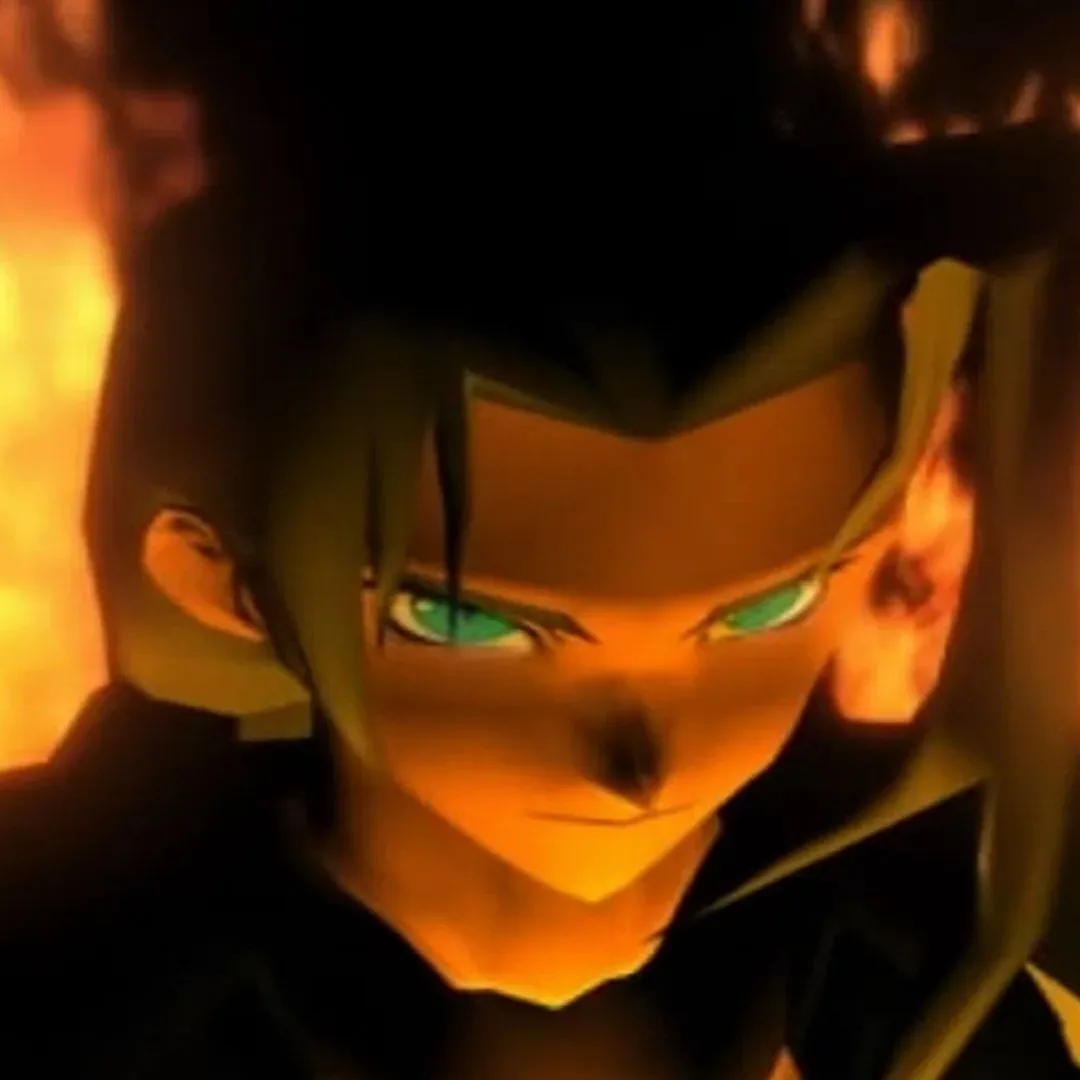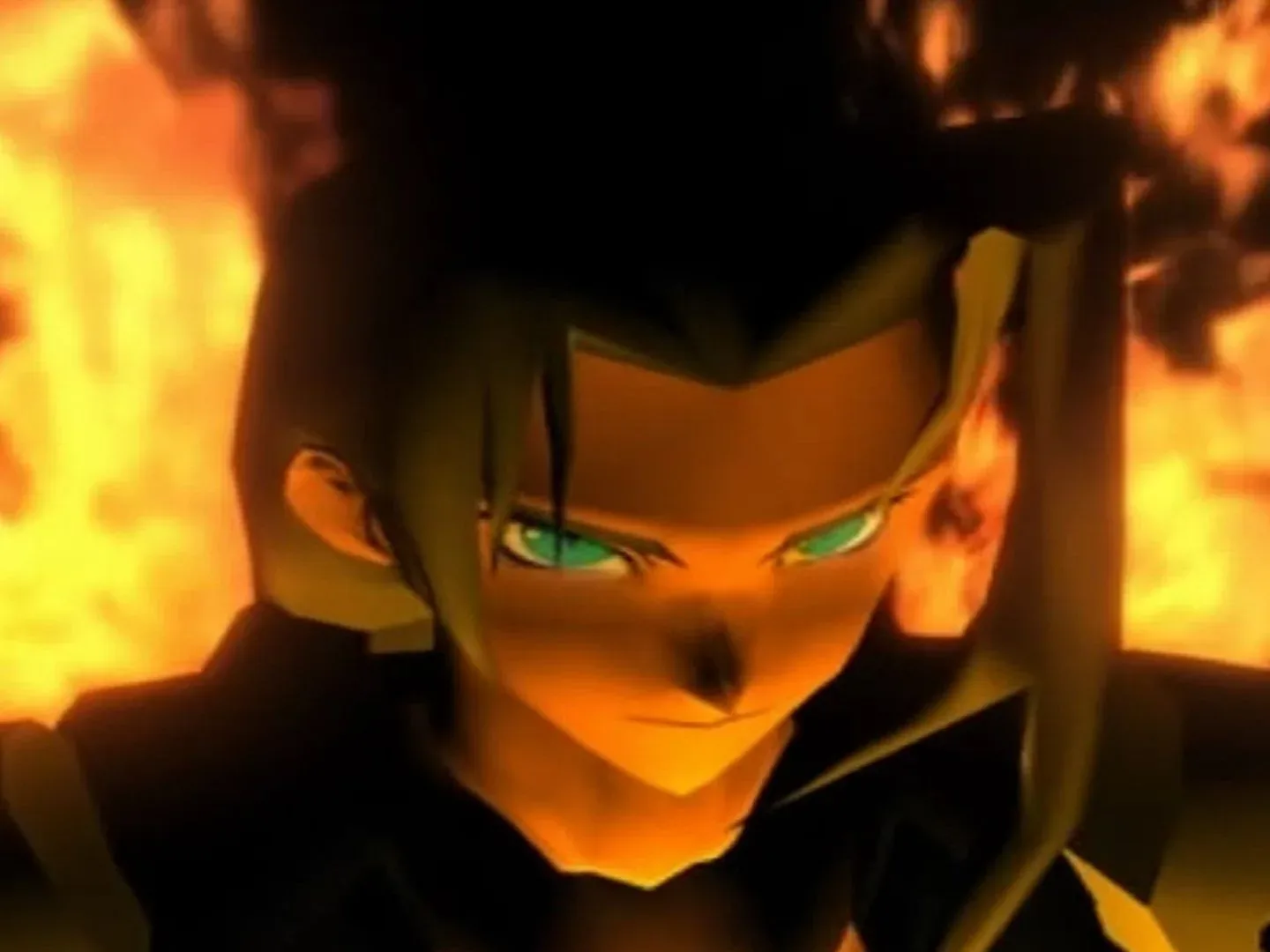
Nobuo Uematsu has offered an unusually blunt appraisal of a score that remains central to the identity of Final Fantasy VII. In Nobuo Uematsu: On The Record, the composer says that, beyond fan favorites such as “One-Winged Angel,” much of the game’s music is “boring” compared with his work on earlier Final Fantasy entries.
That line is tailor-made to start an argument among RPG fans. But the surrounding explanation makes it more interesting than a simple ranking of albums. Uematsu frames the relative restraint as an intentional response to a changing job. As games moved from the Famicom and Super Famicom era to the original PlayStation, their visuals could communicate far more by themselves. His music for Final Fantasy VII, then, was designed not to constantly seize the listener’s attention, but to leave room for the image, the scene and the player’s focus.
“Because of the improvements in the visuals, the music distracts from the gameplay if the melody is too catchy,” Uematsu says. “So I wrote music that doesn't impose on the focus for the story.” It is a provocative word choice—“boring” is hardly how fans usually describe this score—but it also identifies a fundamental tension in game composition: music must be memorable enough to establish a place or emotion, while being flexible enough to live beside repeated exploration, dialogue and action.
That distinction matters because a soundtrack can be excellent precisely because it is not demanding to be heard every second. In this reading, a cue that settles into a scene rather than dominating it has not failed. It is performing a different narrative function.
For more context, explore Silent Hill Townfall’s Zoe Ellis Turns Vulnerability Into Its Sharpest Horror.
From musical storyteller to visual partner
Uematsu contrasts Final Fantasy VII with the Famicom and Super Famicom games, saying their music had a more direct role in moving the story forward. With more limited visuals, the score could carry emotional and dramatic information the screen was less equipped to express on its own. A character theme, a threatening battle cue or a change in harmony could shoulder substantial storytelling work.
By Final Fantasy VII, Uematsu felt the visuals had become convincing enough that music needed to recede at times. He describes realizing that he was writing to enhance the visuals, an approach he says began with Final Fantasy VII and continued into Final Fantasy VIII.
This is not an argument that music suddenly became unimportant. It is an argument about hierarchy: which part of the game should command attention in a particular moment? A forceful melody can tell players what to feel with total clarity. A more restrained piece can create room for the environment and imagery to do their own work.
In practical terms, “not imposing” does not mean featureless. It can mean a track uses repetition, texture and a stable mood to make a location feel coherent without becoming an interruption. That is especially valuable in an RPG, where players may spend long stretches navigating spaces, entering menus or revisiting an area. Music has to survive repetition. A tune that is thrilling on its first pass can become exhausting if it insists on being the main event during every loop.
Why “Mako Reactor” illustrates the point
“Mako Reactor” is a useful example of the aesthetic Uematsu is describing. The track is associated with Shinra’s technology and its extraction of the planet’s life force. Its mood is ominous and industrial rather than openly melodic in the manner of a big character theme. It works through an uneasy, cyclical feel—less a song demanding applause than a persistent layer of atmosphere.
That atmosphere is not neutral background noise. The cue gives the setting weight. It suggests machinery, menace and environmental unease while allowing the game’s visual language to remain legible. The player can notice it closely, but does not have to do so in order for it to function. That is a particularly useful quality in interactive storytelling: the music rewards attention while continuing to support those who are concentrating on where to go or what comes next.
Calling such a track “boring” therefore depends on what listeners expect from a soundtrack. If the standard is a nonstop collection of instantly hummable centerpieces, a deliberately ambient or repetitive cue may feel modest. If the standard is whether the piece helps a scene retain a consistent emotional temperature, repetition becomes part of its strength.
There is also a difference between listening to a soundtrack away from the game and encountering it in context. An album listener may want constant shifts, strong hooks and standalone structure. A game composer has to consider scenes, loops and player agency. A track can be built for a room, a situation or a stretch of exploration rather than for the arc of a three-minute pop song. Neither approach is inherently superior, but they answer different needs.
“Boring” is not the same as unsuccessful
Uematsu’s criticism should not be flattened into a claim that Final Fantasy VII lacks memorable music. His own exception, “One-Winged Angel,” makes clear that the score still has major, attention-grabbing peaks. The broader point is that he sees the balance of the soundtrack as less commanding than his previous work—and, crucially, that he believes this was appropriate to the game’s technical and visual transition.
That creates a useful way to discuss game music without treating every score as a playlist competition. The highest-profile tracks often become a game’s musical public face, but they are only part of the score’s architecture. Location themes, transitional material and ominous environmental cues can be less conspicuous while still giving the world continuity. Remove them, and the dramatic themes may have less contrast or less place to land.
It is also revealing that Uematsu’s comments focus on the melody being “too catchy.” In everyday criticism, catchy is nearly always praise. In a game, though, catchiness can be a design problem if it repeatedly pulls attention away from dialogue, visual storytelling or gameplay. A composer may deliberately reserve the boldest melodic statements for moments that need a clear emotional underline. The restraint makes the exception feel larger when it arrives.
That logic does not require fans to agree with the composer’s personal evaluation. Many listeners will reasonably find the score’s synth-forward identity and atmospheric writing to be among its greatest qualities. A piece may be less overtly spectacular than an earlier work and still be more fitting for its setting. In fact, the disagreement points to a healthy divide between an artist’s evolving craft priorities and an audience’s attachment to the finished work.
PlayStation changed the palette, not just the pictures
The shift was not only visual. Uematsu’s work evolved across Final Fantasy VII, VIII and IX as the sound team became more familiar with the PlayStation’s capabilities. The later scores are described as more orchestral and more dynamic than VII, while the 1997 game retains a notably synth-heavy character.
Here, “orchestral” refers to music that leans more toward the colors and dramatic shape associated with an orchestra: broader instrumental contrasts, larger swells and a more expansive sense of movement. “Dynamic,” in this context, does not merely mean loud. It means a stronger range between quieter and more forceful passages, or more pronounced shifts in intensity and arrangement.
Final Fantasy VII’s synth-heavy flavor is not simply a limitation to be apologized for. It is part of the score’s personality. Synthetic textures can feel mechanical, uncanny, bright or abrasive in ways that suit a world defined by imposing technology and spiritual unease. The result has a distinct identity even beside later games whose music reaches for greater orchestral breadth.
That is why the composer’s self-critique lands as a fascinating craft note rather than a final verdict. It suggests he was listening for a different kind of achievement: music that leads the drama. Fans may be listening for another: music that makes Midgar, its systems and its tension feel inseparable from the game. Both evaluations can coexist.
The conversation also broadens an often-overlooked point about technical progress. Better hardware does not automatically mean music must become bigger, denser or more elaborate. It can mean the composer has new choices about when not to fill the space. As visual storytelling gains detail, a score may be asked to provide contrast, atmosphere and pacing rather than carrying every emotional signal on its own.
A useful lens for revisiting the score
For players revisiting Final Fantasy VII, Uematsu’s comments offer a different listening exercise. Instead of only waiting for the most celebrated melodies, pay attention to what the less showy tracks permit a scene to do. Do they establish a space quickly? Do they make repeated movement feel less empty? Do they suggest pressure, danger or melancholy without turning every moment into a climax?
Those questions do not turn the soundtrack into a homework assignment. They simply recognize that background music is often built to be experienced indirectly. Its success may be felt before it is consciously identified. And in a game that asks players to inhabit a world over many hours, that kind of unobtrusive consistency can be as important as the huge musical moments everyone remembers.
Uematsu may judge much of the score as less exciting than the music he wrote for earlier entries, but his explanation gives listeners a better reason to resist taking “boring” at face value. Final Fantasy VII was a turning point in how he understood music’s relationship to the image. The soundtrack’s restraint was not an absence of ideas; it was an idea about attention—when to guide it, when to leave it alone, and when to let a game’s newly expressive visuals speak.
For another perspective on the remarks and their focus on the score’s deliberate restraint, see this discussion of Uematsu’s comments.