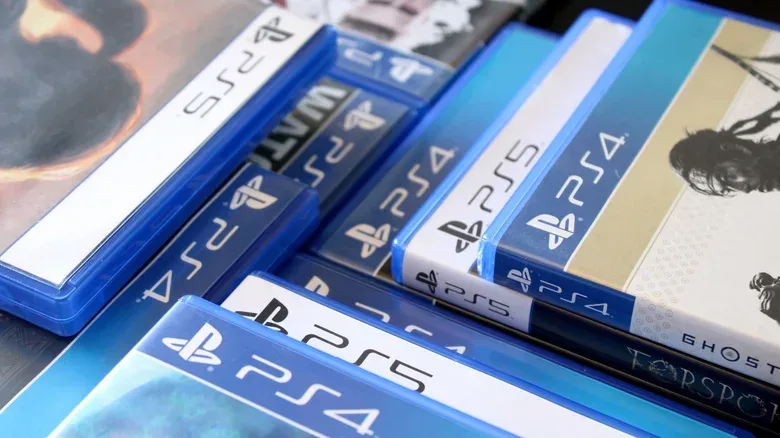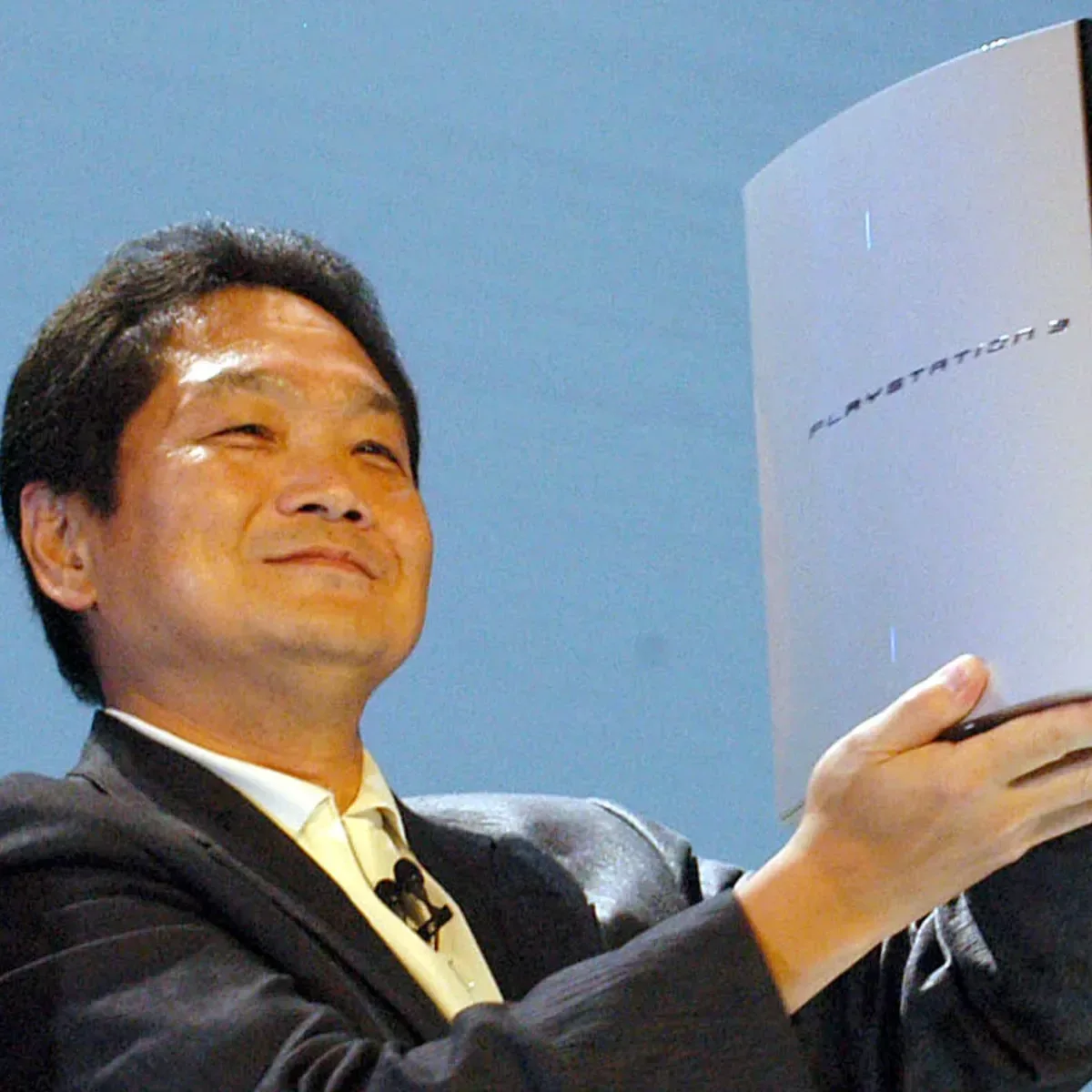
Ken Kutaragi, the engineer closely associated with the original PlayStation and the development of the PS2 and PS3, has weighed in on Sony’s planned move away from disc-based PlayStation games. His view lands in an awkward but revealing middle ground: he understands why players are upset, yet believes retaining physical discs is not economically sensible.
That position matters less because it signals Sony policy—Kutaragi left Sony in 2007 and now runs his own companies—than because it comes from a figure who helped define several eras of PlayStation hardware. He sees the shift as the consequence of an increasingly connected games business, while conceding that discs now mean something much larger to many players than a delivery format.
Sony said in July that it plans to stop making disc-based PlayStation games beginning in January 2028, pointing to players’ preference for digital purchases. The proposal has prompted sustained backlash, including an online petition that had exceeded 352,000 signatures by the time of Sony’s July 31 earnings call.
Discs are a format, but players see ownership
The heart of the argument is not simply whether a game arrives on a Blu-ray disc or as a download. It is what that purchase represents.
For more context, explore How Long Can an HDMI Cable Be for Gaming? Bandwidth, Black Screens and the Long-Run Fixes.
Kutaragi described physical games as having become a metaphor for owning games. That is a concise description of why the debate is so emotionally charged. A disc is tangible: it can be held, displayed, traded, lent, resold, or kept even after a console generation has passed. None of those outcomes automatically prove that a game will remain playable forever, but they give buyers an object that feels separate from a storefront account.
Digital distribution changes that relationship. A player generally accesses a purchase through an account, platform software, and a continuing permission to download or use the title. In legal and technical terms, that is typically a license: permission to use content under stated terms, rather than ownership of the intellectual property itself. The distinction is crucial because a license can be limited or revoked under certain conditions.
Sony made that distinction plainly in its response to a California federal class action in August, arguing that reasonable consumers understand digital downloads are licensed rather than owned and that those licenses may be revoked. That stance gives the anger over discs a sharper edge. For players, a physical release can represent a practical fallback and a cultural assurance that a purchase is not entirely dependent on a company’s future policies.
Related coverage includes Ken Kutaragi Backs Sony's Move Away From PS5 Discs, While Acknowledging Ownership Fears.
Kutaragi suggested resistance to a disc-free future may partly be a matter of mentality, comparing modern consoles with smartphones. His basic point is that widespread internet access has normalized receiving and retaining content digitally. The comparison explains the business direction, but it does not settle the ownership concern. Trust that a digital library will remain available is not the same thing as a contractual guarantee that every item will remain accessible indefinitely.
The sales figures behind Sony’s decision
The commercial case cited by Sony is stark. In the April-to-June quarter, digital downloads accounted for 82% of PS4 and PS5 full-game sales. Physical software generated ¥20.5 billion out of ¥526.6 billion in game-software revenue—less than 4% of that total.
Those numbers do not mean physical games have no audience. They do show why Sony may regard disc production, packaging, shipping, retail handling, and the infrastructure surrounding those processes as increasingly difficult to justify at scale. A business does not need every customer to prefer downloads before it changes course; it needs the remaining physical market to be small enough that maintaining the old system no longer looks proportionate to its costs or strategic goals.
During the July 31 earnings call, Sony CFO Lin Tao said the company would proceed cautiously despite strong player reactions. “Cautiously” is important here. It does not reverse the January 2028 plan, but it indicates Sony recognizes that the change touches more than revenue mix. It affects collectors, families that share games locally, players with limited or unreliable connectivity, and people who value an independent second-hand market.
There is also a difference between digital sales share and unanimous consumer preference. The first is a measurement of where purchases occurred. The second would require every buyer to view the loss of discs as acceptable. The petition and the continuing public argument demonstrate that those are not interchangeable ideas.
Why Kutaragi sees a different kind of PlayStation
Kutaragi’s comments point to a broader change in how PlayStation may be understood. He noted that Sony Interactive Entertainment has brought in people from Gaikai and other streaming businesses, and suggested the company may see PlayStation not only as a console but as a “content terminal.”
That phrase is useful because it describes a platform centered on access to content and online services rather than solely a dedicated machine reading locally purchased media. A content terminal, in this context, is a device through which games and other services are delivered, authenticated, updated, and potentially streamed. The concept does not mean every game is necessarily streamed. It does mean the network becomes much more central to the platform’s identity.
This is not a surprise to Kutaragi. He predicted as far back as 2006 that digital distribution would ultimately make discs unnecessary. His history with the PS2 and PS3 also informs his perspective: both machines had network features, but online connectivity was not used as widely as it is on contemporary consoles.
Analysis: Kutaragi’s position is best read as an explanation of the direction of travel, not a full answer to the objections. Digital-first platforms can be convenient and economically efficient while still creating anxiety around access, preservation, and the meaning of a purchase. Those propositions can coexist. The important policy question is whether a company can capture the efficiencies of digital delivery while giving buyers durable, understandable protections.
Former PlayStation leaders disagree on the remedy
Kutaragi is the third former PlayStation executive to publicly address the issue, and the three perspectives sketch out the range of the debate.
- Shuhei Yoshida, the former president of Sony’s Worldwide Studios, said in August that he is fully digital and does not see the loss of discs as a major problem.
- Shawn Layden, former chairman of Sony Worldwide Studios, called a disc-free PlayStation “depressing, but solvable.” His proposed route was licensing Sony’s disc-pressing process to outside manufacturers, in a model he compared with Xbox.
- Ken Kutaragi accepts the economic logic behind Sony’s direction but recognizes that physical media has become a stand-in for ownership.
The contrast is useful. Yoshida’s view treats the transition as a natural outcome of changed habits. Layden’s treats it as undesirable but potentially manageable if physical production moves beyond Sony itself. Kutaragi treats it as economically understandable while acknowledging that players are not merely mourning plastic cases and shelves.
Layden’s idea also highlights a practical distinction often lost in debates about “physical versus digital.” Ending Sony-made disc games would not necessarily answer every question about whether another party could manufacture, distribute, or support physical releases. But no such arrangement has been announced in the information available, so it should be treated as a suggestion rather than an established alternative.
Ownership has now reached Congress
The fight over digital purchases is also moving beyond the console market. On October 15, Representative Ritchie Torres of New York announced the Power to the Players Act. The measure would direct the Federal Trade Commission to create rules treating purchased games as owned rather than licensed.
The proposal would also require online games to receive an offline mode before their servers are shut down. That could be particularly significant for games whose key functions depend on remote servers. An offline mode is a version of a game that can operate without an active connection to the publisher’s servers; its scope could vary widely depending on how the game was designed.
For now, the proposal is not formally introduced, so it is not law and its final language is unknown. Still, its announcement shows how the argument prompted by PlayStation discs overlaps with a wider consumer-rights question: what should “buy” mean when software is delivered through an account and governed by continuing platform terms?
What players should watch before 2028
Sony’s stated timeline gives players time, but not certainty about the exact consequences of its policy. The most meaningful developments to watch are likely to be concrete implementation details rather than broad arguments about whether digital is the future.
- Whether Sony provides additional clarification about continued access to previously purchased digital games. The difference between being able to download a game now and knowing what protections apply later is central to consumer confidence.
- Whether any licensed third-party disc manufacturing plan emerges. Layden has presented this as a possible solution, but it remains only an idea unless Sony or another party adopts it.
- How Sony defines the scope of the 2028 change. A plan to stop making disc-based games is significant, but the practical details of platform support, distribution, and hardware remain essential.
- Whether the Power to the Players Act progresses into formal legislation. If introduced and advanced, it could bring the licensing-versus-ownership dispute into a regulatory setting.
The shift toward digital purchases is supported by Sony’s sales data, and Kutaragi’s comments show why company veterans may regard it as inevitable. Yet the reaction from players shows the issue cannot be reduced to a preference for one download method over another. Discs have come to embody permanence, control, and the ordinary expectation that paying for a game should leave the buyer with something dependable.
That expectation is the real challenge Sony must address as January 2028 approaches. The company’s numbers explain why the disc business is shrinking. They do not, by themselves, resolve what players should be able to count on after the box is gone.