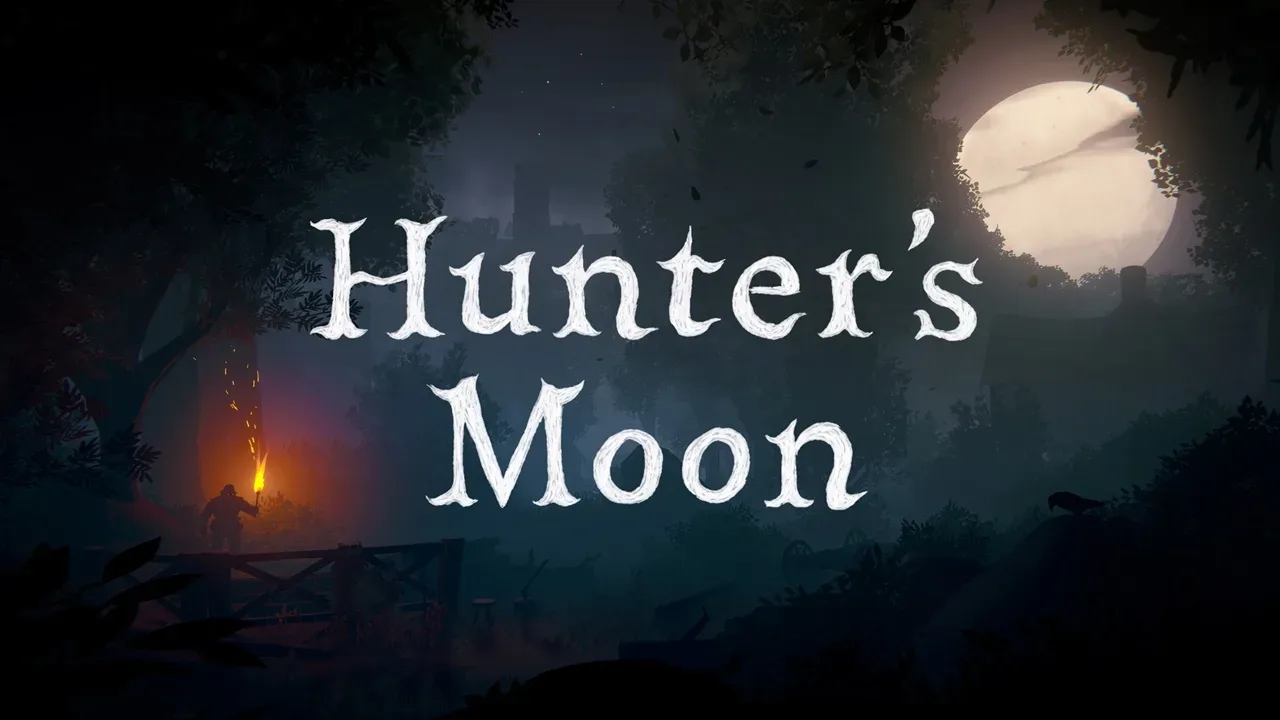
Twin Swans has revealed the extensive voice cast for Hunter’s Moon, its first-person historical narrative folk-horror game due exclusively for PlayStation 5 on October 26, 2026. The game has assembled 48 actors to portray more than 100 roles, an unusually broad roster for a story that unfolds across a single dangerous night in an Early Modern village.
At the center is Lilith Thorne, an accused “witch” fleeing for her life as the Witchfinder General pursues her through the night of the Hunter’s Moon. Hannah Morley voices Lilith, while Gregg Lowe plays the Witchfinder General. Anthony Howell and Joe Pitts also have featured roles as Anthony Talbot and John Purdy, respectively.
The cast news gives a clearer sense of the game’s ambition: this is not simply a tale built around one hunted protagonist and one pursuer. Villagers, families, religious figures, performers, and other local characters appear to make up the social fabric Lilith must navigate. Since players will eavesdrop on villagers to find information that helps their escape, the supporting performances are likely to be fundamental to both atmosphere and play.
A village full of voices
Hunter’s Moon is described as fully voice acted. In practical terms, that means spoken performances carry the narrative rather than only isolated cutscenes, narration, or a handful of key exchanges. With more than 100 roles shared among 48 actors, players should expect a populated soundscape built from named villagers and additional performances, rather than a setting limited to Lilith’s immediate allies and enemies.
The announced leads are:
- Hannah Morley as Lilith Thorne
- Gregg Lowe as the Witchfinder General
- Anthony Howell as Anthony Talbot
- Joe Pitts as John Purdy
- Laurence Bouvard as Mother Sontheil
- Kingsley Judd as the Singing Mummer
- Kymberley Cochrane as Mum Mummer
- Siu-See Hung as Little One
Several performers take on multiple named roles. Sophie McShera plays Maggie Kindreth and Isobel Blacke, while Kristin Atherton plays Miriam Kindreth and Thomasin Device. Lyn Paul is Nell Harsnep and Beatrix Knipe; Sarah Earnshaw is Katherine Crosthwaite and Dorothy Allerton; and Eleanor Kirby is Mary Crosthwaite and Annie Hawker.
The repeated family names are notable. The Talbots, Kindreths, Blackes, Crosthwaites, Allertons, Carpenters, Towers, Glovers, Goodales, Purdys, Hodges, Millers, and Ashburns collectively suggest a community structured through intersecting households. That does not establish how each family relates to Lilith or what role each has in the plot, but it does reinforce the premise that danger can come from familiar people close at hand—not solely from the official hunter chasing her.
Other announced multi-role performers include Ewan Bailey as Parson Benedict Whittaker and Ambrose Wiseman; Dan Parr as Henry Ashburn and Silas Creary; Mark Stanley as Thomas Carpenter and Victor Goodale; Danielle Phillips as Sissy Miller and Jannette Rutter; Neil Bell as Jacob Crosthwaite and Robert Carpenter; Alastair Parker as Richard Allerton and Edward Blacke; and Ben Hunter as Jack Marsh and James Hale.
Related coverage includes Hunter’s Moon Voice Cast Sets the Stage for PS5 Folk Horror.
What “interactive theatre” means here
Writer and director Alicia Contestabile has characterized the project as interactive theatre. In this context, the phrase points to a game focused on inhabiting a dramatic situation and moving through a live-feeling ensemble of characters, rather than treating the cast as incidental background.
The stated gameplay supports that framing. Lilith must evade witch hunters while listening to villagers, using what she learns to aid her escape. Eavesdropping is therefore more than a decorative audio feature: conversations may serve as the player’s route to understanding the village, its stories, and possible ways forward. It also creates a tension suited to the premise. Listening is useful, but Lilith is a person at risk in a community shaped by accusation and fear.
Contestabile’s stated creative aim is to place players in the perspective of an accused woman and examine how beliefs can motivate collective cruelty. The game’s concern is not merely the mythical image of a witch, but the conditions surrounding an accusation: family, friends, and neighbours can all become sources of peril when someone’s life is on the line.
“The witch is an eternally popular mythical figure,” Contestabile said, while emphasizing the historical origins that can be overlooked in modern depictions.
That focus distinguishes the announced setup from a power fantasy about wielding forbidden magic. Lilith is described as an accused witch and is on the run, while the immediate player objective is survival and escape. Whether the game presents anything supernatural as literal is not established by the available details. What is established is its interest in “magical thinking,” suspicion, and the human cost of persecution.
Folk horror and historical framing
Folk horror is a horror mode that draws tension from rural communities, local customs, old beliefs, and the unsettling relationship between a place and its people. Hunter’s Moon is explicitly inspired by both the tradition of folk horror and the true history of English witch hunts. Its setting is an Early Modern village, and its narrative takes place in a compressed, one-night timeframe.
The period framing matters because it places the story’s threat within a social order rather than presenting it as an isolated monster encounter. A Witchfinder General represents organized pursuit, while villagers and their tales provide the everyday layer of the world Lilith has to read carefully. The announced cast includes a parson, mummers, a pedlar, and numerous village households, all of which fits a drama intended to make a community itself feel present.
The term mummer generally refers to a performer associated with traditional folk plays and masked or costumed performance. Here, the game includes a Singing Mummer, Mum Mummer, and Pedlar Mummer among its named roles. Their exact function in the story has not been detailed, but their inclusion is consistent with the folk-oriented texture the game is pursuing.
Resina is composing the original score. Music can do a great deal of structural work in a first-person horror game—signaling pursuit, uncertainty, or the shift from a seemingly ordinary conversation to immediate danger—but no details have been announced about the score’s sound, tracks, or implementation. For now, the firm takeaway is that the game has an original score alongside its large spoken cast.
The full announced ensemble
Beyond the leading names, the game’s credited performers and roles are:
- Gabriel Paul as Pedlar Mummer and additional roles
- Matt Stokoe as Abel Towers and additional roles
- Fenella Norman as Ma Mallory and additional roles
- Michelle Fox as Alice o’ the Woods and additional roles
- Martine Brown as Nan Harsnep and additional roles
- Luci Fish as Ellen Ashburn and additional roles
- Claire Cooper as Janie Goodale and additional roles
- Amy Forrest as Margery Towers and additional roles
- Isobel Steele as Cicely Glover and additional roles
- Frazer Hadfield as Billy Allerton and additional roles
- Christopher York as Eddie Sadler, Bryan Goodale, and additional roles
- Danielle Steers as Madam Whittle and additional roles
- Jennifer Daley as Grace Kirkby and Jellian Hodges
- Emily-Mae as Bess Hodges and Nessie Lambe
- Leah Brotherhead as Peggy Purdy and additional roles
- Iona Champain as Mary Phillips and additional roles
- Alasdair Linn as George Towers and Edmund Glover
- Harriet Carmichael as Jeremiah Allerton, Maude Blacke, and Rachel Towers
- Claire Morgan as Samson Allerton and Isaac Towers
- Clare Louise Connolly as Mercy Towers and Amy Blacke
- Eleanor Bennett as Jane Blacke and additional roles
- Shannon Rewcroft as Patience Towers and additional roles
- Samuel Barnett as Roland Glover and additional roles
- Jacob Dudman as Christopher Talbot and additional roles
- Charlotte Bellamy as Margaret Carpenter and additional roles
- Sarah Belcher as Ailis Sinclair and additional roles
- Laura Elsworthy as Frances Miller and additional roles
- Natalie Anderson as Elisabeth Glover and additional roles
What PS5 players can expect—and what remains unknown
The specific confirmed ingredients are a first-person perspective, a historical narrative, folk-horror influences, an Early Modern village, evasion of witch hunters, and information-gathering through eavesdropping. The full voice cast supports the idea of a densely characterized environment in which paying attention to people’s words will matter.
However, several practical details have not been outlined. There is no confirmed game length, price, performance information, accessibility feature list, age rating, or description of difficulty options. There is also no stated release for PC, Xbox, or Nintendo platforms; the announced launch is exclusive to PS5.
Players looking for a different kind of low-conflict game may also want to keep an eye on MAFATE’s no-combat mail-route demo, though its premise and platform are separate from Hunter’s Moon. Hunter’s Moon, by contrast, frames tension around pursuit, suspicion, and escape.
For Hunter’s Moon, the central promise is clear: a one-night folk-horror flight through a village where the voices around Lilith are part of the threat, the story, and potentially the path out. Twin Swans’ large casting reveal gives that promise a more concrete shape ahead of the October 26 PS5 release.