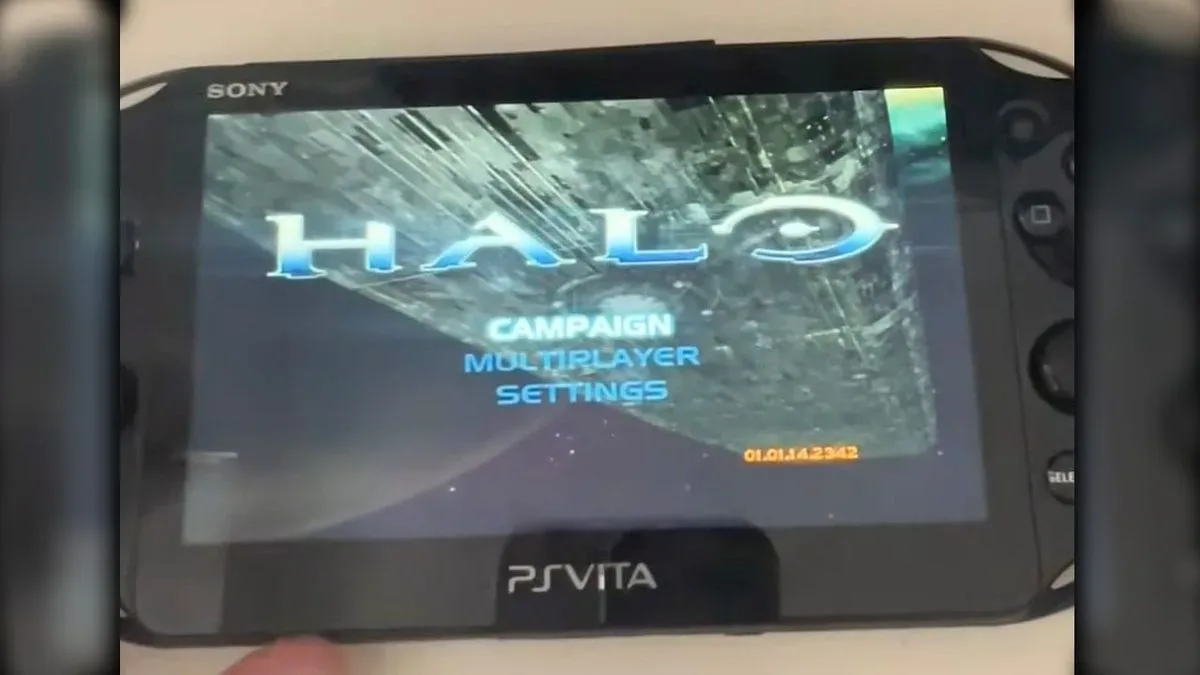
A PS Vita build of Halo: Combat Evolved Recomp has surfaced in an early work-in-progress video, offering a tantalising but extremely limited glimpse of the project. Shared by developer Isidro, the footage shows the game booting on Sony’s handheld, reaching its title screen and navigating selection menus. It does not show in-game action, performance, controls, sound, or a finished release build.
That distinction matters. The clip is promising evidence that the project can start and present its interface on Vita hardware, but it is not yet proof of a complete playable campaign. For now, this is a technical milestone rather than a recommendation, launch, or finished port.
What the PS Vita footage actually confirms
The available video establishes a short list of things the current build can do:
- Boot on a PS Vita.
- Display the Halo: Combat Evolved title screen.
- Reach selection screens and menus.
That is all that has been publicly demonstrated. No gameplay footage has been shown, and no detailed project page has been made available to explain the state of campaign loading, level rendering, inputs, stability, compatibility, installation requirements, or eventual distribution. Anyone watching the clip should treat it as an early progress update, not a benchmark for how the final project might run.
Early demonstrations often focus on the most visible signs of progress: successful startup, graphics initialisation and menu navigation. Those are meaningful hurdles, especially on a different hardware target, but they leave plenty of unanswered questions. A game can reach a front end before every part required for moment-to-moment play is ready. In this case, the absence of gameplay makes caution especially important.
What “Recomp” means in this context
“Recomp” is short for recompilation. In game-preservation and homebrew conversations, the term commonly refers to work that aims to make software operate on a platform it was not originally built for. The technical route can vary from project to project, and the footage does not provide enough detail to describe the exact approach used for this Vita effort.
It is therefore best not to assume this is a conventional commercial port, an emulation setup, or a completed native version. Those are different technical concepts with different implications:
- Port: software adapted to run on a different target platform.
- Emulation: one system reproducing the behaviour of another system so software designed for the original can run.
- Recompilation: code or reconstructed program logic being adapted or rebuilt for a new architecture.
The label attached to a project can be useful shorthand, but the implementation details matter. Until Isidro or other contributors publish documentation, the exact technical makeup of this build—and what users may eventually need to supply themselves—remains unconfirmed.
Related coverage includes Halo: Combat Evolved Recomp Boots on PS Vita in Early Work-in-Progress Demo.
That uncertainty also applies to any assessment of how practical the project could become. Seeing a title screen on Vita is a genuinely interesting achievement; it does not automatically answer whether the entire game can be supported in a stable and enjoyable state on the handheld.
Why the Vita angle is notable
The PS Vita remains a compelling machine for handheld-focused technical projects, and a build associated with the original Halo: Combat Evolved is naturally going to draw attention. The game’s legacy and its straightforward first-person format make the prospect of a portable version easy to understand, even if the public evidence is currently limited to menus.
This is also the kind of project where expectations can race ahead of the build. A clip can rapidly become framed as “Halo on Vita,” a phrase that sounds definitive. A more accurate description is narrower: an early Halo: Combat Evolved Recomp build has been shown booting into title and selection screens on a PS Vita. The difference may feel fussy, but it protects players from mistaking a development snapshot for a downloadable, fully functioning game.
The broader appeal is clear, though. Handheld projects invite a different kind of curiosity than a standard PC release. They are as much about seeing what a device can accommodate as they are about revisiting a game. A successful version would be notable for the Vita community and for preservation-minded fans interested in keeping older hardware active through new software experiments.
AI questions remain unanswered
The project arrives amid growing discussion about AI-assisted coding and the role such tools may play in fan-made technical work. In this instance, there is no confirmed public accounting of whether AI tools were used, how they may have been used, or who contributed to the project. It would be premature to describe the work as AI-made, AI-assisted, or entirely hand-coded.
That information may emerge through a repository or a project page, but none has been established here. The useful standard is simple: credit and process should follow evidence, not assumptions based on the speed of development or the project’s visibility online.
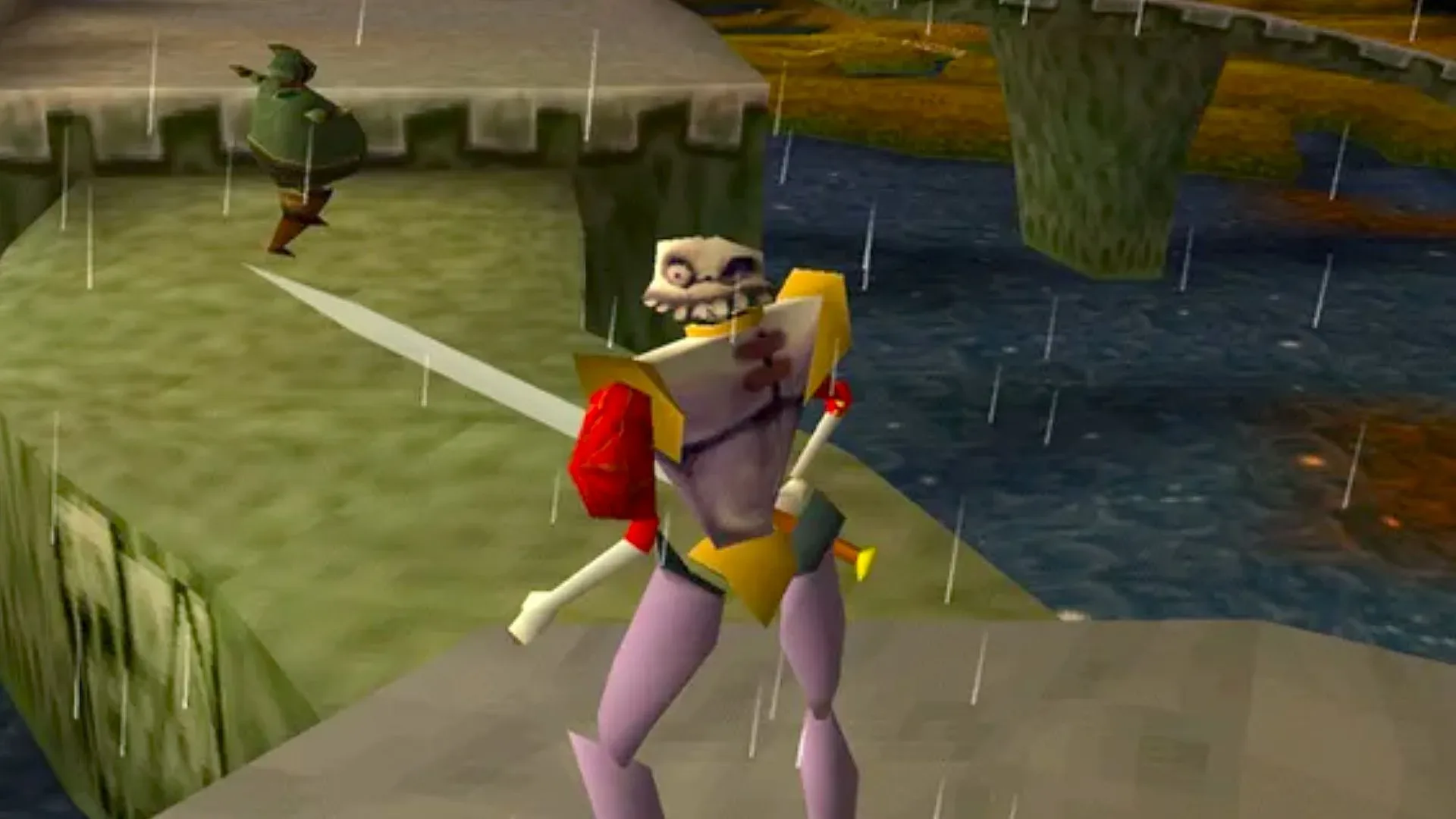
For readers interested in the wider discussion around recompilation projects and explicit positions on generative AI, our coverage of the MediEvil Recomp beta and its human-made stance on GenAI provides useful context. That project’s stated approach should not be projected onto the Vita Halo effort, however; each team’s methods and disclosures stand on their own.
What to watch for next
The next meaningful update will be gameplay. Footage of a level running would give viewers a better basis for evaluating the project’s direction, though even then a work-in-progress build could change substantially. Beyond that, the most useful information would be a clear technical overview from the people involved.
Details still needed
- Whether the build can load and play through campaign content.
- How controls are mapped on the Vita.
- Whether audio, saving and other core systems work.
- What performance and stability are like in actual gameplay.
- Who has contributed and what tools or methods were used.
- Whether a public release is planned and, if so, what requirements it may have.
Until those questions have answers, the sensible position is optimism with a foot on the brake. The boot sequence and menus are a credible early sign of life, not a declaration that the original Halo campaign is ready to carry around on Sony’s handheld.
Interest in portable versions of the game is clearly not limited to Vita. Separate efforts have also put Halo: Combat Evolved on Nintendo 3DS and in a browser-based format. The Vita footage belongs to that broader wave of experiments, but it should be judged only by what has been shown: a work-in-progress Recomp build that reaches the front end, with its gameplay future still to be demonstrated.