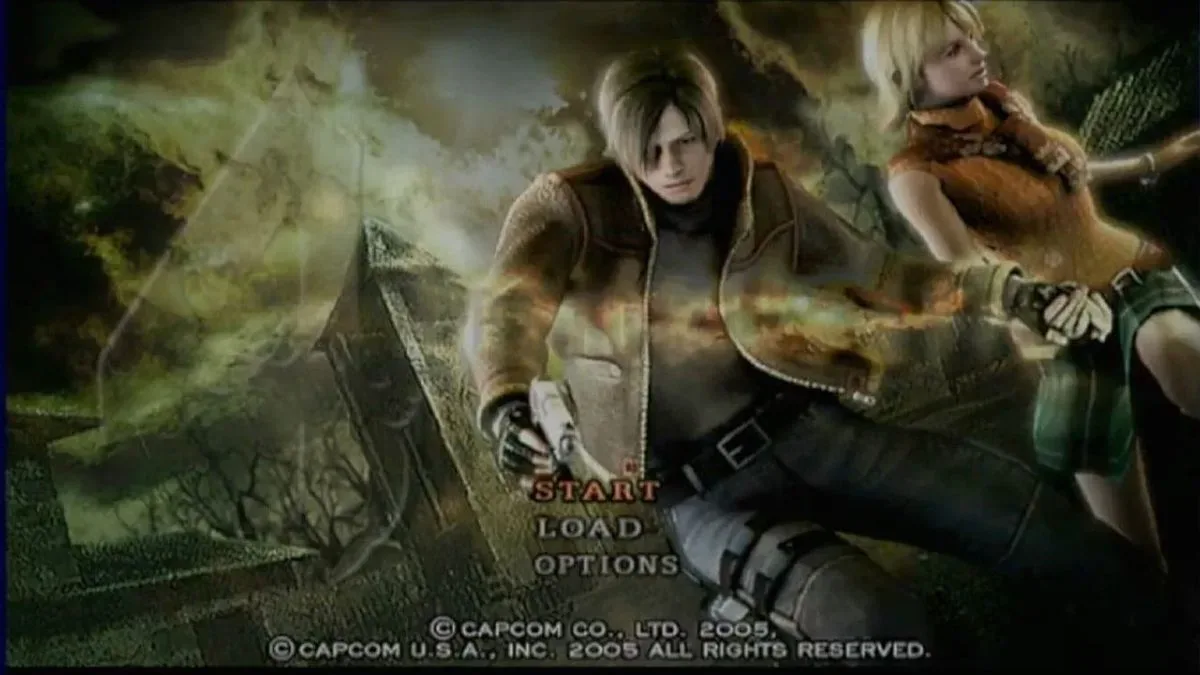
The PS Vita’s afterlife is getting another distinctly undead jolt. Developer Alessio Tosto, better known online as Rinnegatamante, is working on a port of the GameCube version of Resident Evil 4 for Sony’s handheld, while also bringing Game Boy Advance spin-off Resident Evil Gaiden to the same system.
The two projects are very different in scale. Resident Evil 4 is the more ambitious undertaking and has only been publicly shown in teaser form so far. Tosto has stressed that the immediate goal is to get the game functioning, with visual-glitch fixes and optimization to follow. He has also indicated that the build being used contains debugging material that may need to be removed before performance can be pushed toward full speed.
That makes this a project to watch rather than a finished Vita release to download today. The teaser demonstrates direction and momentum, but it does not establish that every section, feature, or performance target has been completed. For anyone following handheld homebrew, that distinction is important: early footage can be encouraging without representing a final build.
Why the GameCube version matters
The target here is specifically the GameCube version of Resident Evil 4, not a newly made Vita edition. That is a meaningful technical and preservation-minded choice. A port project generally aims to make an existing game run on hardware it was not originally built to support; it is not automatically a remaster, remake, or official reissue.
The proposed Vita version is therefore notable because it attempts to bring a substantial GameCube-era game to a much smaller handheld platform. The work described so far points to a staged process: establish functionality first, correct visual problems second, then optimize. That order is sensible in practical terms. There is little value in chasing smooth performance before the program is reliably running and drawing the right things in the right places.
Optimization is the umbrella term for improving how efficiently software uses a device’s processing power and memory. In a game port, that can mean reducing bottlenecks, removing unnecessary overhead, and addressing code or assets that are not appropriate for the target machine. It does not simply mean making graphics prettier. In this case, the stated goal is performance, including the possibility of reaching full speed.
Visual glitches, meanwhile, are errors in what the player sees: geometry, textures, lighting, interface elements, or other on-screen components can display incorrectly. The available information does not identify which specific issues affect this build, so it would be premature to assume what needs repair. The important point is that the developer has openly placed those fixes after core functionality.
A debug build can add another hurdle
Tosto has described the Resident Evil 4 build as a debug build and suggested that extra debug-related bloat may need to be stripped out. A debug build is a version of software prepared with development and troubleshooting in mind. Such builds can include additional diagnostics or material useful during testing rather than for an end user.
Related coverage includes Resident Evil 4 and Gaiden Are Being Brought to PS Vita.
In plain language, “bloat” here refers to extra weight or overhead that is not essential to playing the finished game. Removing it can be part of making software better suited to constrained hardware. It is not a guarantee of a particular result, however. The developer’s phrasing remains appropriately conditional: full speed is considered possible, not promised.
That caution should frame expectations around the project. A teaser and a technical roadmap are not the same as a release date, compatibility list, or claim of complete accuracy. There is no stated timetable in the information available, and no reason to treat the Vita port as finished until its developer says it is.
Resident Evil Gaiden has a more defined feature set
While the Resident Evil 4 project has attracted attention for its scope, Resident Evil Gaiden has a clearer list of planned or available Vita-side enhancements. The Game Boy Advance title is being handled as a native recompilation, with widescreen support, item sparkles, an ambient flashlight, save states, cheats, and texture and music packs mentioned for the project.
Native recompilation, often shortened to “native recomp,” refers broadly to adapting software so it can run directly on the target hardware rather than relying on conventional emulation. The term can cover complicated technical work, but the player-facing implication is straightforward: the project is designed around Vita execution and can make room for additions beyond an untouched original presentation.
Those additions are worth separating by purpose:
- Widescreen changes the display presentation to use a broader image area than the original game’s standard framing.
- Item sparkles are visual cues intended to make objects of interest easier to spot.
- An ambient flashlight adds a lighting-related aid or effect to the game’s presentation.
- Save states allow players to preserve a game’s exact current state, rather than depending only on the game’s original save system.
- Cheats are optional modifiers that can alter play conditions.
- Texture and music packs provide ways to change visual and audio assets.
For a game originally made for Game Boy Advance, these features suggest an effort that goes beyond merely placing the original software on a different screen. They also give players choices that may matter more on a modern handheld: broader presentation, clearer object visibility, flexible saving, and the ability to customize parts of the audiovisual experience.
There is an important boundary, though. Enhancements are not evidence that every player will prefer them. Widescreen, item indicators, cheats, and replacement asset packs can all change the feel of an original game. Their value lies in giving Vita users options, not in replacing the original presentation as the only valid way to play.
AI assistance is part of the conversation
The projects have also prompted discussion because Tosto’s website indicates the use of AI assistance in his porting work. The available material does not specify how much AI contributed to either Resident Evil 4 or Resident Evil Gaiden. Other listings reportedly use labels such as “No AI” and “vibecoded,” which indicates that approaches can vary between projects, but it does not provide a precise breakdown for these two Resident Evil efforts.
That uncertainty matters. “AI-assisted” is a broad label and, without details, it does not tell players which tasks involved a tool, how much code was affected, how development decisions were made, or how much conventional engineering was required. It should not be inflated into a claim that AI created the ports wholesale. Equally, the disclosure means the subject is fair game for users who want clearer boundaries around how fan projects are produced.
Vibecoding is a loose contemporary term typically used for developing software through high-level prompts and iterative AI-generated output, rather than writing every part conventionally by hand. It is not a standardized technical certification. Its appearance as a label on some projects should be treated as an informal description, not a detailed account of a project’s codebase or quality.
For the Vita community, the practical question is likely to be less philosophical: do the projects work well, are they maintained, and are their features communicated clearly? The answer for Resident Evil 4 cannot be settled yet, because the port is still in the functionality-and-optimization phase. Resident Evil Gaiden, by contrast, has a more concrete feature outline for players to evaluate.
What Vita owners should take from this
There are two reasons to keep these projects distinct. First, the games come from different original platforms and have different technical ambitions. Second, their current public status is different. The Resident Evil 4 work is an early, high-profile effort whose remaining steps explicitly include fixes, cleanup, and performance work. Resident Evil Gaiden is a native recompilation project with its Vita-specific extras already identified.
Neither project should be confused with an official Sony or Capcom release. They are independent porting efforts associated with Tosto. That status carries normal homebrew caveats: development can change, features can evolve, and no official support should be presumed from the information available.
Still, the pairing is an intriguing one for a handheld that continues to attract technical community projects. One effort aims at a demanding GameCube conversion; the other focuses on expanding the usability and customization of a Game Boy Advance entry. For related Resident Evil discussion beyond games, see our ranking of the Resident Evil film franchise.
For now, the sensible expectation is simple: watch the Resident Evil 4 Vita project for further proof of compatibility and speed, and view Resident Evil Gaiden as the project with the more clearly described set of handheld-oriented additions. The Vita may be the setting, but the real story is the work still required to make these two very different Resident Evil games fit it properly.