Zach Cregger’s Resident Evil film appears to have done more than bring the survival-horror series to theaters: it has sent players back toward Capcom’s games. Sales estimates for the week after the movie’s arrival show a substantial lift for Resident Evil 2 Remake and Resident Evil 4 (2023) on PlayStation 5, while active-player figures climbed across several major entries.
That is an encouraging result for a franchise adaptation, and especially notable because the movie reportedly runs parallel to the events of Resident Evil 2 Remake rather than serving as a direct retelling of the games. Still, the strongest reading of the data is not simply “movie equals sales.” Capcom discounted the relevant games roughly 10 days before the film reached theaters, creating an important overlap between a promotional price cut and a burst of movie-driven attention.
The upshot is more interesting than a single-cause victory lap. The film may have renewed interest and given lapsed fans a reason to revisit Raccoon City, while the sale gave curious newcomers an easier route in. Those forces can work together without being interchangeable.
The reported sales jump on PS5
For the week following the film’s theatrical debut, estimates put PS5 sales of Resident Evil 2 Remake up 64%, while Resident Evil 4 (2023) rose 54%. Adding Steam performance into the comparison increased those gains by a further 11% for RE2 and 14% for RE4, respectively.
Revenue on PlayStation was estimated to rise even more sharply: 80% for Resident Evil 2 Remake and 84% for Resident Evil 4 (2023). Revenue and unit sales are related but distinct measurements. Unit sales concern copies sold; revenue refers to the money generated by those purchases. A discount normally lowers the price per copy, so a major revenue increase alongside a sale signals that demand rose materially enough to outweigh at least some of the lower-price effect. It does not, by itself, separate movie interest from deal-seeking behavior.
That qualification matters. A well-timed discount can create a sales spike even without a screen adaptation. Conversely, marketing around a successful film can make a discounted game much more attractive than it would have been on price alone. The timing here supports a connection between the movie and the games, but does not offer a clean experiment in which all other factors disappeared.
Player activity offers a second signal
The more persuasive part of the reported pattern is that it was not confined to purchases. Daily active users across multiple Resident Evil games rose after September 18. Resident Evil 2 Remake recorded the largest increase, jumping 48% from approximately 78,000 daily players to approximately 116,000.
Daily active users, often shortened to DAU, is a measure of how many people use or play a product in a given day. It is not identical to sales: a returning owner who starts a new campaign helps the activity total without buying another copy, while a purchaser who does not begin playing immediately may not show up in it. That distinction makes the activity lift useful context. It suggests that attention around the film coincided with people actually returning to the games, not only adding discounted copies to digital libraries.
Related coverage includes Resident Evil Film Sends RE2 and RE4 Remake Sales Climbing on PS5.
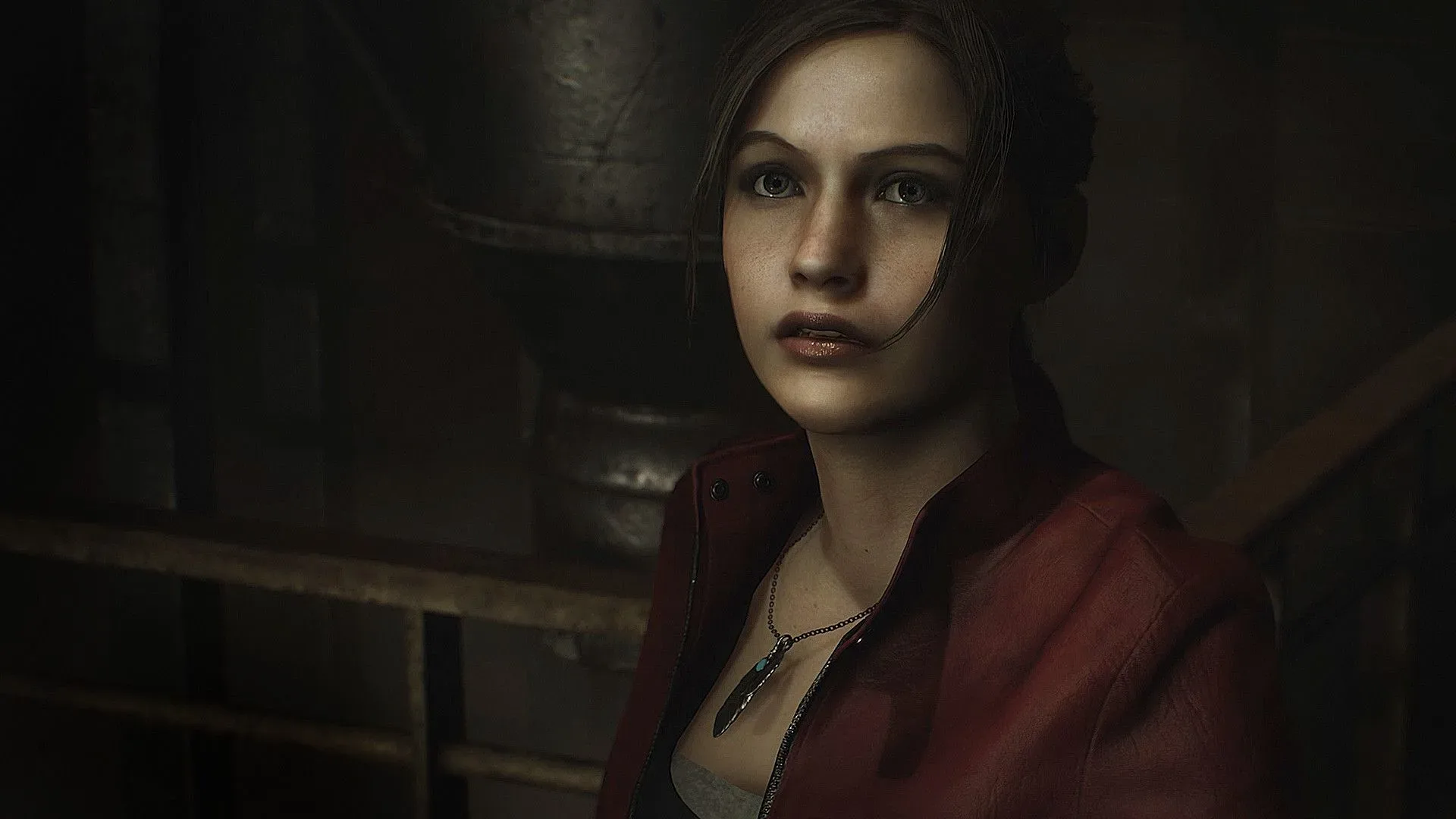
The movie’s parallel setting alongside RE2 gives the game an understandable advantage. A viewer interested in exploring the adjacent game story has an obvious destination. The title’s 48% activity gain therefore fits the broader pattern, though it should still be treated as correlation rather than proof that every additional player came from the cinema.
The ripple extended beyond that one game. Resident Evil 4 (2023) reportedly gained 24% more players, Resident Evil 3 Remake rose 25%, and Resident Evil Requiem increased 20%. That spread suggests a franchise-level effect: a new movie can prompt audiences to sample the most visible recent releases, revisit installed favorites, or follow connections between games.
Why the discount caveat should not be ignored
Attribution is the central challenge in reading entertainment-sales data. The games were price-reduced shortly before the film’s release, and deep discounts were said to account for much of the momentum before the theatrical launch. A sale changes the buyer calculation immediately. Someone who had been mildly interested in a remake can move from “maybe later” to a purchase when a familiar franchise is on sale; an active film campaign can make that same purchase feel timely.
There is also no reason to force an either-or answer. Price promotions are often designed to meet a cultural moment. In this case, the film created a fresh reason to care about Resident Evil, while discounted games lowered the barrier to acting on that interest. The rise in active users after September 18 is compatible with the idea that the film converted awareness into engagement, but it cannot precisely measure how much credit belongs to the movie, the discounts, or their combination.
For players, the practical lesson is simple: the games drawing the largest interest are not arbitrary picks. Resident Evil 2 Remake is the clearest companion for audiences intrigued by a film set parallel to its events. Resident Evil 3 Remake may appeal to those wanting to remain in the same broader setting, while Resident Evil 4 (2023) is a separate major remake that has benefited from the renewed attention. Buyers should nevertheless check the current storefront price rather than assuming the reported promotional pricing remains available.
Requiem’s larger commercial context
The post-film activity rise arrived while Resident Evil Requiem was already a significant business driver. The game recently passed $500 million in lifetime revenue, with 91% of its sales across PlayStation and Steam. It also helped drive PlayStation and PC game sales in Japan during the first half of 2026, where sales increased 13% to 21 million copies.
Those figures place the movie bump in a wider picture: this is a franchise with several active entry points, not one reliant on a single title. A theatrical release can direct viewers toward an older remake; a current game can sustain platform demand; and discounts can give each of those paths added force. The commercial advantage lies in having an accessible catalog ready when attention peaks.
Capcom’s near-term slate further reinforces that sense of momentum. A Code Veronica remake is on the horizon, while Onimusha: Way of the Sword and Pragmata have also been well received this year. For Resident Evil specifically, the key takeaway is not that one film has solved the perennial adaptation debate. It is that a movie taking a less literal route can still spark substantial curiosity about the interactive works around it.
A franchise halo, not a verdict on adaptation
The film’s performance and the subsequent game metrics point to what is often called a halo effect: heightened attention around one product benefits related products under the same brand. In this case, the halo appears visible in purchases, revenue estimates, and active-player growth. The size of the effect varies by title, with Resident Evil 2 Remake receiving the clearest lift.
It would be a mistake, however, to interpret the numbers as a final judgment on whether every fan prefers an adaptation that diverges from game events. Sales data records behavior at scale, not the exact reasons behind each purchase or every viewer’s opinion. What it does show is that a successful new screen entry can coexist with, and apparently direct audiences toward, the games that inspired its world.
For Capcom, the most valuable result may be that renewed interest is reaching both catalog remakes and newer releases. For players, it means an unusually visible moment for a long-running horror series with multiple ways in. And for the broader games business, it is another reminder that adaptations are strongest as bridges: they work best when curiosity on one side has somewhere worthwhile to go on the other. That wider relationship between a major game release and its lasting commercial shadow has also been visible in Cyberpunk 2077’s ongoing discussion around Phantom Liberty’s sales, though the circumstances are different.