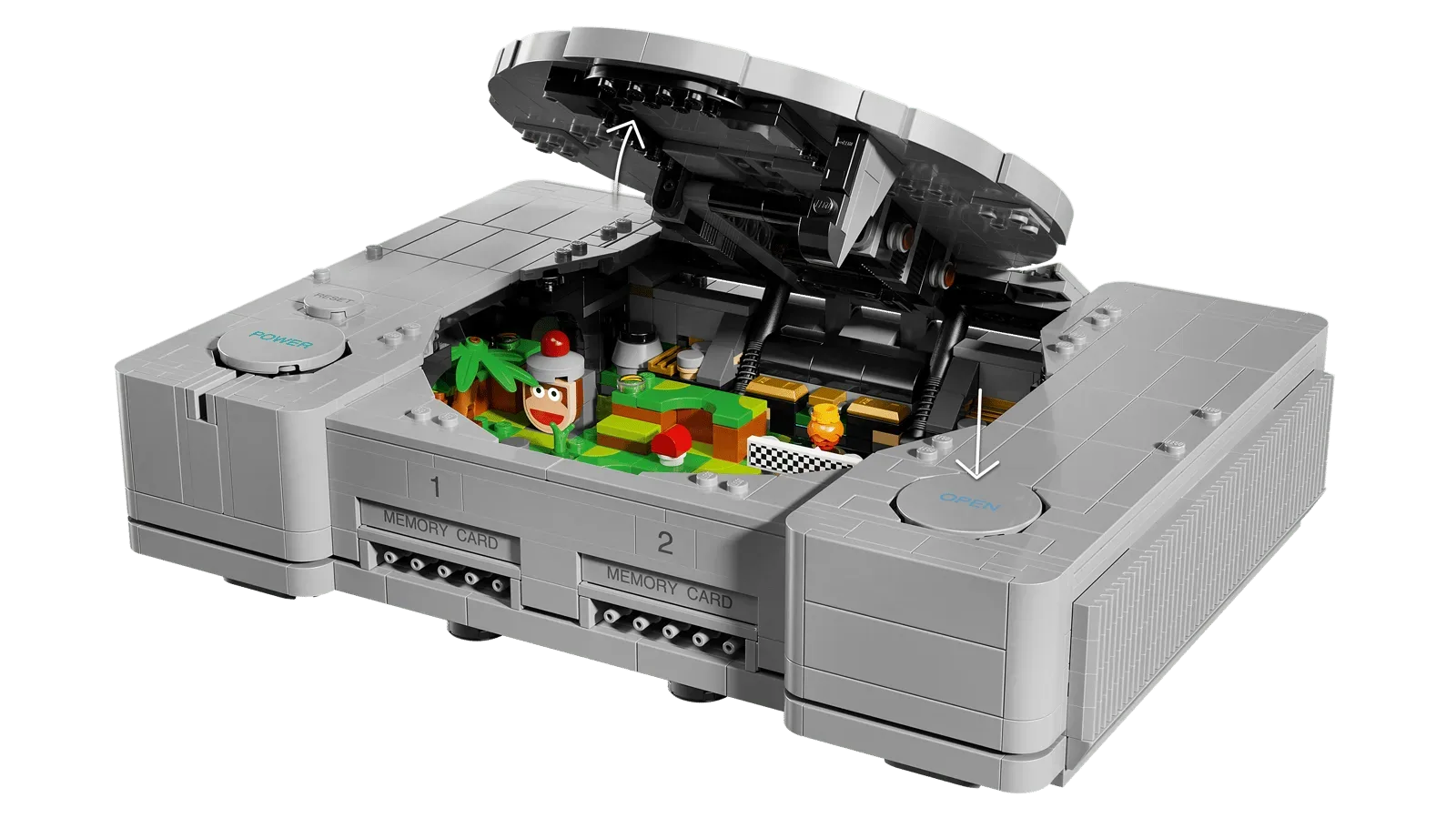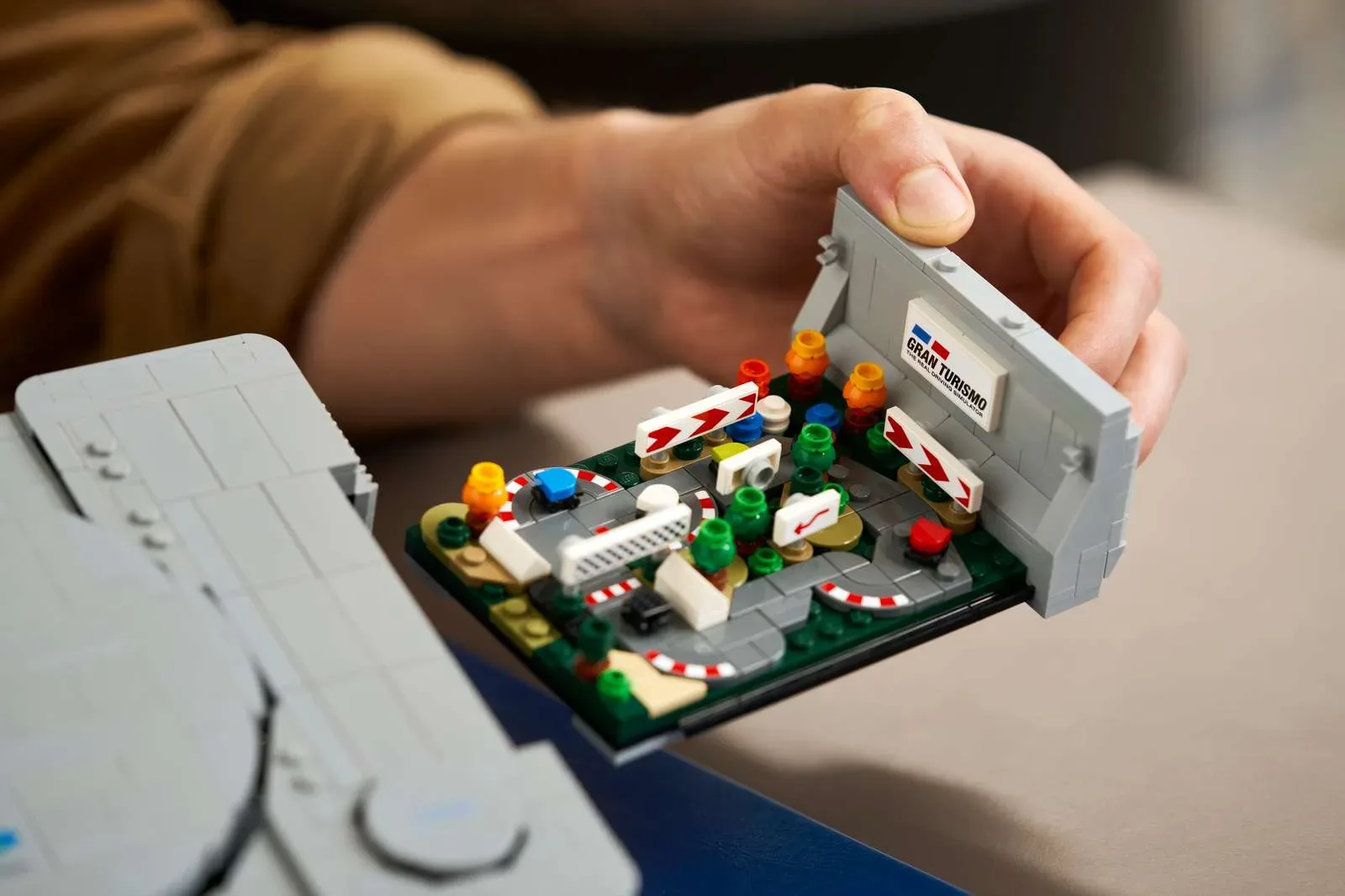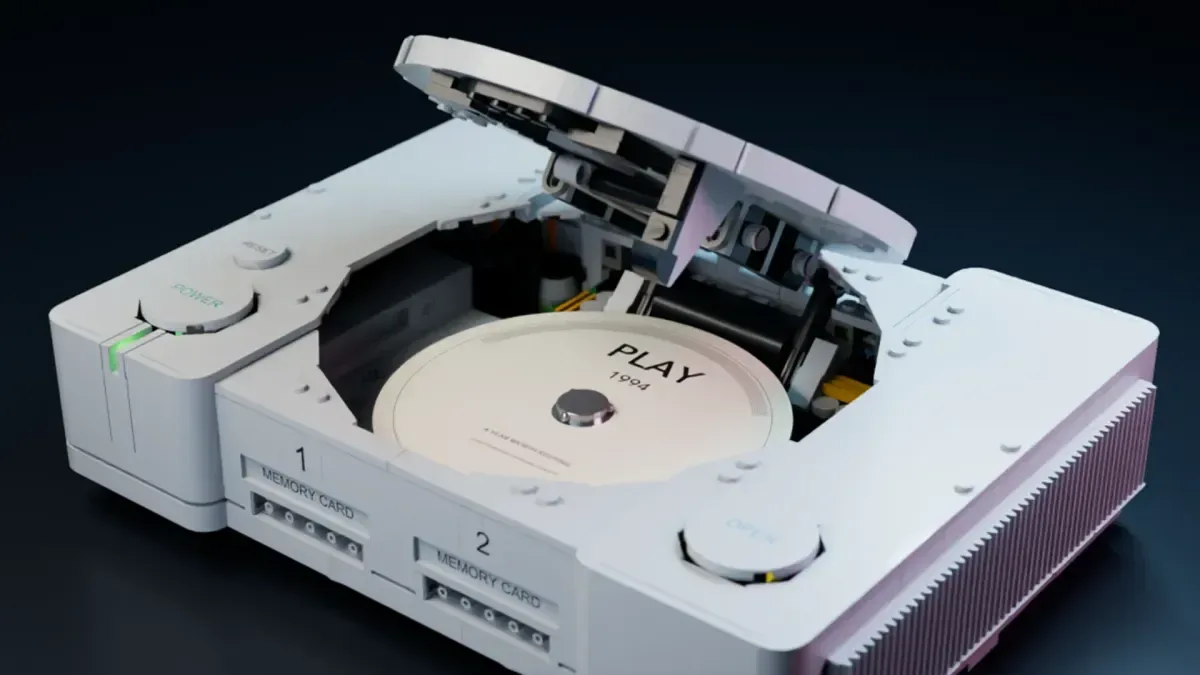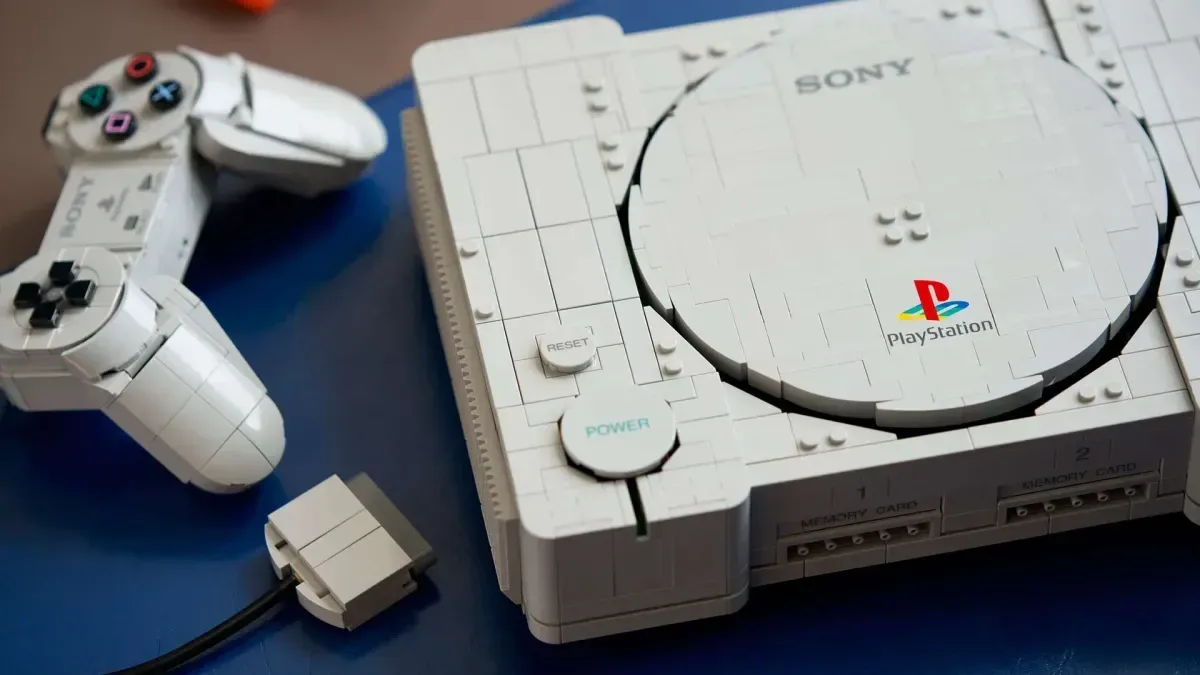
LEGO’s upcoming PlayStation set is already built around a very particular kind of nostalgia: a brick recreation of Sony’s original machine, complete with a display-minded design and hidden nods to Ape Escape and Gran Turismo. Now, a separate project wants to give that plastic console a little more purpose than looking excellent on a shelf. The proposed BrickStation mod kit is being developed to fit inside the LEGO PlayStation build and run PlayStation-era software through a Raspberry Pi-based setup.
It is an ambitious idea, and it is also important to stress that it remains early in development. The LEGO set has not yet reached release, the BrickStation concept imagery is not representative of a finished retail product, and neither a final price nor a launch date has been confirmed for the kit. Still, the stated plan is unusually specific: create a compact, self-contained insert that uses the model’s existing internal space rather than asking collectors to turn their new display piece into a loose pile of “spare” bricks.
A console replica with a potentially less decorative second life
The official LEGO PlayStation model contains 1,911 pieces and is scheduled to arrive on October 4 at £139.99 / $179.99. Beyond the exterior console-and-controller presentation, it includes two removable internal Easter eggs: small dioramas tied to Ape Escape and Gran Turismo. Those concealed scenes matter to the BrickStation proposal because the developers intend to use the same compartment occupied by the Ape Escape display.
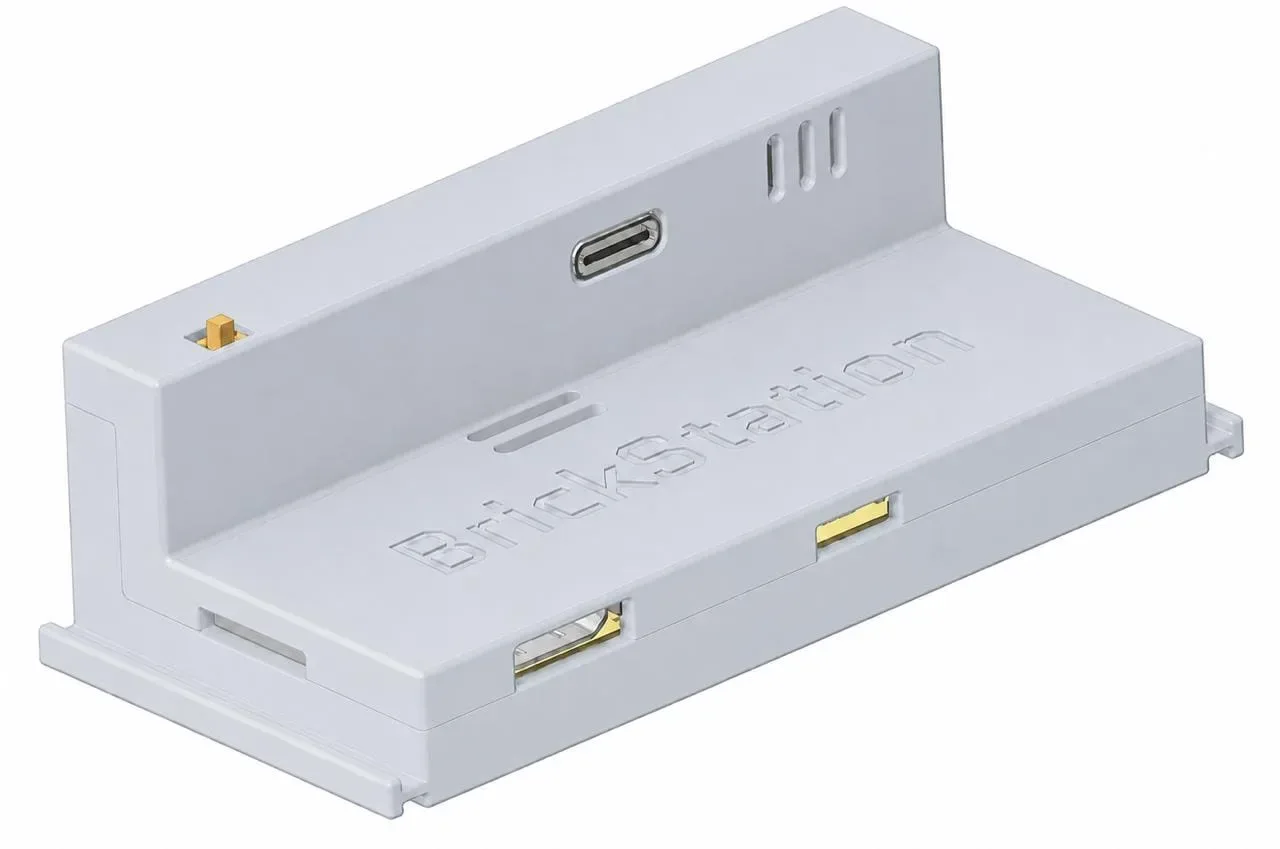
That is the clever engineering target here. Rather than permanently altering the LEGO model or requiring a complicated rebuild, BrickStation is intended to slide into that existing cavity. The aim is a near plug-and-play installation, ideally with little to no need to remove pieces from the set. For a project aimed squarely at people who care about both retro hardware and carefully assembled collectibles, avoiding irreversible changes is more than a nice bonus. It is the line between a fun enhancement and a project many owners would reasonably refuse to attempt.
Collectors who are already wondering how a display-friendly build fits into a playable retro setup may also want to read our guide to mapping a retro console HDMI connection before buying an adapter. BrickStation is pursuing an all-in-one route rather than adapting an original PlayStation’s output, but televisions, cables and controller expectations still have a way of complicating even the most delightfully toy-like setup.
What BrickStation says it is building
The proposed unit will be based on a Raspberry Pi Zero 2 W, housed alongside its supporting electronics in an ABS plastic base made through mould injection. That base is intended to keep the components secure, compact and shaped for the LEGO console’s available interior. In simple terms, the project is not describing a Raspberry Pi tossed under a few bricks with a hopeful HDMI cable dangling from the rear. It is intended as a fitted module designed around the set’s dimensions.
The current feature goals include:
- PlayStation emulation using the Raspberry Pi Zero 2 W.
- HDMI output for connection to a television or monitor.
- Support for wireless controllers.
- Wired controller support over USB.
- Use of the LEGO PlayStation model’s power button as part of the system.
- A stated objective of full-resolution, full-frame-rate play.
Those are development targets, not final guaranteed specifications. Performance, interface design, controller compatibility and the exact installation process will need to be judged on a completed product rather than a concept. That distinction is particularly useful with compact emulation hardware, where a promising component list does not automatically answer practical questions about setup, software configuration, cable routing or long-term maintenance.
The developers have also said they intend to meet relevant regulations and certifications. That is an unglamorous sentence in a world filled with glowing LEDs and tiny HDMI ports, but it is one of the most meaningful parts of the pitch. Hobby electronics can be rewarding, yet power, heat, wireless functions and electrical compliance deserve serious treatment. A polished enclosure and a plan for certified hardware would set a different expectation from a purely informal, assemble-it-at-your-own-risk mod.
BrickBoy experience is the project’s foundation
BrickStation comes from the Switzerland-based team behind BrickBoy, a previous project that combined a brick-built Game Boy-style form with functional console hardware. The new kit is presented as a more advanced follow-up informed by what the team learned on that earlier work. Thomas Bertani, BrickStation’s founder, is leading the effort.
That history does not remove the normal uncertainty attached to a product still on the drawing board. It does, however, explain why the concept is structured around an integrated module rather than an improvised collection of parts. BrickStation’s stated priority is making the result approachable for people who want a functional LEGO PlayStation without needing to become electronics technicians between building bags 14 and 15.
The original PlayStation is an especially suitable subject for this kind of project. Its silhouette is instantly recognizable, its controller remains iconic, and its catalog has long been associated with a generation that treats the hardware as both gaming machine and design object. A brick-built replica already captures the visual affection. A discreet emulation insert could add a layer of interaction without demanding that an original console be taken out of storage or modified.
Of course, an emulation device is not the same thing as original PlayStation hardware, and BrickStation has not supplied detailed information on software, user interface or game-file handling. Prospective buyers should wait for those specifics and ensure that any software they use is obtained and used lawfully. The project’s appeal is the hardware concept: a LEGO display piece potentially becoming a compact living-room emulation machine, not a promise that every practical or legal question has already been answered.
The power-button detail is bigger than it sounds
Among the planned features, enabling the LEGO model’s power button may be the one that most clearly separates BrickStation from simply hiding a mini-computer in the console. A functioning button gives the build a more coherent ritual: press the familiar control, wake the device, pick up a controller and play. It is a small interaction, but retro gaming runs on small interactions. Cartridge doors, controller plugs, startup sounds and power switches are all part of why old hardware feels like hardware rather than merely a box capable of launching games.
Wireless controller support should make the LEGO model easier to place as a display object, while USB support leaves room for a direct physical connection. Exactly which controllers will be supported has not been announced. Nor has the final hardware layout been shown. These may sound like minor caveats, but they are the details that will determine whether a finished BrickStation feels elegant on a media cabinet or needs a cable-management strategy worthy of a secret level.
For anyone planning a shared retro session around it, the social logistics may be at least as important as the technical ones. The unwritten rules of couch multiplayer are not official standards, but they may save somebody from discovering that their chosen controller was “obviously” reserved for player one.
What is known, and what remains unannounced
BrickStation’s developers expect a Kickstarter campaign around the end of the month or near the LEGO set’s official release. That timing is tentative, and crowdfunding should always be approached as a funding process rather than a completed-product storefront. There is no announced BrickStation price, no confirmed shipping window and no finalized public specification sheet.
Additional features have been mentioned for future reveal, but their nature has not been disclosed. Until those details arrive, the sensible picture is straightforward: BrickStation is a proposed add-on for LEGO’s 1,911-piece PlayStation set, built around a Raspberry Pi Zero 2 W and intended to supply HDMI, wired and wireless controller functionality, PS1 emulation and integration with the model’s power button.
There is something wonderfully fitting about the idea. The official model hides miniature tributes to PlayStation games inside its shell; BrickStation wants to replace one of those hidden displays with an actual computer capable of powering a retro play session. Whether the final module can meet its streamlined installation and performance goals remains to be seen. But as a collision of bricks, old-school console design and modern maker hardware, it is already a much more interesting prospect than another ordinary shelf ornament.