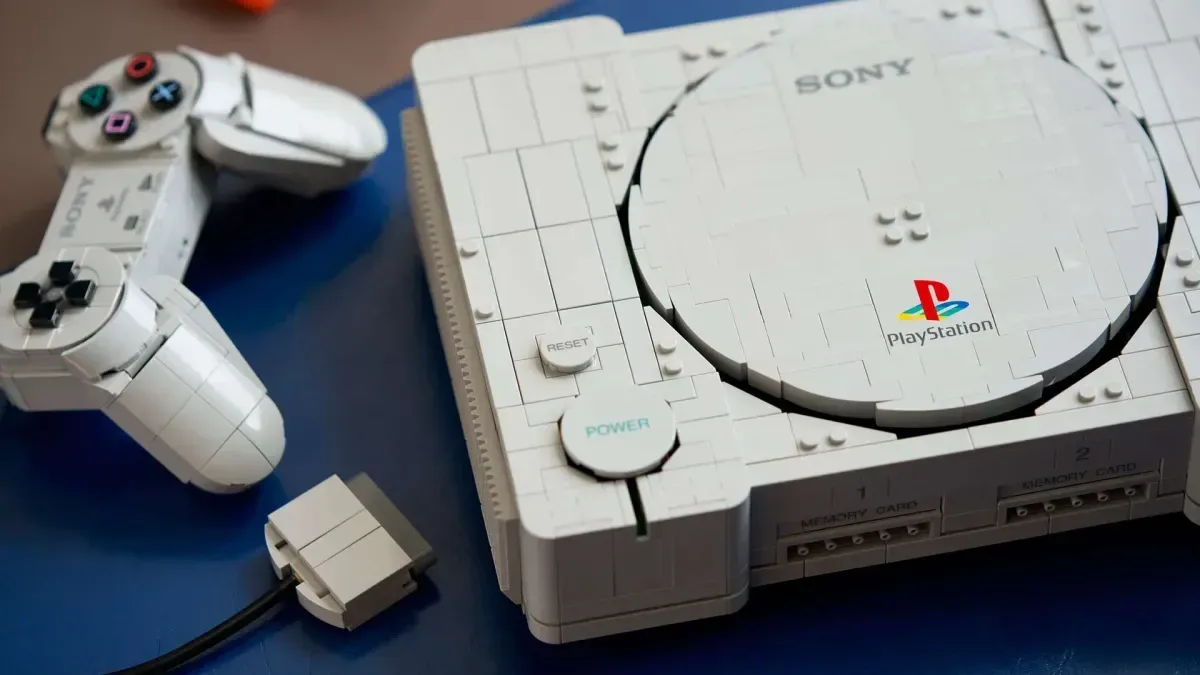
A display model of a PlayStation can look the part. BrickStation’s pitch is to make one do a little more than sit there looking smugly nostalgic.
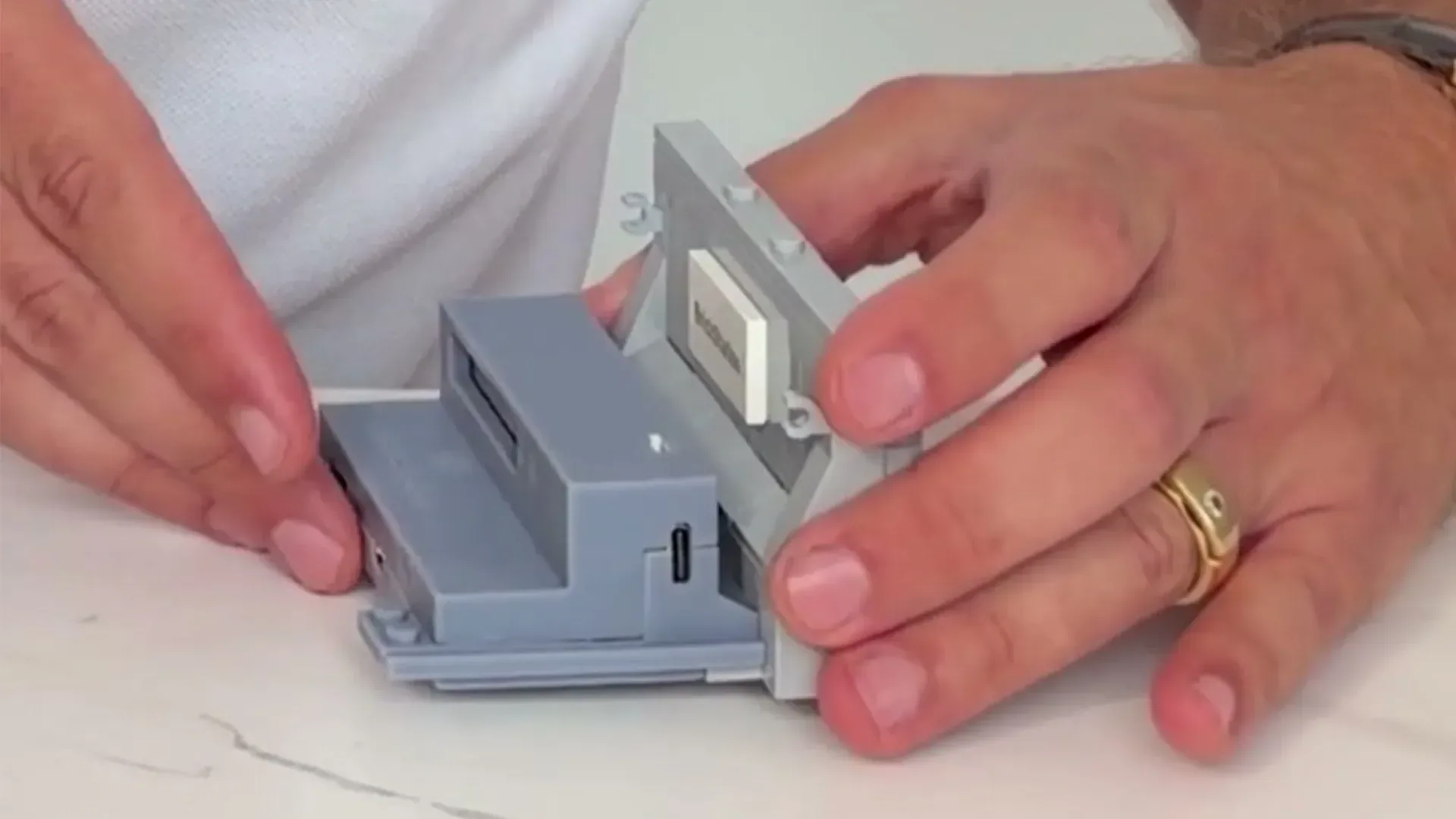
The new add-on, from the creators of the BrickBoy LEGO Game Boy conversion, is designed to fit into the LEGO PlayStation 1 build and turn it into a compact Raspberry Pi-powered emulation setup. The proposed kit replaces the build’s left-side tray section with an electronics base, allowing games to be played on a television over HDMI while preserving the model’s console-like presentation.
BrickStation is currently at the pre-launch interest stage. A crowdfunding campaign is expected in October, but price, shipping timing, and final campaign details have not been provided. As with any proposed crowdfunded hardware, features and delivery plans should be treated as subject to change until the campaign’s final specifications are published.
What BrickStation is meant to add
At its heart, BrickStation is described as a custom-built Raspberry Pi insert. A Raspberry Pi is a small single-board computer that can run software, including emulators: programs that reproduce the behavior of another system well enough to run compatible game software. In this case, the objective is PlayStation-era emulation rather than modifying an original PS1 console.
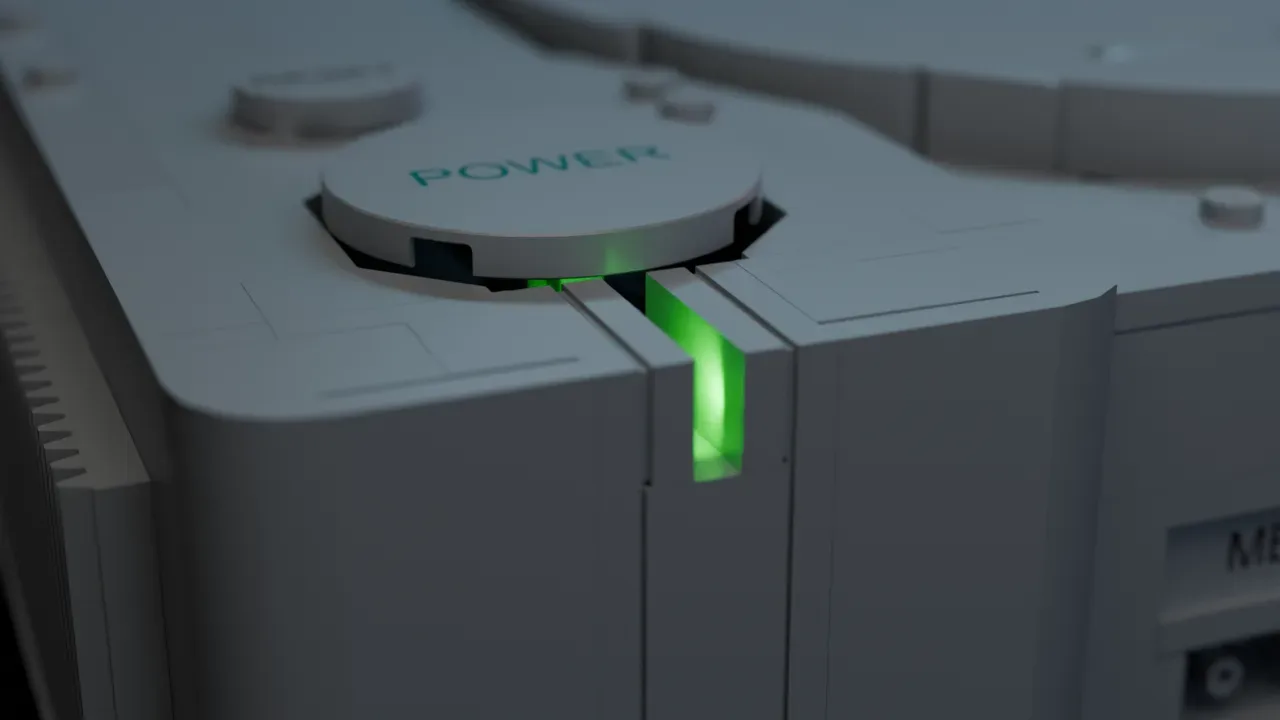
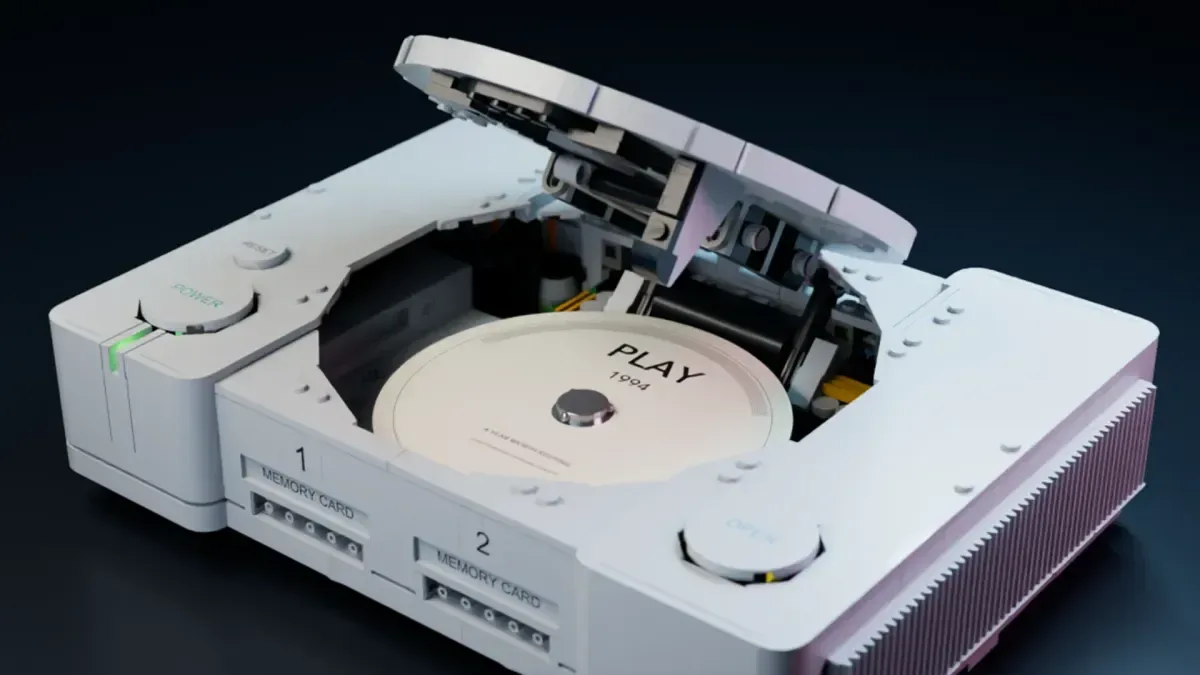
The stated setup includes HDMI output for connecting the build to a TV, plus an arrangement that lets users press the LEGO model’s existing POWER button. When activated, a green LED is intended to illuminate. This is less about pretending that plastic bricks have suddenly become 1990s consumer electronics and more about preserving a tactile ritual that makes the conversion feel integrated rather than merely hidden inside the display.
BrickStation is also planned to include a small speaker and vibration motor. Together, they are intended to simulate the sound and subtle movement associated with a spinning disc drive. That distinction matters: the proposed system is not described as reading PlayStation CDs. A disc can be placed in the LEGO console as a visual display piece, but it is storage and presentation only, not a functioning optical-drive feature.
- HDMI output: sends video and audio to a compatible television or display.
- POWER-button integration: the LEGO build’s button is intended to trigger the insert rather than serving as decoration alone.
- Green LED: provides a console-style visual power indicator.
- Speaker and vibration: simulate the audible and physical character of a disc mechanism.
- Display disc space: lets owners stage a PS1 disc in the build, without disc reading.
A removable tray, not a permanent rebuild
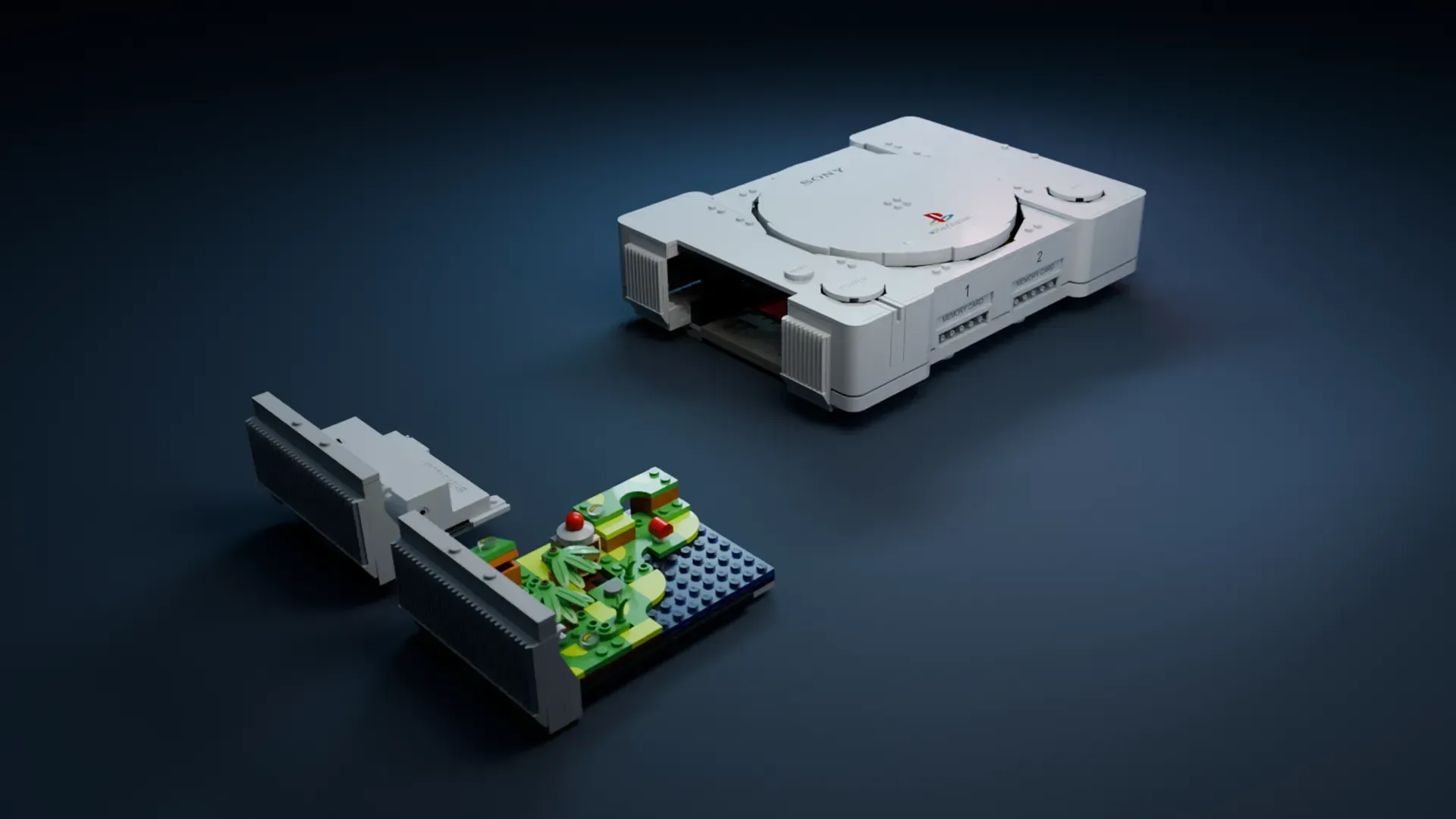
The physical design is one of the more practical parts of the proposal. Rather than asking owners to dismantle the whole LEGO PlayStation construction, the BrickStation base is meant to slide into a side tray. The stated example is removing the Ape Escape diorama tray and fitting the electronics module in its place.
That approach gives the conversion a degree of reversibility. Someone who wants the standard display configuration can retain the original tray, while someone who prefers a playable conversation piece can swap in the BrickStation module. It also avoids making the Raspberry Pi hardware appear as a separate box awkwardly parked next to a model console.
Related coverage includes BrickStation Aims to Turn LEGO PlayStation 1 Set Into a PS1 Emulator.
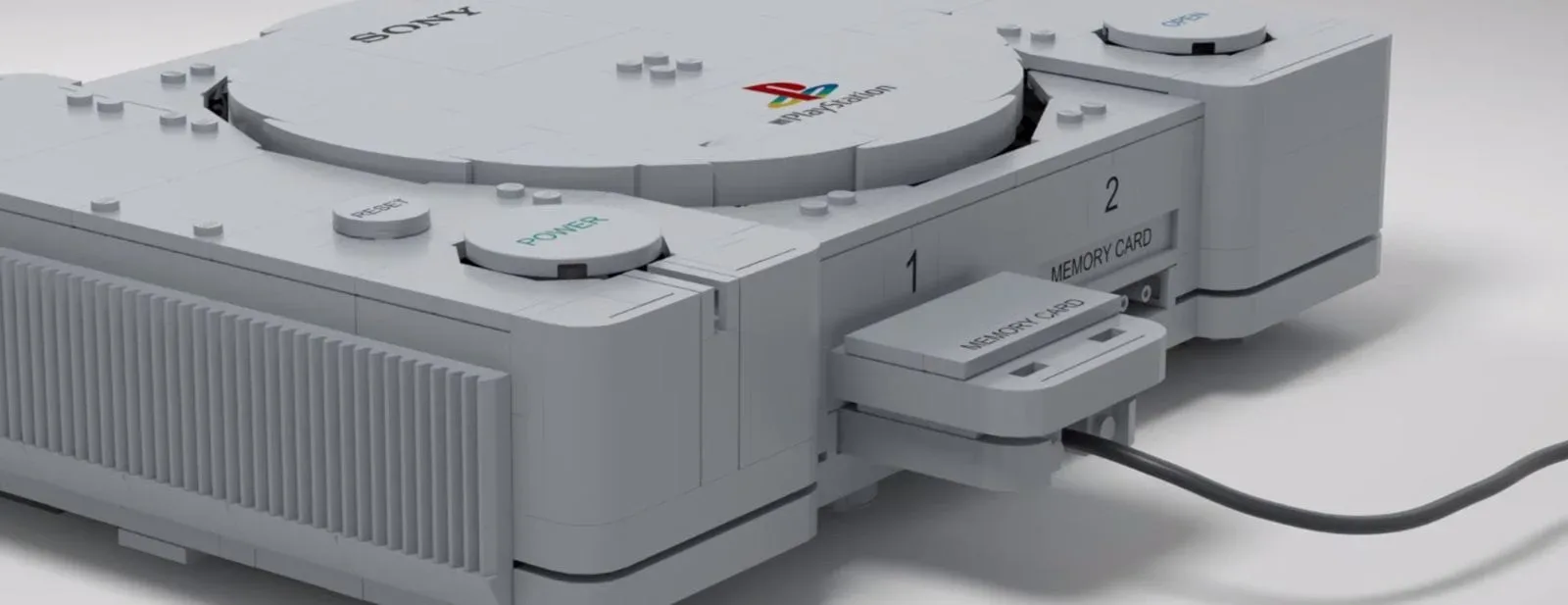
The kit is said to include 83 additional pieces, taking the combined count to 1,994—a nod to the year the original PlayStation launched in Japan. Those pieces are intended for a display memory card and a frame that secures the internal components. The numerical reference is a neat bit of brick-built wordplay, but the more significant design element is the retaining frame: small computers, cables, and ports are not especially useful if they shift around every time the model is moved.
The memory-card feature is the interesting bit
BrickStation’s most unusual claimed feature is support for an original PS1 memory card. The team says users will be able to insert a genuine card and have save data read and saved internally, making authentic save files usable with the emulation setup.
It is useful to separate that from save states, a common emulator feature. A save state is a snapshot of a game at a particular instant, often usable anywhere rather than only at the points where a game normally permits saving. A PS1 memory-card save, by contrast, is the type of data a game itself writes to a physical memory card. The ability to use original memory-card data can be appealing for players who want to continue older progress files or maintain a closer link between their original hardware history and a modern HDMI-based configuration.
The available details describe internal reading and saving of those authentic save files, but do not establish every compatibility scenario, file-management option, or technical limitation. Prospective backers should look for specifics on supported card formats, transfer behavior, and backup procedures once campaign documentation is available. Original saves can be irreplaceable; any hardware interacting with them deserves clear instructions and a cautious first use.
A future accessory is also planned to import users’ own discs to local storage. That accessory is not part of the currently described BrickStation package, and no release window or workflow has been detailed. Importantly, a future disc-import tool would be different from the display disc slot in the LEGO build, which is not intended to read discs.
Controllers remain an open question
The proposal says an original PS1 controller can be used with a USB adapter, but that adapter will not be included. That gives players one possible path to retaining the familiar controller shape, provided they source the necessary accessory themselves.
Bluetooth controller support has been suggested as a possibility, but it has not been confirmed. It should therefore not be regarded as a promised feature at this stage. Controller compatibility is a meaningful question for an emulation project: the television connection makes the LEGO model the centerpiece, but the controls ultimately determine how comfortably it functions as a game machine.
Potential buyers should also distinguish between the compact computer inside the build and the wider software setup around it. An emulator needs compatible software and configuration, while controller mapping, video behavior, and game compatibility can vary. BrickStation’s appeal is the hardware presentation and integration; it does not erase the usual considerations that come with emulation.
Why the BrickBoy connection matters
The same team previously created BrickBoy, a project that put a Raspberry Pi and display into a LEGO Game Boy-style build. That earlier crowdfunding effort reportedly raised more than $100,000. BrickStation follows the same core idea—using a brick-built object as the shell for small modern computing hardware—but shifts from a handheld-inspired project to a living-room console presentation.
The change in format creates different priorities. BrickBoy’s concept depended on a built-in screen and portability. BrickStation, as described, is built around HDMI output, a removable module, controller support, and the theatrical touches of a light, sound, and vibration. In other words, it is less concerned with making a LEGO object independently handheld and more concerned with making a display set perform like the machine it represents.
It is an especially playful use of emulation hardware because it does not try to disguise the project as a restoration of original PlayStation electronics. The brick model remains a model. The Raspberry Pi provides the computing, the TV handles the display, and the vibration and audio cues make the experience feel deliberate rather than accidental. For a look at the broader, continually evolving emulator scene, see this experimental Vita3K emulator build.
What has not been announced
There are several important unknowns. No price has been disclosed, and shipping timing remains unannounced. Bluetooth support is unconfirmed. The planned disc-import accessory is future-facing rather than a current included feature. Full controller compatibility, software configuration, and the final campaign package also await more detailed information.
That leaves BrickStation best understood as a promising concept with a defined design direction, rather than a finished retail product with every edge case settled. Its confirmed ambition is clear: slot a custom Raspberry Pi base into the LEGO PlayStation 1 build, connect it to a TV through HDMI, press the original-style POWER button, and use lighting, sound, and vibration to make the model feel alive.
For retro-gaming fans who enjoy hardware projects as much as games themselves, that may be the point. BrickStation is not trying to replace an original console or convince anyone that a decorative disc slot is a CD drive. It is trying to turn a shelf piece into a compact, interactive homage—one that can preserve the brick-built charm while giving it an actual job to do.