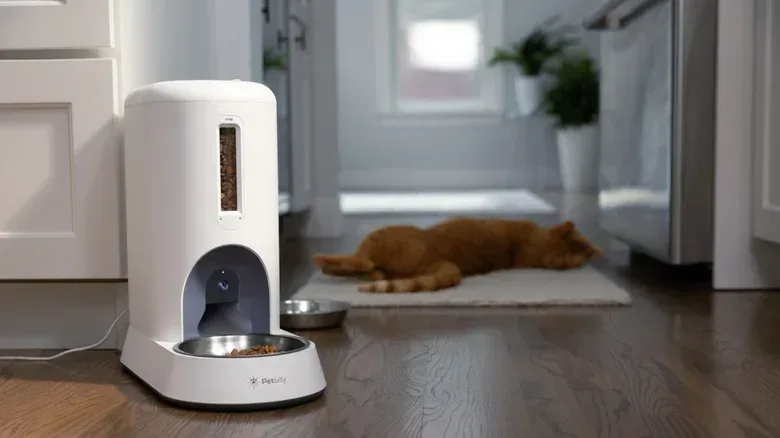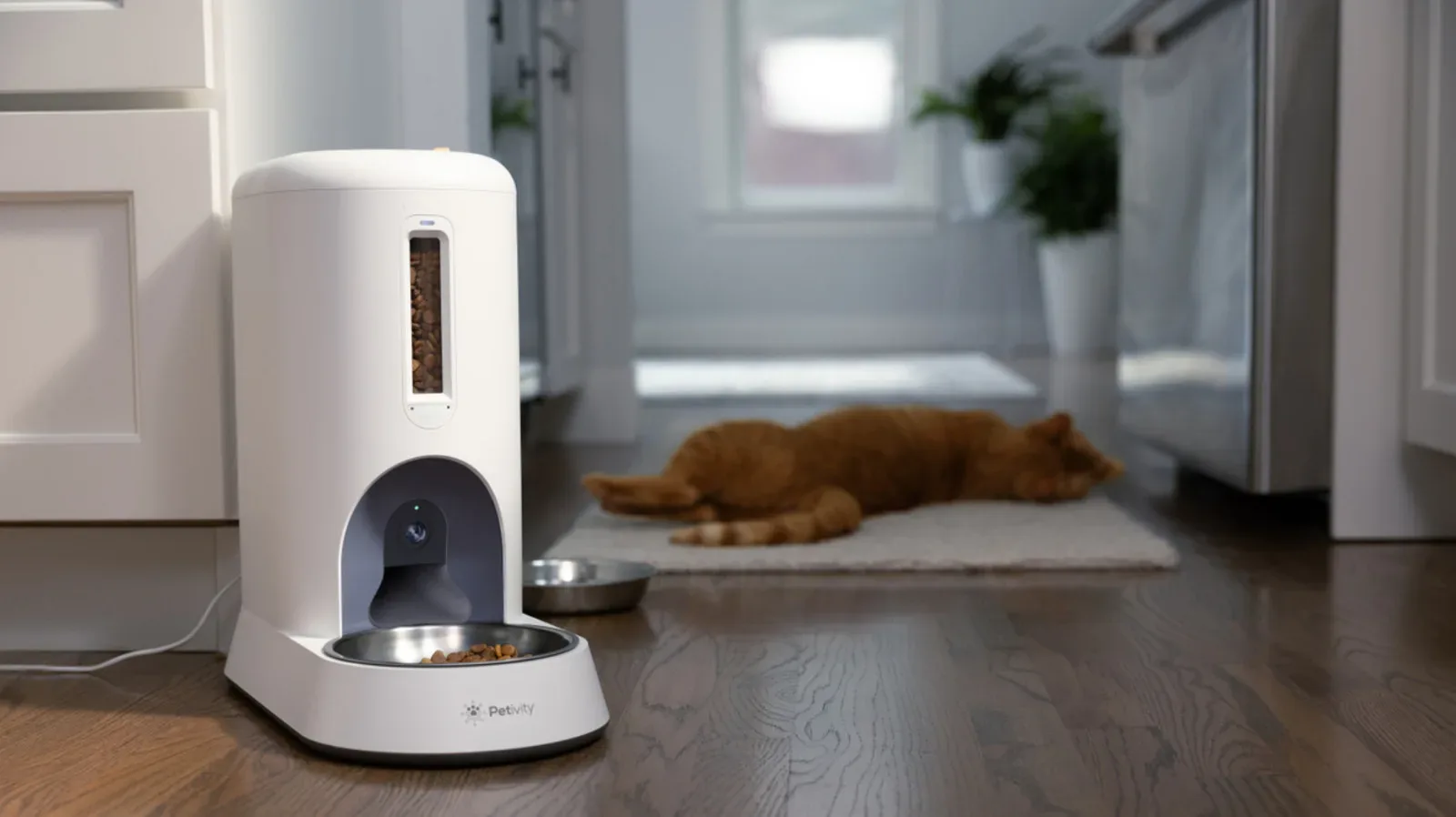
There is a new entrant in the domestic arms race between cat owners and the household’s most accomplished food thief. Petivity, a Purina-owned brand, has introduced the Petivity Smart Feeder for Cats: a kibble dispenser with cameras and AI-enabled facial recognition designed to identify individual cats and log their meals.
The pitch is straightforward but unusually specific. Instead of merely dispensing a set quantity on a schedule, the feeder is intended to track which cat is eating, how much it eats, how often it visits and how its routine changes. Petivity says the system can learn the feeding behaviors of up to five cats. It is available now for $150, and the company says access to its AI tracking tools does not require a subscription.
That makes it less a robotic bowl and more a tiny, kibble-powered household analyst. Or, put another way, the cats have been entered into the surveillance era, except the chief suspect is whichever one keeps treating a sibling’s prescription diet like an appetizer sampler.
Why individual identification matters in a multi-cat home
Automatic feeders are generally useful for scheduling meals and portions, but a shared feeding station creates a basic information problem: the machine may know food was dispensed, while the owner may not know who ate it. That distinction becomes meaningful in homes where cats need different foods or where one animal has a diet tied to medical needs.
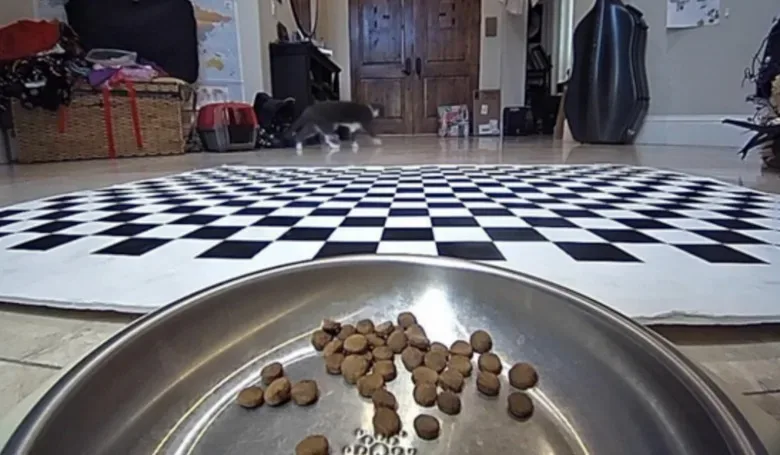
Petivity’s approach relies on cameras and facial-recognition algorithms to associate feeding activity with a particular cat. In this context, facial recognition means software examines visual features in the camera feed to distinguish one cat from another; it does not mean the feeder can understand why a cat is making an extremely persuasive case for second breakfast.
The feeder cannot replace one food with another or physically prevent a cat from taking food it should avoid. That limitation is important. What it can do, by the company’s description, is notify the owner when a particular cat appears to be eating food that may not be intended for it. The practical benefit is visibility: a person can potentially see a pattern of snack theft rather than discovering the issue only after a bowl is unexpectedly empty.
For households using one shared dry-food setup, that monitoring role may be the key differentiator. A timed feeder delivers food. This one is meant to create a record around the meal itself.
What the feeder tracks—and what those terms mean
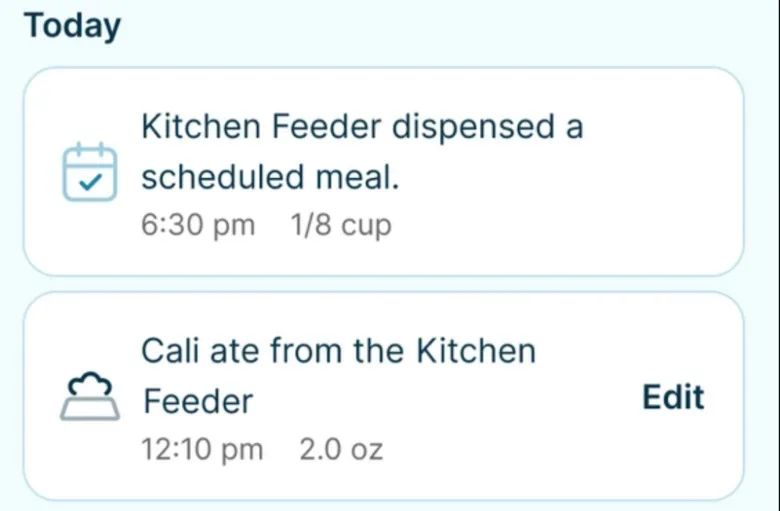
Petivity says the Smart Feeder for Cats tracks portion sizes, eating frequency and feeding patterns through its affiliated app. Those terms sound similar, but they describe different parts of a cat’s relationship with the bowl:
- Portion size is the amount of kibble dispensed or consumed during a feeding event.
- Eating frequency is how often a cat returns to eat.
- Feeding patterns are the broader routines that emerge over time, such as when a cat typically eats and whether that routine changes.
Petivity says these data can surface subtle behavior shifts that may be useful to discuss during a veterinary visit. That is a measured, sensible framing. A feeder log can offer observations about routine; it is not presented as a diagnostic tool, and it should not be treated as a substitute for veterinary care. The value is in turning “I think she has been eating a little differently lately” into a record of what the system observed.
That distinction matters because an alert is only a prompt to pay attention. Owners still need to interpret it in context and, when appropriate, bring the information to a veterinarian. The device may help organize daily feeding information, but it cannot explain the reason behind a change on its own.
It remains a remote-controlled feeder, too
The identity tracking is the unusual feature, but Petivity’s device also covers the familiar smart-feeder basics. Owners can dispense kibble remotely through the app and set custom schedules. The built-in camera enables video check-ins, described as video calls, and the system can issue a low-kibble alert when supplies are running down.
Those functions make the feeder partly a scheduling tool, partly a camera and partly a behavior log. For someone comparing connected household devices, the practical question is not merely whether a gadget has an app, but what the app is actually receiving and sending. Here, that includes feeding records, live or remote camera interaction, notifications and dispensing commands. Anyone managing their mobile plan may also want to understand how video features and background app activity affect usage; our guide to what uses smartphone data explains the broader factors behind video calls and background downloads.
Cleaning is another less glamorous consideration that can determine whether a pet gadget remains useful after the novelty wears off. Petivity says many feeder components are dishwasher-safe. That does not mean every piece can be placed in a dishwasher, but it is a relevant practical feature for an appliance repeatedly exposed to dry food, dust and the general operational chaos of cats.
The AI claim comes with a stated training base
Petivity says its AI tools were trained using 21,000 real-world feeding sessions, 1,400 hours of video and more than 15,000 cat images. Those figures describe the material used to develop the recognition and tracking capabilities. They provide context for the company’s effort to make the system work across cats and feeding scenarios, though they do not by themselves establish how the feeder will perform in every home, lighting condition or multi-cat routine.
The company also reports that 99.5 percent of cats were willing to eat from the feeder during product testing. That is encouraging for a product that asks famously opinionated animals to accept a new object in a location associated with an essential daily ritual. Still, it is a company-reported test figure, not a guarantee that every cat will welcome the machine immediately. Individual animals may react differently to a camera-equipped feeder, a new bowl shape, a new sound or a changed placement.
In other words, the system’s stated training data and testing result address a central concern—whether cats can be identified and will actually use the feeder—but they do not eliminate the usual realities of introducing anything new to a pet’s environment.
The biggest constraint: dry food only
The Petivity Smart Feeder for Cats handles kibble, not wet food. This is not an incidental footnote; it is likely the clearest dividing line for potential buyers. A household that relies primarily on wet food will not get a complete feeding solution from this device.
Automated wet-food feeders do exist, but keeping wet food usable demands refrigeration technology. That requirement adds a different layer of hardware complexity from a dry kibble dispenser. Petivity’s feeder therefore fits best where dry food is already part of the routine and where the added monitoring features solve a real household problem.
Its $150 price also deserves to be considered as the cost of both dispensing hardware and the accompanying identification-and-tracking system. A buyer who only needs timed kibble delivery may place less value on the cameras, individual recognition and behavior records. A buyer managing several cats—especially cats whose foods need close monitoring—may see a clearer rationale for the extra intelligence.
What Petivity’s approach changes
The interesting idea behind this feeder is not that a machine can release kibble on command. It is that feeding is being treated as a data-rich routine rather than a simple scheduled event. In a multi-cat home, the difficulty is often attribution: a bowl can be empty without revealing whether every cat ate normally, one cat ate too much or another skipped a meal.
Petivity’s Smart Feeder for Cats is designed around that missing layer of information. By pairing a camera with AI-enabled facial recognition and app-based records, it aims to transform a shared feeding area into a place where owners can follow individual behavior over time.
That premise will be most compelling for the households that have a genuine need to separate the feline food plotlines. It will be less compelling for wet-food households, people who prefer a non-connected feeder, or anyone whose one cat already regards every meal as a heavily documented personal achievement. But for up to five dry-food-eating cats with very different dining habits, the device’s central promise is easy to understand: fewer mysteries at the bowl, and perhaps fewer unauthorized raids on someone else’s kibble.