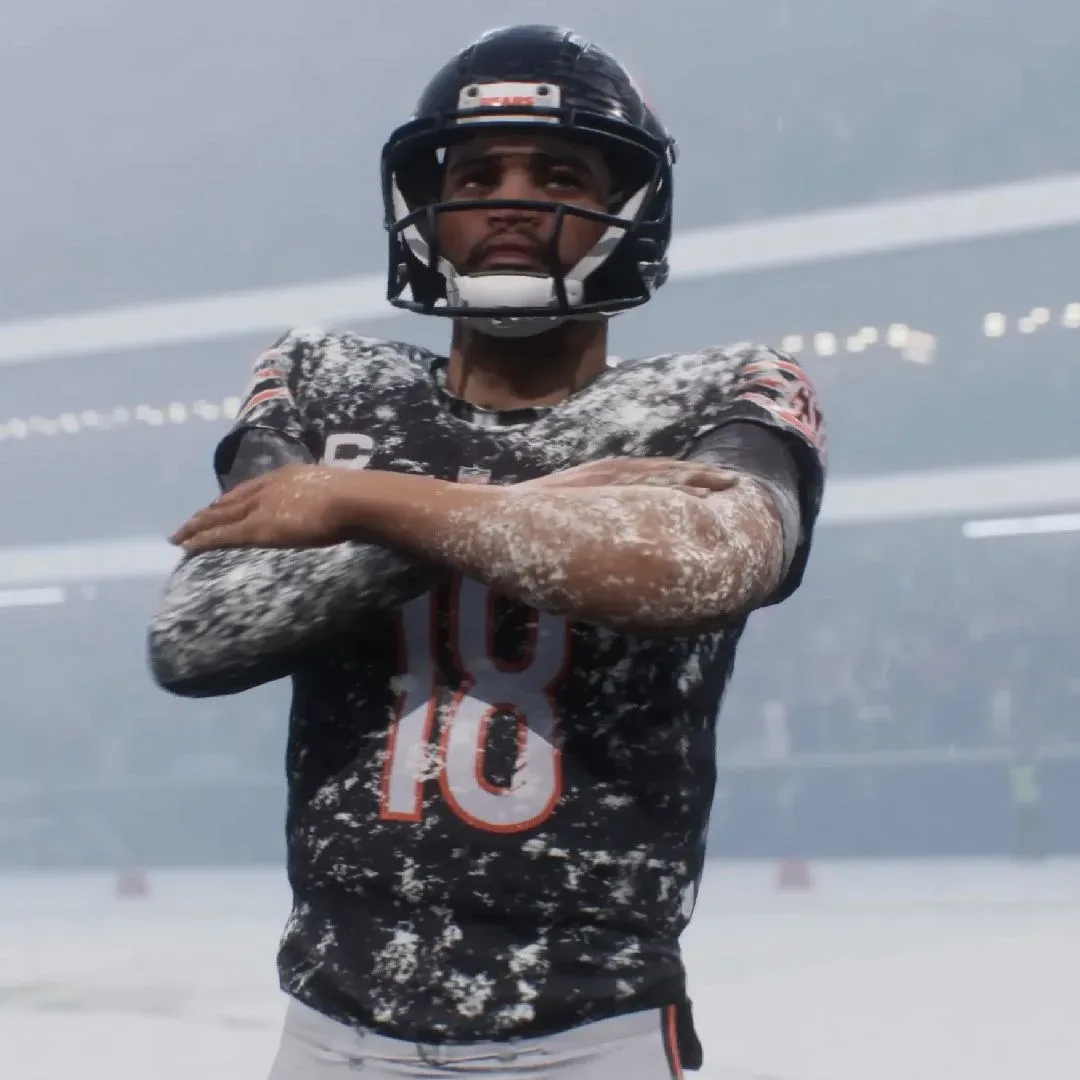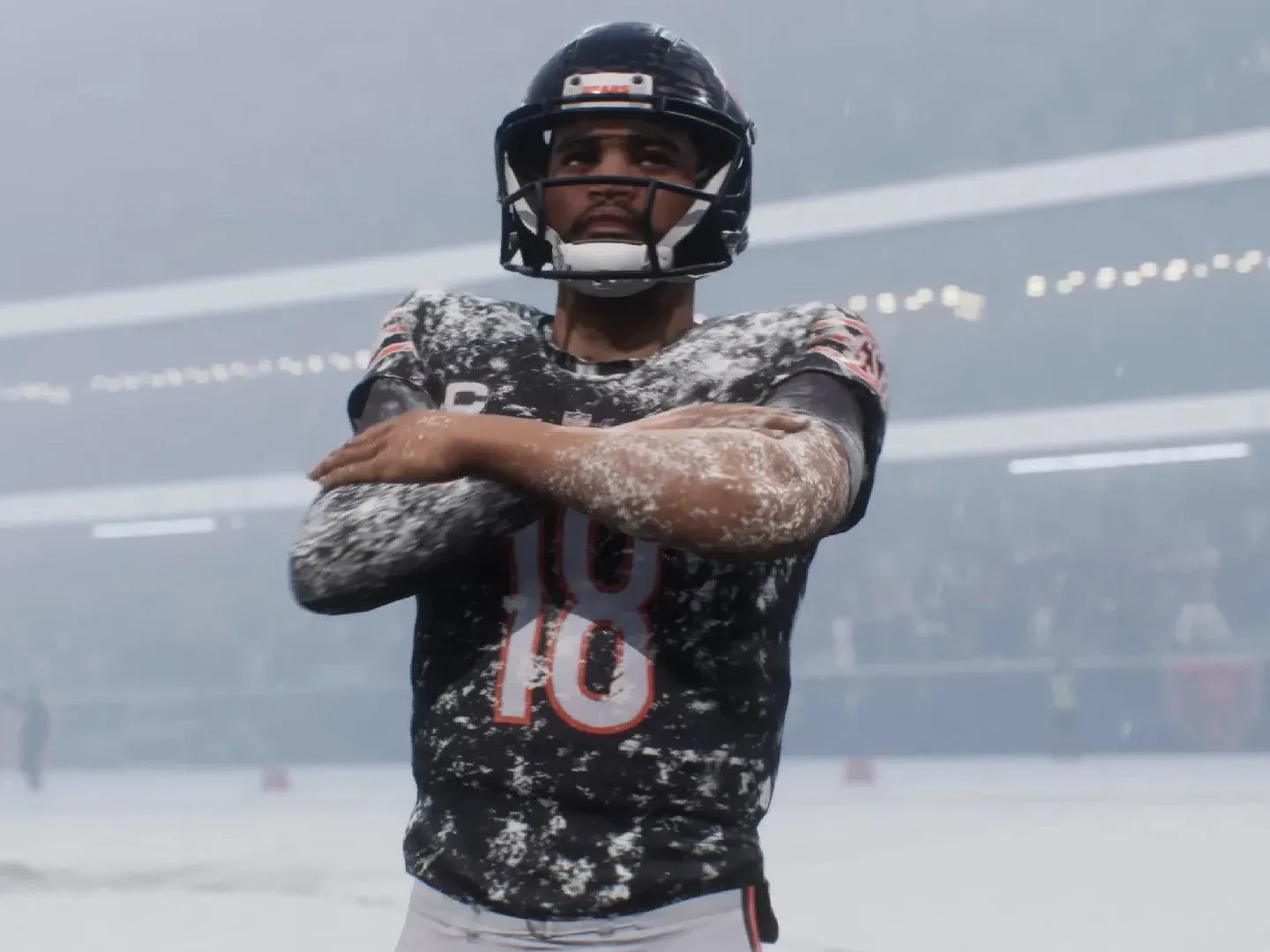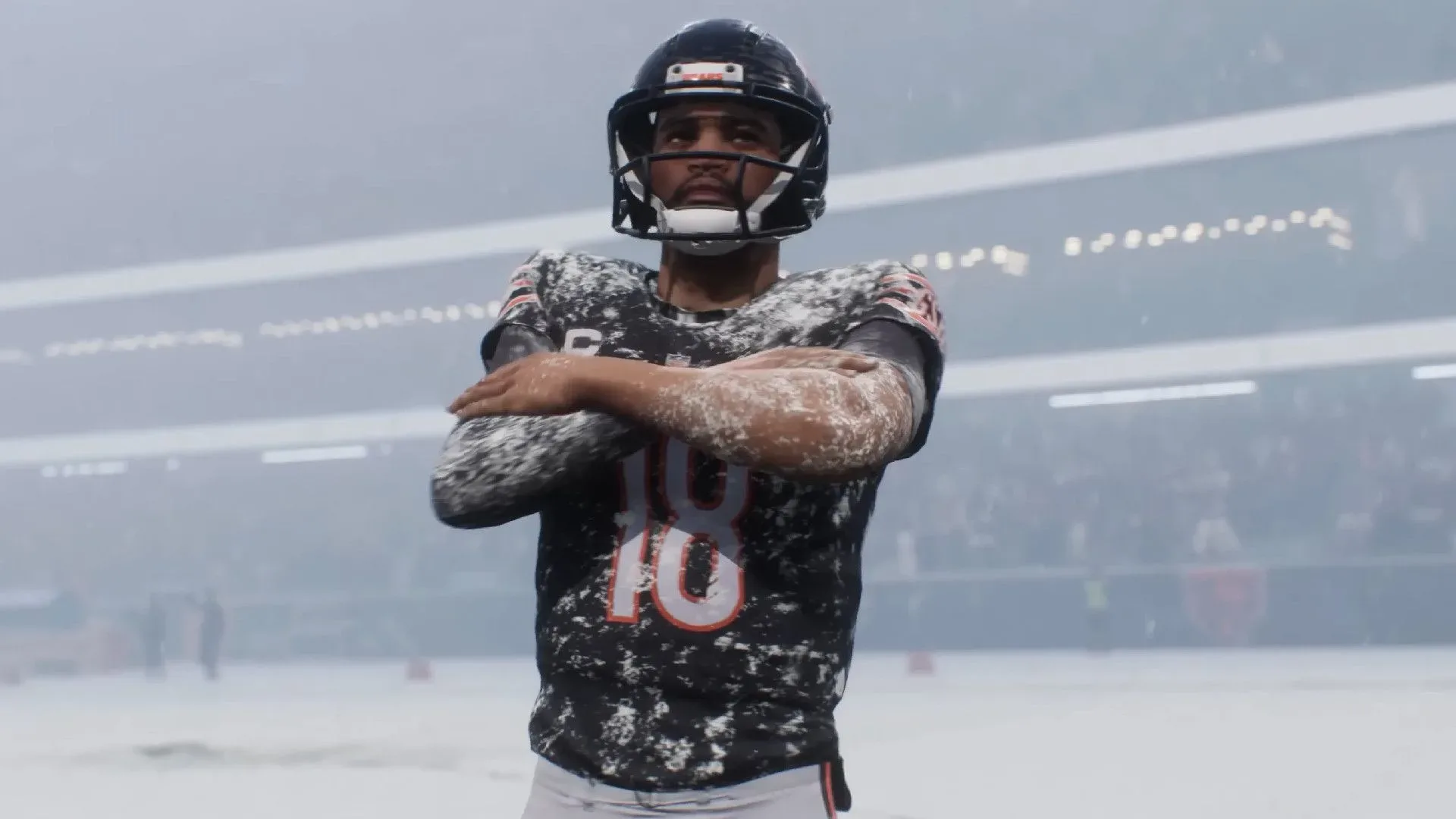
The Madden curse is having another one of its very loud moments.
Chicago Bears quarterback Caleb Williams, the cover athlete for Madden NFL 27, left the second half of Chicago’s 9-3 loss to the Minnesota Vikings after his leg gave way without contact. He was carted off in tears, an image that immediately prompted fears of a major, season-ending injury among Bears supporters and football fans more broadly.
The eventual diagnosis was a hamstring injury, and subsequent reports have suggested it may be relatively minor. That is reassuring news on its face. But the sequence of events — a superstar on the cover of football’s biggest annual game, a sudden injury, and an ugly divisional defeat — was almost custom-built to revive the long-running folklore around the Madden cover.
It does not matter that a curse is not a medical explanation. It does not matter that the logical case is straightforward: professional football is dangerous, injuries happen, and the players chosen for a Madden cover tend to be the league’s most visible athletes playing at its most demanding positions. The superstition persists because it is an unusually neat story template. A player reaches the sport’s most recognizable commercial stage, then something goes wrong, and the box art becomes an easy symbol for an outcome it did not cause.
For more context, explore Kojima Says Xbox Had Never Seen a Physint Pitch Like It as Publishing Moves Forward.
From historic scoring to a worrying afternoon
Williams’ Madden NFL 27 selection made sense after his 2025 season. He helped lead the Bears to a playoff run that ended just short of a conference championship appearance following an overtime loss to the Los Angeles Rams. Across that season, he established himself as one of the league’s most exciting quarterbacks, delivering late-game plays and comebacks that gave Chicago a badly needed sense of momentum.
The beginning of the 2026 season did nothing to weaken the idea that Williams belonged on the cover. In a road win over the Carolina Panthers, Chicago posted 59 points. That total ranked as the fourth-highest score in Bears history and represented the most points the Panthers had ever conceded in a game.
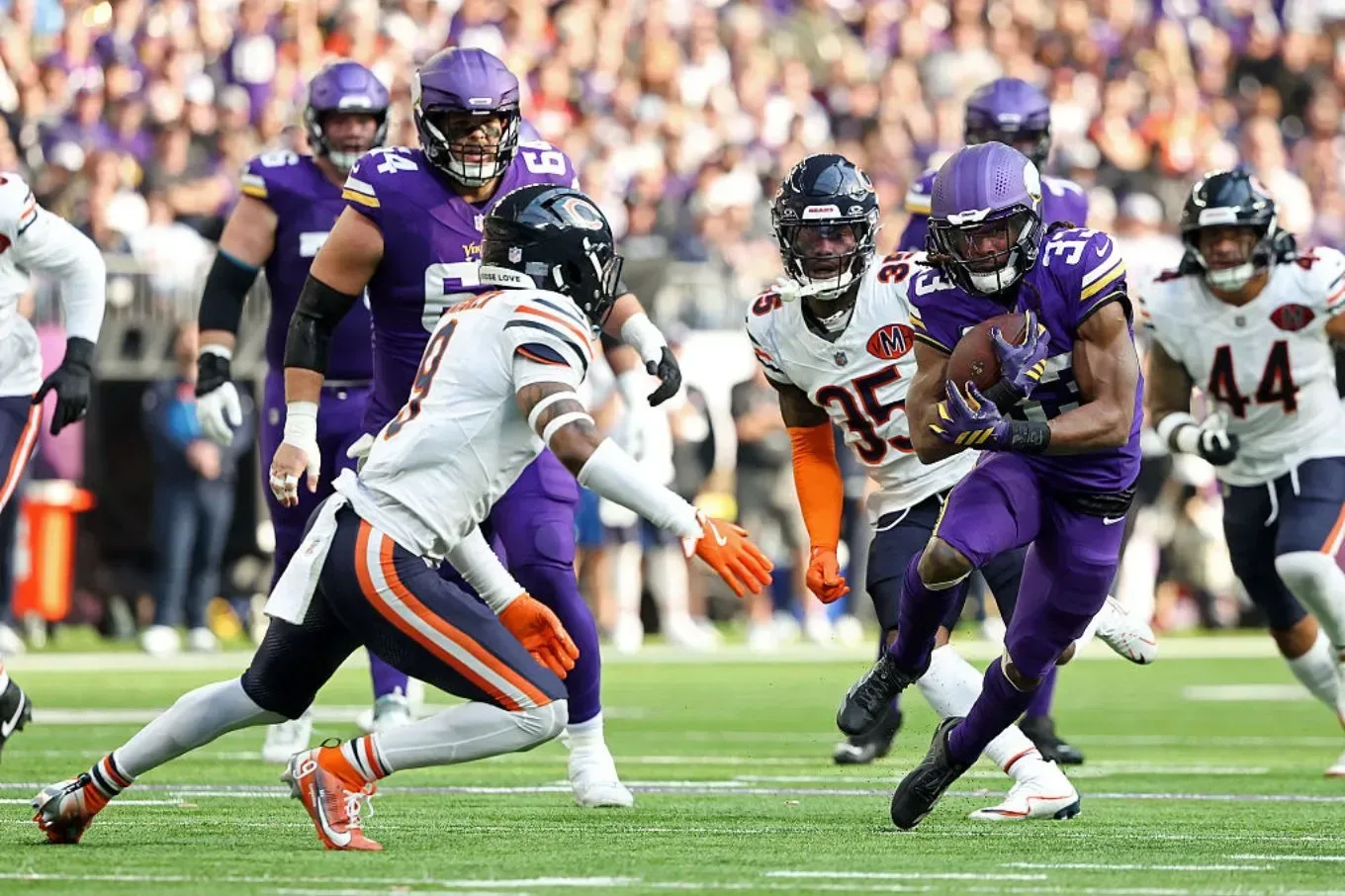
Then came the Vikings matchup. Chicago managed only a field goal in the 9-3 defeat, played in gray, rainy conditions before the home crowd. The on-field frustration was already substantial when Williams went down in the second half without another player making contact. Non-contact injuries routinely trigger the biggest immediate fears because viewers often associate them with serious damage to a ligament or tendon.
Related coverage includes Caleb Williams Injury Rekindles Madden Curse Talk After Madden NFL 27 Cover Debut.
Two terms quickly loom over moments like this. The ACL, or anterior cruciate ligament, is a key stabilizing ligament in the knee; an ACL tear can require a lengthy recovery. The Achilles tendon connects the calf muscles to the heel and is essential in pushing off the ground; a rupture is also commonly understood as a major injury. Neither was the reported diagnosis here. Williams was diagnosed with a hamstring injury, which involves muscles at the back of the thigh.
That distinction matters much more than the superstition. A hamstring issue can vary significantly in severity, and the available indications point toward a minor problem. Until there is fuller team information, it is sensible to treat the early outlook as encouraging but not definitive.
Why the “curse” returned so quickly
The phrase “Madden curse” describes a fan belief that appearing on the cover of EA’s Madden NFL series brings bad luck, particularly injuries, disappointing seasons, or other setbacks. It is a retrospective label, not a testable force. Still, it has endured since the 2000s because professional football supplies no shortage of dramatic reversals and because cover athletes receive unusually intense public attention.
Williams’ injury has pushed the phrase back across social media, with posts declaring that the curse had struck again or insisting it never misses. The reaction has also introduced the legend to younger fans who may not have seen it as a prominent part of Madden conversation.
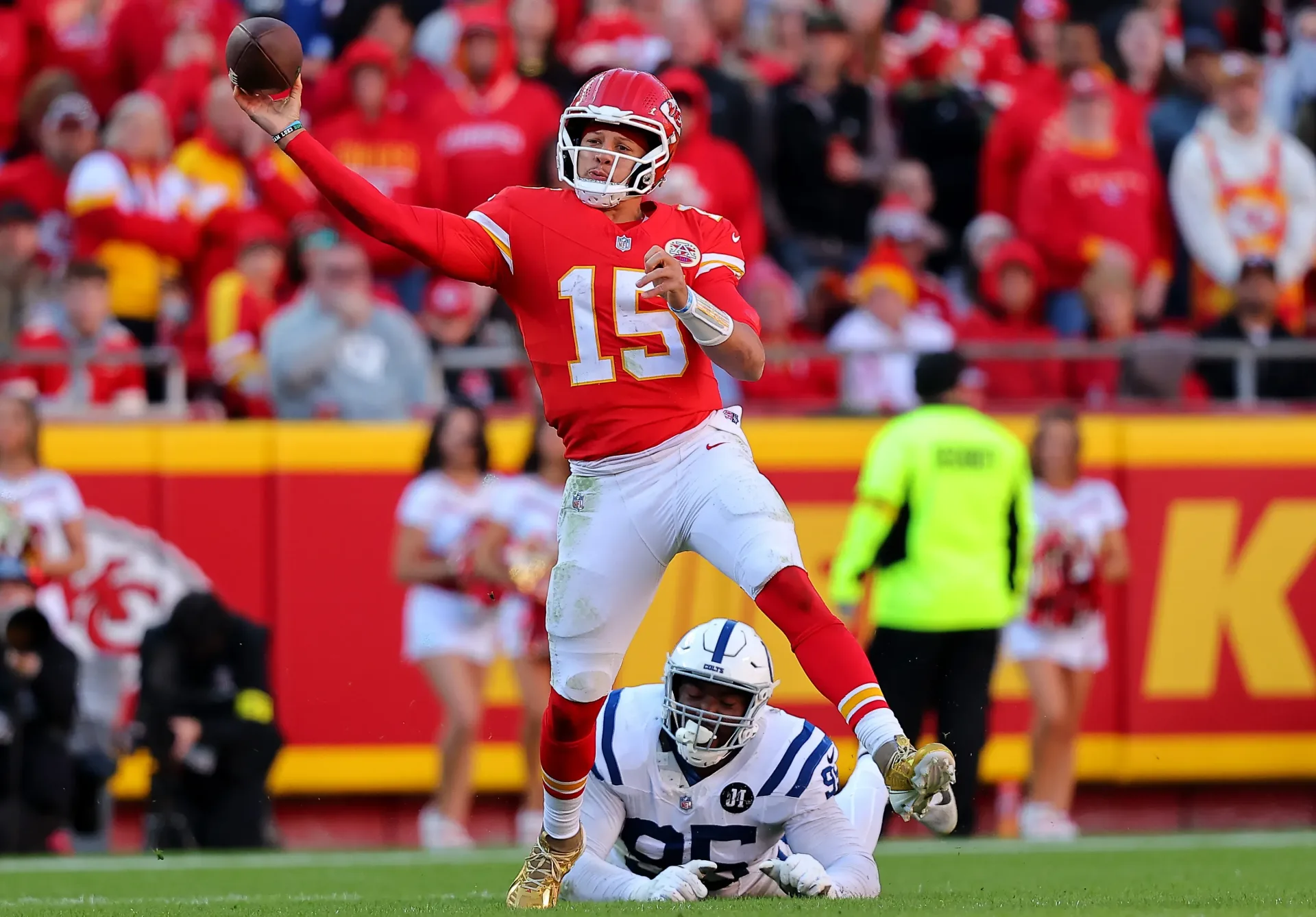
That generational rediscovery is important. The curse had become less persuasive in recent years because several modern cover athletes — including Patrick Mahomes, Josh Allen, and Lamar Jackson — went on to have excellent seasons after appearing on the game’s packaging. A superstition needs memorable hits to survive, but it also needs enough quiet stretches for people to declare it over before a fresh incident gives it new life.
Williams’ situation supplied exactly that kind of emotional whiplash. His 59-point opening statement against Carolina made the notion of a Madden hex look especially flimsy. The Vikings loss, followed by his exit from the game, gave believers a starkly different set of images less than a month later. It is the contrast, as much as the injury itself, that makes this episode feel so dramatic.
Football risk is not evidence of a curse
The rational explanation is not difficult, even if it is less fun than blaming a video-game cover. Quarterbacks and other elite NFL players operate in a sport with frequent collisions, abrupt changes of direction, high-speed acceleration, and relentless physical stress. The game’s biggest stars are often asked to do more, carry greater offensive responsibility, and make the kind of dynamic plays that make them candidates for cover honors in the first place.
That creates a selection effect. In simple terms, the group of players selected for a Madden cover is not a random sample of all football players. It is made up of athletes who have recently become highly visible through exceptional production, athleticism, team success, or spectacular moments. Those traits can coincide with demanding workloads and greater exposure to the circumstances where setbacks occur.
There is also confirmation bias: people naturally remember examples that fit an existing story more vividly than examples that do not. A rough year or injury for a cover athlete can be folded into the curse narrative immediately. A healthy, successful season may receive far less attention because it does not offer the same eerie coincidence.
None of that means fans are wrong to feel uneasy when a cover star is hurt. Sports fandom is emotional, and the cover is designed to symbolize a season’s hopes. For Bears fans, Williams’ image on Madden NFL 27 is not merely marketing; it is tied to the promise of a franchise that finally appeared to have found a quarterback capable of changing its trajectory. Watching him leave the field crying naturally made the stakes feel larger.
What Williams’ injury means right now
The crucial point is that the most frightening possibilities initially feared by spectators were not the reported outcome. A hamstring diagnosis, coupled with reports indicating the issue could be minor, shifts the conversation from immediate season-ending panic toward the more ordinary uncertainty of an in-season injury.
That does not erase the disappointment of the Vikings loss or guarantee how quickly Williams will return to full form. It does mean the Madden curse discussion should remain in its proper place: a piece of sports folklore that can be entertaining, communal, and occasionally unnerving without becoming a substitute for the actual medical information.
For now, the enduring image is a strangely perfect one for the legend: the player chosen to front football’s biggest game encountering a frightening moment in a grim division loss. But the better ending to this particular chapter would be far less supernatural. If the early indications hold, Williams’ hamstring issue will be manageable, and the Bears’ season will be decided by football rather than by the artwork on a game case.
And when the next Madden cover athlete is unveiled, fans will almost certainly make the same jokes, brace for the same imaginary omen, and remember that even a disproven curse can be impossible to retire.