Minecraft’s Ender Dragon has, at least in theory, a new opponent: time itself. A simulation by YouTuber RedLogic suggests that a world seeded with a fully activated End Portal could eventually reach the game’s end sequence with no player ever lifting a diamond sword, loosing an arrow, or even moving a mouse. The projected wait is a modest 1.975 billion simulated years.
That result is not a claim that an ordinary Minecraft save will quietly complete itself while someone is out getting snacks. It depends on an unusually favorable starting condition and a chain of mob interactions so wildly rare that directly running the game until it happened is impractical. Instead, RedLogic used a Monte Carlo simulation: a statistical model that samples random behavior and uses those samples to estimate the timing of unlikely outcomes.
The premise is gloriously absurd, but it is also a neat demonstration of how Minecraft’s individual rules can combine into outcomes no designer needs to script. Endermen can move blocks. Snow Golems can throw snow. Creepers can explode. The Ender Dragon can be harmed once its healing crystals are gone. Put those pieces in exactly the wrong place for long enough, and the credits can, apparently, find their own way onto the screen.
The one enormous catch: the portal must already work
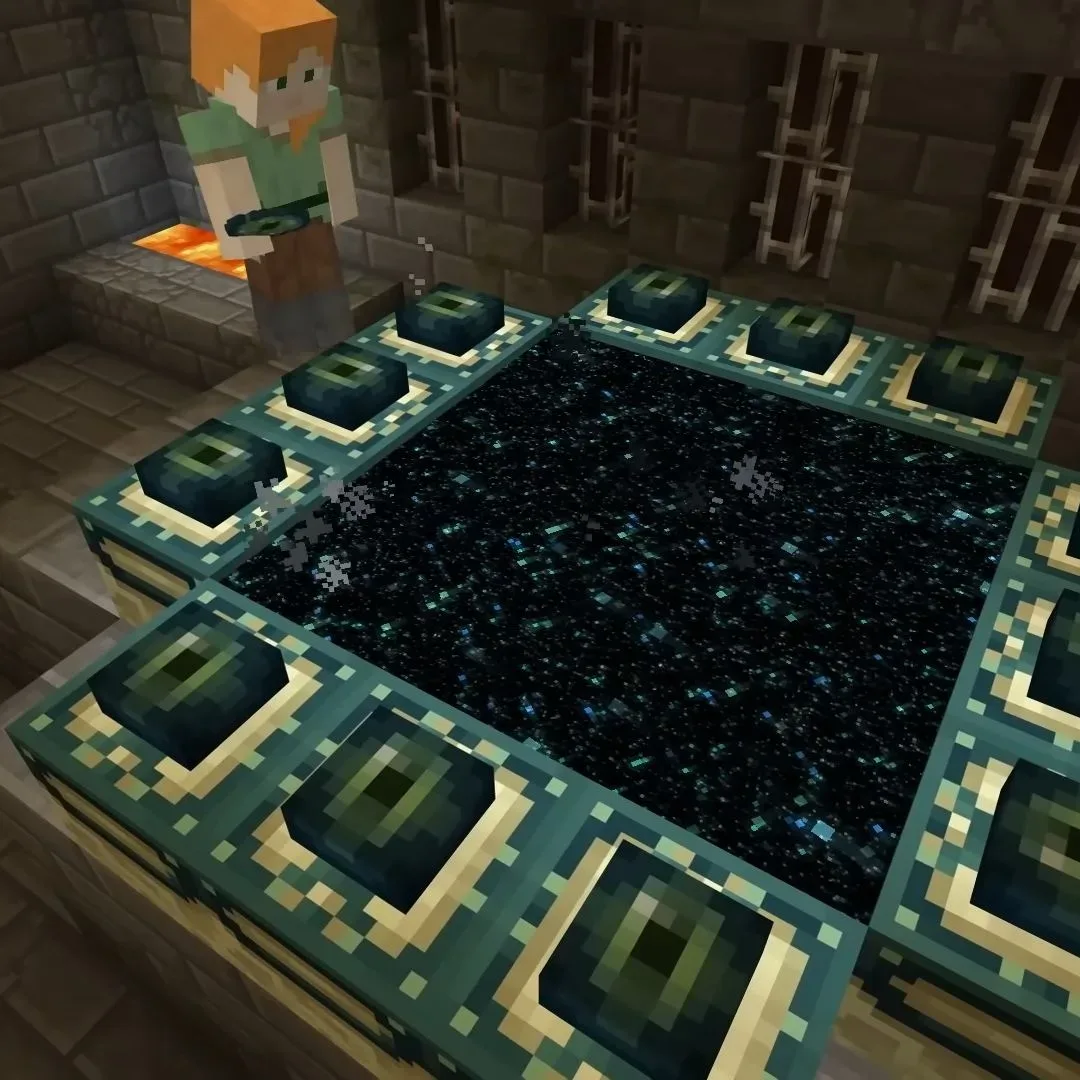
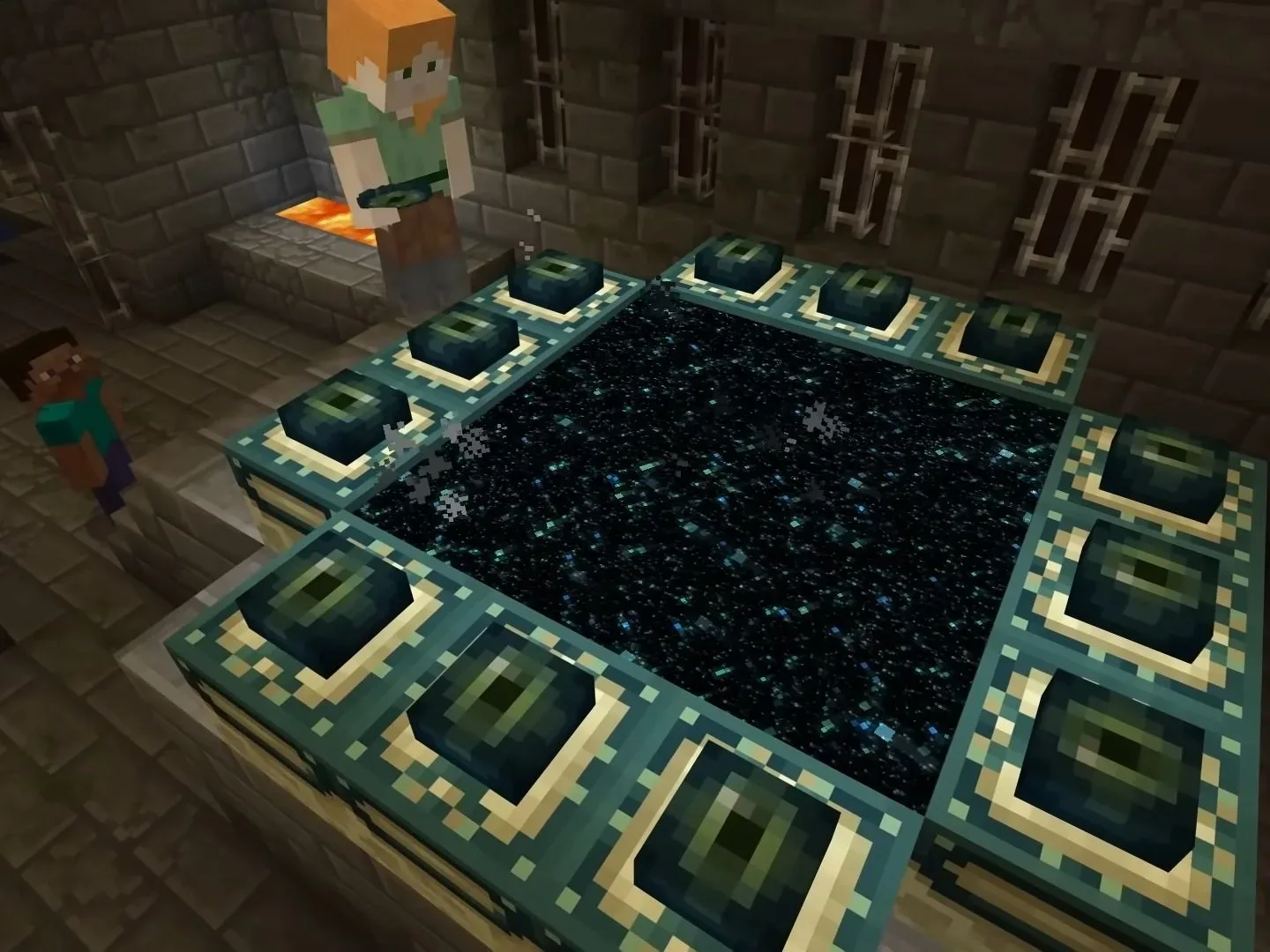
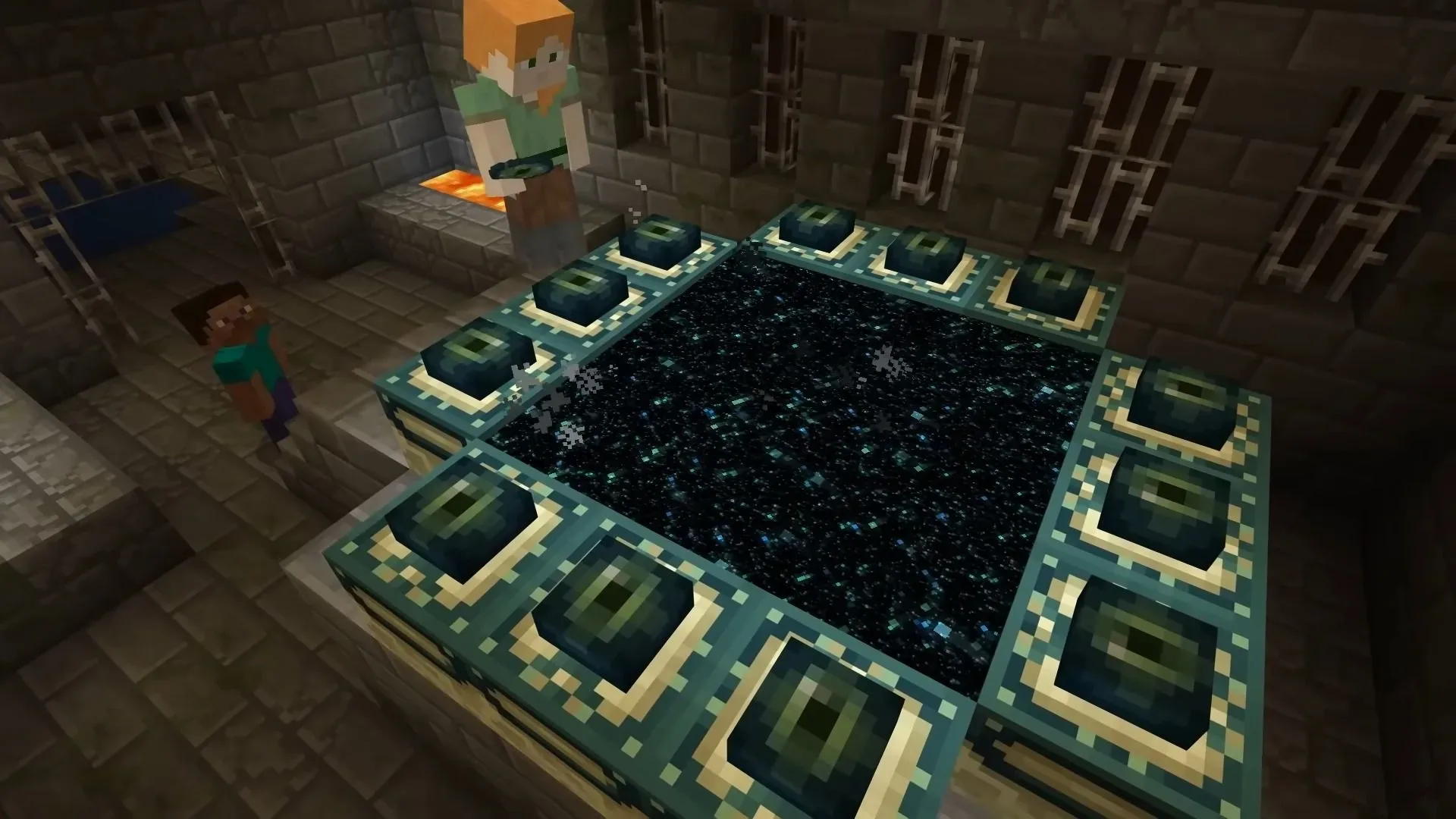
For mobs to finish Minecraft, they first need access to The End. That is the biggest limitation on the scenario. In a standard journey, a player finds a stronghold, obtains Eyes of Ender, and places them into an End Portal frame. The mob cast cannot take that initial step: it cannot make Eyes of Ender or fill the frame.
So the simulation starts from a world with all 12 portal-frame slots already occupied. The modeled world uses seed -535646876083114041, and the location needs to be in a snowy biome. Those conditions are not incidental conveniences; they are prerequisites for the long causal chain that follows.
With the portal open from the outset, it becomes theoretically possible for wandering creatures to enter The End. “Theoretically” is doing heavy lifting here. Access alone does not slay the dragon. The world must first generate the peculiar circumstances for Endermen, Snow Golems and Creepers to successively reshape terrain, breach obstacles and create a method of damaging a flying boss.
How a world full of mobs could reach the dragon
The process begins in the Overworld with an Enderman. Endermen can pick up and place certain blocks. In this scenario, one must place a pumpkin block onto snow, which creates a Snow Golem. The snowy setting matters because it supplies the snow needed for that construction.
That first golem is not a dragon slayer. Its immediate importance is much more mundane: it needs to wander underground near the activated portal and provoke Creepers. A Creeper’s explosion destroys blocks, allowing the environment to be changed without a player mining a route. Over immense spans of simulated time, this destructive behavior can open a path to the portal.
Related coverage includes Minecraft Simulation Suggests the Game Could Beat Itself After Nearly 2 Billion Years.
Then the chain has to repeat and expand in The End. Endermen have to go through the portal and place blocks there. Further Creeper explosions are needed to open a route from the End-side portal room toward the surface. Those placed blocks can provide paths for more Snow Golems to reach the relevant parts of the dimension.
It is worth separating a few mechanics that can otherwise sound like the same event:
- Portal activation is the impossible part for the mobs in this thought experiment, which is why the 12-eye portal is supplied at the beginning.
- Terrain access is the slow, explosive work of Creepers clearing routes where no player is digging.
- Crystal destruction comes from Snow Golems throwing snow while Endermen move through the area. Those snowballs can, on occasion, destroy the Ender Dragon’s healing crystals.
- Dragon damage requires Creepers to be in The End and to explode at the extremely fortunate moment when the dragon is close enough, with Snow Golems providing the provocation.
In normal play, players deliberately destroy the crystals that restore the dragon’s health, then attack the dragon with chosen equipment and timing. The simulation replaces that deliberate plan with wandering, chance, explosive collateral damage and a waiting period best measured on a geological—or perhaps cosmological—scale.
Why Monte Carlo modeling is the point, not a shortcut
A Minecraft world cannot realistically be left running for nearly two billion years. Nor is it practical to recreate every small decision of every entity, tick by tick, for that duration. RedLogic’s approach is to represent important random events and calculate the expected time until they occur.
Monte Carlo simulation is a technique for studying systems with uncertain outcomes. Rather than predicting a single future with perfect certainty, it repeatedly samples the random variables that affect an outcome. In this case, relevant variables include an Enderman’s movement, whether it picks up a pumpkin, whether it reaches the portal, and the positioning of mobs and the dragon at critical moments.
The term random variable sounds intimidating, but it simply means a value shaped by chance. A dice roll is a familiar example. Minecraft mob movement and interactions similarly contain behavior that can be treated statistically for this purpose. The model does not need to replay millions of unimportant movements one at a time if it can estimate the waiting time for a consequential event, such as a successful traversal or an explosion opening a needed route.
This approach relies on the law of large numbers: when enough samples are taken, an observed average tends to approach the underlying average for the modeled process. It is a way to compress an infeasible amount of simulated game time into calculations about probabilities.
That distinction also defines the result’s limits. The 1.975-billion-year figure is a simulation result for its modeled conditions, not a guarantee that every suitably arranged real Minecraft world would finish at exactly that age. The full internal workings of the simulation are not publicly detailed, so readers should understand the estimate as a visualization of a probabilistic model rather than a complete, independently inspectable game replay.
A timeline where progress barely deserves the name
The individual milestones reveal why the eventual dragon defeat takes so long. At 34,777 simulated years, a pumpkin was transported for a further 2,000 years before it became the first Snow Golem to begin carving a route toward the portal. Even the opening move is a saga of waiting for a block to be picked up, moved and put to exactly the right use.
Once access to The End is involved, the timing becomes even more punishing. The simulation projects 2.9 million years before a route out of the End-side portal room opens. Reaching the dimension is thus not equivalent to reaching the fight. The participating mobs still need a viable passage through an environment that players normally navigate and modify intentionally.
The crystal phase provides perhaps the strangest image from the entire exercise. One Snow Golem reportedly wandered The End for 18 million years between destroying one healing crystal and another. This is an endurance record with no trophy, no food break and no apparent awareness that the task involves a dragon.
Damage to the boss arrives at an even less reassuring pace. Nearly a quarter of a billion years into the simulation, the Ender Dragon had lost only 2% of its health. That number clarifies the central bottleneck: the model does not merely require Creepers to enter The End. It requires their detonations to line up with the dragon’s position, after the crystals are no longer restoring its health. Every part of that sentence is a separate opportunity for the universe to do nothing useful.
Eventually, though, a sufficiently long sequence of rare events produces a defeated dragon and the end credits. There is a lovely technical lesson embedded in that ridiculous outcome. A game can have a clear player-directed objective while still containing systems whose unintended interactions form a second, almost unimaginably slow route to victory.
What the experiment does—and does not—say about Minecraft
The simulation is best read as an exploration of emergent behavior. Emergent behavior describes a larger outcome produced by simpler rules interacting, rather than by a dedicated instruction that says “make the game finish itself.” Minecraft’s mobs each follow their own systems. The dramatic result comes from their overlap: block placement enables golems, golems influence Creepers, explosions alter paths, and chance alignments affect crystals and the dragon.
It does not establish a practical automated speedrun, a survival strategy, or a hidden way for players to bypass the normal Ender Dragon encounter. The setup needs the already-completed 12-eye portal that mobs cannot activate, a suitable snowy environment, and an interval of time vastly beyond what a live play session can accommodate. Even then, the modeled route is a statistical possibility, not an instruction list that players can reproduce on demand.
It does, however, show why sandbox-game systems remain so fertile for experimentation. A player looking at an Enderman with a pumpkin, a Snow Golem, and a Creeper would normally see unrelated mobs and materials. The simulation treats them as links in a probability chain whose endpoint is Minecraft’s credits. That is less a replacement for playing than an argument for the strange depth hiding behind familiar mechanics.
For a very different slice of current PC gaming, see the latest report on Graveyard Keeper 2’s Steam pre-orders. Minecraft’s simulated saga, meanwhile, is a reminder that the most patient possible run would not be carried by a hero at all—just an improbably effective procession of mobs accidentally doing everyone’s job for them.