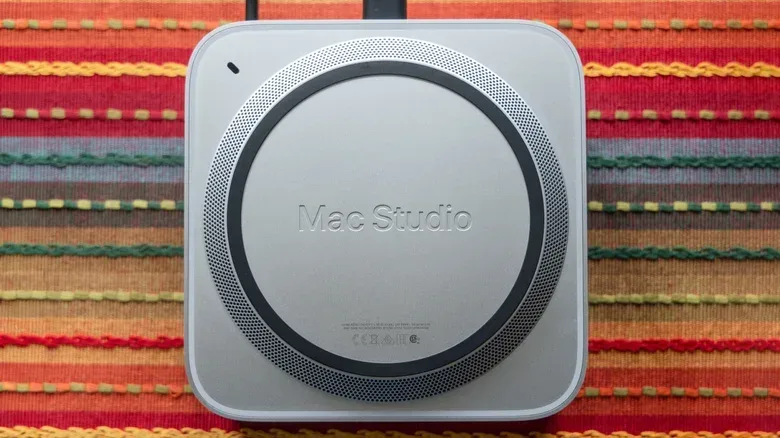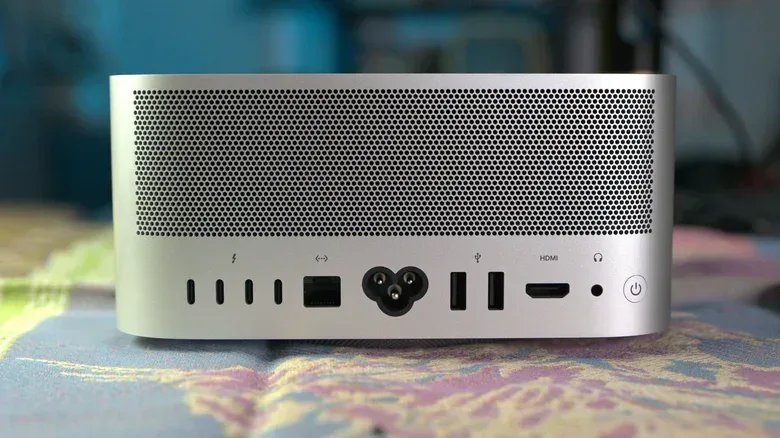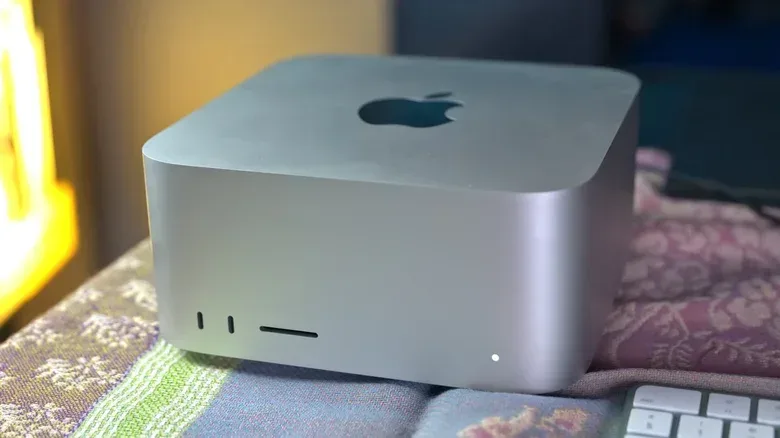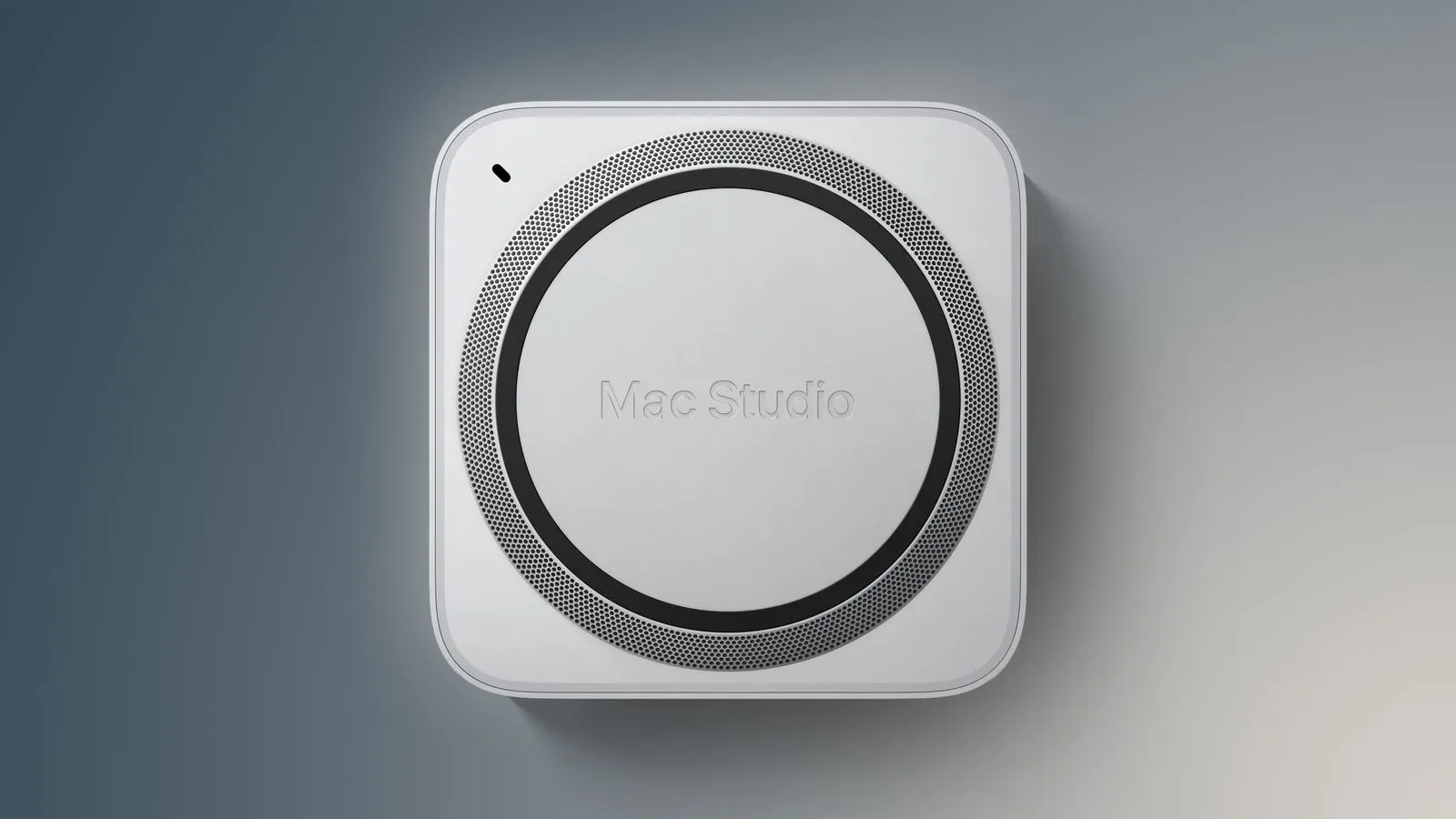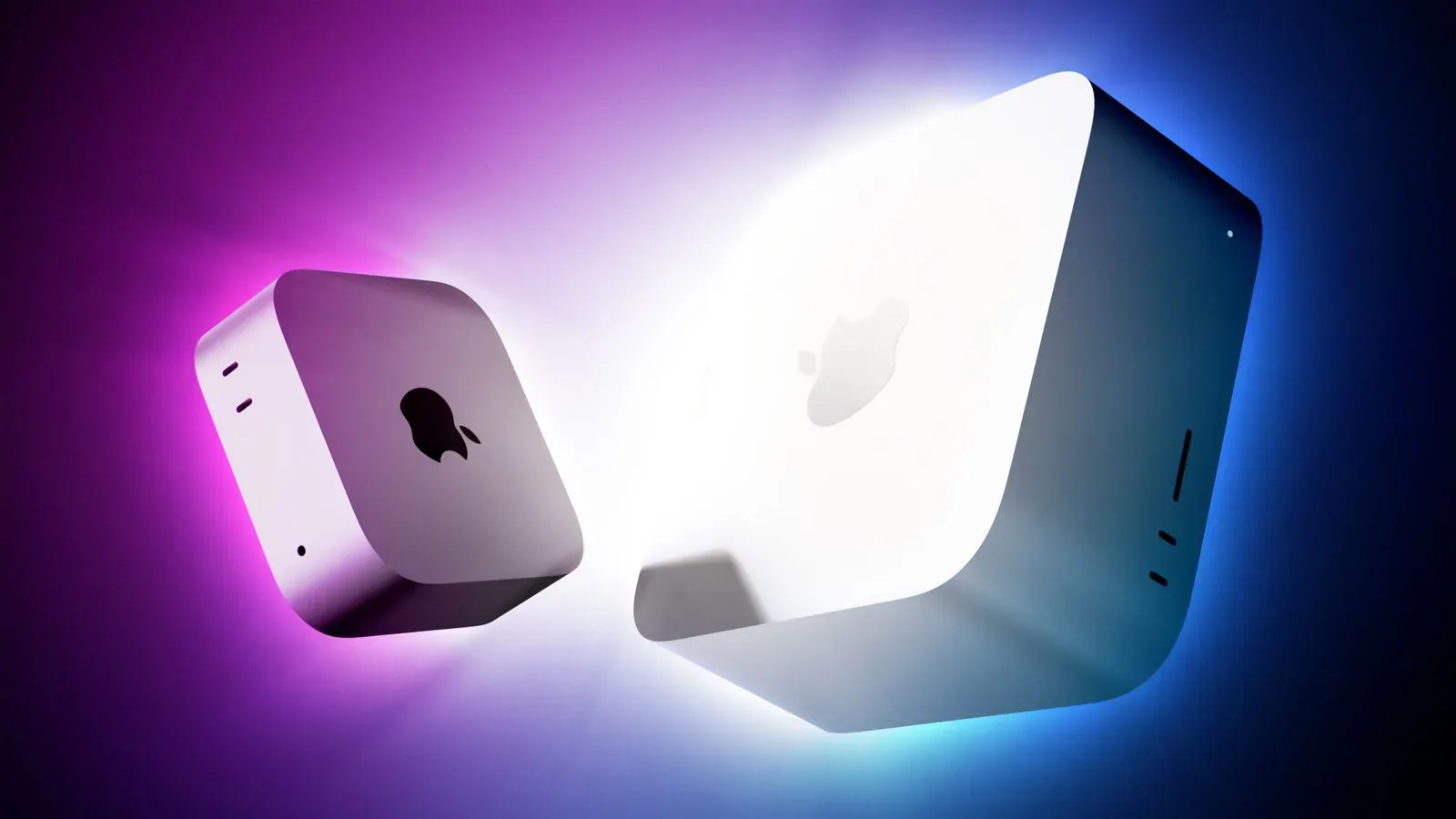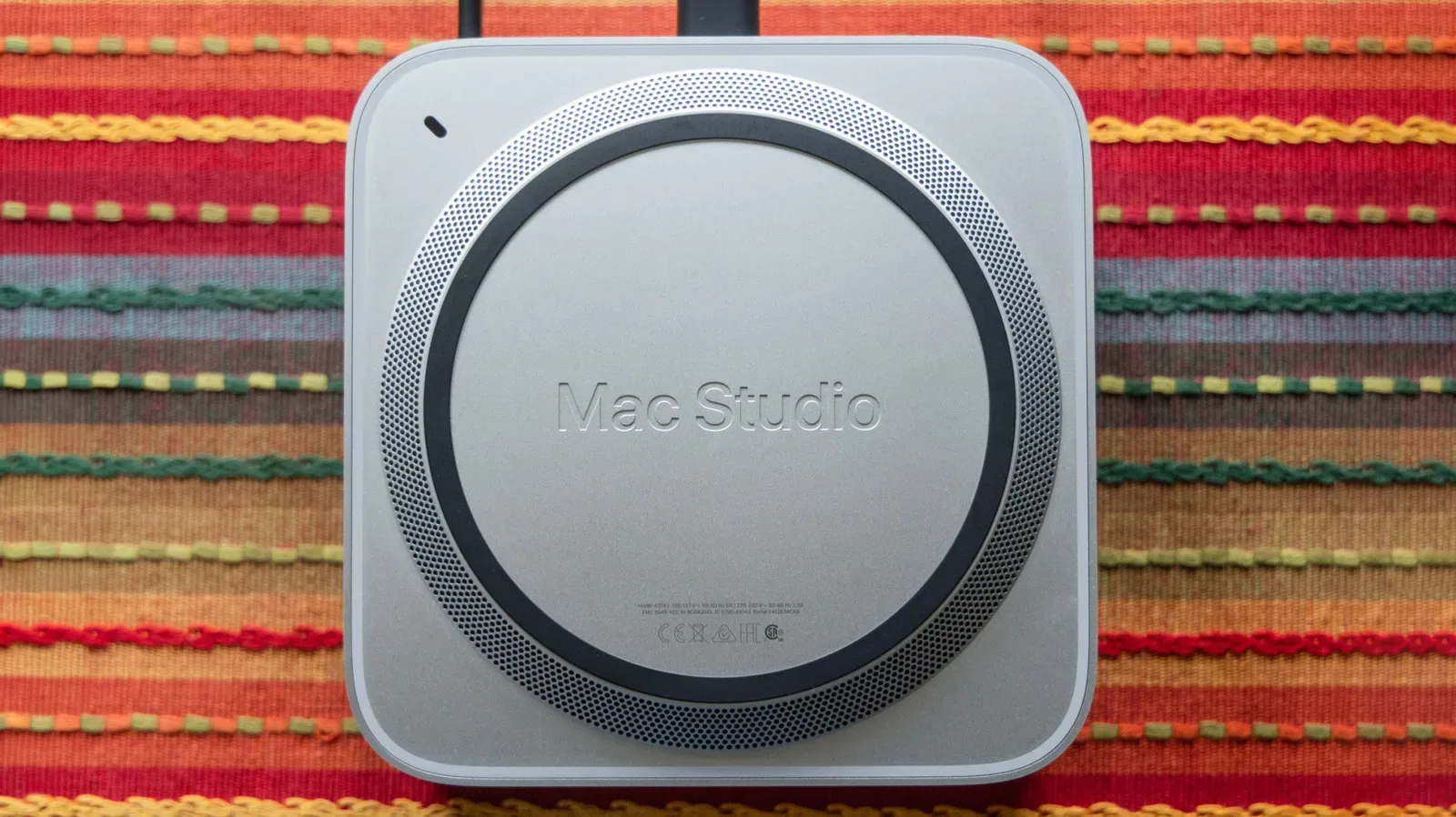
Apple’s newest Mac Studio is positioned as a compact desktop for work that simply does not fit comfortably inside a mainstream machine: local AI inference, enormous datasets held in memory, demanding VFX, and high-resolution video workflows. The trouble is that its price now makes that positioning exceptionally literal. The M5 Max model begins at $2,500, while the M5 Ultra begins at $5,500. At the heavily configured end, an M5 Ultra with 256GB of unified memory and 2TB of storage reaches $11,299.
That is not merely the usual premium attached to a new processor generation. In the 18 months since the prior Mac Studio, the M5 Max entry price has climbed $500, while the M5 Ultra starting price is $1,500 above the M3 Ultra’s. A comparable high-end system with 256GB of memory and a 2TB SSD is $3,800 more expensive than its M3 Ultra predecessor was at launch.
The short version is that a Mac Studio configured for the jobs Apple is emphasizing needs a remarkable amount of extremely fast memory. Memory and storage component prices have risen sharply. But component costs alone do not fully explain every dollar in the final price, leaving room for two reasonable interpretations: Apple may be insulating itself against further increases, it may be expanding its margin on a specialist workstation, or both.
The Mac Studio has become a specialist machine
Apple’s smaller desktop remains the more sensible reference point for most people. The Mac mini tops out at an M5 Pro, 64GB of RAM and 307GB/s of memory bandwidth. That is a substantial amount of capability for many creative and technical tasks. It also establishes the line Apple is drawing: once a workload needs far more memory, much greater memory bandwidth, or the maximum GPU resources, the Mac Studio is now the step up.
The M5 Max Mac Studio starts with a 32-core GPU and can be configured with up to 128GB of unified memory. A version with an 18-core CPU, 40-core GPU, 128GB of memory and 2TB of storage costs $5,899. Apple presents that tier as capable of workloads such as large-language-model use and 8K video editing.
The M5 Ultra is the much more unusual proposition. It combines two M5 Max processors and supports up to 512GB of unified memory, with that top capacity expected next month. The 256GB configuration reaches up to 1.2TB/s of memory bandwidth—four times the stated bandwidth ceiling of the Mac mini. Its entry model starts at $5,500 with a 30-core CPU, 64-core GPU and 96GB of unified memory. The higher-spec version uses a 36-core CPU, 80-core GPU and 256GB of unified memory.
These specifications matter because AI work is often constrained by memory capacity and the rate at which data can move through that memory, not just by processor core counts. An LLM, or large language model, is a system with a vast number of learned parameters. Keeping a model and its working data in local memory can avoid reliance on a remote service and can improve the speed at which the machine generates tokens—the chunks of text models process and produce. Apple’s stated use case is running models with hundreds of billions of parameters locally, while keeping huge datasets in memory.
The workstation pitch extends to video and effects work. Apple says the M5 Ultra can color-grade uncompressed 8K footage in real time, render complex visual-effects simulations and play as many as 33 streams of 8K ProRes 422 video at 30 frames per second. Those are not typical desktop requirements. They describe a system intended for production professionals, teams and companies with work whose value can plausibly justify a five-figure desktop.
There is also a scaling story for the deepest-pocketed AI users. Four Mac Studio systems can be linked through Thunderbolt 5 to create a cluster with as much as triple the performance of a single system. That does not make four computers a casual purchase; it reinforces that the M5 Ultra is aimed at a narrow group that may regard local compute as business infrastructure rather than as a personal PC upgrade.
Unified memory is central to both the performance and the bill
The important term here is unified memory. Rather than treating system memory for the CPU and video memory for the GPU as separate pools, Apple’s architecture uses shared memory. That arrangement is particularly relevant to graphics, video and AI tasks where both sides of the chip need rapid access to the same data. The benefit is efficiency and speed; the trade-off is that large, very fast pools of memory become a defining part of the machine’s cost.
The M5 Ultra uses LPDDR5X memory, installed directly on the processor package and connected through an exceptionally wide 1,024-bit bus. LPDDR5X has a maximum throughput of 172GB/s per memory component, while the broad interface allows the fully equipped M5 Ultra to reach its stated 1.2TB/s figure. In plain English, bandwidth is the quantity of information that can be moved each second. More bandwidth helps prevent powerful CPU and GPU resources from sitting idle while they wait for data.
This is not ordinary inexpensive desktop RAM. The memory is among the fastest and costliest available outside high-bandwidth memory, or HBM, a category commonly used in servers. Nor is it a component that buyers can casually add later: in this design, memory configuration is a purchase-time decision. That makes choosing capacity more consequential than it is on a desktop with user-upgradeable DIMMs.
Reported estimates put Apple’s LPDDR5X cost earlier in the year at roughly $6 per gigabyte, with a possible increase to around $10 or $11 per gigabyte. Those figures are estimates rather than a published Apple bill of materials, but they illustrate the scale of the issue. At 256GB, memory alone could represent approximately $2,500 to $2,800 in cost before the company accounts for the processor, enclosure, power delivery, cooling, storage, ports, assembly, logistics, support and profit.
Storage is another pressure point. The 2TB NAND storage used in the machine is estimated to cost Apple roughly $300 to $500 under current conditions, using high-end PCIe 5.0 storage. Reported comparisons suggest memory pricing is around four times higher than at the time of the preceding Mac Studio, while storage pricing has doubled. NAND is the flash memory that holds the operating system, applications and files even after the computer is shut down; it is distinct from RAM, which is the high-speed working space used while tasks are running.
Why components do not tell the whole pricing story
Using those rough memory and storage estimates, the added component cost at the high end comes to around $2,200 to $2,400, or roughly $2,400 to $2,600 after allowing for other component changes. That is a meaningful increase. It still falls short of the $3,800 gap between the $11,299 M5 Ultra configuration and the M3 Ultra system with the same 256GB memory and 2TB SSD specification, which launched at $7,499.
That difference does not prove a single explanation. Hardware pricing contains costs unavailable to outside observers, and estimated component pricing is inherently imprecise. Still, Apple reportedly targets roughly 40 percent gross margins on computer hardware, and the M5 Ultra price movement is substantially greater than the estimated change in component costs.
One possibility is hedging. If Apple expects memory costs to remain volatile or rise again, charging more now could give it room to avoid repeated model-year price adjustments. Another is simply margin expansion while supply conditions are tight and the product serves buyers with unusually demanding needs. Both can be true at once. Apple has already said that it had not previously seen component costs climb so sharply and quickly, and that absorbing them indefinitely was no longer sustainable.
That wider context matters beyond one desktop. Apple hardware buyers have also recently encountered reports of early iPhone 18 Pro setup, freezing and Face ID problems, a reminder that premium-device decisions involve more than a spec sheet. Early iPhone 18 Pro owners have reported Face ID failures, freezes and setup issues; Mac Studio buyers, by contrast, are confronting an unusually conspicuous price calculation before the machine reaches their desk.
Which configuration makes sense?
For video editors and graphics professionals who need meaningful headroom but do not need enormous local AI models, the M5 Max looks like the less extravagant route. Configurations with 48GB or 64GB of unified memory in the $3,100 to $3,600 range are presented as the practical value area within the current Mac Studio lineup. They retain the workstation-oriented form factor without turning memory capacity into the dominant cost of the purchase.
The M5 Ultra makes more sense where its central advantages are truly used: very large memory capacity, extreme bandwidth, local-model work, high-end VFX, and workflows that can translate faster completion into paid output. A buyer should not treat the Ultra as a straightforward performance upgrade simply because it is the larger chip. Its price premium is tied heavily to resources that many applications will not require.
- Consider the M5 Max if the priority is advanced video or graphics work, but 48GB to 128GB of memory is sufficient.
- Consider the M5 Ultra only when local AI, huge datasets, memory bandwidth or top-end post-production workloads need capacities beyond the M5 Max’s ceiling.
- Do not assume waiting guarantees savings. Apple rarely reduces list prices during a product’s active life, and the previous Studio family reportedly increased in price as memory costs rose.
- Choose memory deliberately. In a unified-memory design, capacity is tightly integrated with the system and cannot be approached as a routine later upgrade.
Waiting could pay off only if memory markets ease, but the available signals do not make that outcome look imminent. Apple has reportedly agreed to pay 30 to 40 percent more for RAM and storage next year, and projections cited for the RAM shortage extend through 2028. That does not make future reductions impossible; it means they are too uncertain to be the basis of a time-sensitive buying plan.
For anyone whose current computer is holding up paid work, the practical decision is uncomfortable but direct: buy the capacity genuinely required rather than a theoretical maximum, and do not count on the present Mac Studio prices falling soon. The M5 Ultra is a formidable local-compute machine, but the new pricing makes it clear that Apple regards it as one for organizations and specialists—not a luxury desktop for every creative hobbyist.