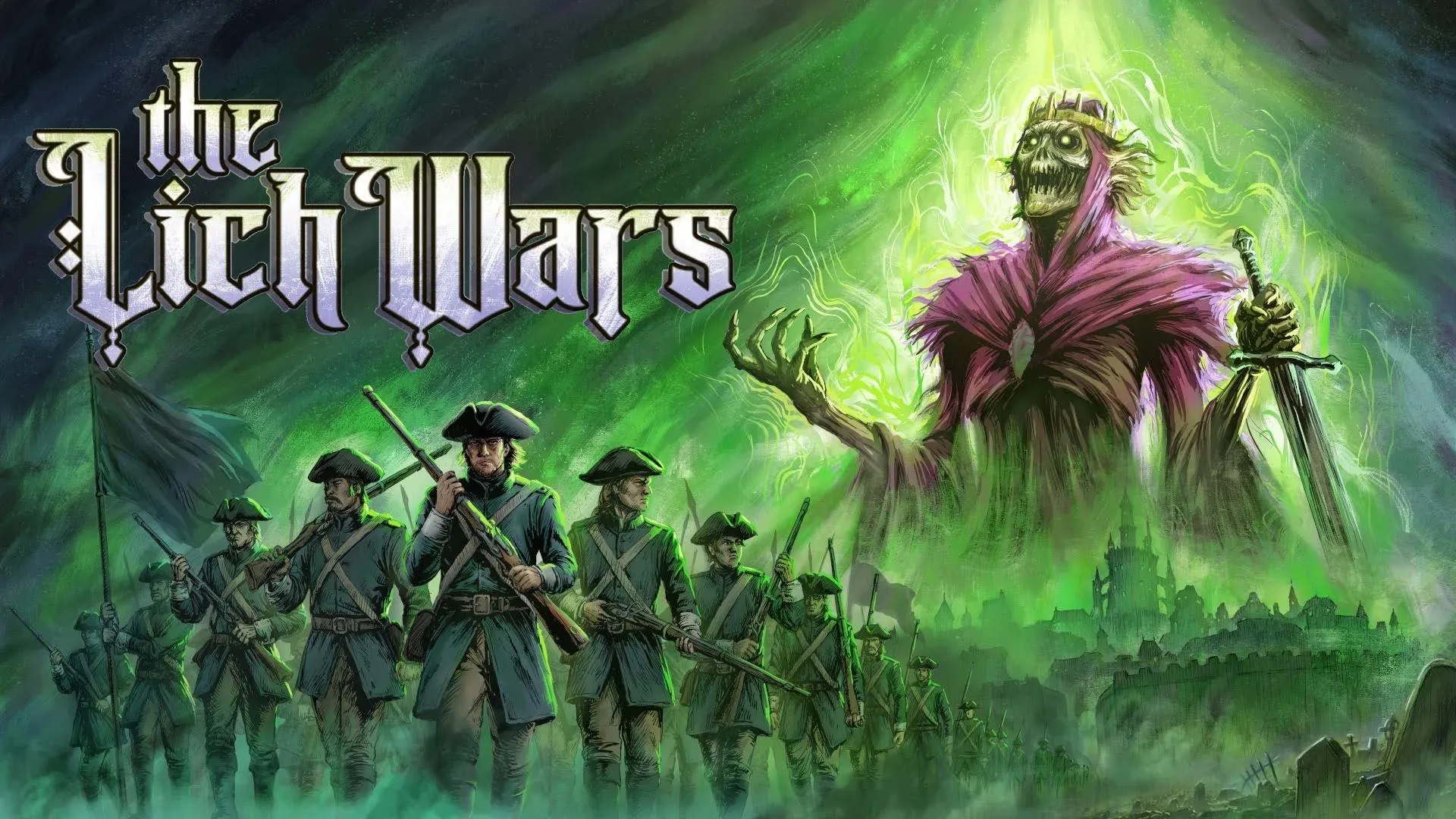
Psychic Software has revealed The Lich Wars, a Gothic role-playing game built around branching interactive fiction, character skills and prose-led combat. Set before The Necromancer’s Tale, it follows a musketeer across almost three decades of service, two wars against the undead and a growing crisis of necromancy in the alternate-history kingdom of Rulsthen.
The game is in development for PC via Steam. No release date has been announced. A reveal trailer is available, but the clearest picture so far is of a deliberately text-forward RPG: one that uses a large written narrative and role-playing checks to shape a military career rather than treating story as a brief bridge between battles.
A prequel designed to stand on its own
The Lich Wars is a prequel to The Necromancer’s Tale, but Psychic Software says players will not need prior familiarity with that game. That is an important distinction for a prequel. It means the new game is intended to provide its own entry point to Rulsthen, its people and the rules surrounding its supernatural threat, rather than rely on recognition of returning names or prior plot knowledge.
For returning players, the earlier setting has a different appeal. Familiar characters will appear at younger points in their lives, while the game explores the events that brought necromancy into Rulsthen. The period covered is 1700 to 1728, a span that had previously served only as a short opening passage in the earlier game.
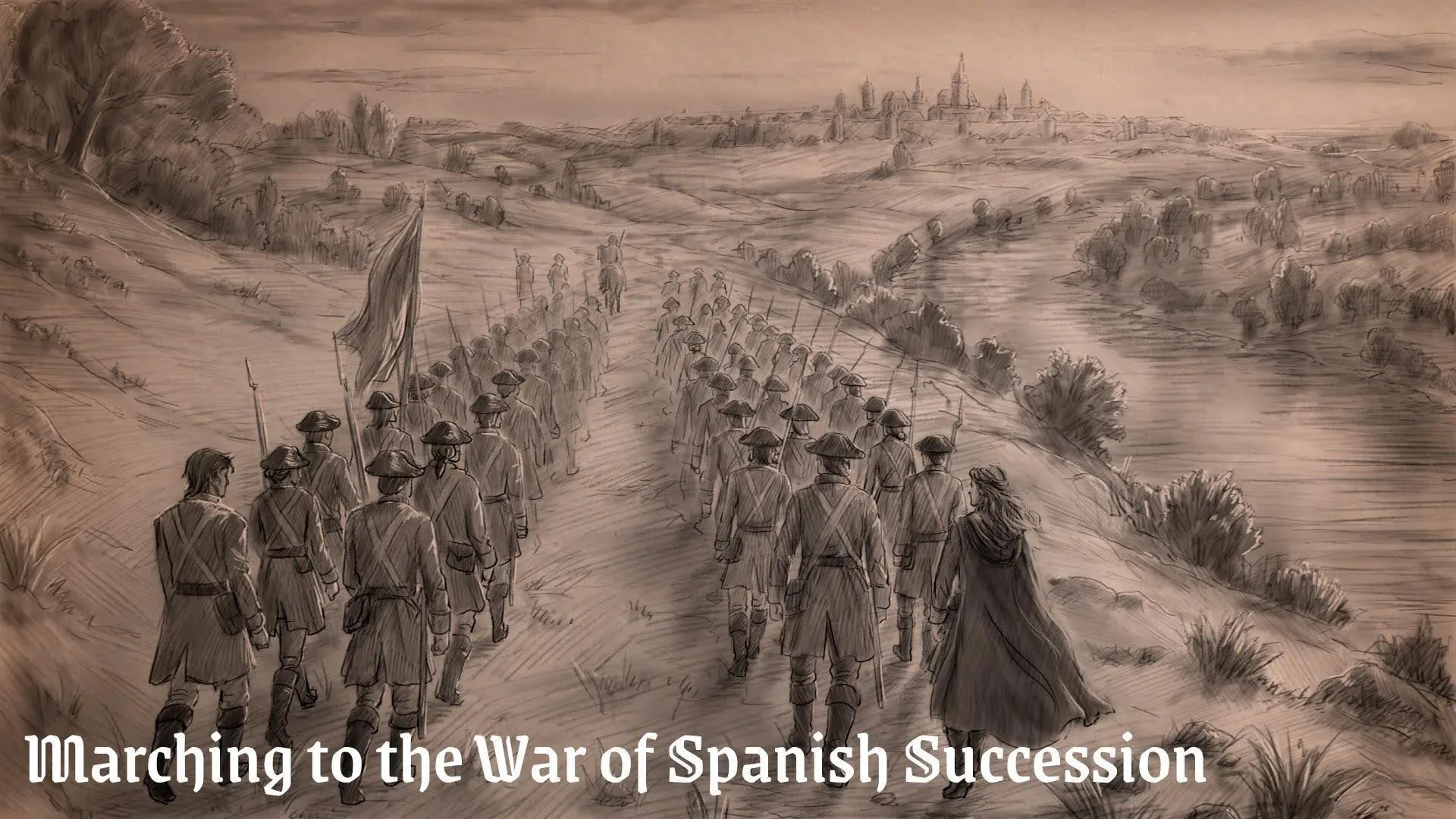
The setting places Rulsthen near Venice, though it is presented as an alternate-history kingdom rather than a literal historical recreation. Players take the part of a member of the Rychva Musketeers, and the premise makes the military institution more than simple background dressing: the protagonist’s career is the framework through which the story’s wars, politics and personal consequences unfold.
That career is said to contain multiple paths. The announcement does not define every route or their exact requirements, so it is too early to treat them as a list of fixed classes or endings. Still, paired with the game’s branching fiction and skill checks, the stated structure suggests that a musketeer’s capabilities and decisions may significantly affect how they move through the long time span.
What “interactive fiction” means here
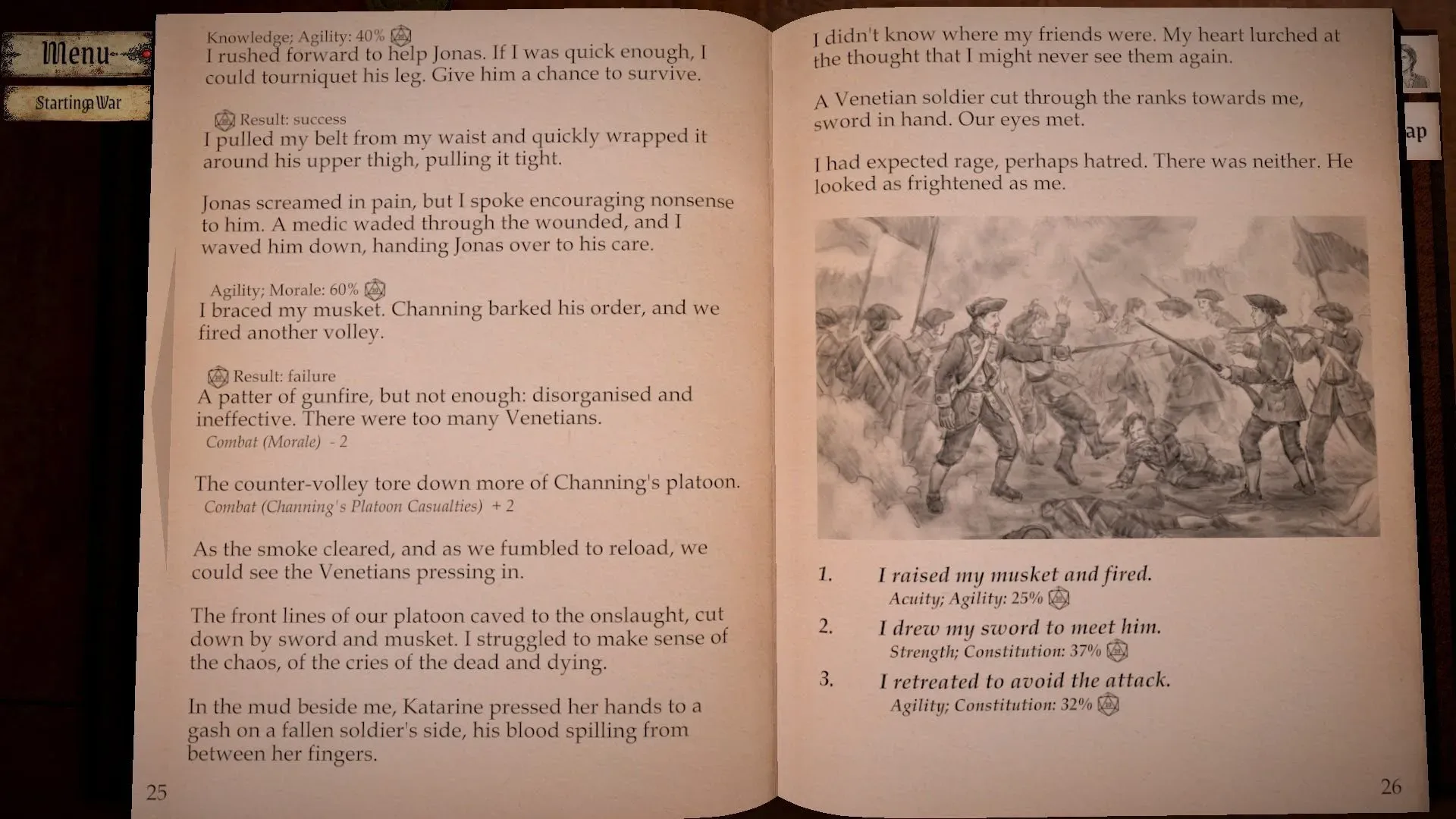
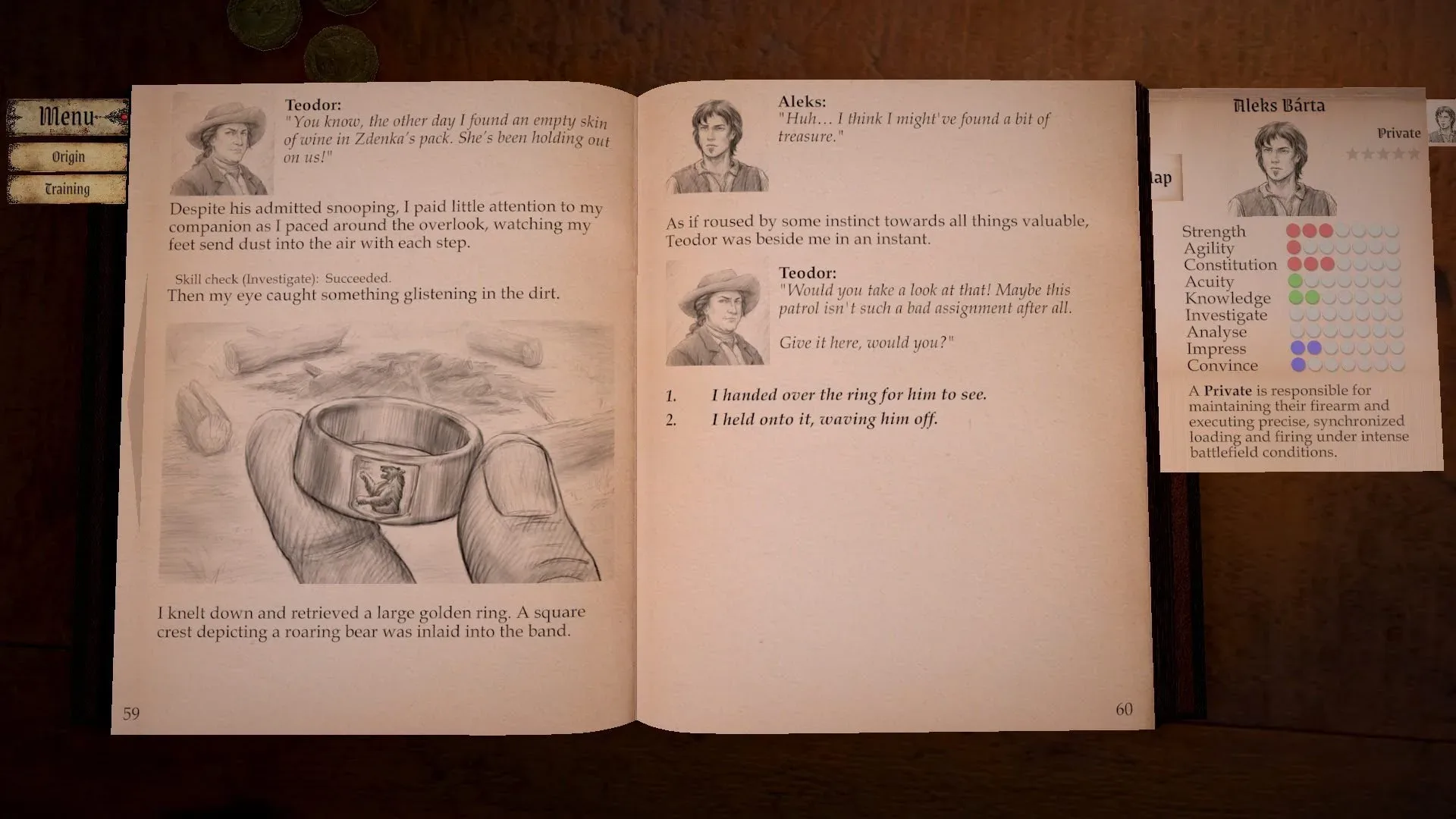
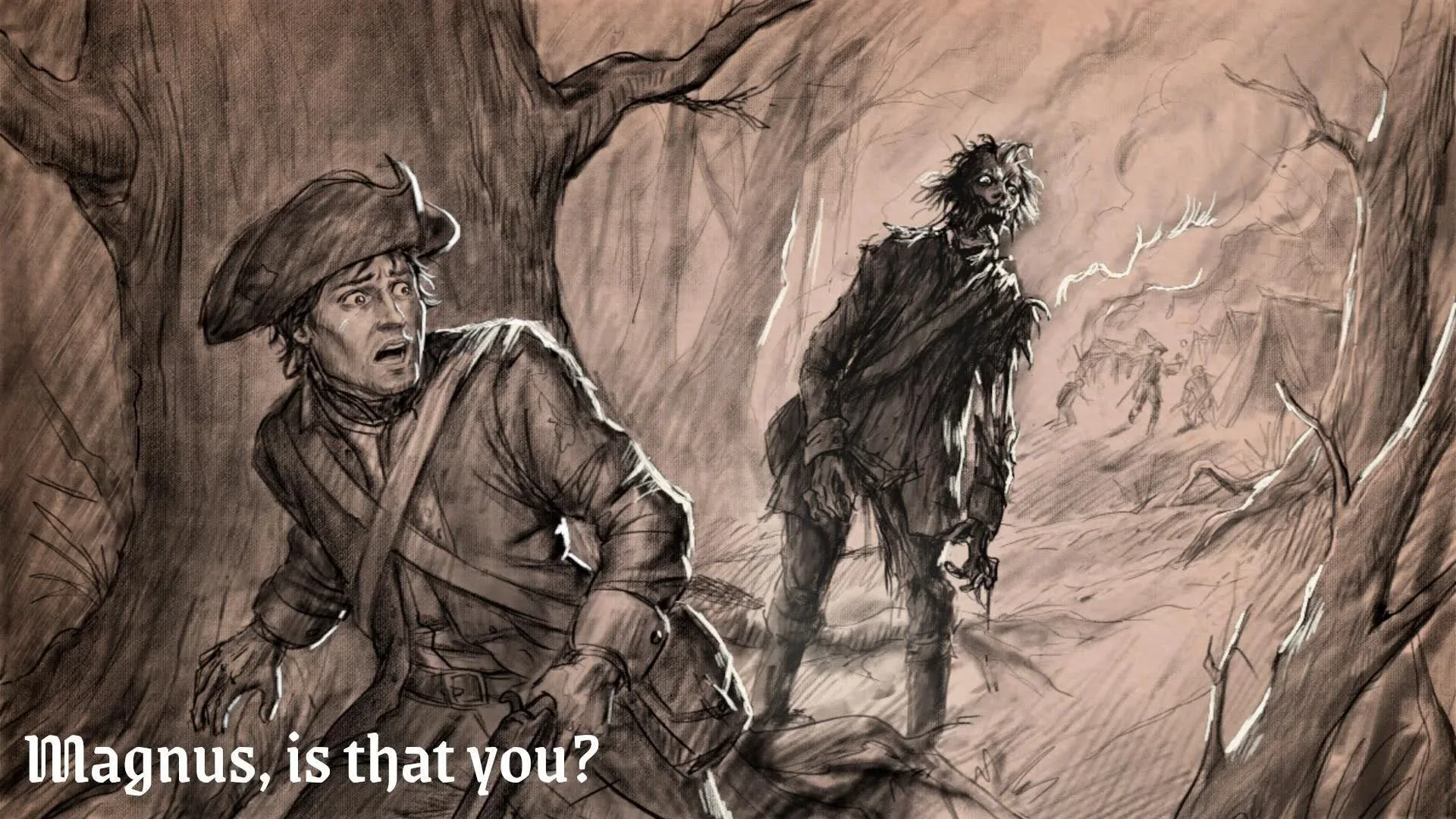
Interactive fiction generally describes a format where reading and decision-making are central to play. In The Lich Wars, that does not appear to mean a bare text interface. The story will play out in a 3D book, while important sequences are represented by hand-painted tabletop miniatures. Hundreds of original illustrations, character portraits and maps will accompany the narrative, and selected dialogue and narration will receive partial voice acting.
The central promise is approximately 300,000 words of hand-written narrative. That figure signals an especially substantial focus on authored prose, although word count alone cannot reveal how much any one playthrough will read or how widely the branches diverge. What it does establish is the intended scale of the written material and the studio’s emphasis on narrative craft.
Related coverage includes The Lich Wars Reveals a 30-Year Gothic Musketeer RPG for PC.
Rather than a straightforward story where choices only alter a line or two of dialogue, the game combines branching passages with checks across nine RPG skills. Those skills cover physical, social and intellectual abilities. A skill check is a game system that tests a character attribute or learned capability in response to a situation; success or failure can affect what the player can do, learn or risk. The announcement has not identified the individual skills or explained the underlying probability rules, but their spread across three types of aptitude implies that violence is not meant to be the only lens for solving problems.
The protagonist and other characters will also contend with unreliable memories. In narrative terms, an unreliable memory is not simply missing information. It creates room for recollections that may be incomplete, self-protective or contradicted by another account. That fits a story spanning decades of war, especially when the people involved must live with choices made under extreme pressure. It may also make investigation and conversation matter as much as a player’s immediate interpretation of events.
Necromancy, civil war and the price of progress
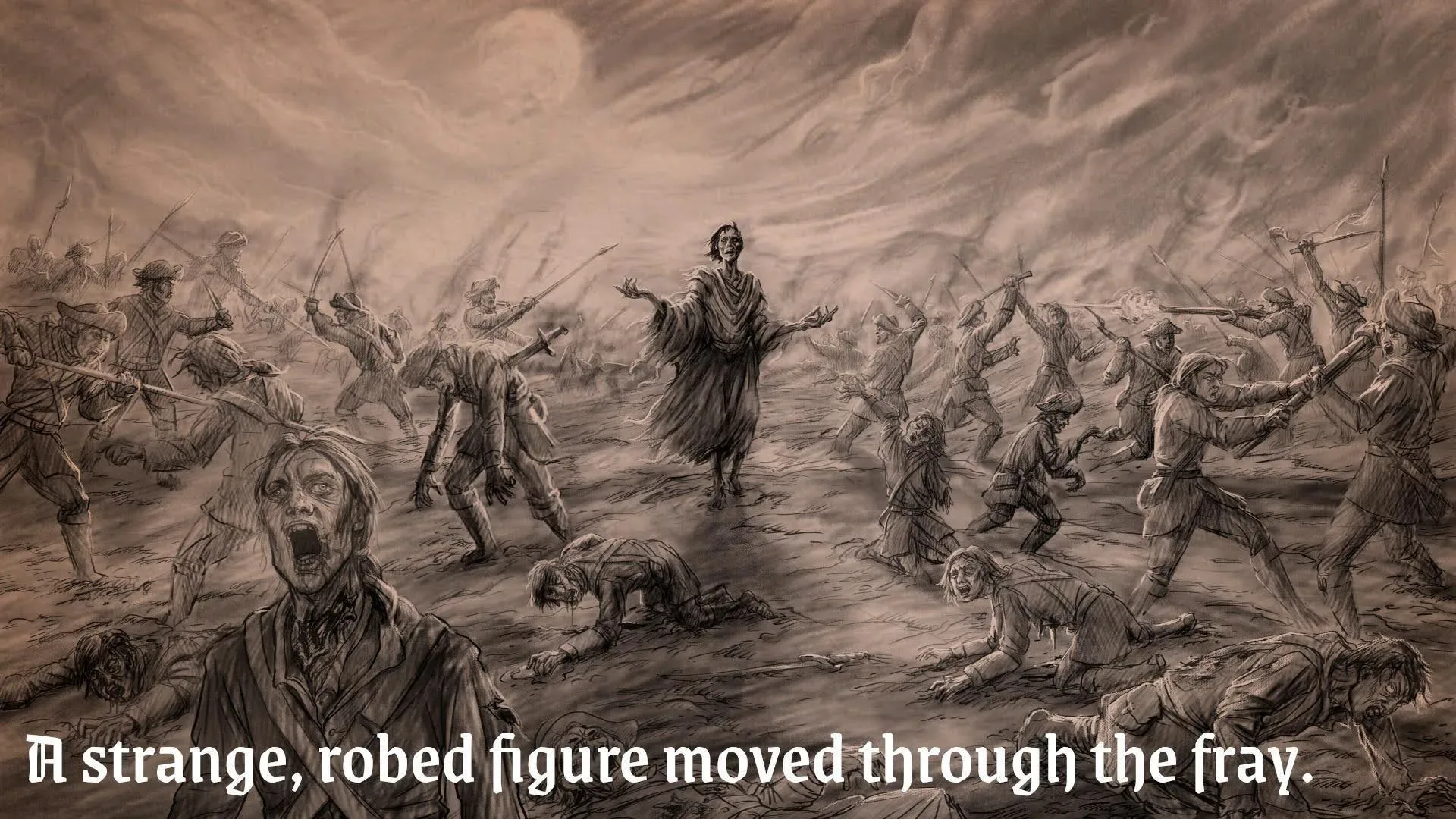
The supernatural premise is not framed as uncomplicated power fantasy. Necromancy functions in this world, but its cost is not fully understood. At the same time, it spreads across Rulsthen as civil war breaks out. That combination positions the undead conflict within a broader social rupture: the danger is not solely monsters on a battlefield, but a country trying to understand and control a force whose consequences remain uncertain.
“At its heart it’s a Gothic tale about a society haunted by its past,” lead developer and narrative lead Sam Redfern said. “Necromancy works, but nobody fully understands its cost.”
Gothic fiction often uses horror, decay and the weight of history to examine fears that are social as well as supernatural. In this case, the studio points directly toward responsibility, the ethics of war and competing versions of the past. Characters remember the wars differently, in ways that allow them to endure what they did. That premise offers a useful reason for the long chronological structure: three decades allow consequences to linger, change shape and become subject to revision rather than vanish once a campaign ends.
There is no claim yet that every decision will permanently transform the kingdom, nor enough detail to map a moral-choice system. The more grounded expectation is that the game’s branching structure, skill checks and disputed memories will support role-playing through viewpoints and consequences. Players may be asked to decide whom to trust and what actions to take in a world where complete certainty is difficult to obtain.
Combat is written, randomized and tabletop-inspired
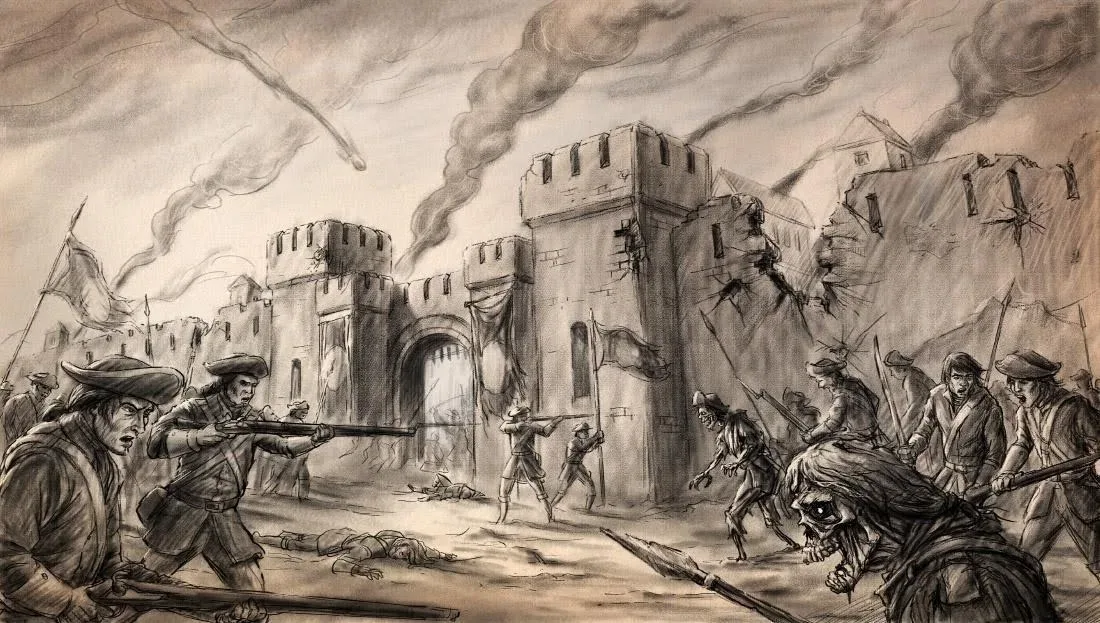
Combat in The Lich Wars is described as tabletop-inspired and narrative-driven. It uses hand-written prose alongside randomized critical-hit tables, moving across several scales of conflict: personal duels, small skirmishes, naval encounters and full battlefield manoeuvres.
A critical hit is typically an unusually consequential combat result, often triggered by chance and capable of producing a greater benefit or a more dramatic outcome than an ordinary success. Here, the critical-hit tables are described as randomized, meaning chance will have a specific role in how combat scenes resolve. The announcement does not state whether players will see dice rolls, select actions from menus, control miniature units directly or use another interface. It would be premature to assume the combat resembles any particular tabletop ruleset.
What is clear is that Psychic Software is positioning battles as authored scenes rather than solely repeatable action encounters. A duel and a naval clash carry very different stakes and tactical contexts, while battlefield manoeuvres imply operations larger than the protagonist’s individual sword or firearm. The tabletop miniatures used for key scenes appear aligned with that presentation, giving military action a physical, diorama-like visual language without displacing the written narrative at the center of the game.
This approach could make the game particularly interesting for players who enjoy RPG decisions but prefer deliberate reading and scenario resolution to reflex-driven combat. Conversely, players looking for confirmation of real-time swordplay, shooter mechanics or a conventional tactical map should wait for further details. None of those implementation specifics have been announced.
Why the long military career matters
Most RPG campaigns cover a compressed period even when their stories concern huge historical shifts. The Lich Wars instead frames almost 30 years as the protagonist’s active career. That can create room for changing relationships, promotions or altered loyalties, though no specific rank system has been detailed. More fundamentally, it lets the game treat war as an experience with aftermath, not merely a sequence of victories.
The two undead wars are not presented as isolated adventures. They are part of an era in which old decisions, state conflict and occult experimentation continue to shape people’s lives. The stated focus on unreliable memories suggests that the account of a war may depend heavily on who is speaking, what they lost and what they need to believe about their own conduct.
The game’s 3D-book framing also seems suited to this historical sweep. A book is a natural metaphor for a life being recorded, revisited and potentially interpreted in different ways. Combined with maps, portraits and illustrations, it may give the campaign the feeling of a chronicle without making it a history lesson. The relevant question for players will be how the presentation serves clarity as branches accumulate across the career; that is something future footage or hands-on details will need to answer.
What has been confirmed, and what remains open
- Confirmed: The Lich Wars is a stand-alone prequel to The Necromancer’s Tale.
- Confirmed: It is planned for PC via Steam and is currently in development.
- Confirmed: Players are a Rychva Musketeer in Rulsthen, near Venice, during an approximately 30-year career that includes two undead wars.
- Confirmed: The game features around 300,000 words of hand-written branching narrative, nine skills, prose-based tabletop-style combat and randomized critical-hit tables.
- Confirmed: Its visual package includes a 3D book, tabletop miniature scenes, illustrations, portraits, maps and partial voice acting.
- Not yet detailed: A release date, exact skill list, combat interface, progression rules, price and the full scope of career branches.
The reveal arrives among a continuing run of PC game announcements, including another recently announced atmospheric PC project, but The Lich Wars has a notably specific ambition: to make the passage of time, the ambiguity of memory and the moral residue of war integral to its RPG structure.
For now, the strongest reason to watch it is that combination of scale and format. A Gothic military narrative with nine broad skills, randomized dramatic turns in combat and a written story of this size could offer a distinct alternative to more action-led RPGs—provided its many systems ultimately support the personal history at the center of the game.