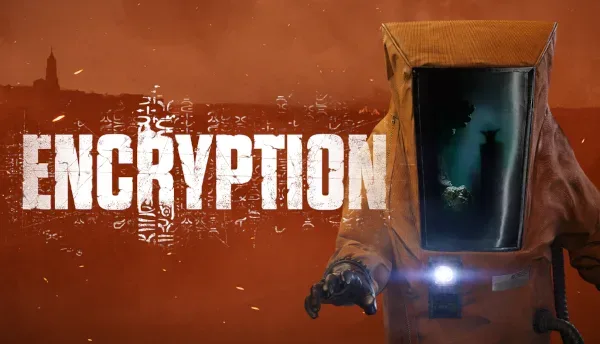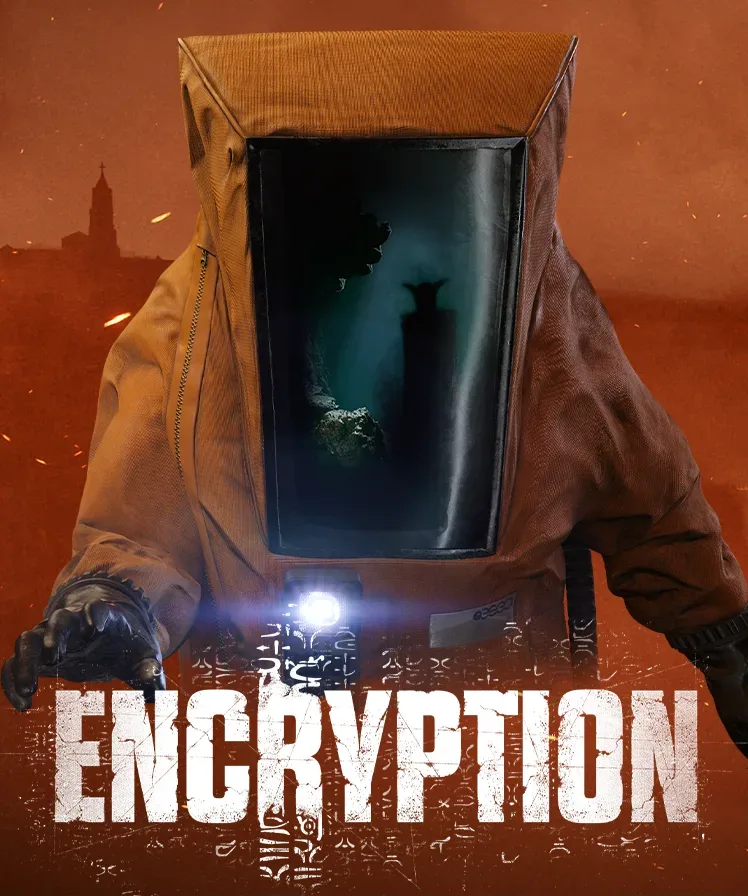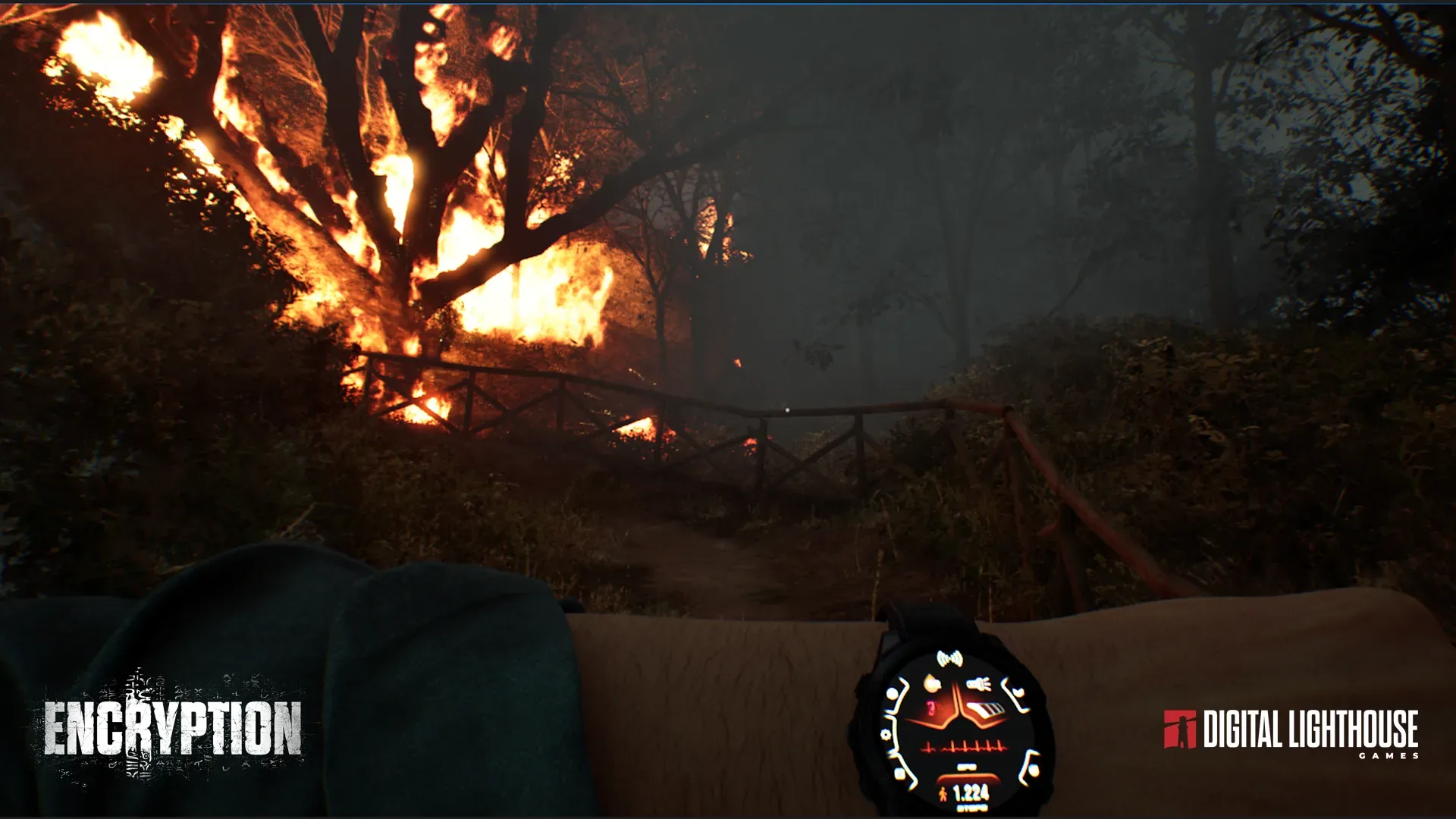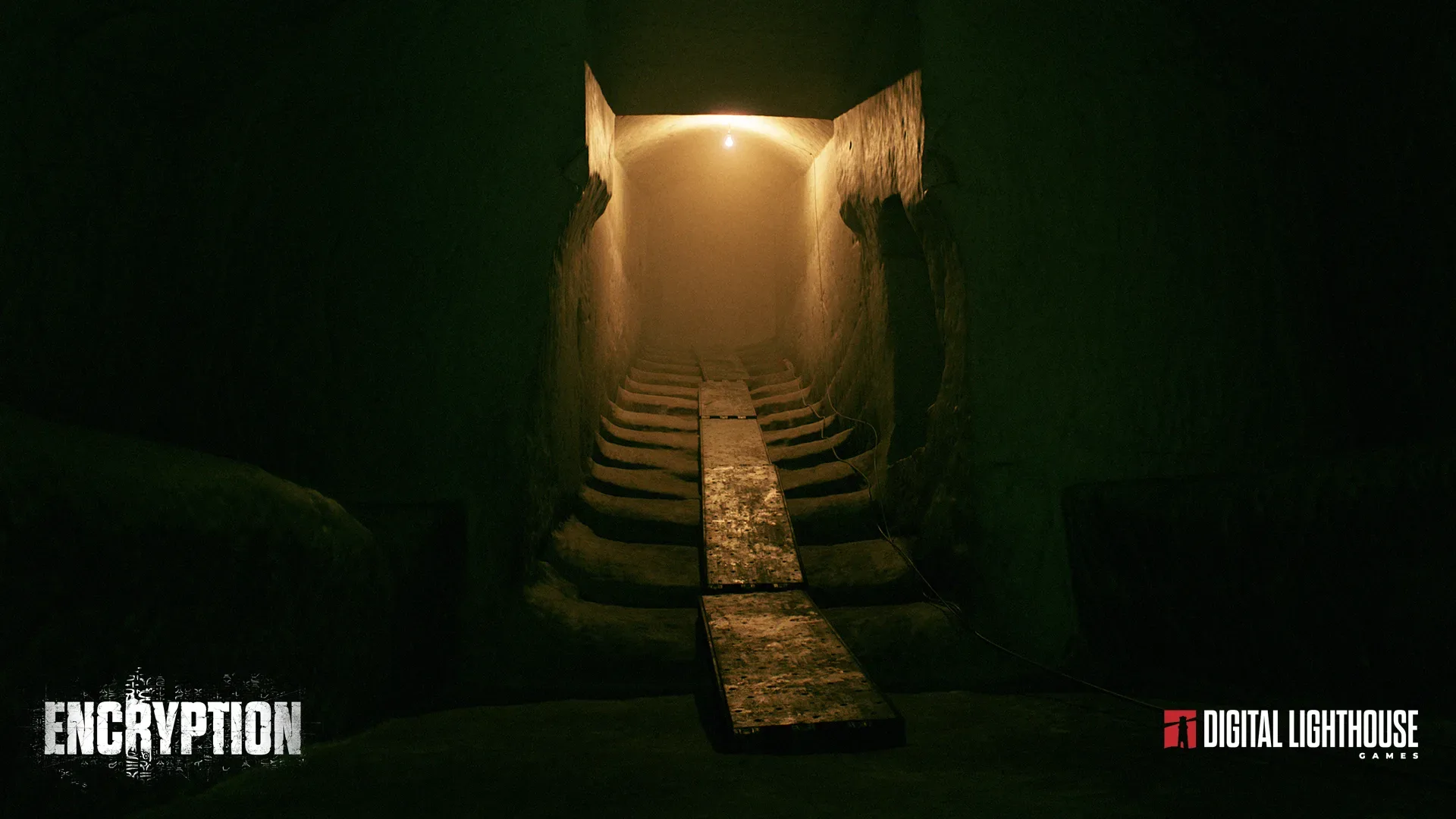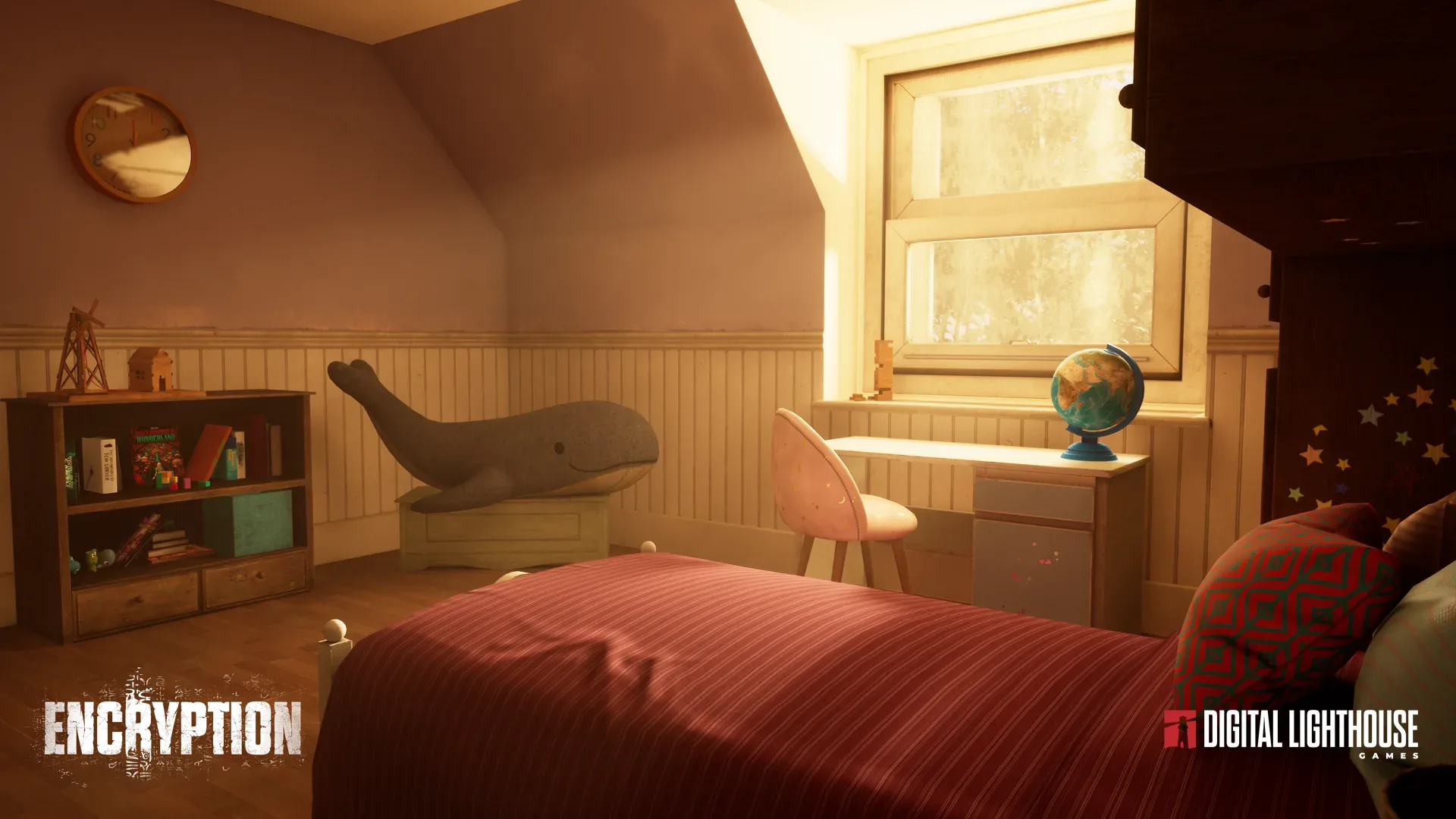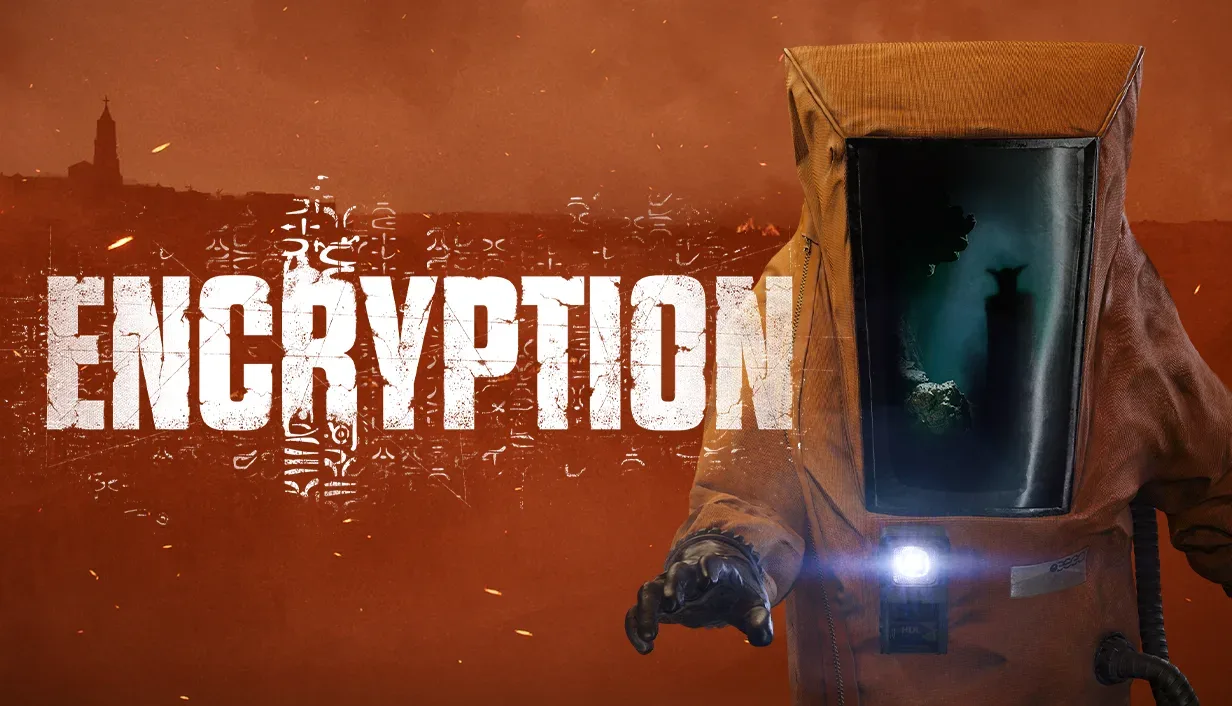
Digital Lighthouse Games has revealed Encryption, its debut game: a cinematic first-person psychological horror adventure planned for PC in 2027. The premise sends Leonardo into southern Italy during a period of wildfires as he searches for his missing daughter, Arianna. His route leads to Matera, where the streets above ground appear deserted—but the space beneath the city is occupied by something far less welcoming.
That is an immediately effective horror setup: a personal crisis, an evacuated-feeling setting and a descent from recognisable reality into a concealed threat. Encryption is not positioned as an action game built around overpowering monsters. Instead, the studio describes a combination of exploration, environmental puzzle solving, stealth and survival, with shadow entities that are attracted to sound. The intended answer to danger is thoughtfulness rather than brute force.
The game is also built around a particularly place-focused production approach. Digital Lighthouse Games says it has recreated Matera and areas of southern Italy with terrestrial and aerial 3D laser scanning, photogrammetry captured under cinematic lighting, Unreal Engine environments and motion-capture animation. Those tools do not automatically make a game frightening, of course, but they can give its spaces a physical specificity that suits psychological horror—especially a story rooted in a real city whose subterranean side becomes central to the mystery.
A search for Arianna beneath a deserted city
Encryption follows Leonardo, a father looking for Arianna amid wildfires in southern Italy. Matera becomes the focal point of that search. Above ground, its streets are empty; below, Leonardo learns he is not alone. The studio has not detailed exactly what has happened to Arianna, what caused the apparent abandonment of the city or how the shadow entities connect to the broader mystery. Those absences are part of the announced premise rather than answers waiting in the announcement.
What has been established is the game’s thematic territory. Adriano Bizzoco, Head of Studio at Digital Lighthouse Games, describes Encryption as psychological horror concerned with the supernatural, loss and destruction, with its story gradually exposing a hidden dark truth.
“Encryption is a rich psychological horror, with themes of the supernatural, loss and destruction that unravel to reveal a dark hidden truth,” Bizzoco said.
“Psychological horror” generally describes horror that works through uncertainty, mental pressure, implication and an unstable sense of safety, rather than relying only on visible threats. Encryption’s announced ingredients fit that model: an intimate missing-person search, a city that is inexplicably empty at street level, ancient mysteries, and a journey into locations where the player cannot assume they understand the rules.
There is an important distinction here. The studio has confirmed supernatural themes and hostile shadow entities, but has not explained their nature. It would be premature to treat them as ghosts, demons, manifestations of Leonardo’s grief, or any other specific interpretation. For now, they are a threat the player must survive while pursuing the narrative.
What the game’s stealth focus could mean
Encryption’s danger is defined by sound. The shadow entities are said to be drawn to noise, placing stealth at the center of survival. That design detail has practical implications even before more systems are shown. In games of this kind, sound-based threats can make basic movement and interaction meaningful: when to move, where to hide, whether a route is worth its risk and how much attention a puzzle solution may demand can all become sources of tension.
The studio’s “brains over brawn” description is equally useful as a statement of intent. Players should not expect the announced premise to revolve around simply defeating every threat encountered. Avoidance, observation, puzzle solving and careful progress are the more clearly signposted verbs. The exact mechanics remain unconfirmed: there is no stated information yet on weapons, resources, checkpoints, difficulty settings, inventory systems or the specific actions that create sound.
That uncertainty matters because “survival” can cover a broad range of experiences. Here, the confirmed details support a cautious reading: Encryption will feature threats, stealth and a survival-minded approach, but the announcement does not yet define how demanding those systems will be. The game’s core promise is atmospheric pressure and problem solving, not a disclosed combat model.
Exploration, ancient mysteries and environmental puzzles
Puzzles will be rooted in ancient mysteries and environmental detail. In a first-person horror adventure, that phrase suggests that progress is meant to come from reading spaces as much as from following an objective marker. A physical environment may hold clues through its arrangement, objects or historical texture; an “ancient mystery” gives the studio room to connect Matera’s deeper spaces to the supernatural aspect of Leonardo’s search.
Still, it is worth separating what is known from what players may infer. Encryption has confirmed exploration and puzzles. It has not confirmed the length of the game, the number of distinct locations, whether puzzles can be skipped, the presence of branching endings, or the degree to which its mysteries are based on history versus fiction. The game is using real locations as a foundation, while its horror story and entities plainly push the setting into a fictional supernatural direction.
For players interested in cinematic horror rather than combat-heavy action, the announced balance may be the chief attraction. Fully voiced dialogue and cinematic sequences point to a guided narrative experience, while exploration, stealth and puzzles are intended to keep the player actively involved in uncovering it. The missing-daughter premise gives that structure a direct emotional stake: Leonardo is not exploring Matera merely for curiosity, but to find Arianna.
Why the location technology is relevant
Digital Lighthouse Games has highlighted several technologies used to recreate its setting. These terms are easy to reduce to a graphics checklist, but each describes a different step in constructing a believable virtual place.
- Terrestrial 3D laser scanning uses equipment on the ground to record the geometry of real-world surroundings. For a game environment, this can provide a detailed spatial reference for surfaces, structures and layouts.
- Aerial 3D laser scanning captures comparable information from above, helping document areas that benefit from a wider perspective.
- Photogrammetry creates digital reference or models from many photographs of an object or place. The studio says its photography was shot with cinematic lighting, linking the location-recording process to the game’s intended visual mood.
- Unreal Engine environments refer to the game worlds assembled in Unreal Engine, the development technology used here to bring the recreated spaces into the playable project.
- Motion-capture animation records performers’ movement to inform character animation, an approach that can support the announced cinematic sequences and voiced storytelling.
The notable point is not simply that Encryption aims for visual fidelity. Its technical approach is closely connected to its narrative location. Matera and southern Italy are not a generic backdrop in the announced concept; they are the terrain through which Leonardo’s investigation moves, and the contrast between the deserted city above and its threatening depths below is central to the setup.
Real-world capture can offer a game’s artists and designers a strong grounding in scale, material and spatial character. But it does not mean every space will be a one-to-one reconstruction, nor has the studio claimed that it will be. The confirmed aim is a recreation of Matera and southern Italy using those methods, shaped into an Unreal Engine horror adventure with cinematic lighting and supernatural elements.
A new studio’s first project, with room for details to emerge
Encryption is Digital Lighthouse Games’ debut title, and the reveal establishes the broad creative direction rather than a complete specification sheet. The game is confirmed for PC in 2027 and is available to wishlist on Steam. No console editions have been announced in the available details, and there is no stated release date beyond 2027.
That leaves several sensible questions open: how large the explorable areas are, how closely the stealth systems connect to puzzles, what form the shadow entities take in play, and how the game’s supernatural material is revealed. The studio has said it intends to share more of Encryption’s world and mysteries later, so the current announcement is best viewed as an introduction to its setting, protagonist and design pillars.
For now, the clearest appeal lies in the cohesion of the pitch. A father’s search during wildfires, a silent city, a descent underground, threats attentive to sound and a location built from extensive real-world capture all point toward the same sort of experience: a slow-burning first-person horror journey where attention is as valuable as speed. For more upcoming PC game coverage, see our look at One More Plate! and its Steam plans.