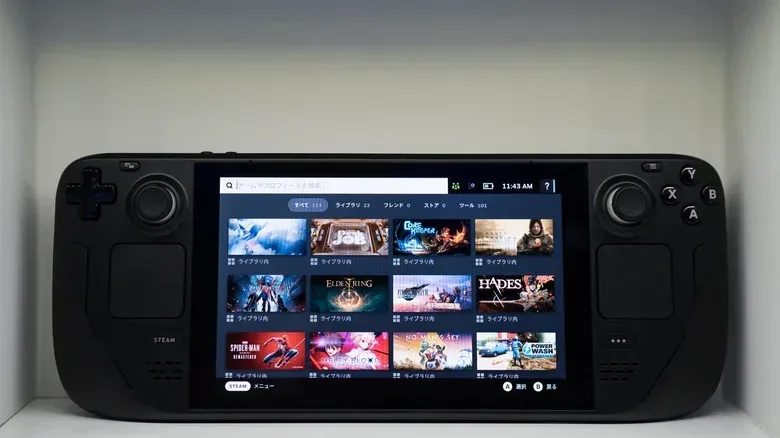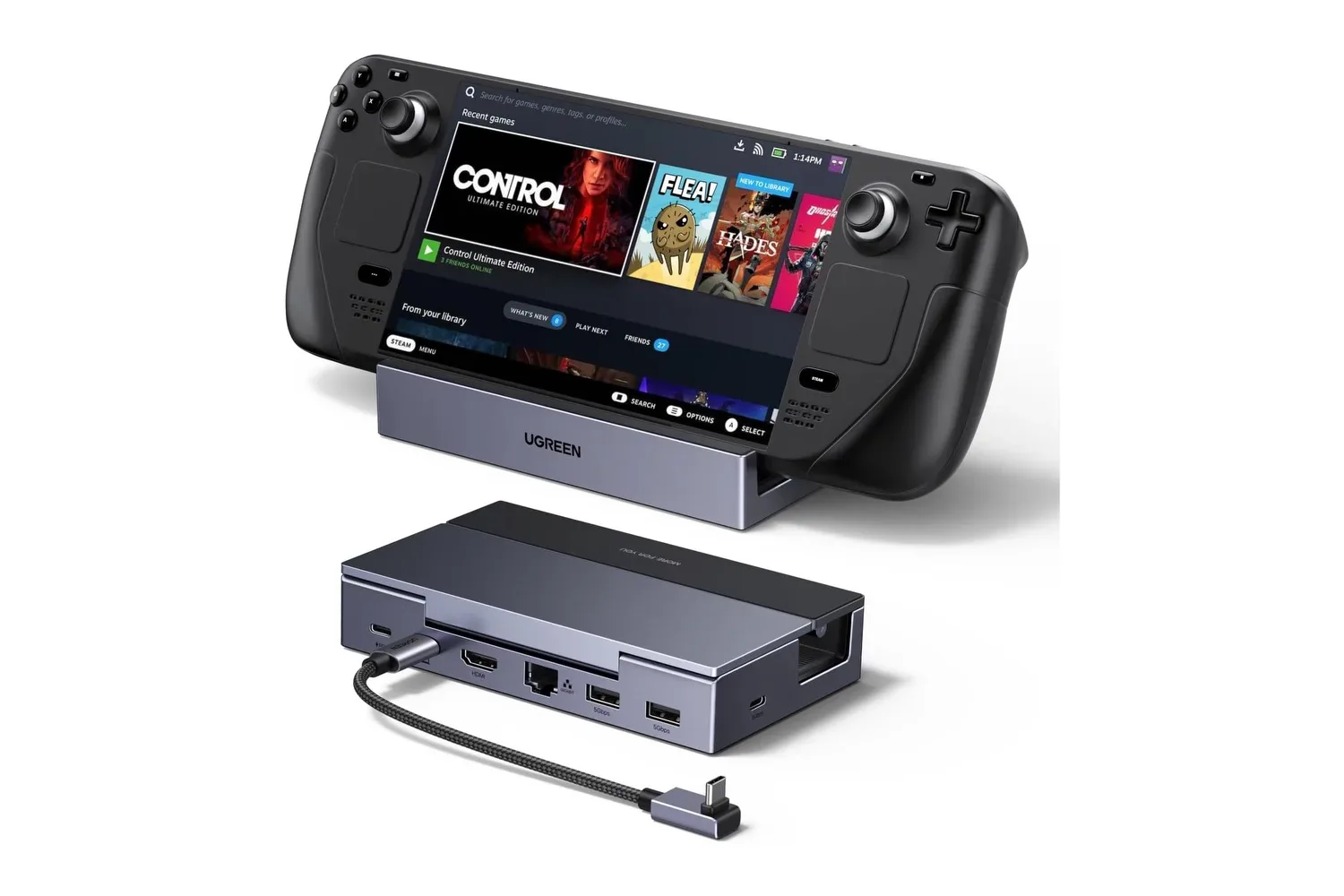
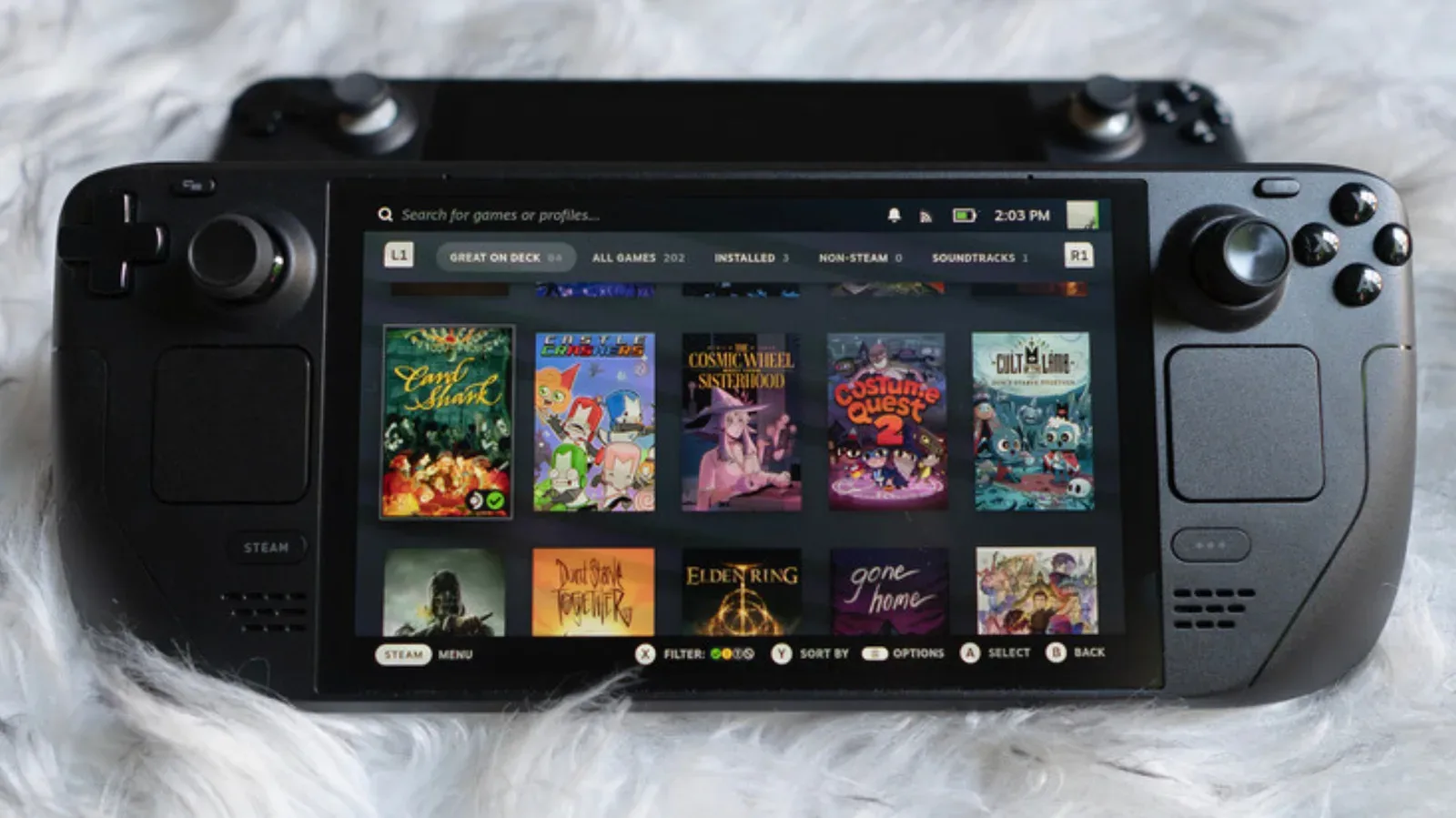
The Steam Deck’s headline price has undergone the kind of boss-phase transformation that makes a launch-day screenshot look fictional. Valve introduced the handheld in early 2022 with a $399 entry model. Its current cheapest model is the 512GB Steam Deck OLED at $789, a number that is very nearly double that original buy-in.
That simple comparison is accurate, but it is not a like-for-like one. The $399 Deck was a 64GB LCD configuration with eMMC storage. The $789 model is an OLED version with 512GB of NVMe solid-state storage, a larger battery, a more efficient chip revision and a higher-spec display. The entry price has indeed leapt dramatically; the closest capacity-for-capacity comparison has increased by a less explosive, though still substantial, amount.
Valve has attributed its 2026 OLED price rise to industry-wide component costs while stressing that the Steam Deck hardware itself did not change. That distinction is central to the story. Buyers are not paying more because a new 2026 performance refresh appeared; they are confronting a reshaped lineup and a parts market in which memory and storage have become much more expensive.
What changed from the original Steam Deck lineup
At launch, Valve offered three versions of the original LCD Steam Deck:
- $399: 64GB of eMMC storage.
- $529: 256GB NVMe SSD storage.
- $649: 512GB NVMe SSD storage, plus anti-glare display glass.
eMMC and NVMe describe types of storage rather than gaming performance settings. eMMC is slower, embedded flash storage; NVMe SSDs are faster solid-state drives connected through an interface designed for high-speed storage. In practical terms, the original $399 option provided far less capacity and slower built-in storage than the more expensive models. The key reason to spend more in the 2022 range was storage quantity and speed, not a more powerful processor.
All three original machines used the same custom AMD chip, 16GB of LPDDR5 memory, 40Wh battery, and a 7-inch 1280 x 800 LCD with a 60Hz refresh rate. A refresh rate is the maximum number of times a display can update each second: 60Hz means up to 60 updates per second. It is not a guarantee a game will run at 60 frames per second, but it sets an upper display limit.
That $399 level was deliberately aggressive from the start. Gabe Newell described the launch pricing as painful for Valve and framed it as a way to establish a new device category rather than a hardware-margin play. Put plainly, the original entry price was not evidence that a portable PC filled with contemporary parts was inherently cheap to build. It was a strategic price that Valve was willing to support.
The OLED revision made the old comparison messier
In November 2023, Valve reorganized the family around Steam Deck OLED. The revised lineup initially put the 512GB OLED at $549 and the 1TB OLED at $649. The original 256GB LCD dropped from $529 to $399, while the 64GB and 512GB LCD units were discounted until remaining stock was exhausted.
Related coverage includes Why the Steam Deck now starts at $789.
The OLED revision was not merely a storage swap. It replaced the 7-inch LCD with a 7.4-inch HDR OLED panel capable of up to 90Hz, moved the chip from a 7nm process to a 6nm process, and increased battery capacity from 40Wh to 50Wh.
OLED is a display technology in which individual pixels emit their own light. HDR, or high dynamic range, is a display capability aimed at presenting a wider range between dark and bright portions of an image when content and display support it. The 90Hz maximum also raises the ceiling above the original model’s 60Hz panel. Meanwhile, the shift from a 7nm process to 6nm refers to the chip manufacturing process cited for the revision; Valve paired that more advanced process with the bigger battery.
The lineup briefly created an unusually buyer-friendly overlap. In 2023, someone seeking 512GB could buy an OLED Deck for $549—$100 less than the original 512GB LCD’s $649 launch price—while receiving the OLED screen, larger battery and revised chip. In that period, the Deck became better equipped while its comparable storage tier became cheaper.
That history matters because it prevents two misleading takes. It would be wrong to pretend that today’s $789 model is identical to 2022’s $399 base unit. It would also be wrong to dismiss the current jump because the OLED is improved. Improvements were already built into the 2023 OLED price. The latest increase came later, without a new Steam Deck revision attached to it.
Why the $399 Steam Deck disappeared
Valve stopped producing the 256GB LCD model in late 2025. By mid-February 2026, it had sold out, leaving the $549 512GB OLED as the entry point. That alone raised the family’s advertised starting price by $150, because the least expensive configuration was no longer available.
Then Valve increased OLED pricing in May 2026: the 512GB version rose by $240 and the 1TB version by $300. The currently listed prices are $789 for 512GB and $949 for 1TB.
Those two events should be separated. First, discontinuing the $399 LCD removed a lower-cost option from the catalog. Second, the remaining OLED models became more expensive. Combining them explains why a shopper who remembers “Steam Deck starts at $399” now sees $789, but each step has a different cause.
Memory and SSD shortages hit the parts inside the Deck
The supply pressure described by Valve centers on two important components: LPDDR5 RAM and NAND flash storage. Every Steam Deck OLED contains 16GB of LPDDR5 RAM and either a 512GB or 1TB SSD.
RAM, short for random-access memory, is the fast working memory a system uses while software is running. LPDDR5 is a low-power type of memory commonly used where efficiency matters. It is distinct from the SSD: RAM holds active data temporarily, while the SSD is persistent storage for the operating system, games and files.
NAND flash is the non-volatile memory used inside SSDs. “Non-volatile” means stored information remains when the device is powered off. A 512GB or 1TB Deck does not simply have a larger number on its box; it contains more flash storage capacity, which becomes a more costly proposition when NAND prices climb.
Memory manufacturers have directed production toward AI data-center demand rather than consumer applications. That shift matters to handheld PCs because the Deck needs both memory and flash storage—two categories under pressure at once. Estimates cited for the first quarter of 2026 put mobile-memory contract prices up about 90%, with NAND flash up 55% to 60%. Forecasts for the second quarter, when Valve raised prices, projected further increases of 58% to 63% for DRAM and 70% to 75% for NAND.
A contract price is a negotiated bulk price between component suppliers and buyers, not necessarily the price a shopper sees on a shelf. Still, it is a useful signal of upstream pressure. If the components needed for a handheld’s memory and storage are sharply more expensive before assembly, the manufacturer must absorb that cost, cut elsewhere, reduce supply, or raise the retail price.
Valve’s actions suggest it had limited room to absorb it. The company had already warned that OLED availability could be intermittent in some regions because of memory and storage shortages. It later said component costs had made the original target for its Steam Machine no longer viable. Together, those details point to a company that had previously priced hardware tightly and then encountered an unusually unfriendly component market.
How large is the comparable-model increase?
For buyers comparing the lowest advertised price, the rise from $399 in 2022 to $789 now is roughly a doubling. But comparing the 512GB model at launch to the 512GB model now gives a clearer tier-to-tier view: $649 then versus $789 now, an increase of about 22%.
That 22% figure does not make the change painless. It means a buyer who wants the storage tier most closely matched to today’s entry OLED pays $140 more than the original 512GB LCD price. It also means the “nearly doubled” framing is primarily about the vanished entry tier, whereas the 512GB comparison includes a significantly upgraded handheld.
There is another useful baseline: the 512GB OLED originally cost $549 in 2023 and is now $789. That is a $240 increase, or roughly 44%. Since that comparison holds the same OLED capacity tier, it is the clearest measure of the 2026 repricing itself.
What it means next to other current hardware
At $789, the 512GB Steam Deck OLED costs $289 more than a $499.99 Switch 2. The 1TB Deck OLED at $949 costs more than an $899 PS5 Pro. Asus’ ROG Xbox Ally X launched at $999.99 in October 2025, placing it $210 above the less expensive Deck OLED.
Those figures offer context, not a universal value verdict. A handheld PC, a dedicated home console, and a Windows handheld do not serve precisely the same needs. The relevant point is that Valve’s price advantage is narrower than it once was, especially for someone entering the Deck ecosystem today rather than comparing 2026 pricing with a device they bought years ago.
Other platform holders have also adjusted prices. PlayStation 5 pricing rose in April 2026, while Switch 2 pricing in the United States rose by $50 in September. But Valve’s 512GB OLED increase was much sharper: 44% from its initial $549 price. That does not prove any company faced identical bills or margins; it shows that component inflation has not been distributed evenly across gaming hardware.
Demand estimates need a large asterisk
One estimate based on Steam’s revenue-ranked best-sellers chart suggested weekly Steam Deck sales fell from roughly 11,000 to 18,000 units during 2025 to around 1,400 to 3,000 after the May price change—a potential decline of as much as 82%.
That is an estimate rather than an official sales report. Valve does not publish Steam Deck hardware sales, and a revenue-rank-based calculation cannot provide the certainty of company-released unit data. It is reasonable to treat it as a sign that the new price may have weighed heavily on demand, not as a definitive count of every Deck sold.
For prospective buyers, the practical takeaway is straightforward: assess the current machine at its current price, not against the 2022 deal that no longer exists. The 512GB OLED includes meaningful improvements over the original base model, but it is also a much more expensive doorway into the platform. Buyers who specifically need 1TB are facing a $949 device in a period when storage itself is an important part of the cost problem.
Valve is working on a Steam Deck successor, but no price or release date has been provided. With conventional DRAM contract prices still expected to rise by another 10% to 15% in the current quarter, there is no supplied evidence that the broader parts crunch will make the next handheld easier to price. For now, the Steam Deck’s price story is less about a surprise new feature and more about the unglamorous machinery beneath the thumbsticks: RAM, NAND, supply allocation and the end of a deliberately low-cost entry model.
That makes the old $399 Deck a useful reminder of how dramatically the portable-PC market has shifted. It also fits a broader PC reality: the hardware journey does not end at purchase, and even routine ownership details can matter—such as avoiding cleaning shortcuts that can damage a screen.