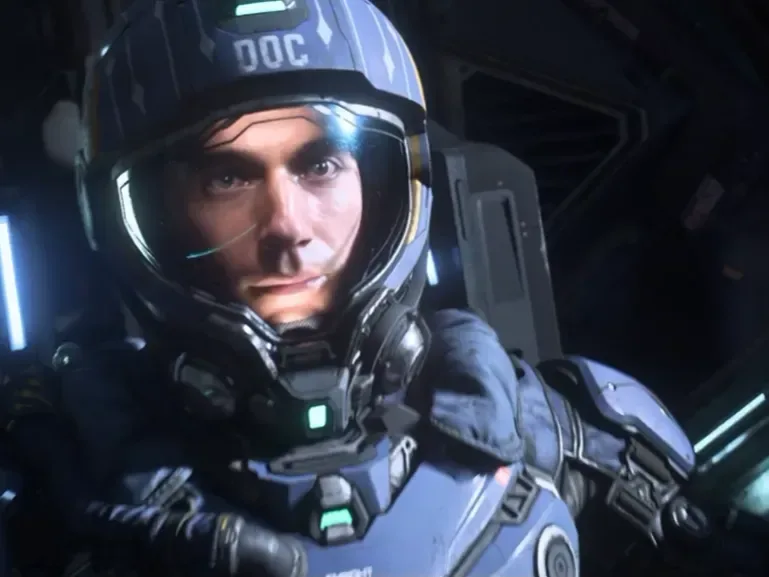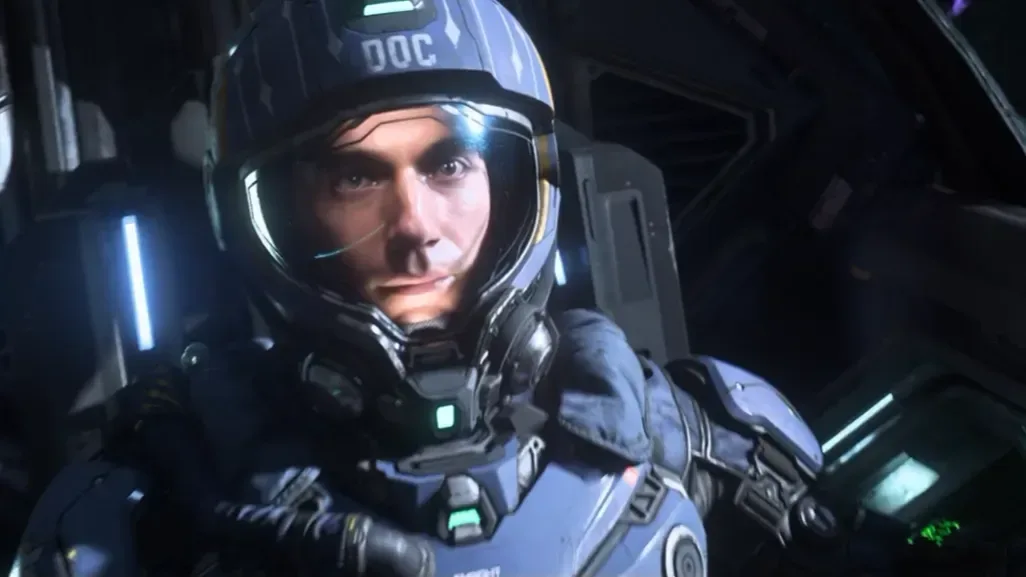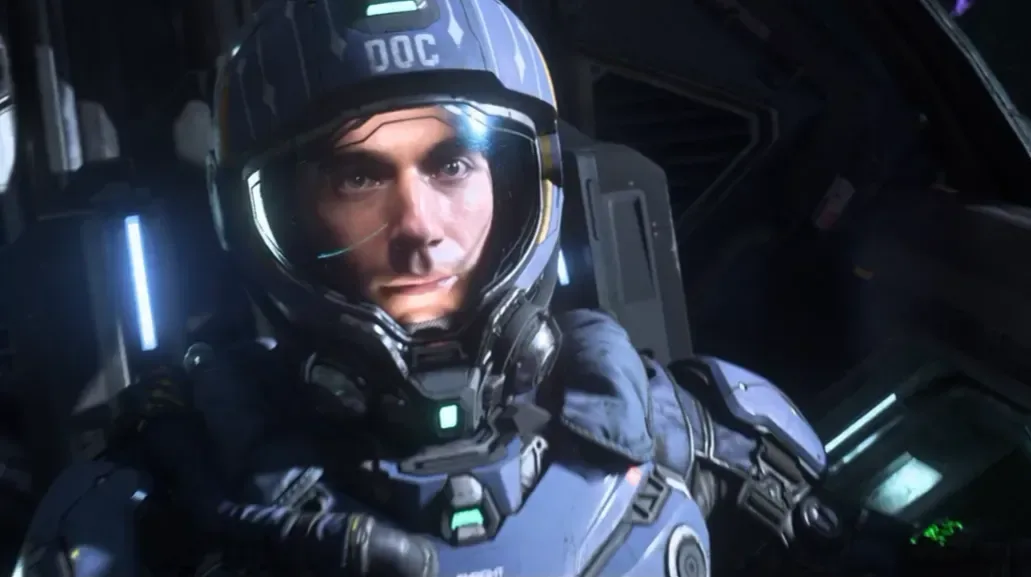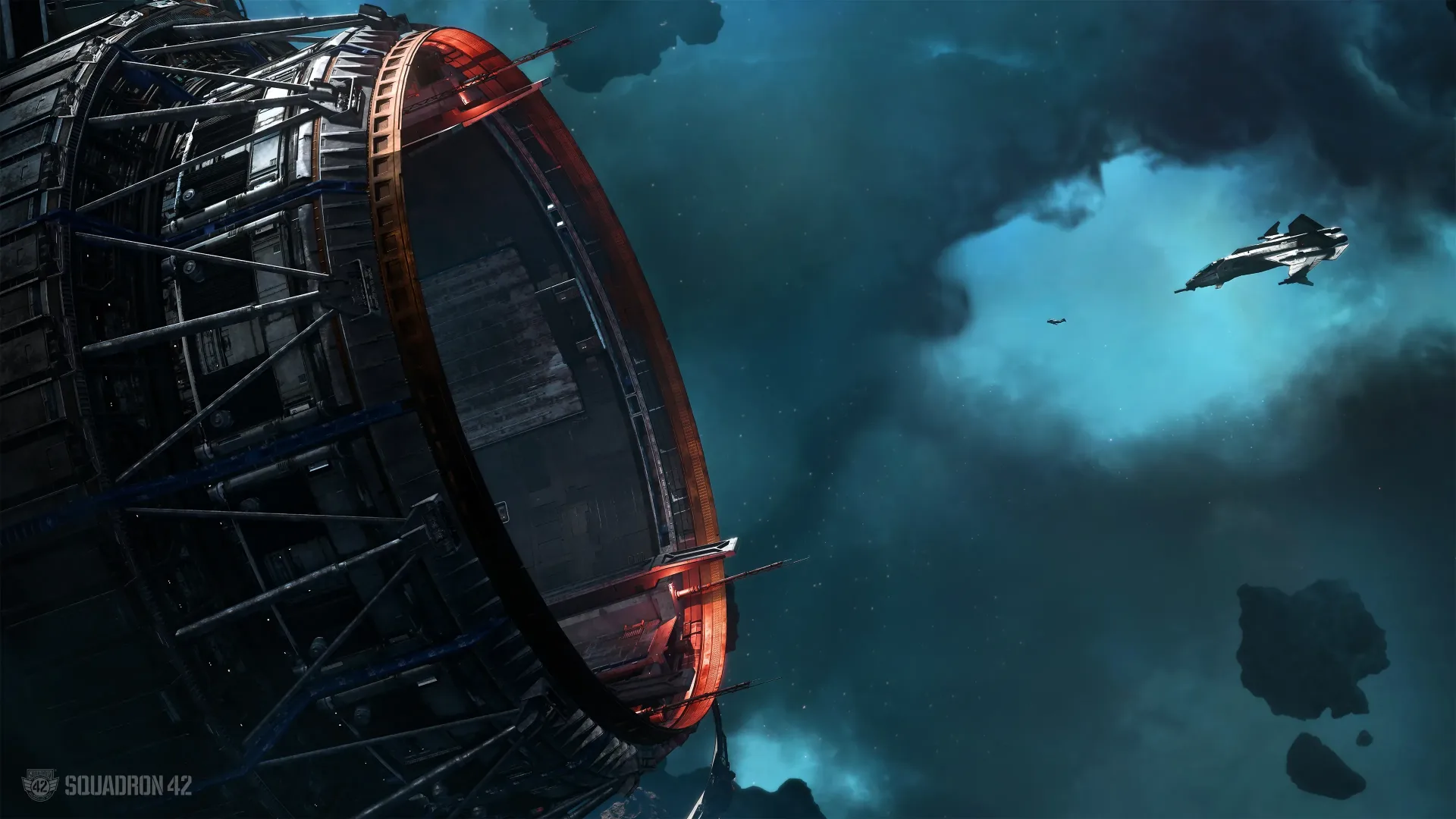
Squadron 42 is back in the spotlight with a new cinematic trailer, a Steam wishlist page and a cast list that reads like the roll call for a very expensive space opera. Cloud Imperium Games’ long-running single-player companion to Star Citizen is targeting the second quarter of 2027, and its latest showcase puts the emphasis on a campaign built from ship combat, on-foot action and interactive drama rather than an endlessly shared universe.
That distinction matters. Star Citizen remains without a release window, while Squadron 42 is presented as a self-contained, story-driven game set in the same broad fiction. The trailer suggests a broad menu of activities: flying in space battles, first-person combat, stealth, platforming, puzzle-solving, ship customization, downtime aboard a capital ship, a hacking minigame and decisions involving fellow crew members. That is an ambitious spread, even before accounting for the game’s full performance-capture cast.
Steam wishlisting does not establish a launch date, nor does it answer the most important questions about the campaign’s final scope, performance or structure. It does, however, give interested players a straightforward way to follow the project as its stated Q2 2027 target approaches.
A military space story with the player in the middle
Squadron 42 takes place in the year 2945, when the United Empire of Earth is threatened by outlaws and hostile alien forces. Players enter the UEE Navy as a rookie and serve aboard a large capital ship, rising from recruit toward the center of a galactic conflict.
The setup points to a campaign interested in both the institutional side of military science fiction and the personal lives inside it. The player is not merely passing through a mission briefing and launching into the next dogfight; the stated premise has them living and working with a crew, developing relationships and confronting sacrifices and quick decisions that may shape their course.
That does not confirm how radically any decision will alter the plot. “Narrative choices” are visible in the trailer, but the extent of branching has not been detailed here. It is best to treat them as a declared component of the experience, not as a promise of a fully divergent campaign with dozens of separate outcomes.
The game is positioned as a spiritual successor to Wing Commander, the series created by Chris Roberts. The connection is clear at the level of intent: cinematic space warfare, a military squadron framework and a prominent cast are all central to the pitch. But Squadron 42 is not just pursuing cockpit scenes. Its design also moves the player out of the ship and into first-person situations aboard installations and other locations.
What the trailer says players will actually do
The new footage is useful because it shows the project’s intended blend rather than describing it solely as a cinematic space game. Its featured pieces fall into several connected categories:
Related coverage includes Squadron 42 Returns With New Trailer, Steam Wishlists and Full Cast Reveal.
- Space combat: Players pilot through combat encounters in space, keeping the classic squadron-fighter element at the heart of the package.
- First-person action: On-foot sections include combat and stealth-oriented movement through hostile areas.
- Traversal and problem-solving: The trailer includes platforming and puzzles, suggesting that not every on-foot sequence is a shooting gallery.
- Ship and crew life: Ship customization and off-duty activities indicate that the capital ship functions as more than a loading-screen wrapper between missions.
- Interactive systems: A hacking minigame appears in the footage, while choices involving crew members suggest some scenes will ask for player input rather than playing without interruption.
Performance capture is particularly relevant to how these elements may fit together. It refers to recording actors’ body movement and facial performance for digital characters. The stated goal here is to weave those performances into the playable experience, instead of limiting the recognizable cast to non-interactive cinematics. In practical terms, that could mean players encounter actors during scenes that transition into exploration, action or decision points. It does not by itself reveal exactly how seamless or frequent those transitions will be.
This balance will be a major test for Squadron 42. A campaign that combines space-flight controls, first-person gunplay, stealth, environmental puzzles, dialogue and social downtime has plenty of ways to feel disjointed if its systems do not support one another. On the other hand, the range could give the capital ship and its crew a stronger sense of place than a mission-to-mission fighter campaign alone. The trailer makes the intended variety clear; the final game will have to show whether it feels cohesive.
The cast is unusually extensive
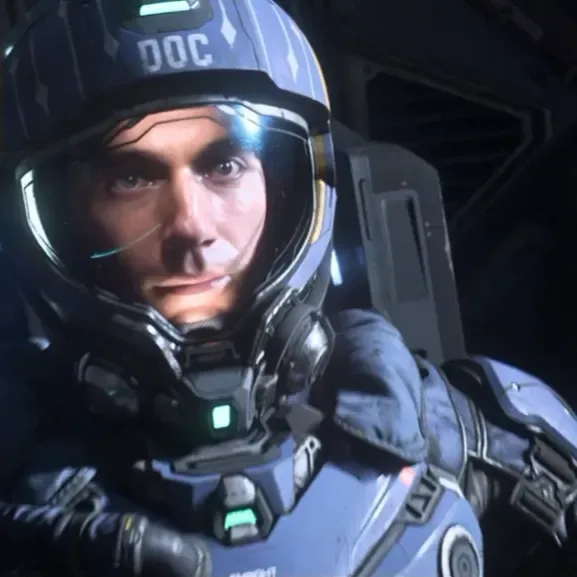
Cloud Imperium Games has confirmed a cast that includes Mark Hamill, Gary Oldman, Mark Strong, John Rhys-Davies, Henry Cavill, Ben Mendelsohn, Liam Cunningham, Andy Serkis, Jack Huston, Rhona Mitra, Eleanor Tomlinson, Sandi Roberts, Harry Treadaway, Danny Huston, Jonathan Bailey, Gillian Anderson, Damson Idris and Jane Perry.
Ian Duncan plays the male player character, while Alix Wilton Regan plays the female player character. Regan’s previous game work includes Samantha Traynor in Mass Effect 3, the female Inquisitor in Dragon Age: Inquisition and Aya in Assassin’s Creed Origins.
A star-heavy voice and performance-capture roster can provide memorable characters, but it is not a substitute for the surrounding game. Its real value will depend on whether the crew dynamics, missions and choices give the performers situations worth inhabiting. The trailer’s focus on life aboard the ship suggests Squadron 42 wants the cast to sell an ensemble, rather than simply appear as brief famous faces between action sequences.
Why the release moved to Q2 2027
The project had previously been targeted for 2026. In August, Chris Roberts said the plan had been for a fourth-quarter release around IAE, but that the team did not want the game competing for attention with November’s Grand Theft Auto 6 coverage cycle.
The reasoning was about the broader attention economy rather than a direct platform clash. GTA 6 was not expected on PC that November, but Roberts argued that publications and creators would still be heavily focused on it. In that view, releasing a major single-player game into the same news period would reduce its ability to command a conversation.
There is a practical logic to avoiding an event of that scale. Yet it also means Squadron 42, already a project with a very long public history, has another major date for players to weigh. The game’s development began in 2014, following 2013 work that included opening studios, hiring staff and releasing Star Citizen’s Hangar module. By the planned 2027 launch window, the project will have spent well over a decade in development.
For a useful contrast on why some players are increasingly drawn to more contained experiences rather than giant productions, see this discussion of shorter, focused games versus massive epics. Squadron 42 plainly is not presenting itself as small-scale, but its campaign format may provide a more bounded proposition than Star Citizen’s ongoing universe.
The difficult Star Citizen backdrop
Squadron 42’s renewed marketing push arrives amid continuing scrutiny of Star Citizen and its funding model. Star Citizen passed $1 billion raised in May and has added a further $50 million since. That milestone came shortly after a $5,000 virtual spaceship was sold despite not being flyable in-game.
The wider project has generated passionate support and sustained criticism. Some players view Star Citizen as a uniquely compelling space simulation and continue to fund its development through virtual ship sales. Others question whether it will ever properly launch and object to a model in which some digital ships cost thousands of dollars. Those are sharply opposed assessments, but both explain why news surrounding the project draws unusual attention.
A recent developer livestream added to the uneasy context. The stream was intended to demonstrate the “intended” version of a new Star Citizen update after early-access players reported bugs and other issues. The same problems reportedly appeared during the presentation, or appeared more severely, and tension between developers became visible.
None of that establishes the quality of Squadron 42 itself. It does mean that a trailer and cast confirmation will be judged against more than visual spectacle. Players have a lengthy development timeline, a changed release target and a controversial adjacent live project in mind. The campaign needs to eventually make its case in a form people can play, not only in highly produced footage.
What Steam wishlists mean—and what they do not
A Steam wishlist is a user’s saved interest list for a game. It can help a prospective player keep track of a title and receive Steam notifications connected to release or store activity. For a publisher, wishlists are also an important indicator of visible interest on the platform.
What the feature does not mean is equally important. Wishlisting Squadron 42 is not a preorder, does not guarantee access and does not confirm that the Q2 2027 date is locked. It is simply a low-commitment way to monitor the game through an official PC storefront.
For now, the reliable takeaways are specific: Squadron 42 is planned for Q2 2027; its new trailer depicts space combat, first-person sequences and crew-centered story material; Steam wishlists are live; and its performance-capture lineup is extensive. Everything beyond that—how its systems connect, how meaningful its choices are, how polished its on-foot play feels and whether the date holds—remains for the finished game to demonstrate.