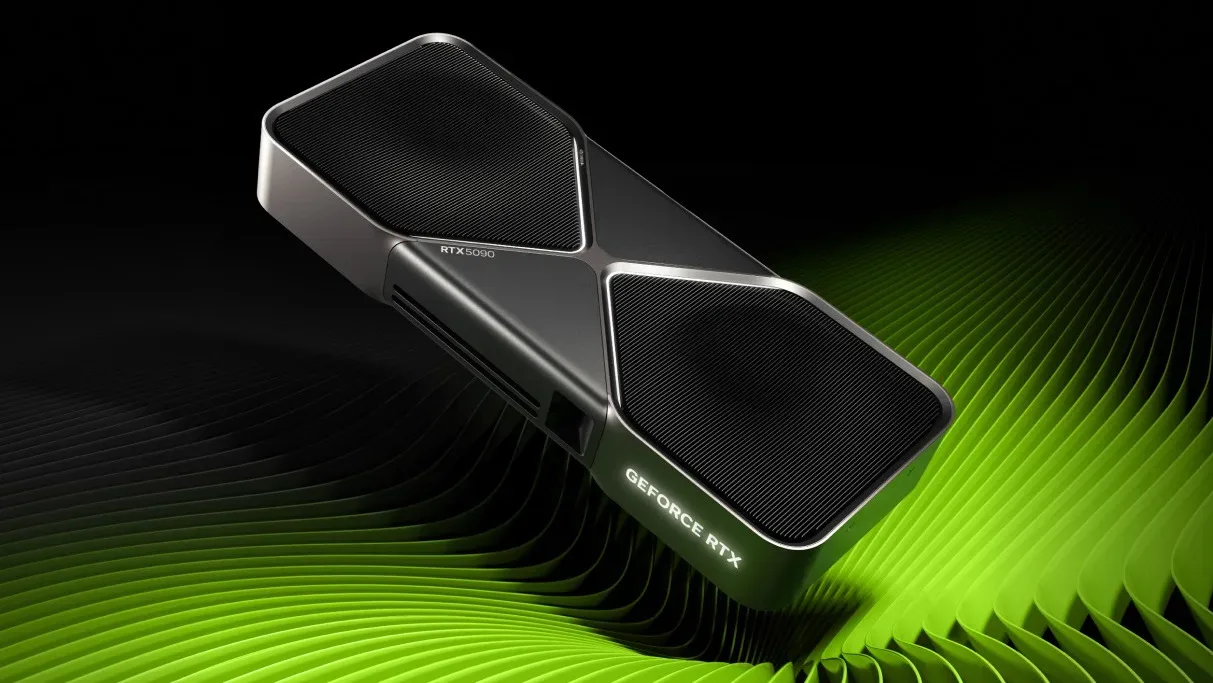
A new claim that Nvidia may be ending RTX 5090 production has put fresh attention on an awkward reality for high-end PC gaming: for most do-it-yourself builders, the flagship card has already become functionally unavailable. The rumor is significant, but it is not confirmed by Nvidia—and the existing price gap between the card’s launch MSRP and present-day listings may matter more to prospective buyers than whether a formal discontinuation notice ever arrives.
The claim centers on GB202, the GPU die used by the GeForce RTX 5090. A GPU die is the physical piece of silicon containing the processor’s computing hardware; it is the shared foundation from which a manufacturer can build more than one product. The reported claim is that future GB202 supply will be reserved for RTX Pro products rather than the RTX 5090.
That distinction is important. It does not necessarily mean every RTX 5090 disappears from store shelves overnight, nor does it establish that Nvidia has formally retired the gaming card. It would instead point to a possible change in how a limited component is allocated. Existing inventory could still be sold, and a slowdown in new production is different from a product cancellation.
What is known, and what remains a rumor
The RTX 5090 launched in January 2025 with a $1,999 price. More recently, standalone listings have climbed toward $10,000. That is a dramatic separation between the intended entry price and the amount a buyer may face in the market now.
Reports tying GB202 to RTX Pro-only supply have not been confirmed by Nvidia. That caveat needs to stay at the center of the story. A previous round of convincing rumors suggested the RTX 5070 Ti would be discontinued, but that outcome did not occur. Production had reportedly slowed amid VRAM prioritization for data-center use, yet the GeForce product itself remained in the picture.
VRAM, or video memory, is the high-speed memory a graphics card uses to hold game textures, frame data and other visual workloads close to the GPU. In data-center hardware, comparable memory capacity and bandwidth can be valuable for AI and professional computing tasks. If memory or silicon supply is being directed toward those markets, consumer graphics-card output can be constrained without Nvidia needing to declare a GeForce model dead.
That makes several outcomes plausible based on the information available: the RTX 5090 could be formally discontinued; it could receive very limited new allocation; or the claim could be inaccurate, as similar rumors have been before. None of those possibilities should be presented as settled until Nvidia addresses the matter directly.
Why the GB202 detail matters
GB202 is not an RTX 5090-exclusive component. It is used across nine workstation and data-center GPU products. That breadth helps explain why a supply decision involving the die could have consequences beyond one gaming card.
Related coverage includes RTX 5090 Discontinuation Rumor Raises Fresh Questions About Nvidia's Gaming GPU Supply.
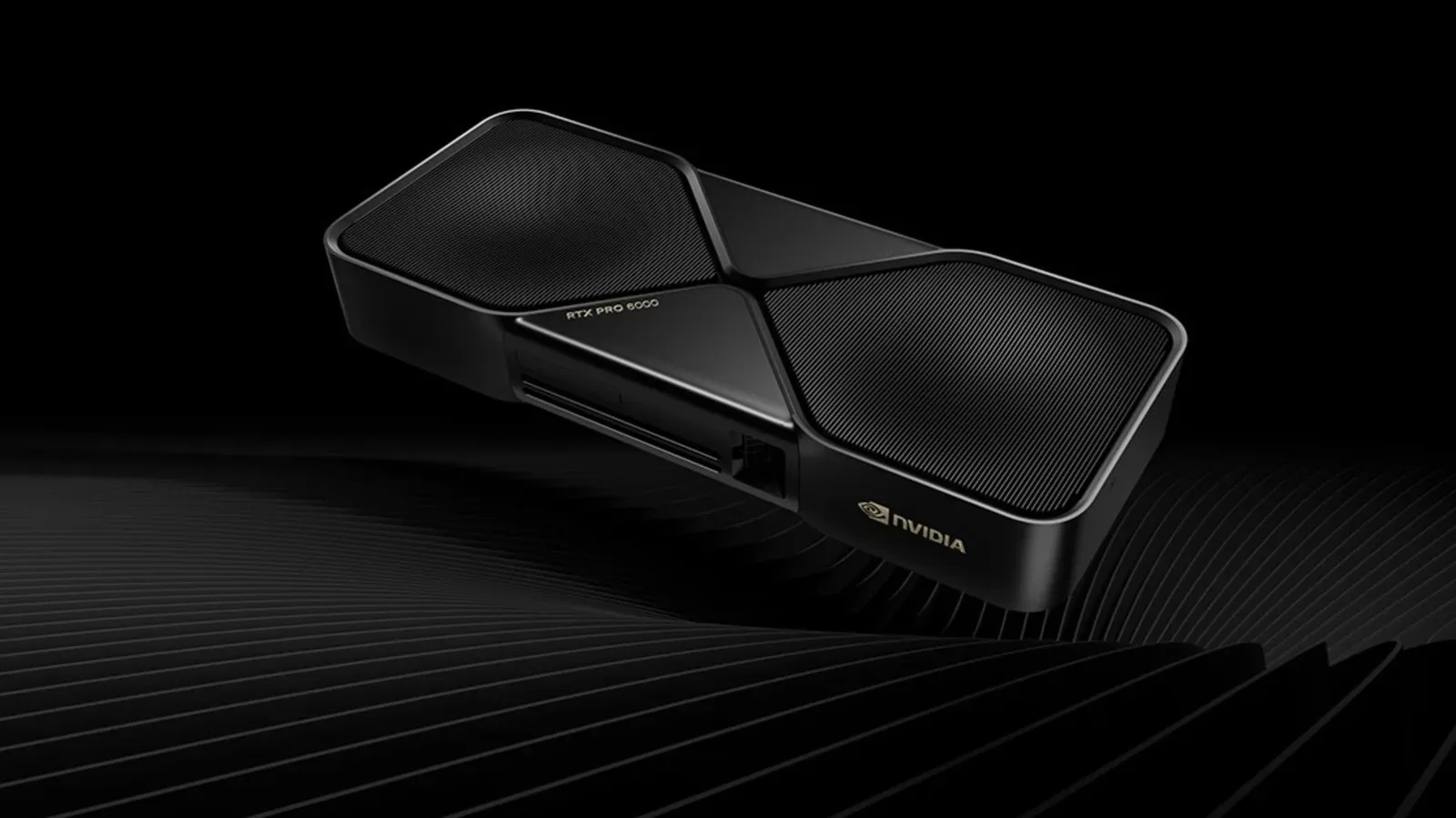
At the extreme high end, the commercial incentive is clear even without assuming a permanent exit from gaming hardware. The RTX Pro 6000 Blackwell is cited at about $18,000, while an RTX 5090 has been appearing around $9,000 at retail. Those figures are not a direct comparison of specifications, intended customers or profit per unit. They do illustrate the much higher dollar amount attached to Nvidia’s professional offering.
Workstation and data-center cards are designed for professional workloads rather than a conventional home gaming build. The RTX 5090 is a consumer GeForce flagship, while RTX Pro products serve a different market. But when products draw on the same underlying die, their supply chains can overlap. A decision to favor professional hardware could therefore limit the number of dies that make their way into gaming cards.
Nvidia has also folded gaming into an “Edge Computing” category in its earnings reporting rather than presenting it as a standalone division. That reporting choice does not prove the discontinuation claim. It does, however, fit a broader picture in which AI-oriented and professional computing demand occupies a prominent place in the company’s priorities.
For DIY builders, the MSRP is already distant history
There is a major difference between a product existing and a product being a realistic recommendation. The RTX 5090 may still be purchasable through some channels, but a GPU approaching $10,000 is outside the practical budget of the overwhelming majority of PC builders. At that point, shoppers are no longer choosing between sensible upgrades. They are deciding whether to enter a collector-like, ultra-premium market for a single component.
That is why the rumored allocation change may have less immediate impact on typical buyers than the price trajectory does. The RTX 5090’s launch figure of $1,999 was already firmly flagship territory. A retail figure many multiples above that is an entirely different proposition, one that can distort every other part of a build budget.
- For a new build: Treat an unusually expensive RTX 5090 listing as a market condition, not a normal baseline for a gaming PC.
- For an upgrade: Do not assume that a rumor of reduced production makes a high-priced card a rational buy. Scarcity can raise urgency without improving value.
- For owners: A report about supply does not change the card already in a system. Driver support, game requirements and the rest of a PC still matter more to day-to-day use than speculation around future shipments.
- For deal hunters: Keep the price of a complete system in view, rather than evaluating the GPU in isolation.
The last point is especially relevant here. Prebuilt PCs carrying an RTX 5090 have not experienced the same apparent price escalation as the card sold alone. It is currently possible to find an Alienware desktop with an RTX 5090 for less than the cost of purchasing the GPU by itself at some retail listings. That does not automatically make any particular prebuilt a good fit, since total component configuration, warranty terms and upgrade needs still matter. It does show how strange the standalone graphics-card market has become.
Anyone comparing prebuilt systems should make sure the configuration actually matches their needs instead of looking only at the badge on the GPU. Processor, memory capacity, storage, cooling, power supply details and the system’s upgrade flexibility all determine whether a machine makes sense over time. A desktop may be cheaper than a standalone flagship GPU and still not be the right purchase for a particular workload.
A prebuilt market could feel the impact first
If RTX 5090 manufacturing were to stop rather than merely slow, prebuilt gaming PCs would likely be the most visible casualty. System makers can procure components through channels that do not resemble a shopper adding a graphics card to a cart, which may explain why complete 5090 desktops have remained comparatively less detached from reality than standalone cards.
That advantage depends on supply continuing to reach those manufacturers. If new RTX 5090 allocation dried up, complete systems could lose the component that separates them from lower-tier configurations, or their prices could rise as remaining parts become harder to secure. For shoppers who specifically want this GPU, a complete desktop could be the more attainable route today—but it is not evidence that the supply situation is stable.
It is also worth separating a product’s market relevance from its technical position. The RTX 5090 is Nvidia’s flagship GeForce card, but its current standalone price means it is already irrelevant to normal component-buying decisions for many players. A formal end to production would change supply expectations and likely put more pressure on prices, yet the access problem is happening before any formal confirmation.
What not to infer from the report
The rumor does not establish that Nvidia is abandoning GeForce gaming cards. It concerns one die, one flagship product and a possible allocation priority. Nor does it confirm a replacement. There is also a separate report that Nvidia’s next-generation graphics cards may not arrive until 2028, but that timetable remains a rumor as well.
For buyers, this uncertainty is a reason to avoid treating leaked supply information as a deadline. There is no confirmed statement that the RTX 5090 is ending, no confirmed date for a replacement generation, and no assurance that buying at a severe premium will protect against future price changes. A leak can be useful context; it is not the same as a purchasing guarantee.
The wider condition being described as “RAMageddon”—mounting pressure around memory pricing and supply—adds to the uncertainty at the top end. If memory and related resources remain constrained, high-end parts could stay expensive even if the RTX 5090 itself continues to ship in some form. The central takeaway is therefore less dramatic than “the flagship is dead,” but more useful: availability, allocation and price have become inseparable for anyone shopping at the very top of the PC market.
For PC players with less extreme needs, it may be wiser to define the performance target first—resolution, game settings, refresh-rate goals and the applications a system must run—then set a budget that includes the entire machine. Even supporting equipment can affect a setup’s usefulness; for example, a USB-C charger suited to Steam Deck power needs addresses a very different PC-gaming use case, but is a reminder that the best purchase is not always the most expensive silicon available.
Until Nvidia confirms or disputes the claim, the RTX 5090 should be viewed as a product with uncertain future supply and an already extraordinary real-world asking price. Whether it is discontinued, trickles into the market, or continues in limited volume, the immediate calculation for builders is the same: a nominal $1,999 flagship that sells near $10,000 is not functioning as a mainstream enthusiast option.