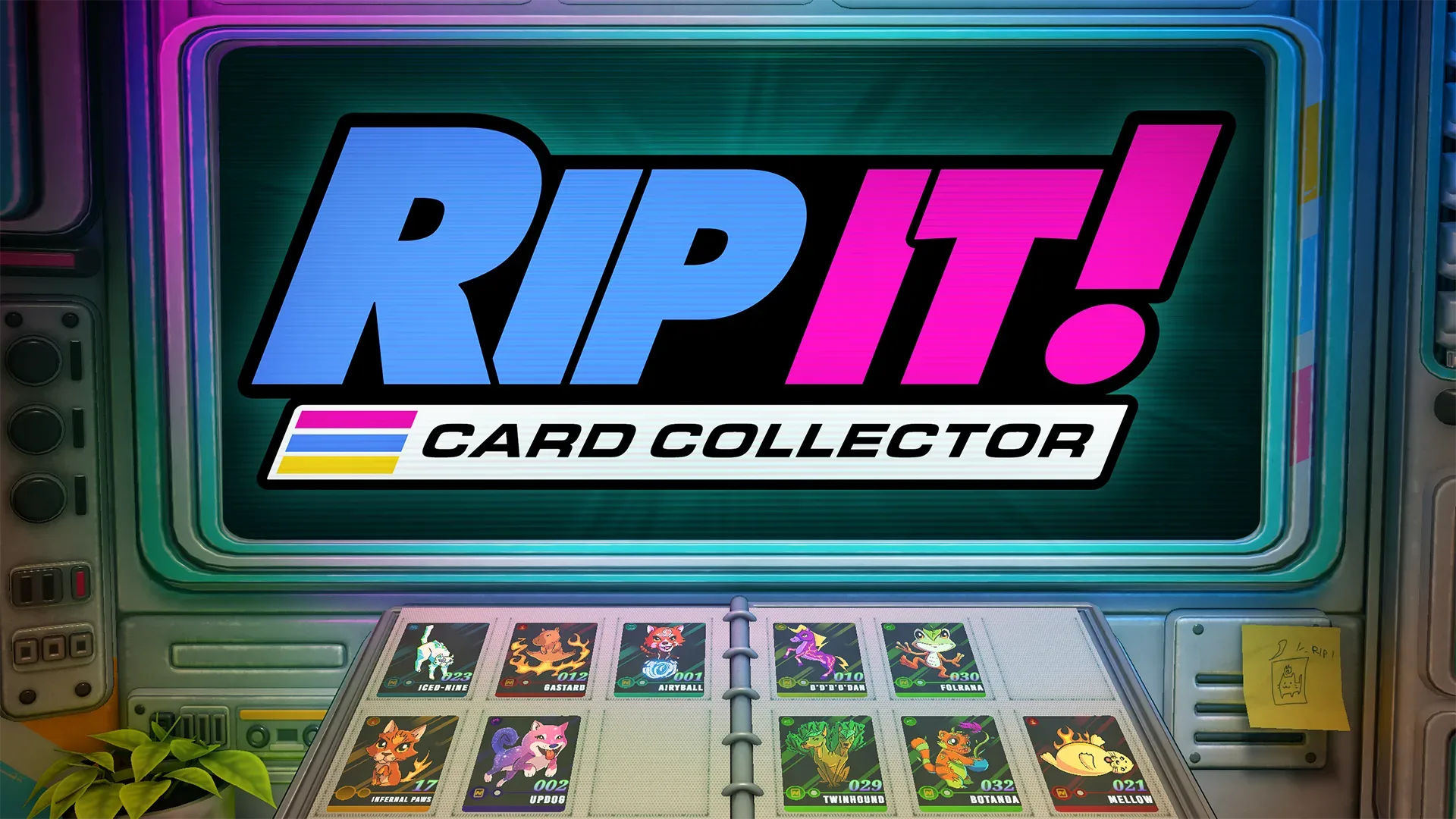
Rip It! Card Collector, a card-opening and collection-focused incremental game from Cybernetic Walrus, is due to launch on Steam on October 30, 2026. A free demo is available now, offering a sizeable early slice of its loop: open packs, sort the results, sell the surplus and reinvest in a more capable card-processing setup.
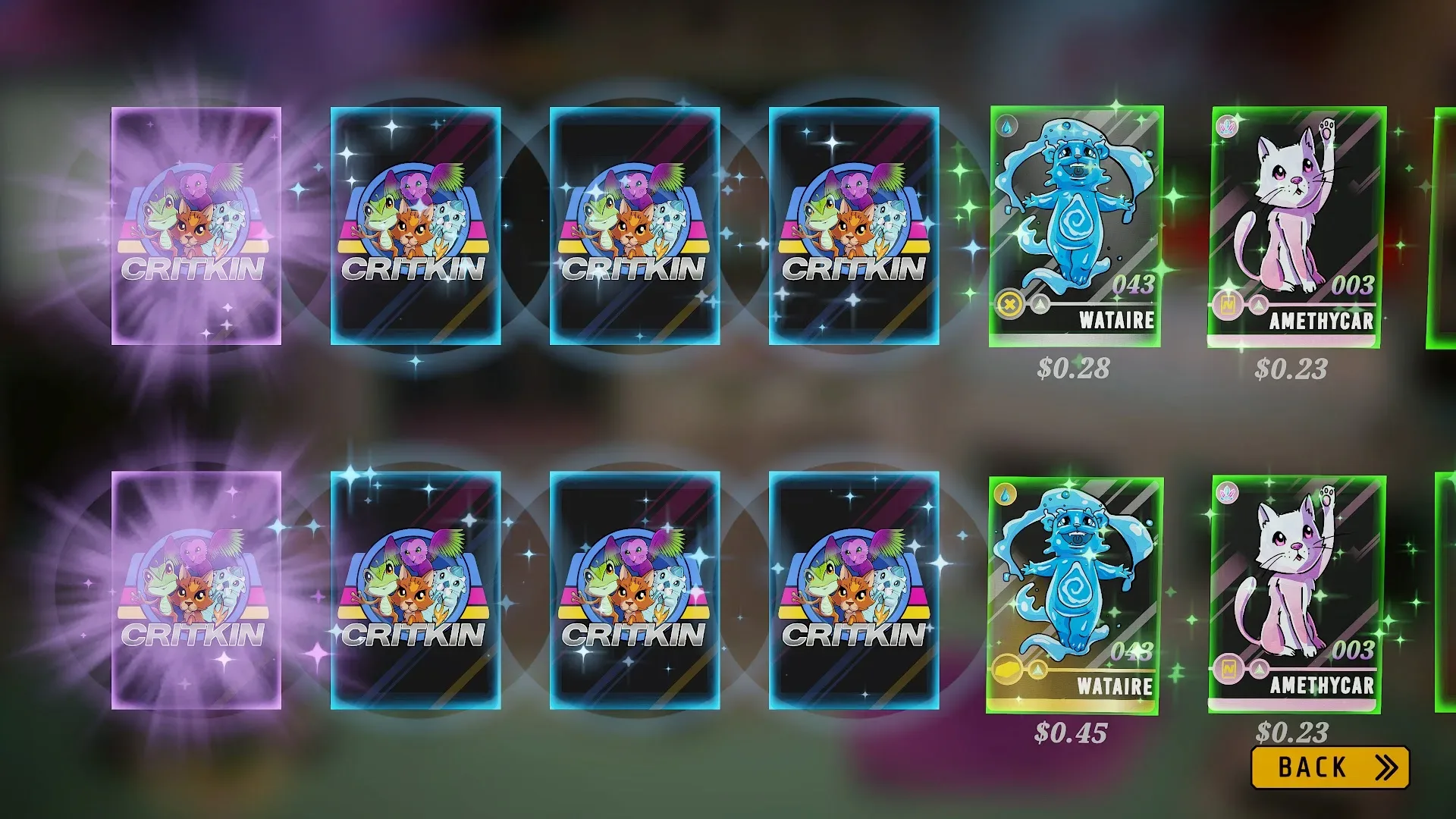
The full release is planned to include more than 1,800 cards, spanning common, rare and mythic pulls as well as promos and special finishes. The demo has 369 cards to chase, including foil and gold variants. That makes the demo more than a brief visual teaser; it presents enough of the collection structure for players to see how duplicates, finishes and workstation upgrades fit together.
A collecting game built around the pack-opening ritual
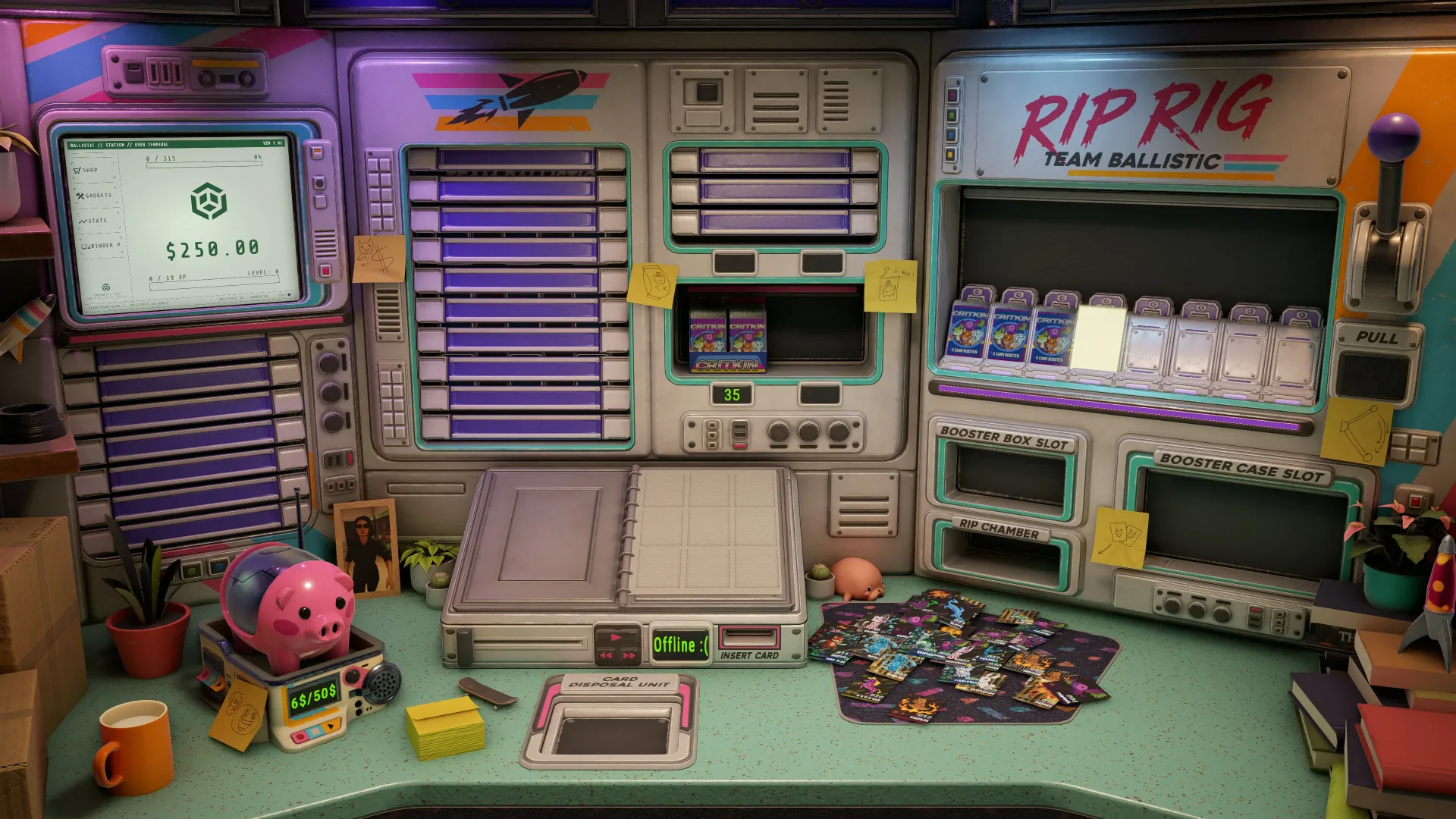
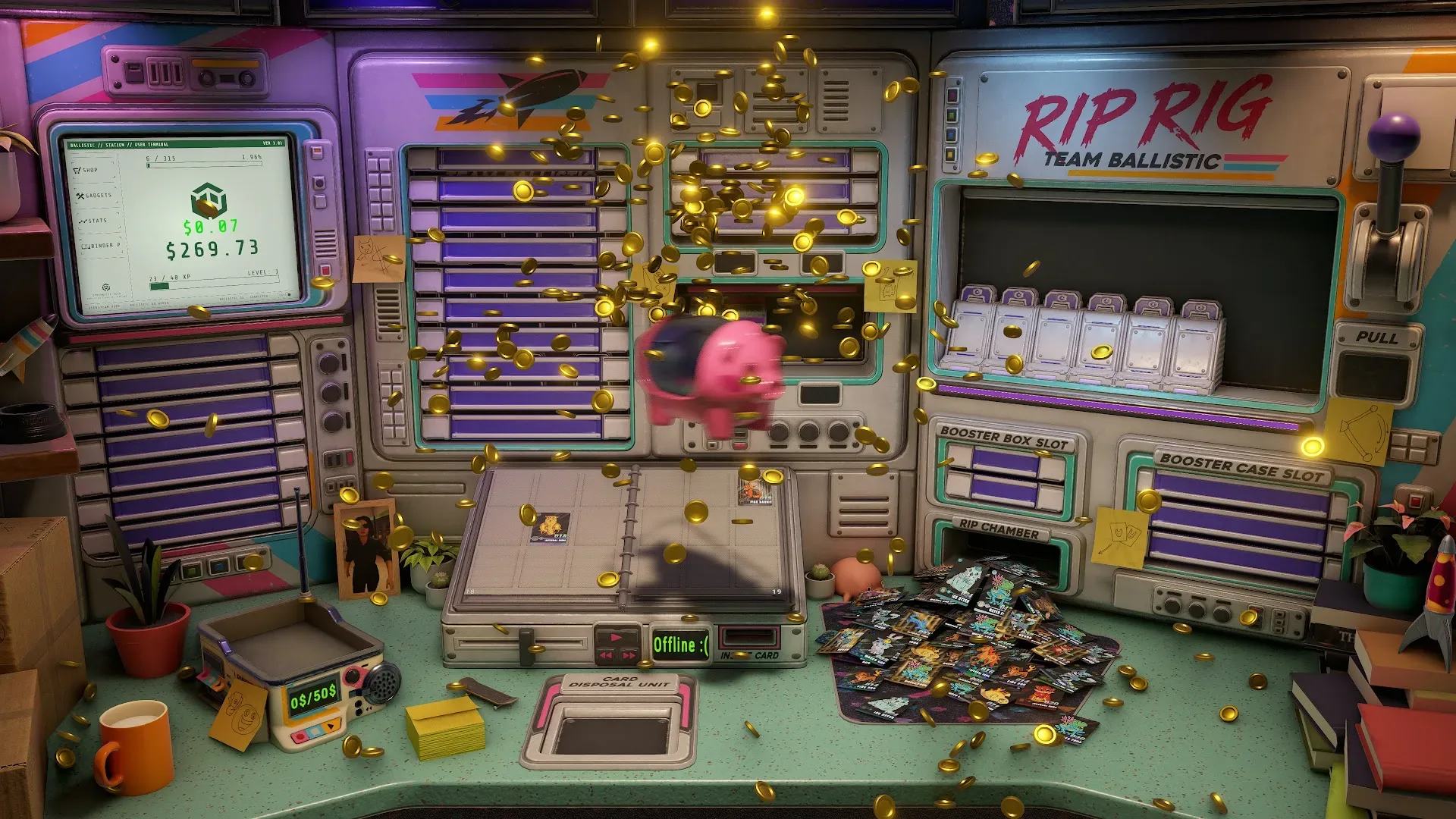
Rip It! Card Collector puts its attention on the physical gestures associated with opening and organising cards, translated into an interactive digital workspace. Players flick switches, pull levers, feed packs into machinery and watch the cards emerge before pulling, sorting, stacking and filing them.
The stated appeal is not simply seeing a card appear in an inventory. It is the sequence around it: putting a pack through the machine, handling the output, checking the pull and deciding where it belongs. The newly released trailer foregrounds that repeated ritual, as well as the growing scale of the operation.
That focus distinguishes the game’s collection loop from a straightforward menu-driven checklist. Organisation is part of the central activity rather than a background screen. For players who find a neat binder, a sorted stack or a carefully filed set satisfying, the game is clearly aiming to recreate that sense of order alongside the chance of an especially valuable-looking pull.
What “incremental” means here
Incremental describes a game structure where repeated actions produce resources, and those resources are used to improve the rate or efficiency of future actions. In Rip It! Card Collector, the basic action is processing card packs. Duplicate cards can be sold, generating earnings that can then be invested in equipment.
The result is a progression loop with two linked goals:
- Collection progress: finding cards and finishes that are missing from the file.
- Operational progress: improving the setup so more packs can be processed more efficiently.
Players begin with a retro-futuristic pack-ripping workstation. Over time, that station can be upgraded into a larger card-processing rig, described as a mechanised Rip Rig. The shift from manual ripping to machinery gives the game a clear automation angle: early actions appear to be hands-on, while later investment is intended to increase throughput.
Related coverage includes Rip It! Card Collector Demo Is Live Before October 30 Steam Launch.
Throughput, in this context, means the amount of pack-processing work a setup can handle over a period of play. It is a useful term for understanding the game’s upgrade path. Better gear is not only a cosmetic prize; its purpose is to help players move through more packs and therefore create more chances to uncover cards still missing from the collection.
Duplicates are part of the plan, not just bad luck
A large card pool naturally means repeat pulls. Rip It! Card Collector treats those duplicates as an economic component of the loop. Rather than only representing a missed chance at a new card, extras can be sold to fund upgrades.
This creates a practical decision chain: keep working through packs, turn surplus cards into money, purchase improved hardware, then use the upgraded workflow to process additional packs. The game’s collection chase and its machinery progression are therefore designed to support each other.
The setup also gives rarity a functional role beyond visual prestige. Common cards may appear regularly, while rare and mythic cards represent harder-to-find targets. Promos and special finishes add further collection targets. A finish is the treatment or visual version of a card rather than necessarily a wholly separate subject; the demo specifically includes foil and gold finishes. For completion-minded players, that means finding the card itself may be only one part of the pursuit when multiple versions exist.
What the free demo includes
The Steam demo contains 369 collectible cards across several finishes, including foil and gold. It also provides an early look at upgrading the pack-ripping setup. Those elements should let prospective players evaluate both sides of the pitch: whether the manual interaction has the tactile feel they want, and whether advancing from a modest workstation toward bigger machinery is compelling.
Importantly, the demo’s card count should not be confused with the planned full-game total. The full release is set to feature more than 1,800 cards, meaning the demo represents a smaller, focused collection pool rather than the complete catalogue.
It is also worth separating what has been confirmed from what has not. The available details establish the demo’s number of cards, the full game’s planned card count, several named rarity and finish types, and the broad upgrade loop. They do not lay out every individual upgrade, every card category or the exact probabilities for particular pulls. Players looking for a precise breakdown of odds or a complete checklist will need to wait for further details.
Why the workstation matters
The retro-futuristic workstation is more than a setting for the pack opening. It is the visual and mechanical anchor for the game’s sense of progression. At the start, players handle the ripping process directly. As earnings are reinvested, the workspace develops into a more elaborate processing rig.
That framing makes the game part collection organiser and part small-scale workflow optimiser. Optimisation means arranging purchases and actions to improve how efficiently a system produces an outcome. Here, the desired outcome is more processed packs and, ultimately, a more complete card collection. Selling duplicates and choosing new gear are the stated tools for that optimisation.
For a player, the practical question is likely to be how satisfying it feels to balance immediate collecting against longer-term investment. Spending earnings on gear is aimed at helping the entire operation process more packs, but the core attraction remains the uncertainty of what tumbles out next. The game’s structure depends on those two motivations reinforcing each other rather than competing: an improved machine should make the next hunt feel more possible, while an incomplete set gives the machine a reason to keep running.
A PC release for players who enjoy systems as much as sets
Rip It! Card Collector is coming to Steam on October 30, with the demo already providing a no-cost way to inspect the loop. Its premise will likely be most immediately legible to players who enjoy collecting games, incremental progression and hands-on organisation rather than competitive card battles. The available description is about opening, processing and filing cards; it does not present the cards as pieces for a competitive deck-building game.
That makes the project a notably different kind of card-game fantasy. The tension is in the pull, the satisfaction is in the sorting, and the long-term objective is completing an expanding catalogue while building a better machine to support the effort. More broadly, it sits alongside a busy run of PC releases and demos; Firva: Strings of Fate’s early demo access is another recent example of a game inviting players to sample its central loop before launch.
For Rip It! Card Collector, that loop has a very specific texture: levers, switches, packs, piles, files and the intermittent hope that the next card is the one still absent from the collection. The full Steam release arrives October 30, 2026, while the 369-card demo is available now.