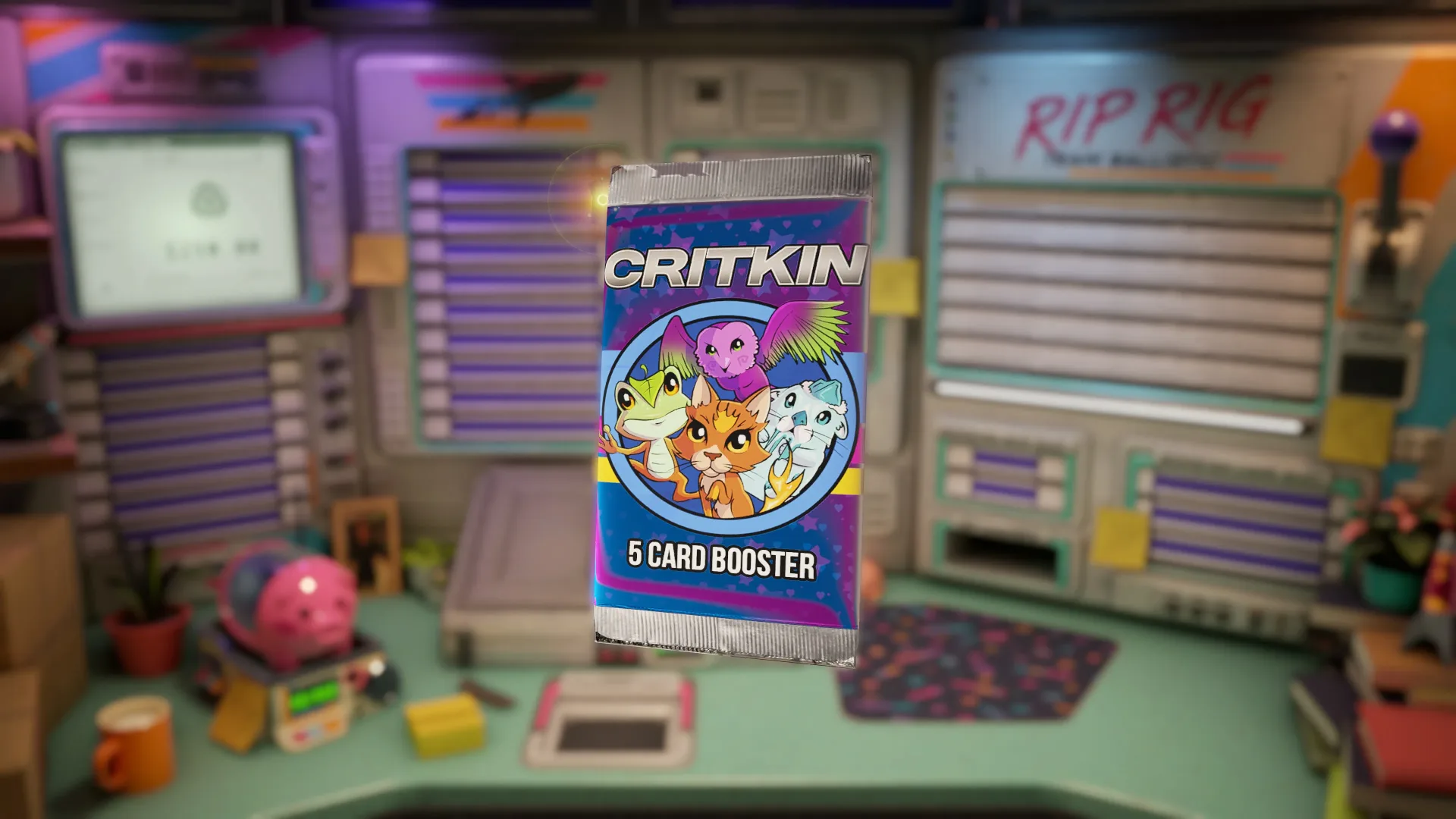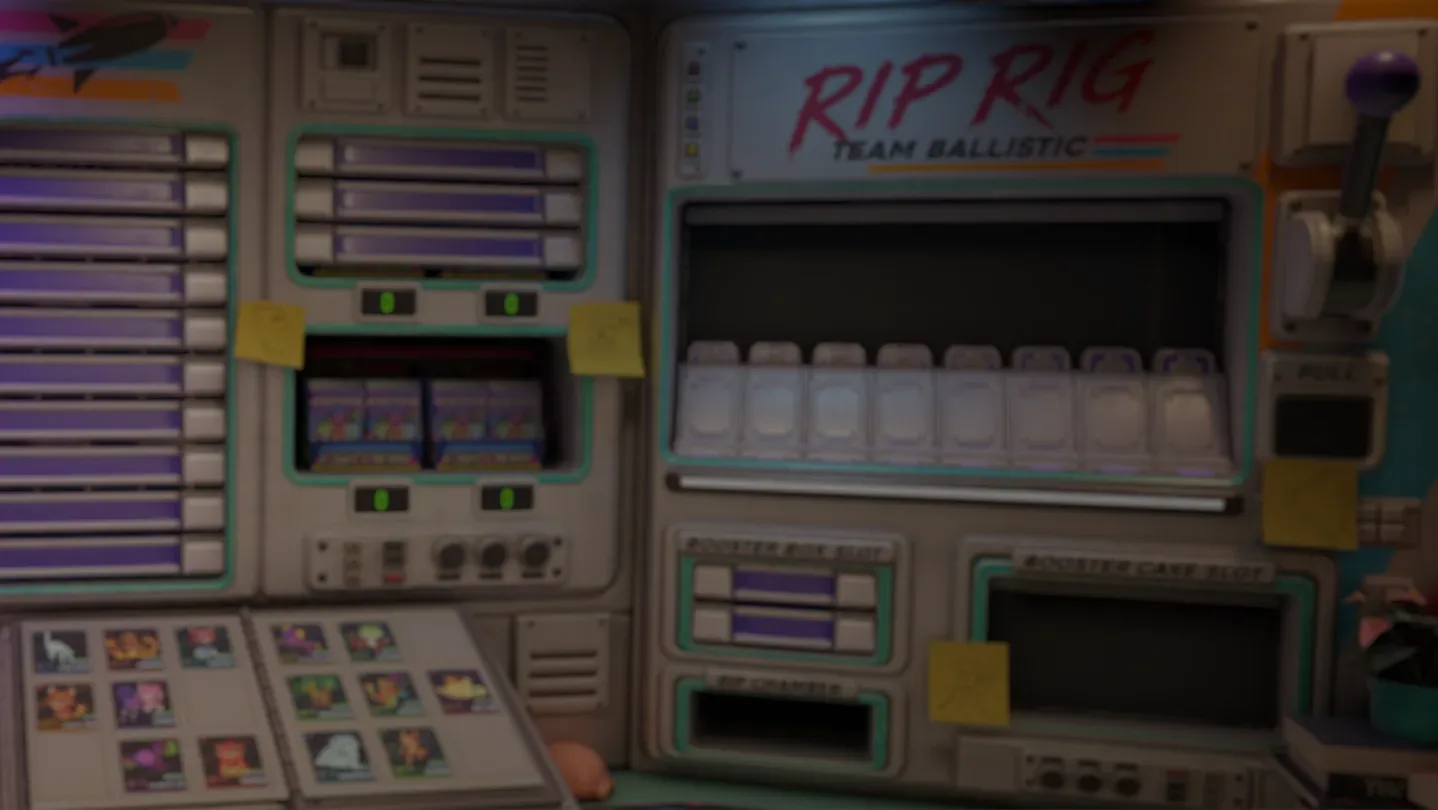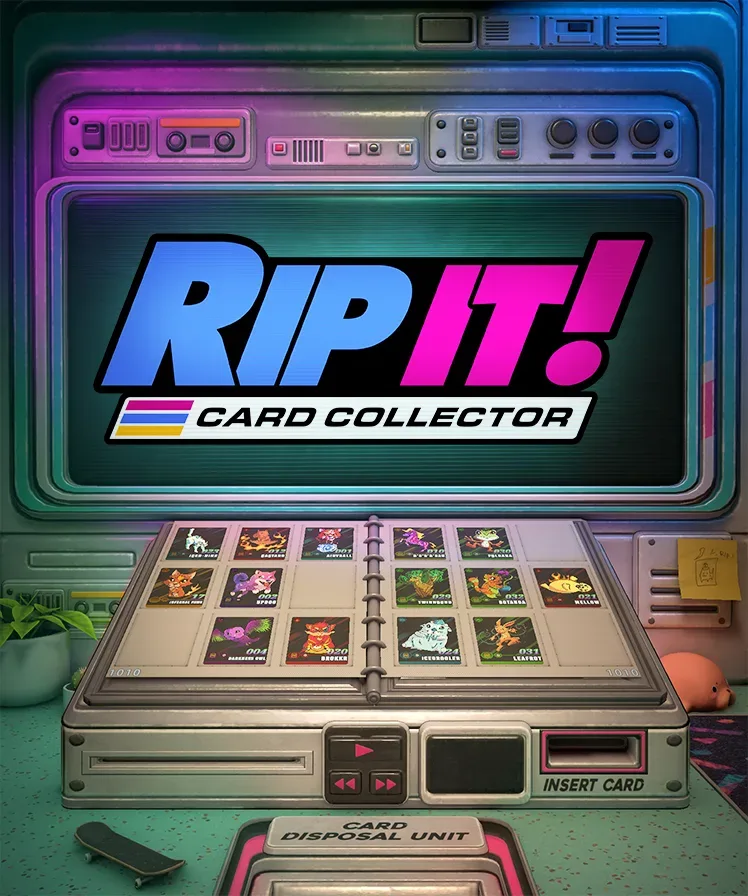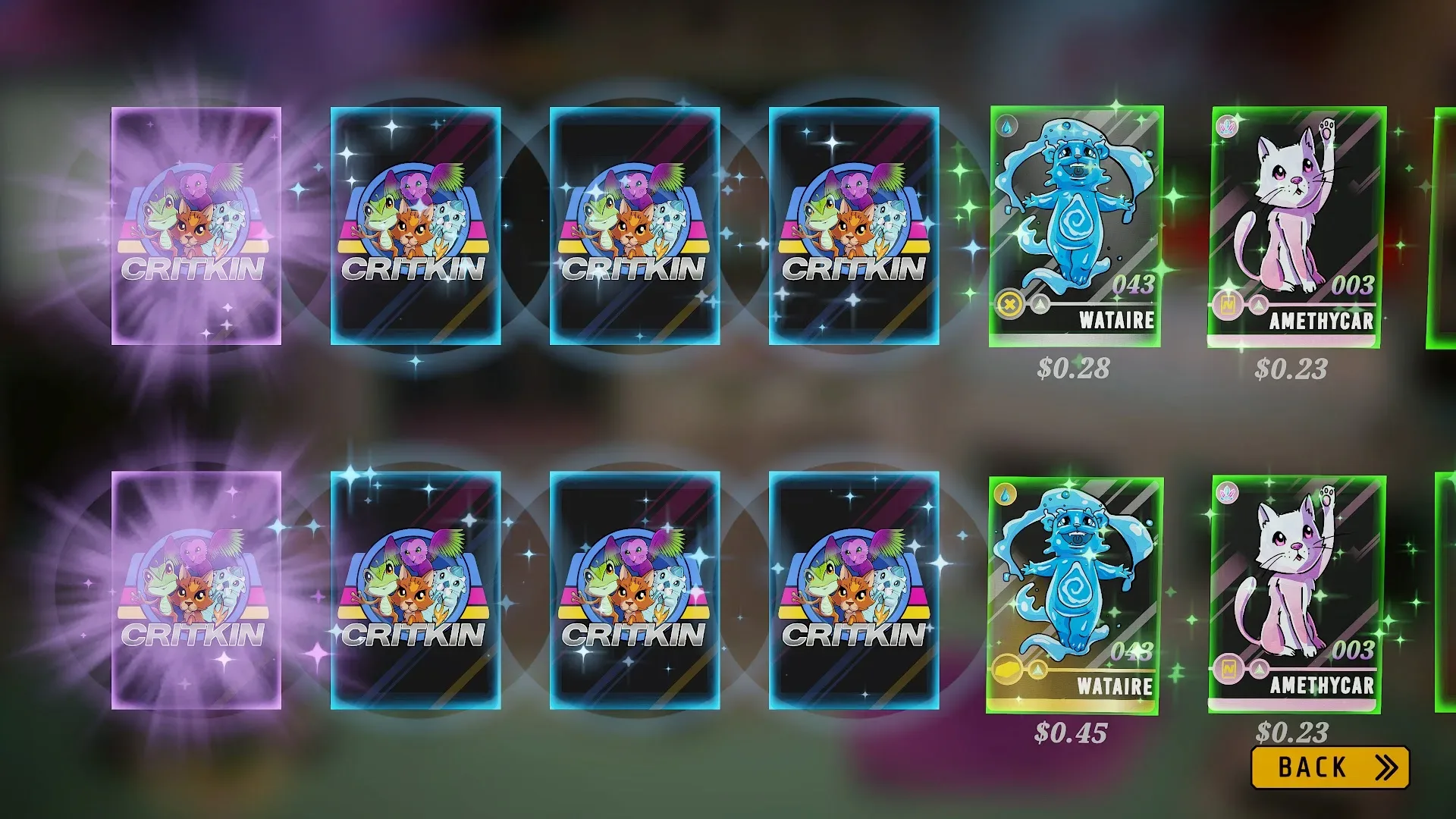
Cybernetic Walrus has announced Rip It! Card Collector, a PC card-collecting simulation headed to Steam. The game centres on the satisfying loop familiar to collectors—opening packs, checking the pull, filing cards into binders and deciding what to do with duplicates—but frames that loop as an incremental game with an expanding workstation behind it.
Its announced card pool contains more than 1,800 cards, spanning standard pulls, super rares, secret promos and high-value cards. The stated objective is not simply to fill pages in a binder. Players will also sell surplus cards, reinvest the proceeds in equipment and gradually turn a hands-on packing-table routine into a more automated operation.
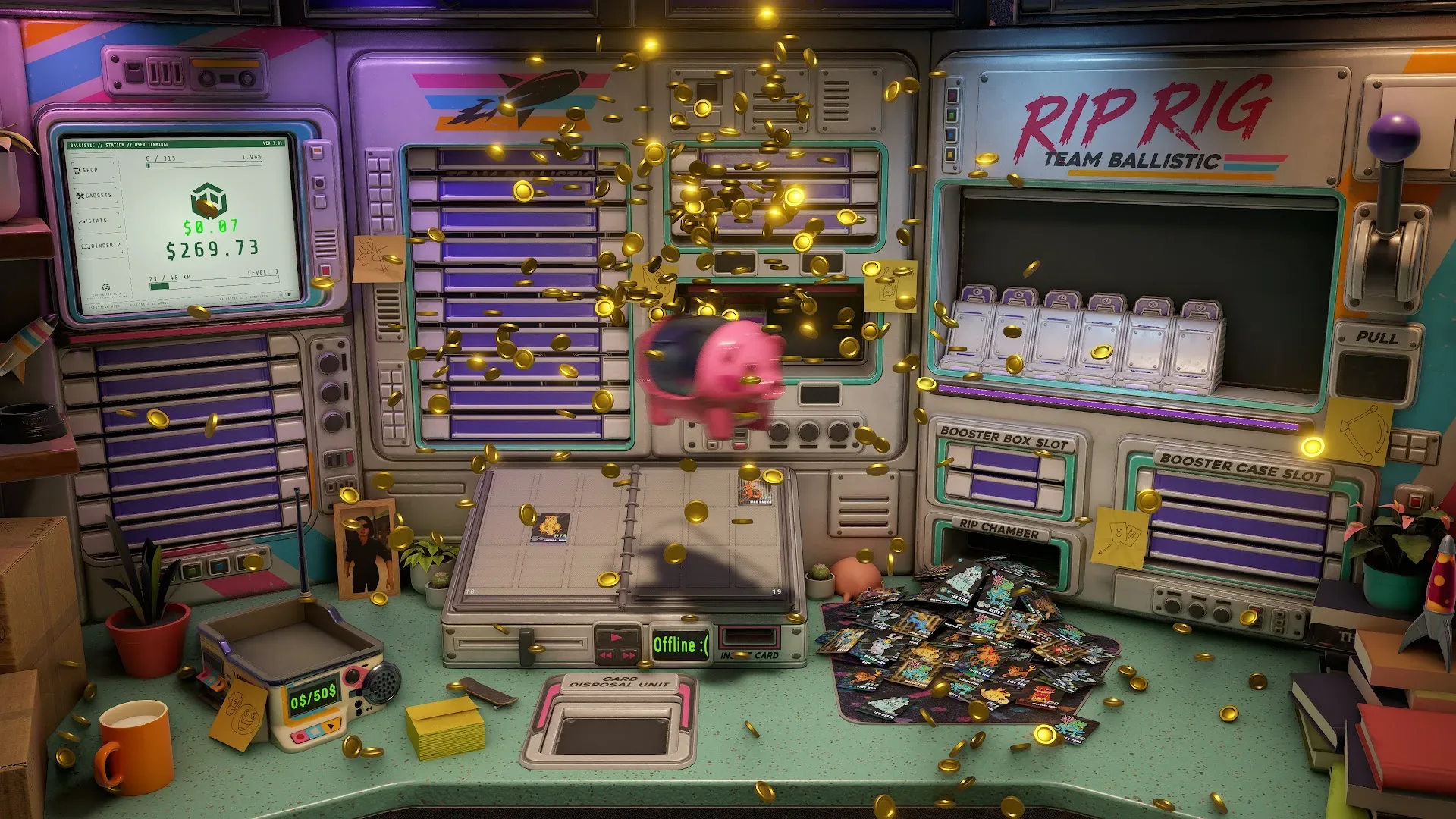
That makes Rip It! Card Collector a game about both the chase and the infrastructure required to make that chase run faster. Packs can initially be opened by hand, while machines and gear are intended to speed up the handling and processing of cards as players progress.
A collecting loop built around physical actions
The word tactile is important to the premise. In this context, it describes a game that aims to make individual actions feel hands-on: tearing open a pack, looking through its contents, sorting the results and placing cards into an organised collection. Rather than treating cards solely as numbers that appear in an inventory, Rip It! Card Collector is positioning the act of processing each pack as part of the appeal.
The announced loop is straightforward:
- Open packs and reveal cards.
- Sort the pulls and place wanted cards into binders.
- Keep hunting for rarer cards to advance the collection.
- Sell duplicates for funds.
- Buy upgrades that improve pack-processing capacity.
The details of how odds, sales values, individual sets or binder completion are handled have not been announced. Still, the structure makes clear that duplicates will be more than dead weight. They are a resource that can be converted into the money needed for equipment upgrades.
What “incremental” means here
Incremental games are generally structured around steady growth: a small action creates resources, those resources improve the player’s output, and the improved output creates resources more quickly. Rip It! Card Collector applies that progression model to the practical side of card collecting.
At the beginning, manually opening and sorting packs is part of the process. Later, the player can unlock machinery and other gear to accelerate or automate card processing. Cybernetic Walrus describes the end goal as scaling up to a fully automated card-processing operation.
Related coverage includes Rip It! Card Collector Announced for Steam.
In practical terms, automation is meant to change the rhythm rather than eliminate the collection goal. The card hunt remains the central reason to open packs, but upgrades should reduce the repetitive handling needed to reach the next run of pulls. The key unanswered question is how much decision-making remains once equipment takes over: the announcement confirms automated processing, but not the precise level of player control, machine configuration or collection management attached to it.
Rarity is the engine of the chase
The announced 1,800-plus-card catalogue gives the game a substantial completion target. It will include ordinary cards alongside super rares, secret promos and cards described as expensive. These categories establish a rarity ladder: common or standard pulls support the wider collection, while more elusive cards create longer-term targets.
A promo, short for promotional card, is typically a card associated with a special release or distribution rather than the ordinary pool. Rip It! Card Collector’s use of “secret promos” suggests intentionally hard-to-find entries, although the announcement does not explain how they will be obtained. Likewise, “expensive cards” indicates that some finds will command greater in-game value, but no economy figures have been detailed.
The combination of rare targets and duplicate sales is a natural fit for incremental design. Players can make progress even when they do not find the one card they were hoping for: a pack can still yield binder additions, stock for sale or money for the next workstation upgrade. Whether that balance feels generous, demanding or heavily luck-driven will depend on implementation that has not yet been outlined.
Binders, duplicates and a virtual collection
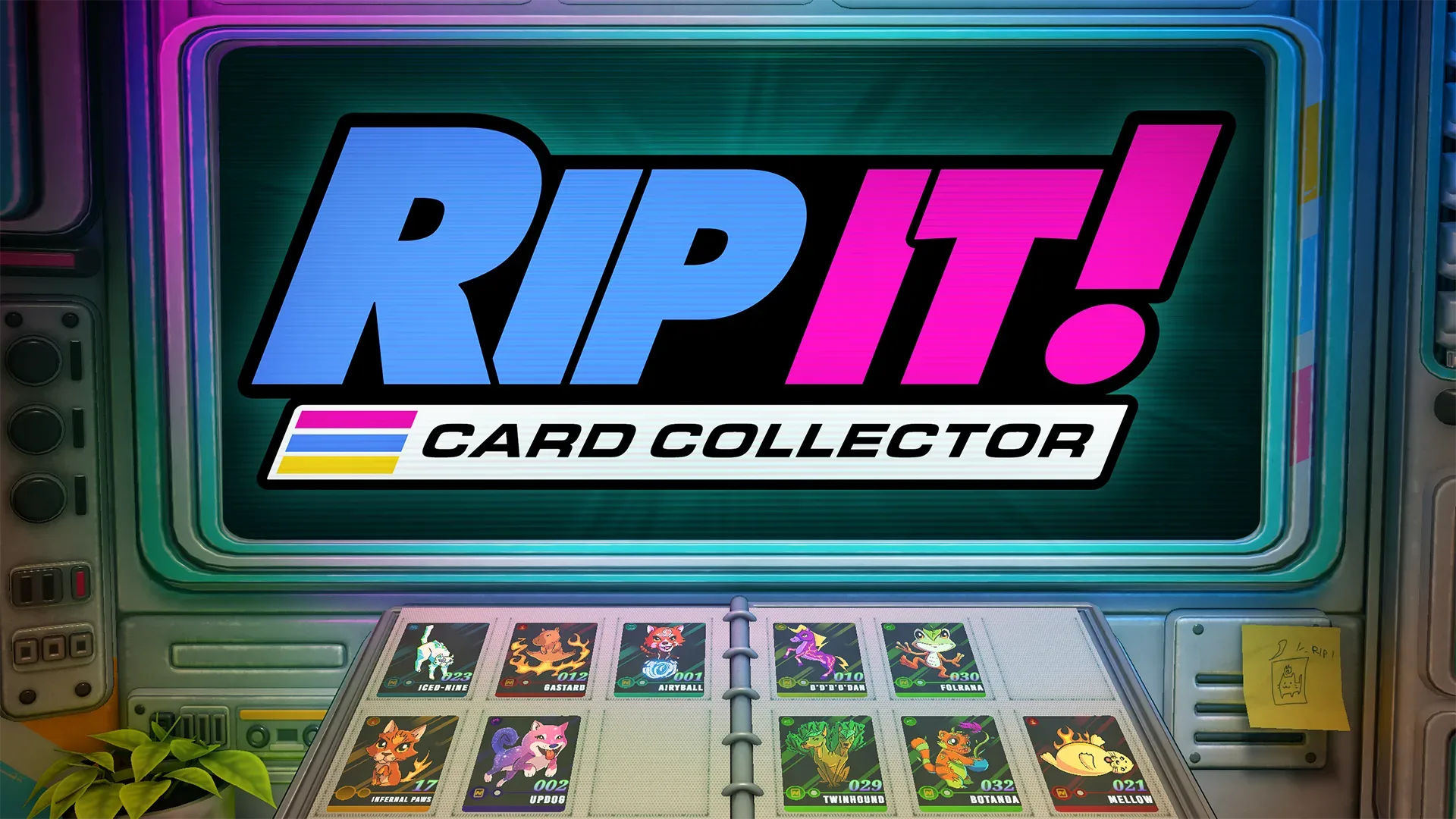
Binders are confirmed as the organisational home for collected cards. That matters because it gives the announced collection a visible structure beyond a running total. Players will be able to arrange cards in binders while looking for rare additions, creating a direct connection between pack opening and the broader aim of assembling the catalogue.
It is worth drawing a distinction between Rip It! Card Collector’s subject and real-world collecting. This is a video game about the rituals and systems of collecting cards, not an announcement of a physical trading-card product. The cards, sales and processing equipment described here are part of the game’s economy and progression system. No real-world card brand, licensed card property, pricing model or release date has been specified.
That framing may appeal to players who enjoy collection completion and organisation but want the experience contained within a game system. The announcement focuses on the pleasure of a new pull and the satisfaction of a neatly managed binder, then adds the fantasy of building an ever more efficient workstation around those activities.
PC and Steam are confirmed, but launch timing is not
Rip It! Card Collector is confirmed for PC via Steam. Cybernetic Walrus has not provided a release date, price, demo plan, console version or early-access plan in the announcement. It also does not specify whether the game will have online features, trading between players, achievements, controller support or other platform features.
For now, the clearest picture is of a single-player-oriented collecting and automation premise: open packs, find and organise more than 1,800 cards, turn unwanted extras into cash, and build out a workstation capable of handling a greater volume of cards.
Players keeping an eye on unusual PC management and simulation concepts can also follow other upcoming Steam projects, including Dragon Shelter’s Steam launch with its elemental-dragon farm revival.
What has been confirmed
- Rip It! Card Collector is being developed or published under the Cybernetic Walrus name.
- It is planned for PC and Steam.
- Its loop includes opening packs, sorting cards, binder organisation and duplicate sales.
- More than 1,800 cards are planned.
- The card pool includes standard cards, super rares, secret promos and expensive cards.
- Players can use proceeds from duplicates to upgrade a pack-processing workstation.
- Machines and gear can accelerate and automate processing.
What remains unconfirmed
- A release date or release window.
- Price and edition details.
- Specific card sets, themes or licensing.
- How rarity odds and secret promos will work.
- The depth of the binder system and automation options.
- Whether platforms beyond PC are planned.
The premise is clear: Rip It! Card Collector wants to turn the moment-to-moment rituals of a pack-opening hobby into a progression game where both the binder and the workshop grow together. More details will be needed to explain the game’s economy and collection systems, but its central hook is already well defined—rip packs, chase the rare cards, keep the best finds, and make the rest fund the machine that helps rip even more.