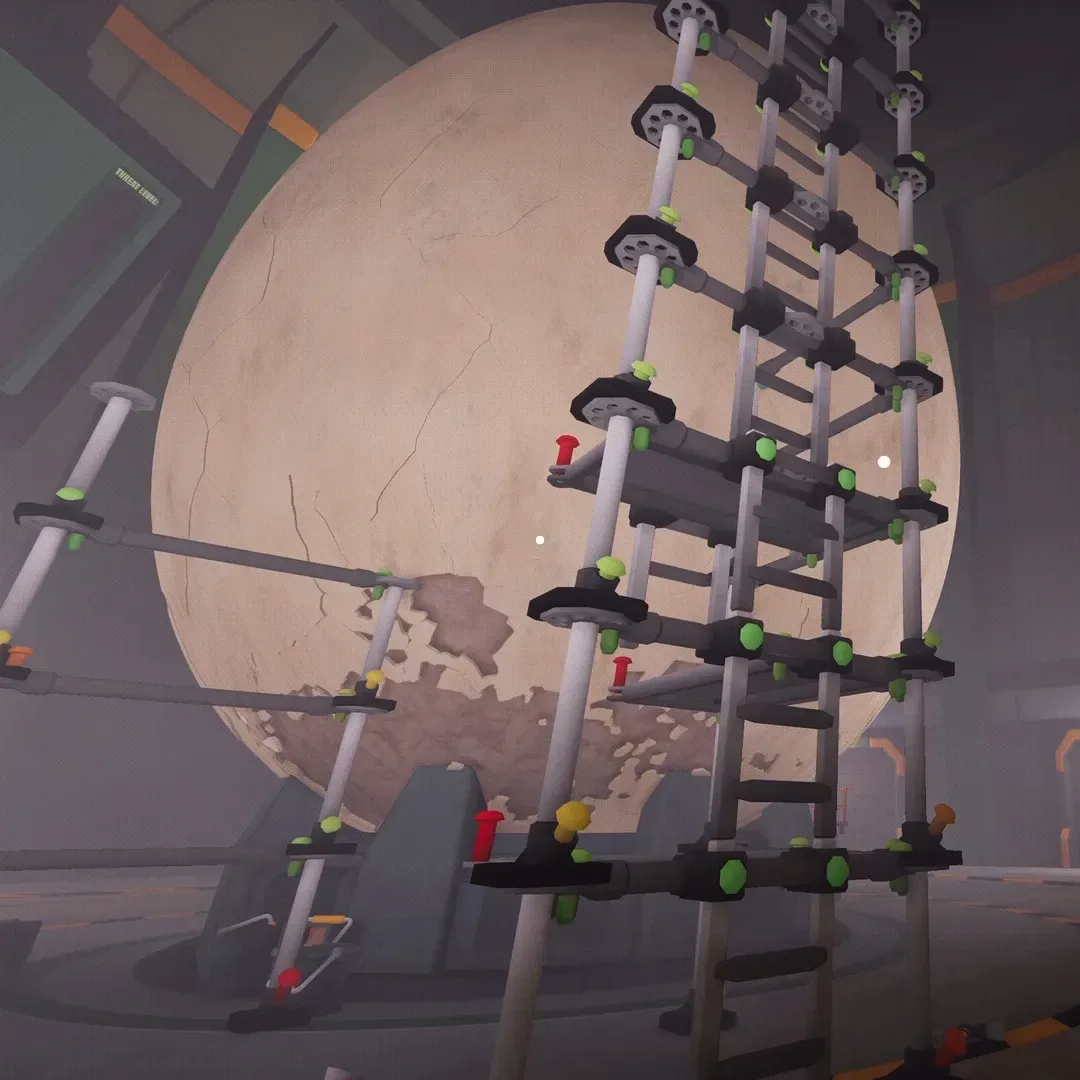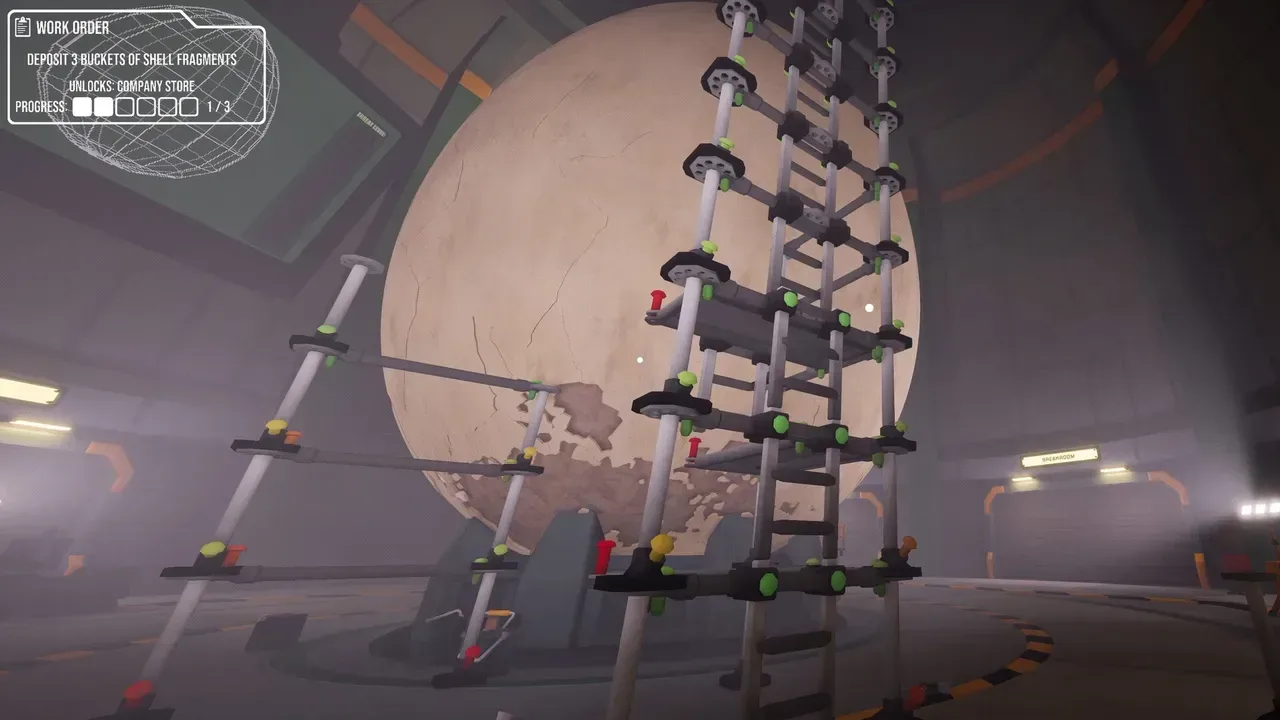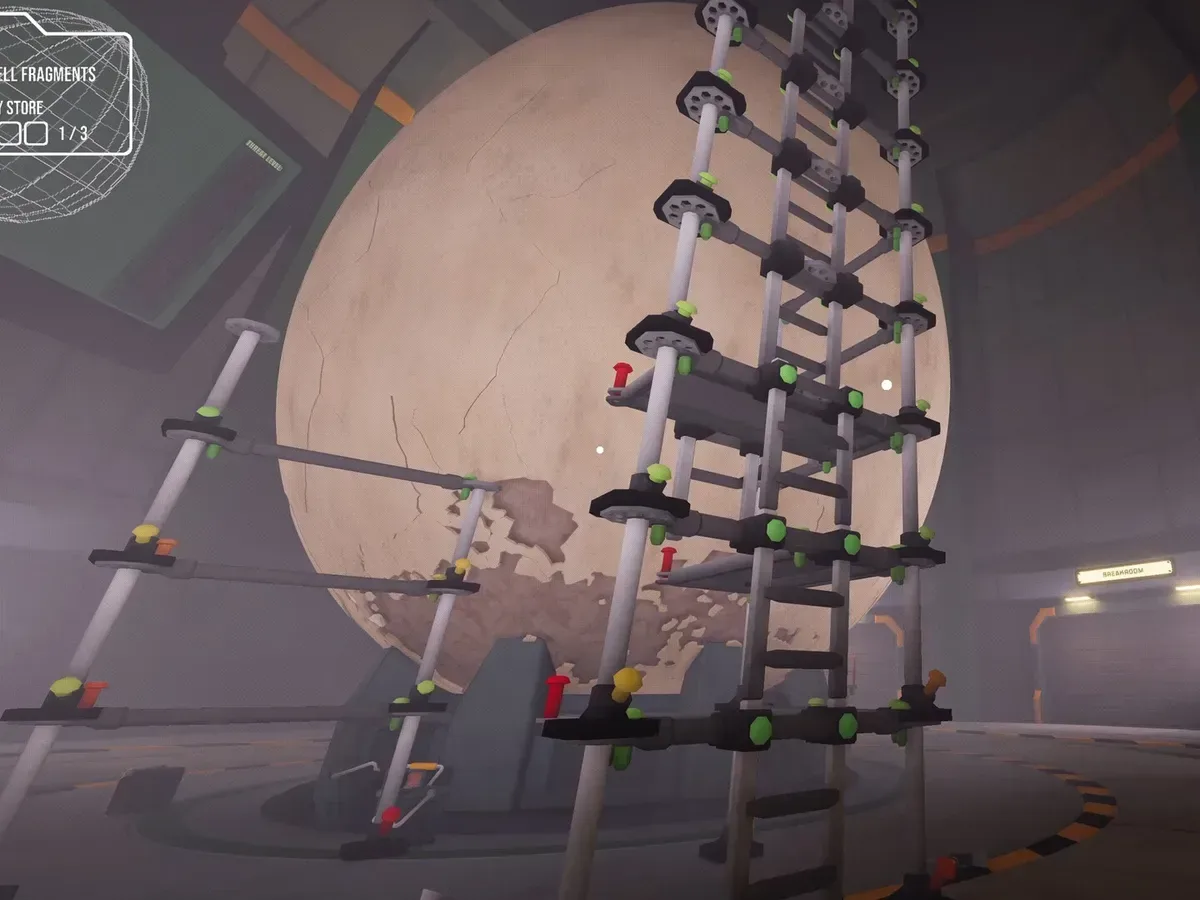
Crack has an admirably direct premise: an enormous egg is sitting in a laboratory, nobody knows where it came from or what it contains, and players are handed tools with which to break it open. The co-op game is due on Steam on October 26, but its central object is not being presented as a passive prop. The egg reportedly reacts to what players do to it, turning the act of cracking it into the game’s central mystery as well as its central job.
That setup has the strange clarity of a playground dare, except with scaffolding, dynamite and an unexplained laboratory wrapped around it. Crack is being described as an “incremental adventure,” a term that matters here because it suggests the initial pickaxe is only the beginning. Rather than simply repeating one action until the shell gives way, players are expected to gather new equipment, convert shattered shell fragments into currency and push deeper into an environment that includes secret rooms.
A very large egg, and a deliberately small question
“How do we open it?” is a wonderfully focused question for a game to build around. Crack does not need a sprawling premise before it gives players a tangible objective. There is a giant obstacle in front of the group; hit it, chip at it, climb around it and find better ways to make progress. The unanswered questions surrounding the egg supply the reason to continue. Is the laboratory built to study it, contain it or crack it? What exactly does an egg’s reaction to player activity look like? And, eventually, what is inside?
The available details wisely leave those questions unresolved. The stated mystery is the attraction, so any assumptions about the egg’s origin, its contents or the scale of the laboratory would be premature. What is clear is that the game’s promise rests on an interaction: every tool choice and every bit of damage may be part of a feedback loop with the egg itself.
For more context, explore Pokémon Fossil Museum Will Open at Denver Museum of Nature & Science on May 28, 2027.
That is a meaningful distinction from a conventional destructible object. In many games, a breakable wall or crate exists to yield resources or clear a route. Crack positions the egg as an active presence. If it truly responds to player behavior, then dismantling it may involve observation as much as force. Players will likely want to pay attention to changes in the environment and to the consequences of using new equipment, rather than treating every escalation purely as a bigger hammer.
What “incremental adventure” appears to mean
Incremental generally describes a structure built on small, cumulative gains. In Crack’s case, the disclosed loop begins with practical tools such as pickaxes and chisels. Breaking the shell produces material that can be used as currency, which implies that progress can fund further progress. Later equipment includes dynamite and unspecified “weird tools,” while scaffolding gives players a way to change how they access the egg and surrounding space.
It is useful to separate what that confirms from what it does not. The game has shell fragments that function as currency; it has tool progression; and it allows scaffolding construction. Those facts support a cycle of work, reward and expanded capability. They do not yet establish the precise upgrade menu, the number of tools, how persistent progress is, or whether every resource decision has consequences. Those are details players will need to discover after launch.
Related coverage includes Crack Turns a Giant Mystery Egg Into Steam's Next Co-Op Obsession.
Still, the structure makes sense for a co-op game. One person can focus on the immediate job of cracking shell, another can help build an approach with scaffolding, and the group can decide when an explosive solution is worth the risk or effort. Co-op does not automatically mean rigid roles, but a single large target naturally gives a team a shared point of attention. A player who wanders into a secret room may return with knowledge or equipment relevant to the next attempt at the egg.
The tools disclosed so far
- Pickaxes: the basic, direct means of attacking the shell.
- Chisels: another early tool, suggesting more than one approach to removing material.
- Dynamite: a later and more forceful escalation beyond hand tools.
- Other unusual tools: mentioned but not specified, leaving room for surprises in the laboratory.
- Scaffolding: a buildable structure that may help the group reach or navigate parts of the huge object.
The inclusion of scaffolding is especially important. It suggests the egg is not merely a health bar with a shell texture. Scale and positioning appear to be part of the problem. If players can build upward or around portions of it, the laboratory may become a working site shaped by the group’s activity. That can make the task feel less like a single button loop and more like a shared construction-and-demolition project.
Why the shell economy could be the key mechanic
Broken shell becoming currency gives Crack a clean explanation for why smashing matters beyond the eventual payoff. Each fragment can be framed as both evidence of progress and a resource for the next stage. That feedback loop is a staple of incremental design: an action provides the means to improve the action, leading to greater access or efficiency.
In this setting, though, the fiction helps the system feel more cohesive. The thing players are trying to open is also the thing financing the tools used to open it. There is a pleasing circularity to that arrangement. It also introduces a practical tension, at least in concept: if shell is valuable, players may need to consider whether a blunt solution is simply fast or whether it affects the value and accessibility of what remains. The currently available information does not explain whether tool choice changes resource returns, so that should be treated as an open possibility rather than a promised feature.
Secret rooms add another layer to the loop. An incremental game can risk becoming too mechanically narrow when every gain comes from the same repeated task. Exploration gives the laboratory a reason to exist beyond scenery. It can interrupt the rhythm of striking the egg, reward curiosity and potentially reframes the egg as part of a wider space with its own hidden history. Exactly what those rooms hold has not been detailed.
The mystery carries an unavoidable expectation
A game centered on an unopened object asks players to invest in its eventual reveal. That is powerful, but it also creates an expectation that the journey and the answer will justify the anticipation. The game’s emphasis on secrets and reactive behavior may be a smart way to distribute discovery throughout the process, rather than saving everything for one final moment.
There is a cautionary lesson in the history of Curiosity: What’s Inside the Cube?, another project built around a tantalizing hidden-object question. Its person-at-the-center reward was tied to a revenue share from Godus; by 2017, that game had not made a profit, leaving no revenue to share. Crack has not advertised a comparable real-world prize. The relevance is narrower: mystery games benefit when their payoff is clear, managed and satisfying on its own terms.
Crack’s strongest apparent safeguard is that it is presenting the opening process as the game, not merely a queue for an answer. Tool upgrades, currency, environmental construction and hidden rooms all give the group things to do before any ultimate reveal. The egg remains the destination, but the laboratory is meant to make the route matter.
What players should keep in mind before launch
The Steam release date is October 26. Players interested in the concept can wishlist the game ahead of release, but the publicly described material is still broad in important areas. There is no stated price, no confirmed account of player count beyond its co-op framing, and no detailed explanation of the egg’s reactive system. It would be sensible to regard the current outline as a premise and a set of core mechanics rather than a complete feature list.
For prospective co-op groups, the appeal is easy to understand. Crack appears designed around a shared, legible goal that can produce both coordination and chaos: one team wants to carefully work a surface, another member finds dynamite, someone else builds scaffolding, and all of it is directed at the same impossible egg. The unanswered mystery gives the activity stakes, while the incremental structure gives it momentum.
There is also something refreshing about a game premise that does not pretend its hook needs to be more complicated than it is. Crack is about breaking open a giant egg. It just happens to be an egg in a laboratory, with secrets, a responsive shell, an economy made from its fragments and enough strange equipment to turn a silly sentence into a potentially involved co-op routine.