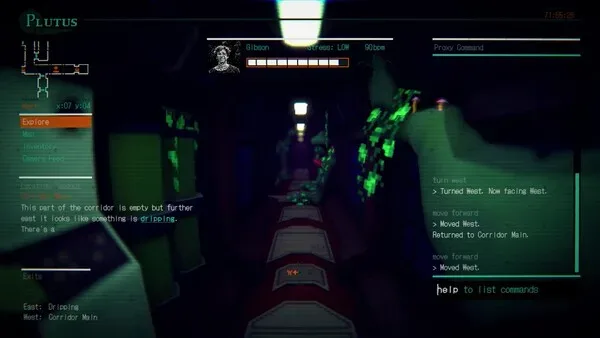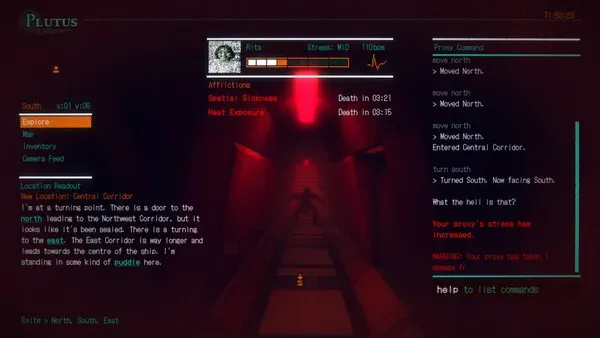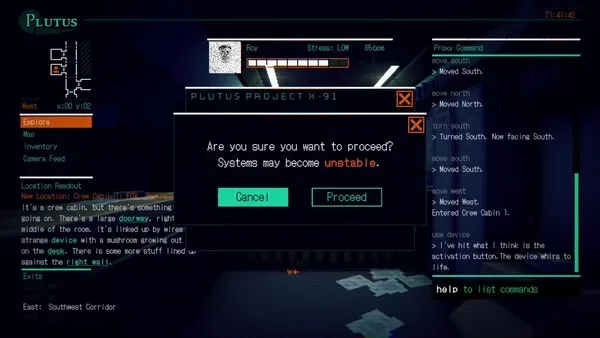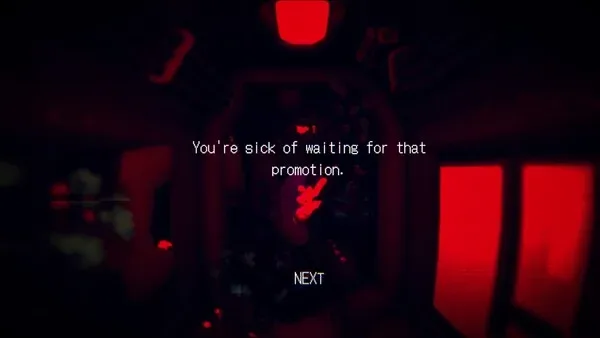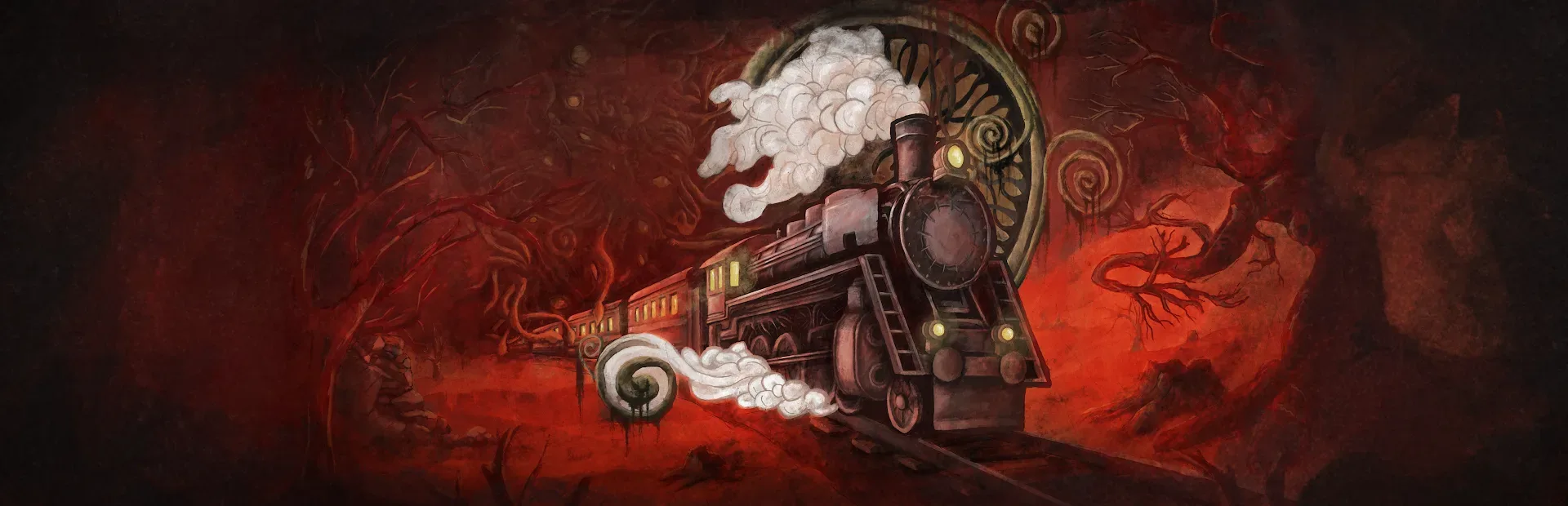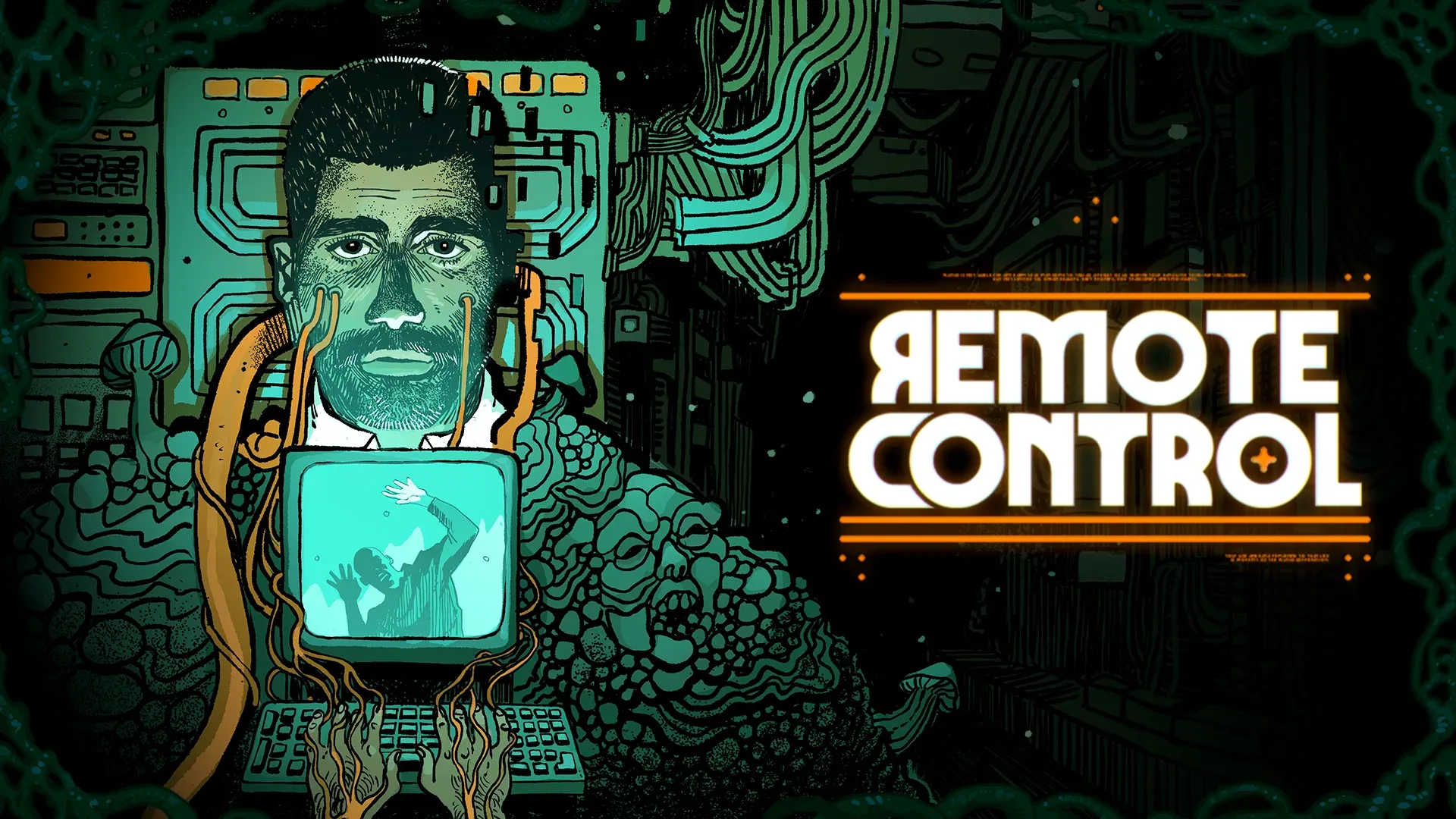
Remote Control, a science-fiction psychological horror game built around typed commands, is scheduled to launch for PC through Steam on January 29. Its central premise is unsettlingly simple: the player remains at a desk while six human proxies enter The Pelican, a long-lost research ship that has suddenly reappeared.
The distance between the player and the danger is the point. Rather than personally walking a character through the derelict vessel, players issue instructions from afar. The proxies serve as their eyes and ears, but they do not act independently: they will not move unless ordered to do so. That arrangement makes every instruction a deliberate act of command, particularly because the people carrying out those commands can die permanently.
The game’s setup combines an investigation with a resource-management problem. The crew of The Pelican is dead, and the task is to search its spaces, gather evidence, gain access to new areas and reconstruct the sequence of events that led to the disaster. Logs and other scattered clues point toward a narrative involving blackmail, betrayal and corporate greed.
A horror game where language is the interface
Remote Control’s defining mechanic is its use of typed instructions. Players begin with a restricted command set, then learn additional commands through exploration. In practical terms, that means progress is tied not only to finding a route or clue, but also to expanding the vocabulary available to direct the proxies.
Typing games can mean many things, from speed-focused challenges to games that use text as a menu system. Here, typing is specifically framed as the method of control. The player gives orders; the proxies obey. The format creates a clear separation between the person making a decision and the person exposed to its consequences.
That separation is especially fitting for psychological horror. A conventional on-screen protagonist can make danger feel immediate because the player occupies the threatened character’s position. Remote Control instead places the player in an insulated role: physically safe at a desk, yet responsible for choosing where other people go and what risks they take. The horror is therefore not only what may be on The Pelican, but the pressure of sending someone else toward it.
The proxies can voice fear and a desire for self-preservation, but they continue to follow the player’s orders.
That detail gives the command system an ethical edge. Fear is not merely environmental flavor when it comes from a person who cannot refuse an instruction. The player is asked to assess incomplete information, the value of a potential lead, and the cost of putting one of six irreplaceable people in danger.
Related coverage includes Remote Control Brings Typing-Driven Sci-Fi Horror to Steam on January 29.
Six proxies, with no reset button for their deaths
Remote Control gives the player six human proxies, and each death is permanent. Permanent death, often called permadeath, means a character who dies does not return later in the run. It raises the stakes of exploration because the available team can shrink as the investigation continues.
The supplied details do not specify the exact threats aboard The Pelican, nor how replacement, failure states or mission completion will work. What is clear is that the six lives are a finite resource. A player cannot treat scouting as consequence-free when a bad order may remove one of the very people needed to continue seeing, hearing and acting inside the ship.
That constraint also gives information a practical value. A clue can advance the mystery, but reaching it may require exposing a proxy to danger. Unlocking a new section of the vessel can open the investigation, while simultaneously introducing more uncertainty. The central decision is not simply whether an area is worth visiting; it is whether the possible evidence is worth the risk to the person sent to retrieve it.
Because proxies express anxiety and self-preservation while remaining obedient, the game’s tension is not based solely on a numerical survival system. Their reactions have the potential to make the player consciously consider the human cost of a command even when the game still permits it. That is a different kind of pressure from controlling a disposable drone or an abstract unit on a tactical map.
The Pelican is both setting and case file
The Pelican is described as a research spaceship that was lost and has mysteriously returned. Its reappearance provides the mystery’s starting point, while the ship’s dead crew gives every new discovery a forensic quality. Players are not entering an active workplace or responding to a routine signal; they are examining the remains of something that has already gone catastrophically wrong.
Exploration serves several connected purposes. It reveals clues about the crew, uncovers logs, unlocks additional areas and supplies the evidence needed to understand the ship’s story. The game’s stated themes of blackmail, betrayal and corporate greed suggest that the answers will not be limited to a technical accident. They point toward decisions and conflicts involving people and institutions.
Importantly, those story themes are presented as elements players will uncover rather than a complete explanation of what happened. The available information does not identify who blackmailed whom, how any betrayal unfolded, or the corporation involved. Leaving those questions open is appropriate to the game’s investigative structure: the player’s role is to assemble the account from fragmented material found across the vessel.
The setting also reinforces the command-based design. A large, derelict ship naturally creates physical distance, closed-off areas and uncertain conditions. As new commands are learned and new spaces become available, the investigation can widen without removing the basic premise that the player is operating remotely. The desk is not just a framing device; it is the boundary that makes the player dependent on other people.
What the command structure could mean for decision-making
Remote Control’s progression is said to begin with a limited range of commands. This is more than a tutorial-friendly way to introduce mechanics. It means that the player’s options are deliberately constrained at the beginning, and that learning how to communicate becomes part of advancing through the ship.
In a horror investigation, limited options can sharpen uncertainty. If a player does not yet have the right command to handle a situation, they may need to search elsewhere, interpret the evidence already found, or decide which proxy can most safely investigate another route. The information provided does not detail individual commands or their syntax, so it would be premature to assume a particular level of typing complexity. Still, the structure makes command discovery an explicit part of Remote Control’s exploration loop.
The model also leaves room for mistakes to feel personal. When movement occurs only after a typed direction, a bad outcome is associated with a specific order rather than a character’s autonomous behavior. That can make even small choices feel weightier: every advance is authorized, every unexplored room is an intentional destination, and every loss is inseparable from the player’s decision to send someone onward.
There is a built-in contradiction at the heart of this design. The player has authority but lacks direct presence. The proxies are vulnerable but have no final authority over their own movement. Remote Control uses that imbalance to turn the apparently mundane act of entering text into an instrument of suspense.
Platform and release details
Remote Control is confirmed for PC via Steam on January 29. No price, system requirements, console versions or precise launch time are included in the available release details. Players looking for a preview of its premise can view the release-date trailer on YouTube.
The game arrives amid a broad range of PC-focused releases and software stories; for another recent PC game release discussion, see our coverage of Muv-Luv Girls Gaiden’s English release.
For Remote Control, the key question is not whether players can survive The Pelican themselves. It is whether they can live with the consequences of directing six other people through it. Its combination of typed orders, persistent deaths and evidence-based exploration makes responsibility—not reflexes—the proposed source of terror.