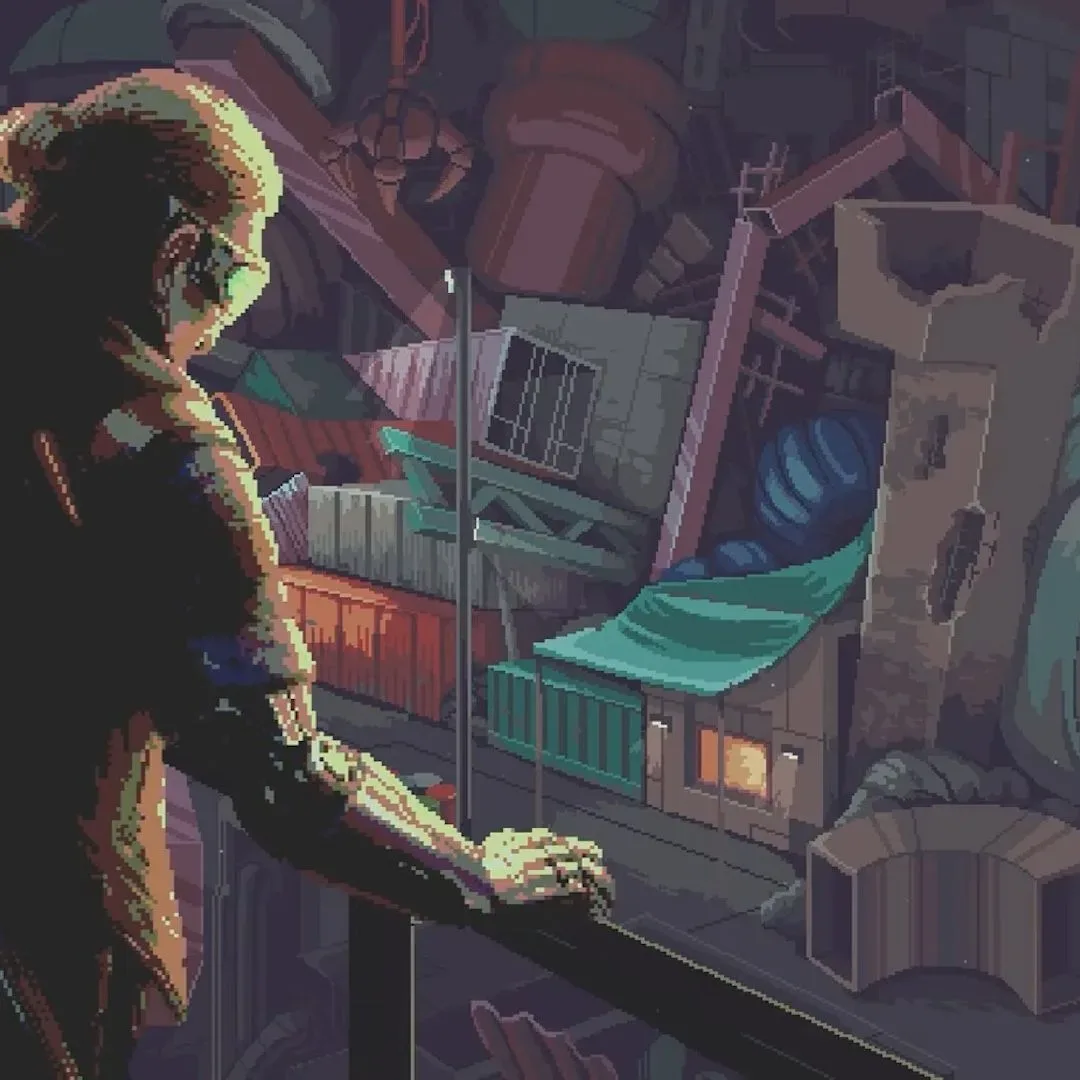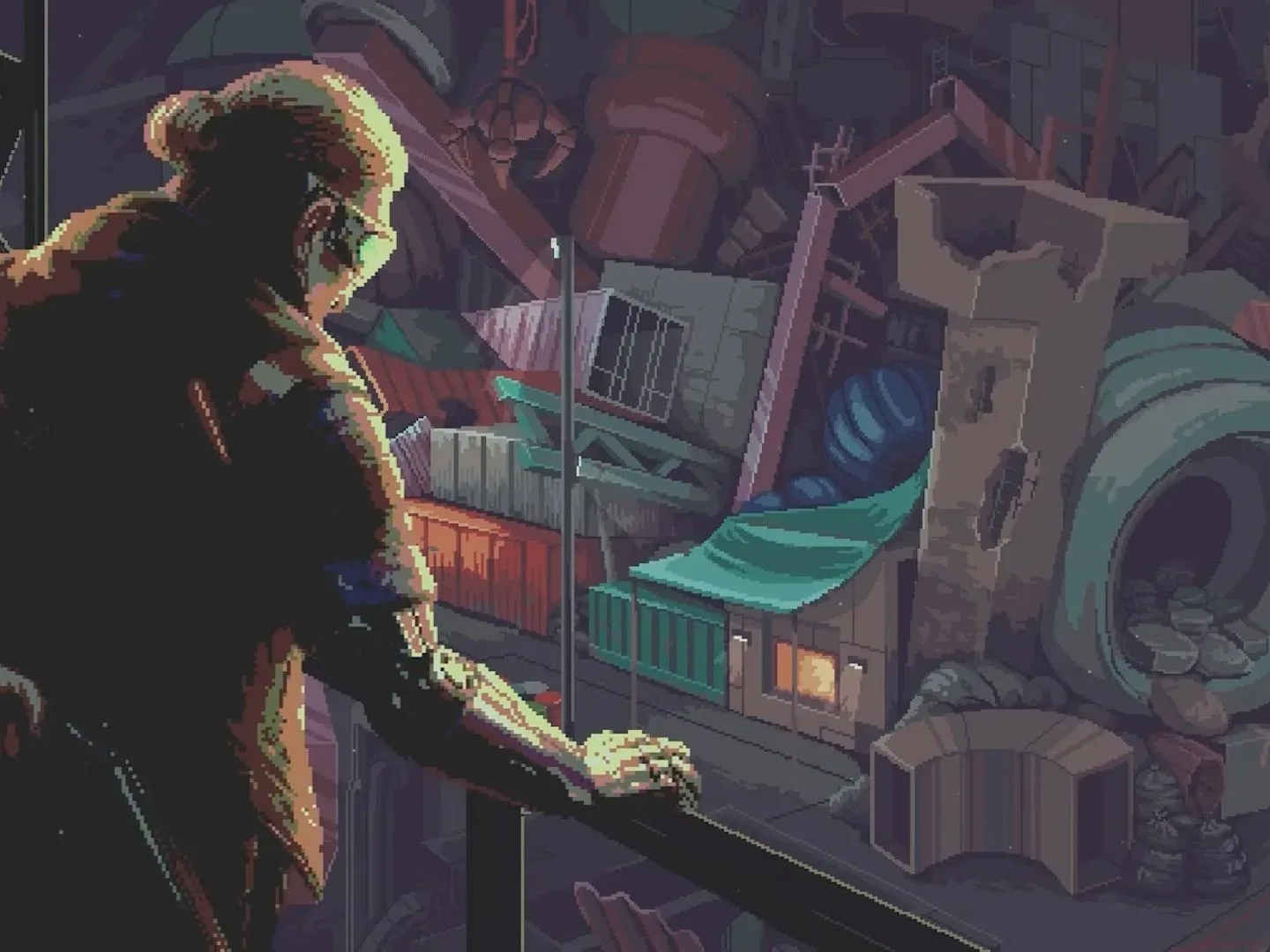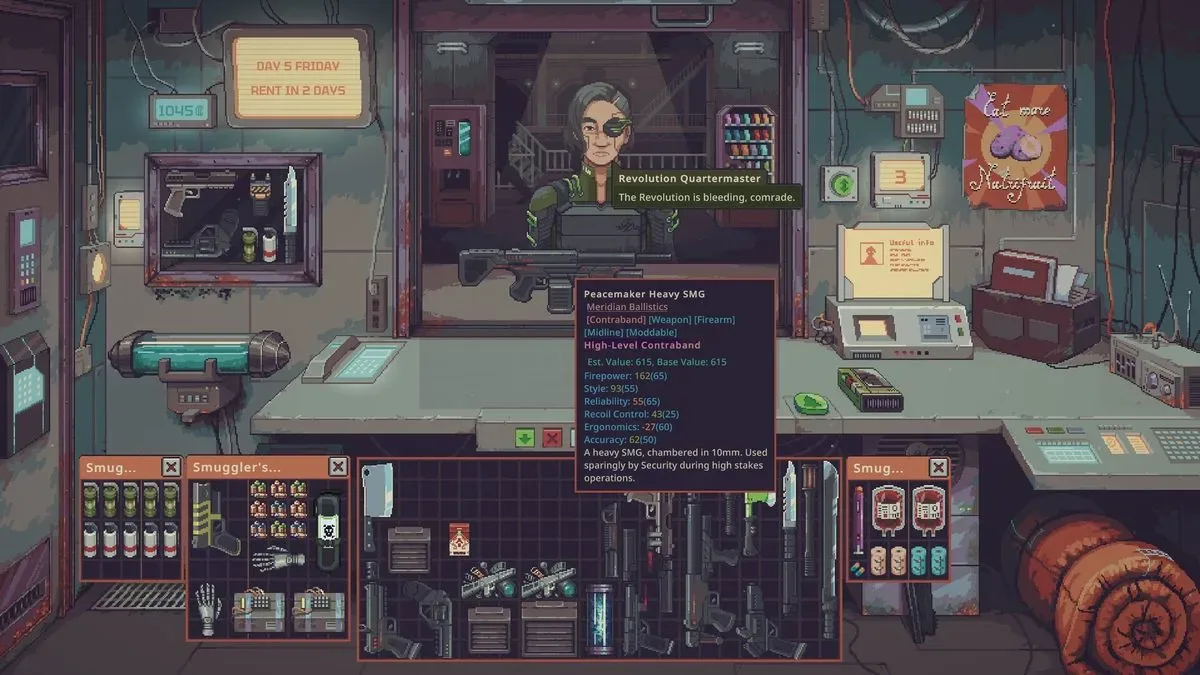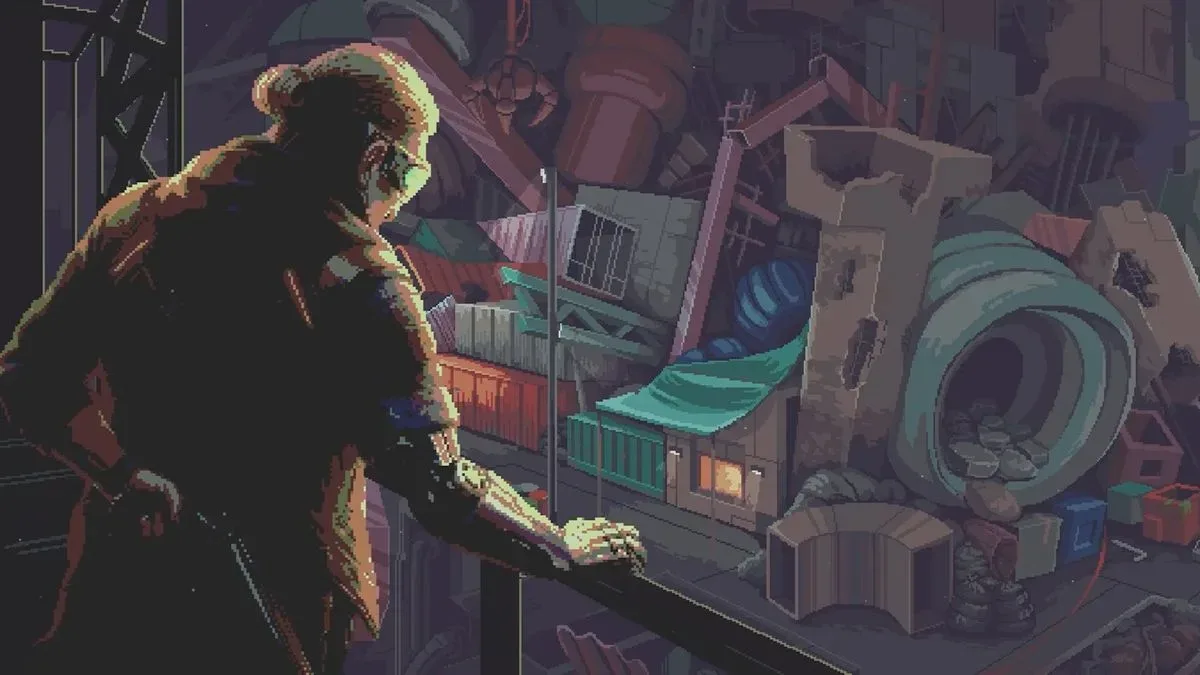
Probably Stolen is making an unusually strong case for the humble counter transaction as a cyberpunk pressure cooker. The game’s demo is currently the biggest single-player entry on Steam Next Fest’s charts, standing out in an event reported to contain a record 8,000 demos. Its hook is not simply stocking shelves or chasing profit. Players are asked to craft, trade and smuggle questionable goods while deciding whom to trust, what rules to break and when an apparent customer may be a serious threat.
Questing Goose Studio’s premise casts the player as a merchant operating under overlapping pressures: rent, law enforcement, criminal opportunity, faction loyalty and the danger posed by synthetic humans connected to a sentient AI chip. The full game is scheduled to launch on October 28, with tinyBuild publishing.
At the time reflected by the demo’s Steam figures, it had exactly 2,000 user reviews and a 98% positive rating. Those early numbers are not a guarantee of how the full release will land, but they do indicate that the game’s central loop has connected with a substantial early audience amid an especially crowded demo event.
A shop counter where every choice creates exposure
The key idea in Probably Stolen is that commerce is not neutral. A sale can be approved, refused, reported or ignored, and each response may carry a consequence. Customers may be security operatives seeking evidence, revolutionaries pursuing leverage or members of a fallen elite judging whether the shopkeeper is useful. The stated premise is simple: somebody is always watching.
That gives the game a decision-focused structure reminiscent of a bureaucratic simulation, but its setting and actions are much dirtier than a routine retail game. Players are permitted to dilute a product’s quality, pass off counterfeit products as genuine and fence stolen merchandise. “Fencing” is a term for selling goods obtained through theft or other illicit means, generally while trying to conceal their origin. In this case, the mechanic appears to turn the shop’s inventory into a direct risk-management problem: a potentially better return may also increase the chance of Security taking interest.
The contrast with more leisurely shop simulations is deliberate. Many games in the genre frame a store as a comfortable service point for adventurers. Probably Stolen instead makes the store a place where survival, exploitation and information-gathering overlap. The player is not only considering what an item is worth; they are also weighing who wants it, what that person can reveal, and whether a transaction makes the shop more visible.
What the game means by a job sim
A job simulator is a game built around performing a profession’s repeatable tasks rather than solely moving through combat encounters or completing a linear story. Here, those tasks include inventory and sales decisions, crafting, trading and illicit dealing. The cyberpunk framing adds a set of stakes that make the work feel less like administration and more like a sequence of small gambles.
The most promising implication is that routine actions may be meaningful because they are interconnected. Refusing a customer might be safer in the immediate moment yet cost a relationship. Accepting a dubious sale might solve a rent problem but create a legal one. Reporting an individual could please one group while putting another on edge. The available material does not spell out every consequence system, so it is too early to assume how deep every branch runs. Still, faction loyalties, reputation bonuses and customer uncertainty all point toward a game designed to make a shopkeeper’s judgment matter.
Related coverage includes Probably Stolen Turns Cyberpunk Shopkeeping Into a Fight Against AI-Controlled Threats.
AI is both the setting’s danger and part of the moment around the demo
Probably Stolen arrives during a Steam Next Fest heavily shaped by discussion of generative AI. With thousands of demos competing for attention and many visibly marked by AI, discoverability is a practical challenge for developers trying to reach players. The game’s fiction happens to center in part on stopping “rampant AI,” giving its pitch an accidental topical charge.
It is important to separate those two uses of the term. Generative AI refers to systems that produce material such as text or images. The AI described in Probably Stolen is a fictional, sentient chip that oversees a legion of synthetic humans. The latter is a narrative and gameplay threat inside a cyberpunk world, not a stated claim about the production of the game itself.
That fictional threat is also not merely scenery. A shotgun is kept nearby because a synthetic human could enter the shop, creating the possibility that the merchant’s work can break into violence. Questing Goose Studio describes the player’s larger objective as stopping the rampant AI by killing those it controls. This is a notable shift from a purely economic sim: preparation, inventory and personal safety appear to share the same cramped space.
Cyberpunk, as used here, describes a future marked by advanced technology alongside social strain, unequal power and compromised everyday life. The player is not placed above that system as a heroic executive or detached investigator. They are a person trying to pay rent, keep a business running and choose which risks are tolerable. That ground-level perspective is why the premise feels more immediate than a generic “save the city from rogue machines” setup.
Specializations change the opening conditions
Probably Stolen also brings role-playing-game structure into its shopkeeping framework. A role-playing game, or RPG, generally lets players define a character through distinct abilities, traits or starting roles that affect how they approach situations. In this case, the opening specialization changes the resources and options available from the start.
- Rat Wrangler: can raise rats for meat.
- Organ Dealer: begins with an organ-storage container and a blood-transfusion set.
- Gunsmith: starts with guns, modifications and ammunition in stock.
- Apprentice: is the neutral option, receiving more starting cash plus standard household goods and food.
There are 10 specializations in total, alongside the Apprentice route. Even from the limited examples, the purpose is clear: the shop’s identity should not be fixed. A gunsmith begins with a practical relationship to weapons and ammunition; an organ dealer starts with a more macabre logistical toolkit; a rat wrangler is positioned around an unusual food source. These are not cosmetic labels if their starting items and capabilities influence what the player can make, sell or survive with.
The demo also includes 25 perks. Perks are character modifiers that grant an advantage or impose a trade-off. Examples include preventing nighttime robberies and improving faction reputation, while negative selections can increase rent or reduce the base inventory. A smaller base inventory is an especially understandable constraint in a game about retail and contraband: less storage means fewer possible goods to hold, which can restrict flexibility even if a particular item has a high potential payoff.
This combination gives replayability a concrete foundation. “Replayability” does not have to mean endless content; it can mean that a second run begins with a genuinely different set of tools and pressures. If a specialization changes stock, a perk changes vulnerability to robbery, and faction standing shapes relationships, the early priorities can differ substantially between characters. The available details support variety in setup, though the full extent of later-game divergence will remain unknown until release.
Why the demo is cutting through a packed festival
A record-scale festival creates a visibility problem. More demos theoretically mean more choices for players, but they also mean individual games have less time to communicate why they deserve attention. Probably Stolen has a concise answer: it lets players run a grimy cyberpunk storefront where the ordinary act of making a sale can become a moral, financial or tactical decision.
The premise is supported by a clear set of immediate stakes. Rent creates ongoing financial pressure. Security represents legal risk. Robberies can threaten stock and safety. Customers may be informants or political actors. Synthetic humans can turn up as a physical danger. These elements give the game several ways to make a player care about a transaction before any long-term story outcome is known.
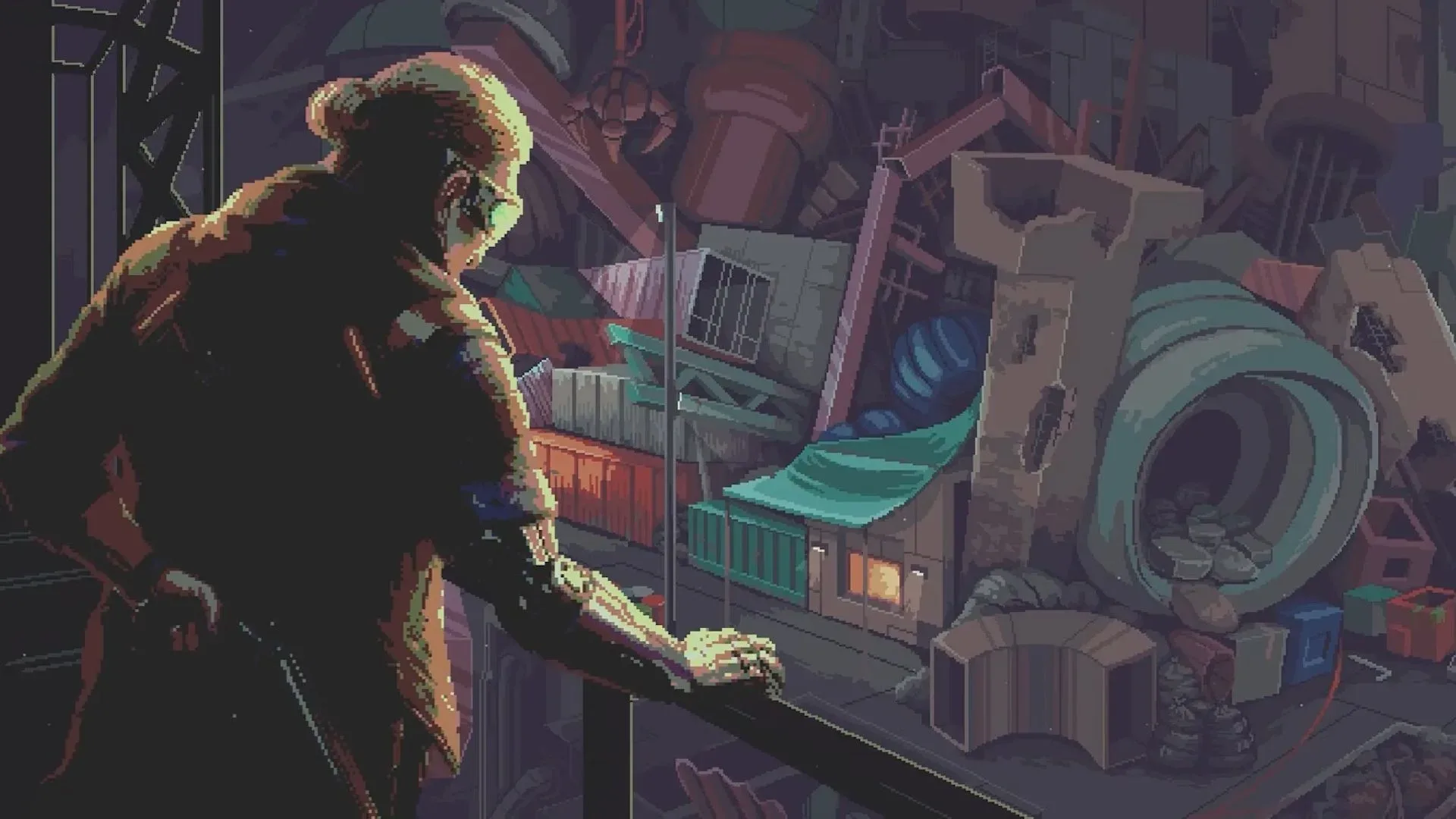
The presentation has been described as pixel art with a responsive interface, a pairing that suits the concept. Pixel art can convey a dense, gritty environment without requiring realism, while a fast interface matters in a game where players may repeatedly compare goods, customer requests and personal risks. Interface clarity is not an ornamental concern in a management-focused game; it determines whether the player understands why a decision was made and what it could cost.
There is a broader reason the concept has potential. Games about work often become compelling when the work is legible but the judgment is difficult. Selling an item is easy to understand. Deciding whether it is counterfeit, stolen, needed by the wrong person or likely to attract Security is more complicated. That is the tension Probably Stolen appears to be pursuing.
What to watch before the October 28 launch
The demo’s popularity and review score make Probably Stolen one of the more conspicuous single-player games in the current Steam Next Fest lineup. Its full release will need to show whether its systemic promises hold beyond the first sharp impression: whether specializations remain distinct, whether perks produce interesting compromises, and whether faction and customer decisions develop into satisfying consequences rather than simple right-or-wrong answers.
Its strongest asset is that its systems all serve the same fantasy. The player is not a clean-cut entrepreneur or a distant commander. They are a merchant keeping an unstable business alive in a hostile city, deciding when to be honest, when to cheat and when to reach for the shotgun. For another view of how major publishers are making difficult choices about game portfolios, see EA’s new portfolio plan for Battlefield, Apex and sports titles.