Electronic Arts has set out a dramatically narrower list of games and franchises it intends to support as it begins a major restructuring that includes 400 layoffs. The company’s leadership has told staff it will put more resources behind Battlefield, Apex Legends, annual sports games, The Sims, Skate and a select group of big licensed projects. At the same time, the next Mass Effect has been canceled, BioWare is closing after roughly 30 years, and work on a Sims project known internally as Project Lotus has been paused.
The message is clear even where individual projects remain lightly described: EA is concentrating on properties with established audiences, recurring engagement potential, annual sports cycles, and global growth opportunities. It is a consequential change for players waiting on Mass Effect, for the affected studio teams, and for anyone trying to understand what “focus” means when a publisher reshapes its development slate after a $55 billion leveraged buyout.
What EA says it will keep making
In a joint internal email, chief studios officer Cam Weber and chief operating officer David Tinson framed the plan around three priorities. First, EA says it will decline some projects it cares about in order to invest more deeply in areas already working. Second, it wants to reach more players, including in Asian markets. Third, it wants to create new forms of sports engagement for fans.
The projects and franchises named for continued investment are:
- More Battlefield
- Heavy investment in Apex Legends
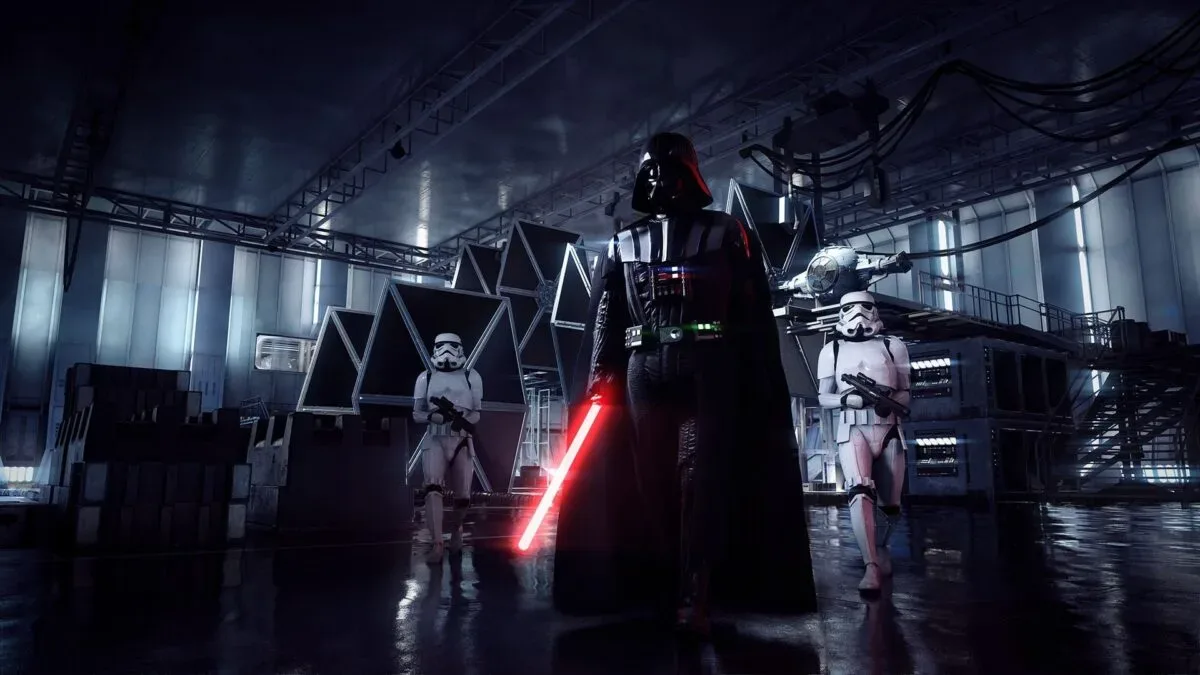
- A new shooter from DICE and Respawn, reported to be a new Star Wars Battlefront 3
- Star Wars Jedi 3
- Marvel’s Iron Man
- EA Sports FC and EA’s other annual sports franchises
- Project Gridiron, an open-world football experience
- A return of Fight Night
- Project Evergreen, a new Sims experience
- More Skate
That list should not be read as a calendar of imminent releases. EA has named initiatives and areas of investment, but the information does not establish launch dates, platforms, business models, or the precise scope of each game. The DICE and Respawn shooter is especially important to separate from a formal confirmation: it has been reported as a new Battlefront, but EA’s own outlined list identifies it only as a new shooter from those studios.
Still, the portfolio choices reveal the company’s direction. Battlefield and Apex Legends are shooter brands with clear long-term value to EA. EA Sports FC and the rest of the annual sports line remain central. Meanwhile, Star Wars Jedi, Iron Man, The Sims, Skate and Fight Night suggest EA is not abandoning single-brand projects or recognizable premium franchises outright. It is selecting a smaller set of them.
Mass Effect is canceled, and BioWare is closing
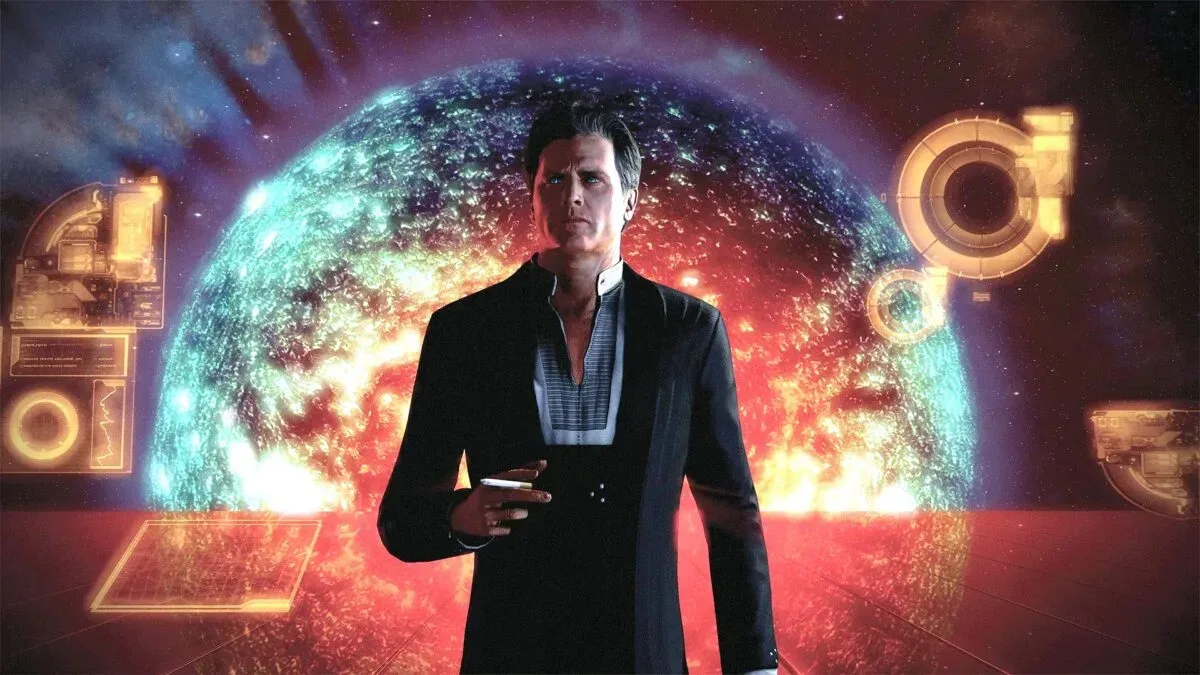
The most immediate loss from the restructuring is the upcoming Mass Effect game. Its cancellation is paired with the closure of BioWare, the studio associated with the project, after approximately three decades. The affected BioWare team was reportedly around 50 people, or about 12.5% of the 400 layoffs announced in this wave.
For fans, this is more definitive than a routine delay or a shift in development priorities. EA is not describing a new path for the Mass Effect project; it has ended it. And because BioWare is closing, there is no indication in the available information that the existing team will continue the work elsewhere inside EA.
Related coverage includes EA Maps Out a New Strategy as BioWare Closes and Mass Effect Development Ends.
The studio closure also gives the wider strategy a human scale that portfolio language can obscure. “Organizational efficiency” and “focus” are corporate terms, but their immediate meaning is jobs eliminated, teams dispersed and a major project stopped. The reported BioWare closure is part of a broader pattern worth following, as explored in EA’s complicated record of acquired studios disappearing.
Skate is continuing, but with a smaller team
Skate remains in EA’s plans, though Full Circle is being reduced. Developers at the studio have already publicly indicated layoffs through LinkedIn posts. EA’s explanation is not that it is leaving Skate behind; instead, it says the game needs a more focused, smaller team and a clearer roadmap intended to keep players engaged over the long term.
That wording matters. A roadmap is a plan used to communicate the expected direction of a game’s updates, content and priorities over time. In this context, EA is presenting Skate less as a one-time product and more as an experience that must retain an ongoing community. Long-term engagement means players continuing to return rather than treating a game as something finished after an initial period of play.
EA says Skate has already succeeded at bringing players in. Its stated problem is sustaining that attention. The company’s proposed response is to reduce and refocus the development organization, not to discontinue the project. Whether a smaller team can deliver the roadmap EA envisions is an open practical question, but the distinction is important: Skate is continuing under new constraints.
The Sims is changing course from Lotus to Evergreen
Maxis is also receiving a new assignment. Development on Project Lotus has been paused, while the studio moves to Project Evergreen, described as a new Sims experience. EA says this change gives the team additional time to realize the project’s full potential and vision.
“Paused” is not the same as canceled, so the available information does not establish that Project Lotus is permanently dead. It does mean, however, that it is no longer the active priority. The active Sims plan is Project Evergreen.
The language around Evergreen aligns with EA’s broader emphasis on enduring communities and sustained participation. But it would be a mistake to infer unannounced details from that alignment. EA has not laid out Project Evergreen’s platforms, release window, monetization, features, or relationship to previous Sims games in the material available here. For now, the reliable takeaway is structural: Maxis has shifted its development focus.
Why debt and cost cutting are central to the story
The restructuring follows EA’s sale to Saudi Arabia in a $55 billion leveraged buyout, described as the largest such buyout in history. A leveraged buyout is an acquisition financed substantially with borrowed money. That debt does not disappear because the company is no longer publicly traded. Instead, it becomes a major obligation for the business that must generate enough cash to service it.
Before the transaction, EA was reported to be targeting $700 million in yearly cost reductions, including $170 million labeled “organizational efficiencies.” The 400 layoffs, project cancellation, studio closure, and smaller Skate team show some of the concrete changes now occurring under that umbrella. The available information does not specify how much these moves save or whether they satisfy the stated cost-cutting target.
Nor does it prove that every portfolio choice is solely a debt decision. EA’s leaders also point to competition for players’ time, changing markets and the need to expand beyond the company’s traditional strengths. But the combination of a debt-financed acquisition, a stated savings target, layoffs and a more selective slate makes the financial context impossible to separate from the creative one.
A portfolio built around repeat audiences and global reach
EA describes itself internally as the leading publisher in Western HD gaming. “HD gaming” is generally a label for higher-fidelity console and PC games rather than an exact product category, and the statement is a declaration of the company’s competitive position rather than a measurement explained in the internal email.
The more useful point for players is how EA intends to act on that confidence. The chosen lineup leans toward franchises with recognizable names and reasons to maintain a durable audience: competitive shooters, sports titles, simulation games and established licensed universes. The company explicitly says it sees opportunities outside the markets, platforms and business models where it has historically been strongest, including a push toward more players in Asia and new sports-fan experiences.
That does not mean every future EA game will be annualized, online-only, sports-related or designed the same way. Star Wars Jedi 3 and Marvel’s Iron Man sit alongside Battlefield, Apex Legends and EA Sports FC in the company’s own list. What it does mean is that projects are now being judged within a strategy that puts exceptional weight on scale, retention and recognizable demand.
For consumers, the near-term picture is mixed. There is renewed commitment to major series such as Battlefield, Apex Legends, The Sims and Skate, plus the prospect of a Fight Night return and an open-world football project. But there is also the end of a new Mass Effect, a BioWare closure, less certainty around Lotus, and a smaller Full Circle team. EA’s restructuring is therefore not simply a list of games coming next. It is a decision about which kinds of game development the company believes can carry its business through an expensive new era.