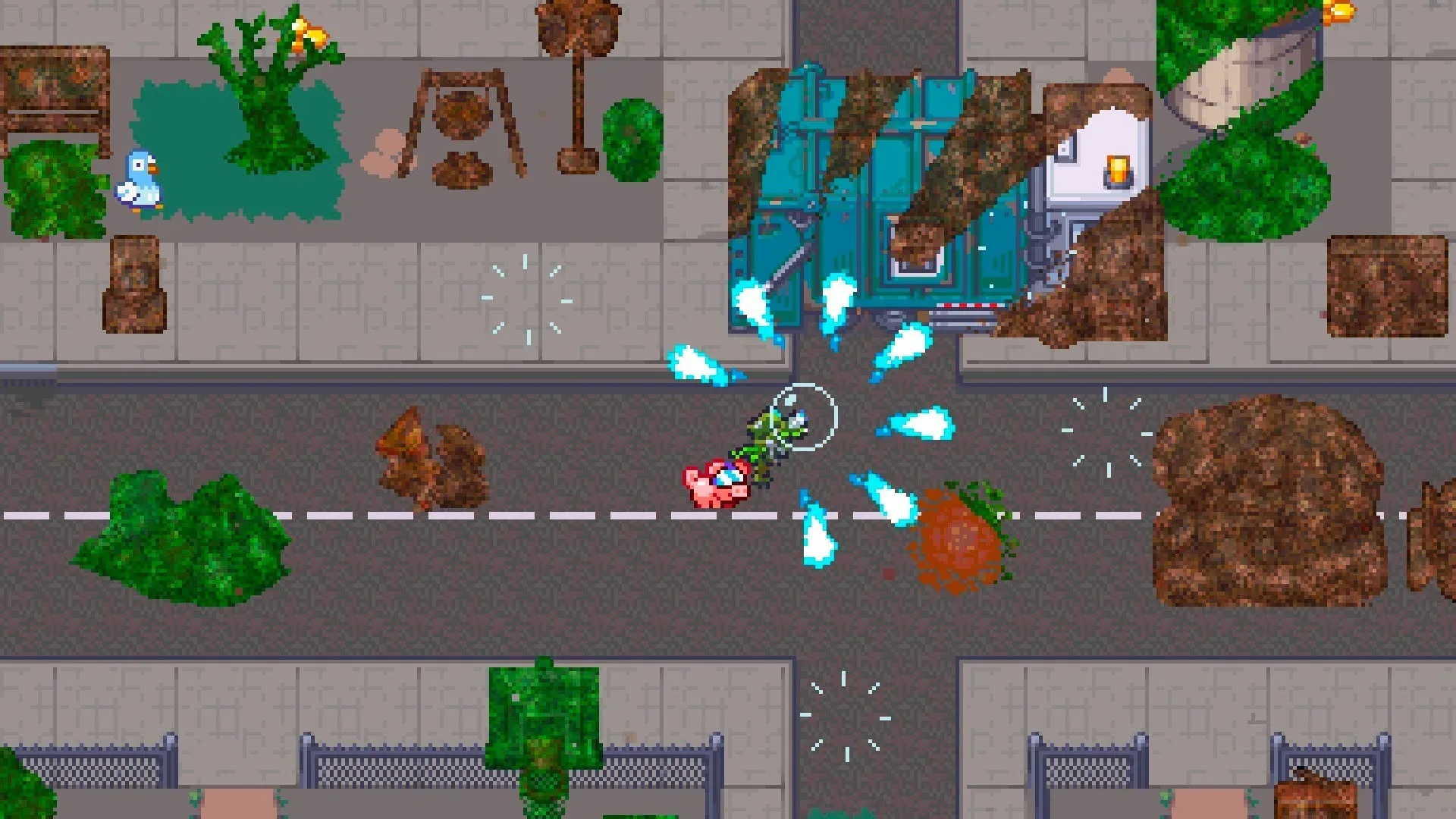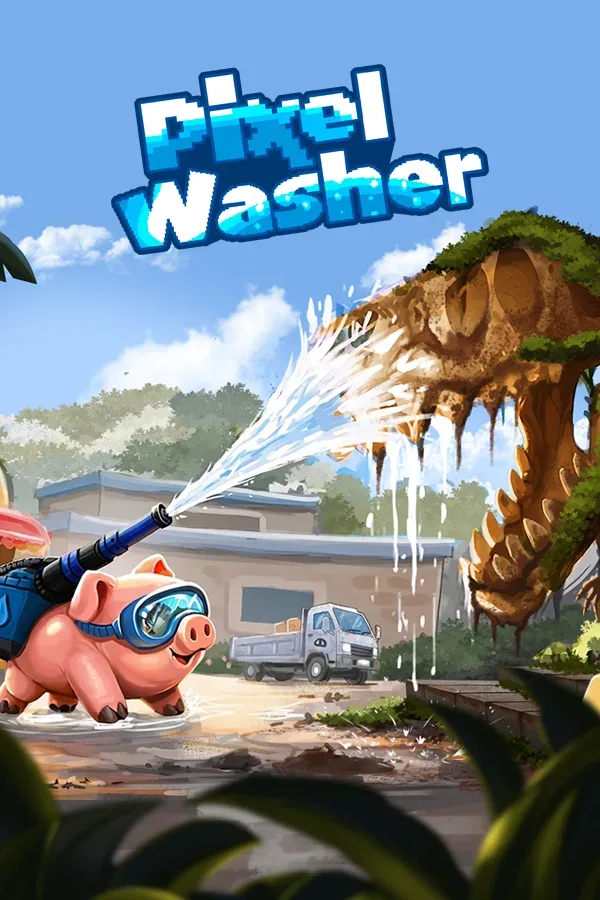
Pixel Washer has entered Steam Early Access, bringing its distinctly pig-powered cleaning premise to PC for $12.99 USD. Developed by Valadria and launched with Acclaim, the game casts players as Pigxel, a goggle-wearing pig using a power washer to remove layers of dirt from hand-crafted pixel-art environments and help restore a grimy town.
The immediate pitch is straightforward: point the washer at filth, clean a space, earn money, then improve the tools used for the next job. But the framing matters. Pixel Washer is being positioned as a cozy, zen-like simulation rather than a high-pressure challenge game. Its rhythm is intended to make an ordinary task feel rewarding through visible restoration, calming audio and gradual equipment progression.
The Early Access launch also comes with a trailer narrated by Tim Kitzrow, known as the voice actor associated with NBA Jam. It is a playful bit of contrast for a game whose central activity is methodically pressure-washing pixelated muck rather than throwing down a booming arcade-sports call.
What players can expect from Pixel Washer
Pixel Washer’s primary loop revolves around cleaning. Players use a power washer to blast grime away and uncover the artwork below it. The levels are described as hand-crafted pixel-art spaces, so washing is not merely about changing a progress meter: it is also the process through which the environment’s color, details and personality become visible again.
That gives the game a clear restoration theme. Pigxel is not simply completing isolated cleaning assignments; the stated goal is to bring a filthy town back one job at a time. The premise naturally ties individual level completion to a broader sense of place, even though the currently described structure emphasizes a selection of distinct pixel-art levels.
For players unfamiliar with the label, a power-washing simulation is a game built around the controlled removal of dirt from objects and environments. The appeal is typically tactile and visual rather than competitive. A dirty surface presents an immediately legible problem, while a clean surface offers an equally immediate result. In Pixel Washer, the pixel-art presentation makes that contrast especially central: grime conceals the world’s designed details until the player works through it.
Its advertised feature set currently includes:
- Cleaning pixel-art environments with a power washer.
- Multiple hand-crafted locations to choose from.
- Money earned through jobs.
- More powerful washers, vehicles and additional equipment to purchase with those earnings.
- A relaxed soundtrack and deliberately satisfying cleaning sound design.
- A town-restoration setup centered on Pigxel, the goggled pig protagonist.
The upgrades suggest that the game will have a progression loop beyond simply moving from one dirty space to the next. Better washers may make later work more efficient or expand the player’s options, while new vehicles and equipment indicate that the developers want cleaning jobs to develop alongside the player’s toolkit. The available details do not define the exact functions, costs or unlock conditions of those items, so prospective players should avoid assuming a particular upgrade system until more is detailed or implemented.
Early Access is part of the plan, not just a label
Acclaim and Valadria say the Early Access period will be used to grow Pixel Washer with new content, new features, quality-of-life improvements and updates informed by its community. That wording is important because Early Access describes a game that is publicly playable while development continues toward a fuller release. It does not, by itself, specify how much content will be added, when individual additions will arrive or which player requests will make it into the final version.
In practical terms, the appeal of entering Early Access is an opportunity to play the game’s core premise now while development remains active. The trade-off is that the eventual 1.0 version is still ahead. Anyone considering the $12.99 entry price should therefore view the current Steam release as an in-development edition, with the announced plan—rather than a fixed inventory of future material—being the promise at this stage.
Quality-of-life improvements, one of the stated areas of focus, generally refers to changes that reduce friction without necessarily changing the game’s main concept. In a cleaning simulator, that could concern how clearly players can identify remaining grime, how tools are managed, or how jobs and upgrades are navigated. Those examples are explanatory possibilities rather than announced Pixel Washer features; the developers have not yet outlined a specific quality-of-life roadmap.
Likewise, “community-driven” updates mean player input is intended to have a role in the game’s development process. It should not be read as a guarantee that every suggestion will be included. A useful measure of that commitment will be how clearly future updates explain what has changed and how the game is moving toward its planned release state.
That iterative approach is familiar across PC development, including games that use live testing or evolving modes to refine a concept. For another example of how active experimentation can affect a game’s social systems, see our look at Arc Raiders’ experimental PvE mode. Pixel Washer is aiming at a very different, single-player-friendly mood in its public description, but the broader point remains: an unfinished release is best judged both by its current experience and by the clarity of its development direction.
A cozy design built around visible progress
“Cozy” can mean a lot of things in games, but Pixel Washer’s description provides a fairly concrete version of it. The game is built around chill music, satisfying sound design, approachable pixel art and a task that produces a clean, visible before-and-after change. There is no announced competitive component, combat system or high-stakes premise in the available launch information. Instead, the fantasy is that cleaning itself can become the reward.
Sound has an outsized role in that kind of design. A washer’s spray, the effect of grime coming loose and audio signals that communicate progress can all make a repetitive interaction feel more substantial. The game specifically highlights satisfying sound design, which suggests audio is intended to reinforce the sensation of clearing dirt rather than merely sit in the background.
The pixel-art format could also make the restoration premise especially readable. Pixel art relies on deliberately placed blocks of color and tightly composed visual detail. When an environment begins covered in filth, every cleaned patch has the potential to reveal a small piece of the artist’s work. That is an analysis of why the format fits the stated concept, not a claim about the game’s precise cleaning mechanics or level layout.
Vehicles add another note of scale. The announcement says they can be acquired with money earned on jobs, alongside improved washers and equipment. It does not say whether vehicles change traversal, carry equipment, unlock jobs or serve another function. Still, their inclusion signals that the game’s advancement is not limited to a sequence of increasingly strong nozzles.
Steam now, Switch 2 with the planned 1.0 launch
Pixel Washer is available now through Steam Early Access. The developers also plan to bring the game to Switch 2 when it reaches its full 1.0 release in 2027. This is a planned platform rollout, not a currently available Switch 2 edition, and no separate console price, specific 2027 date or feature comparison has been provided.
That distinction is worth keeping clear. The Steam version is the one players can buy today, and it is the version expected to receive the content, feature and quality-of-life work described for Early Access. The Switch 2 release is attached to the projected full launch. Players who primarily want the Nintendo version will need to wait for more details closer to 1.0.
The choice of a 2027 full-release window gives the project a stated destination, but it does not fill in the path between the Early Access debut and version 1.0. There is currently no published schedule in the available information for future level drops, upgrade additions, community updates or a final release date. That uncertainty is normal for a project still being expanded, but it is still the key practical consideration for anyone deciding whether to join early.
Who Pixel Washer appears to be for
Based on the announced features, Pixel Washer looks best suited to players who enjoy low-pressure games with tangible incremental progress. The key attraction is likely not a complicated simulation of industrial washing hardware; it is the repeated, satisfying act of revealing a colorful scene, getting paid and improving Pigxel’s cleaning operation.
Players seeking a fully finalized game with a locked-in feature list may prefer to watch the project’s Early Access updates first. Conversely, people who like following a game as it receives new content and refinements may find the current launch a natural point to step in—provided they are comfortable with the usual uncertainty around in-development software.
For now, the clearest promise is simple and pleasantly strange: a pig in goggles, a power washer, an overly dirty town and a lineup of pixel-art surfaces waiting to be restored. Pixel Washer is available on Steam Early Access for $12.99 USD, while its full 1.0 release and planned Switch 2 version remain targeted for 2027.