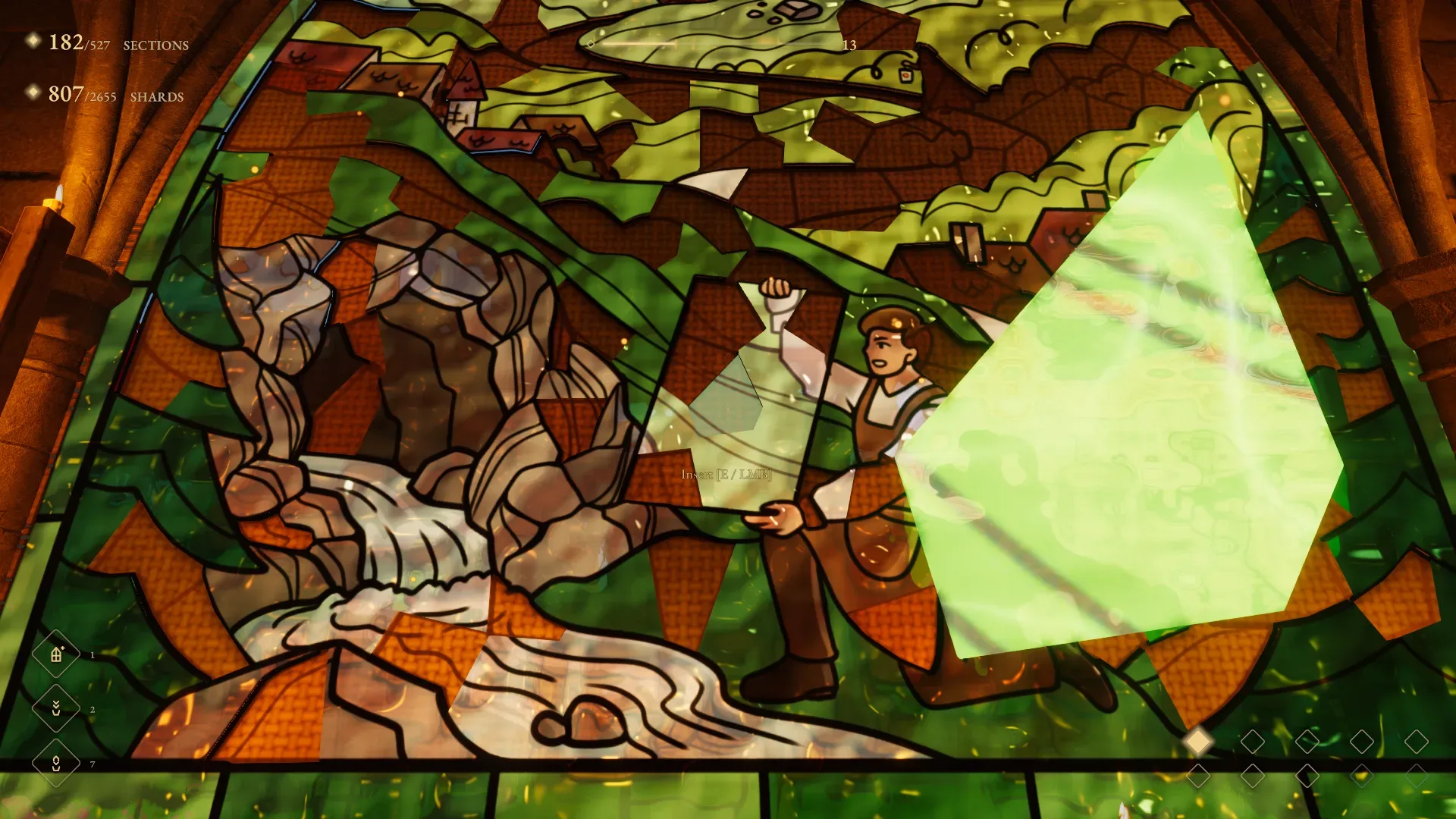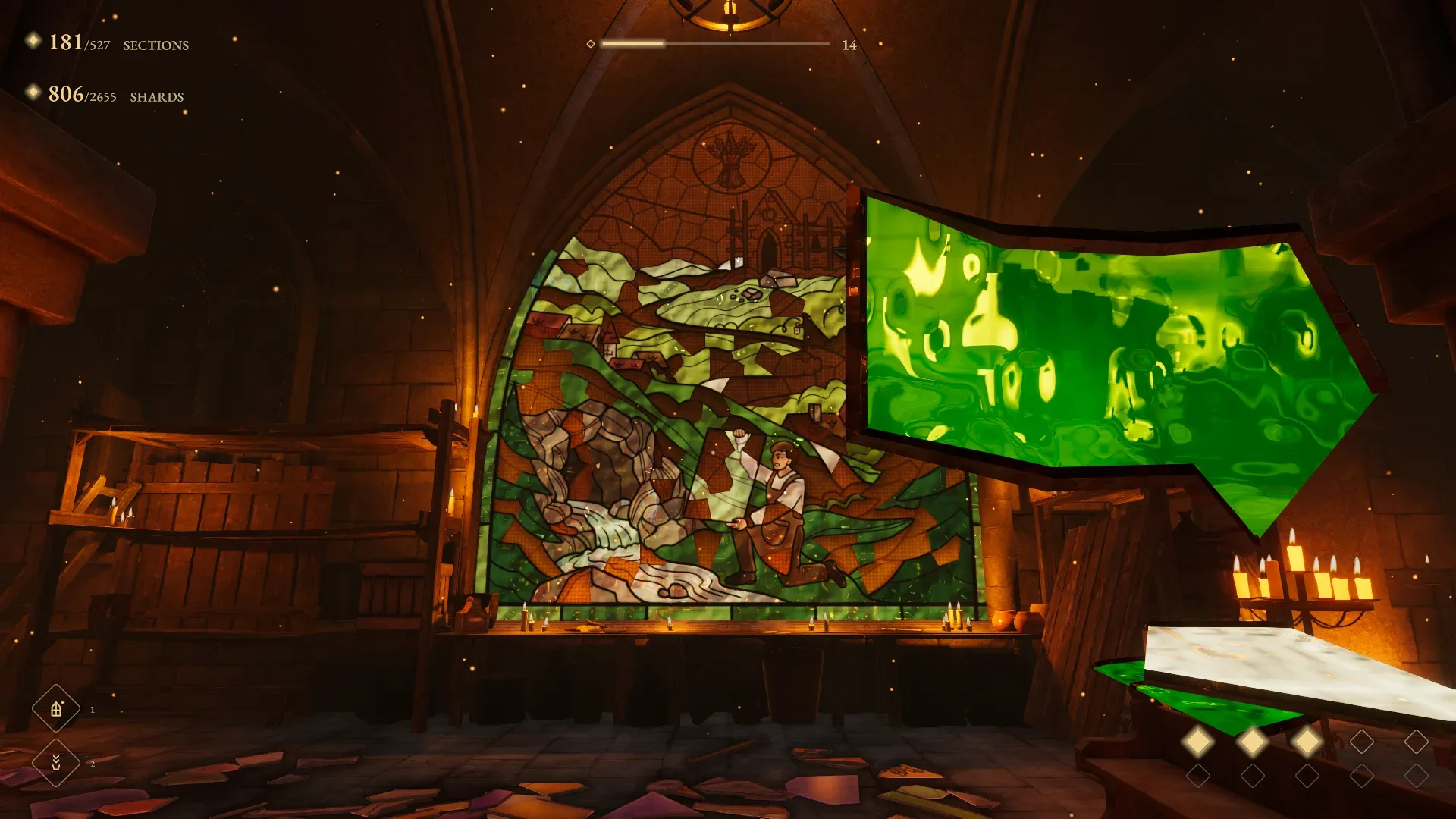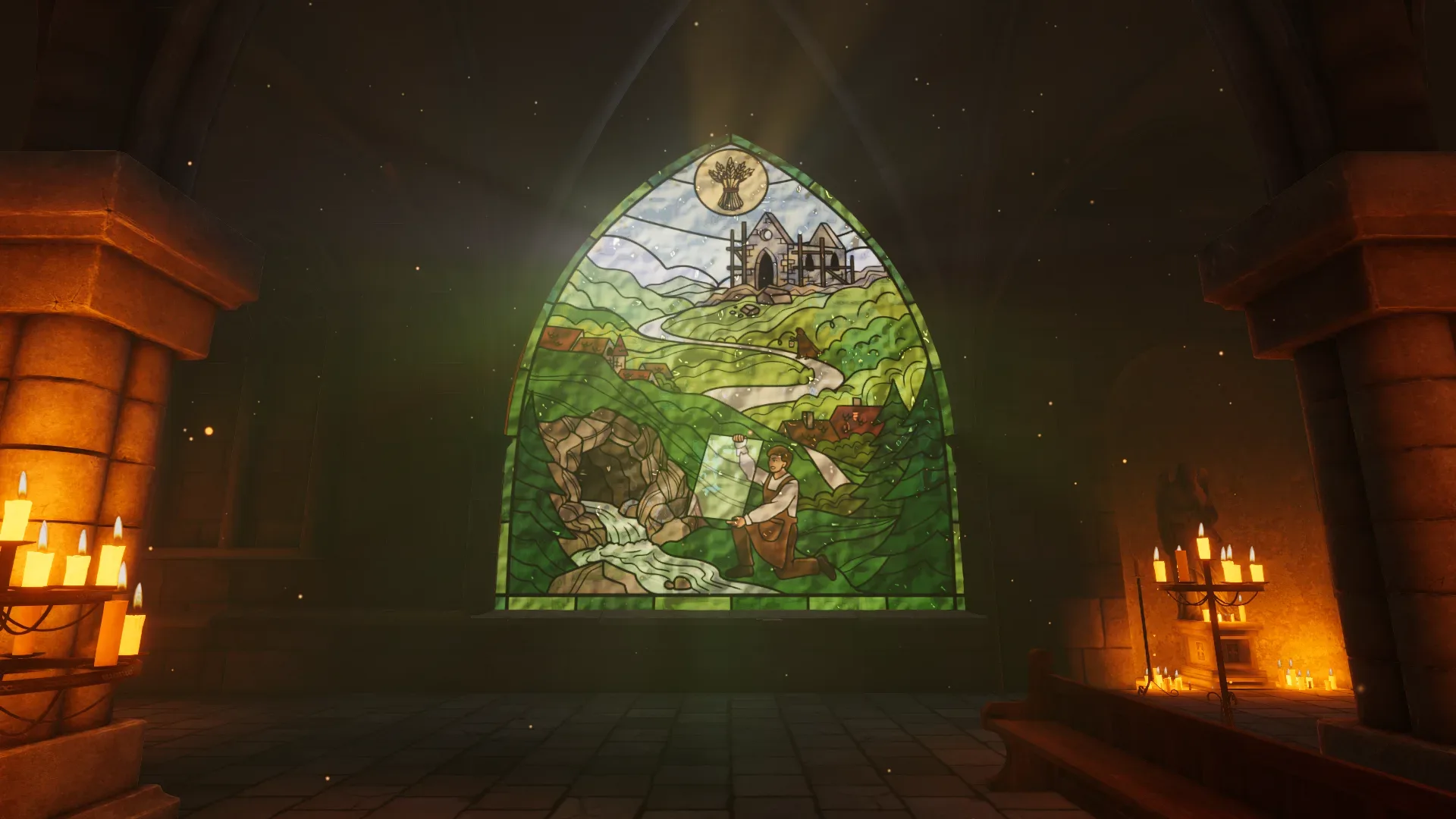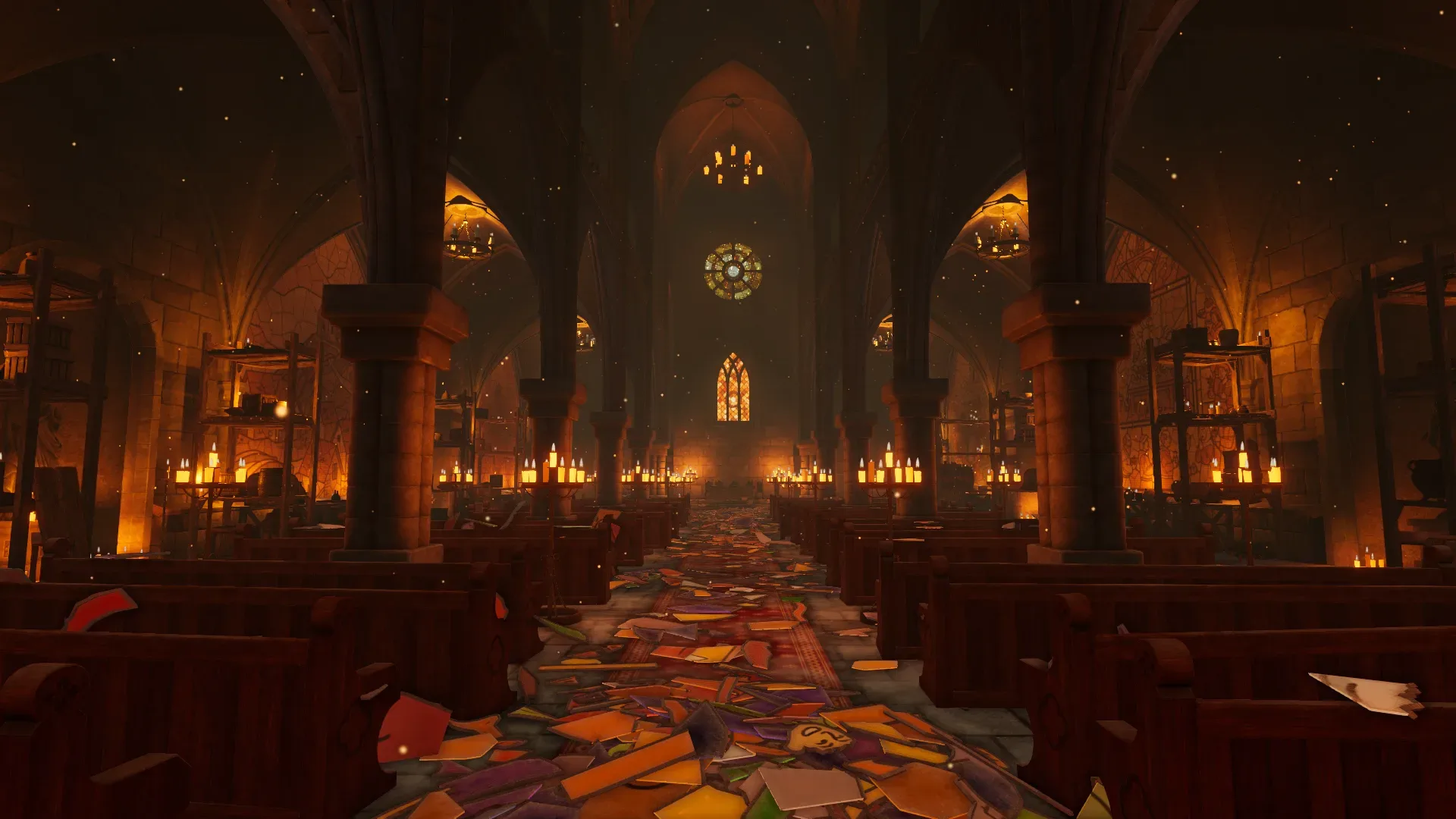

Piece & Quiet: A Stained Glass Restoration is set to arrive on Steam for PC on November 27, 2026, inviting players into an abandoned mountain chapel with a very specific job: restore its ruined stained-glass windows, one carefully placed fragment at a time.
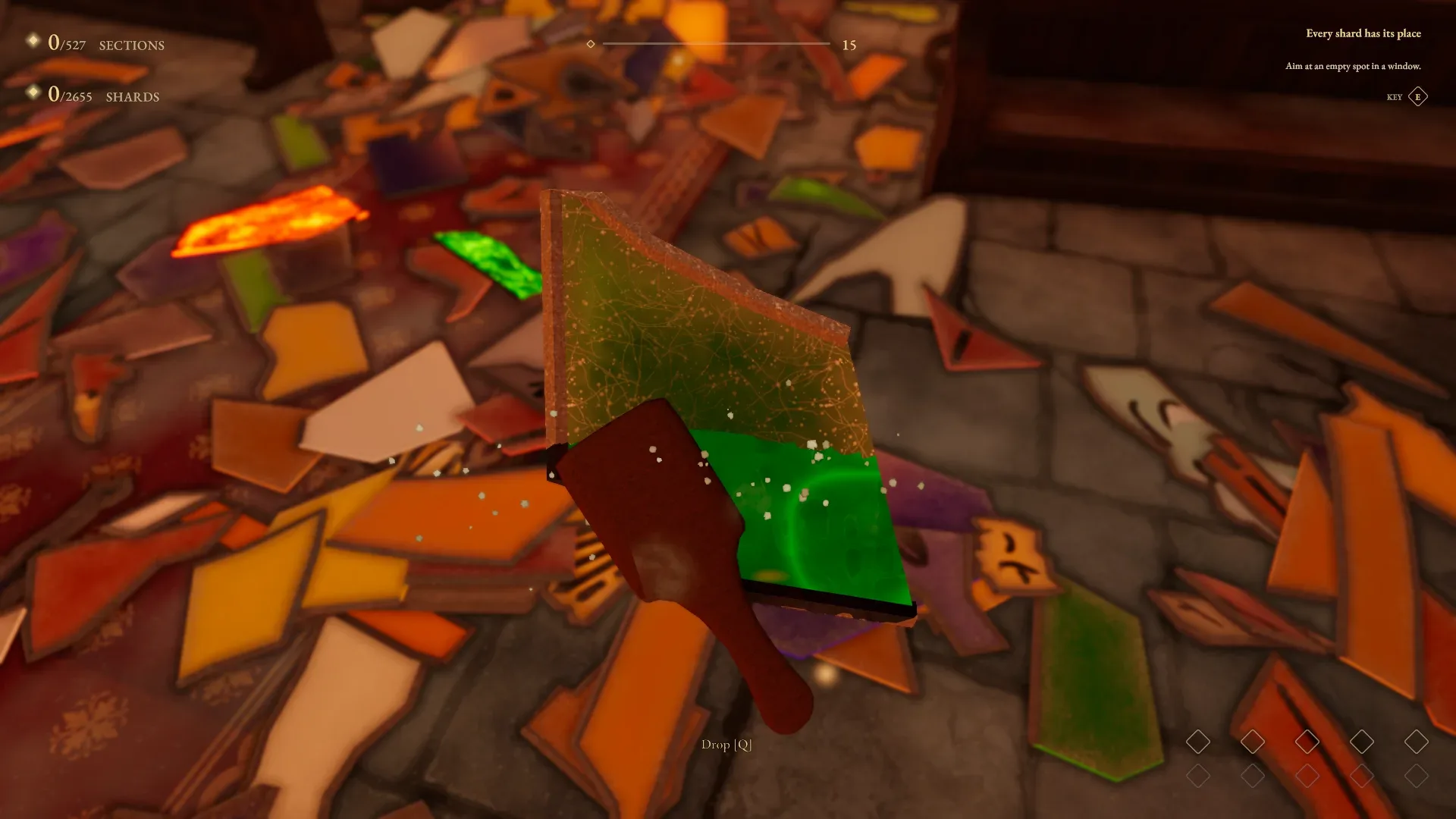
Published by Spaghetti Cat, the first-person cozy simulation centers on cleaning, sorting and assembling a total of 2,655 pieces of glass. Those fragments form six separate windows, each presented as both a restoration project and a piece of the chapel’s larger mystery. There are no failure states or penalties attached to the work, while players can select either a timer-free Relaxed Mode or a Timed Mode that records how long each restoration takes.
The premise is pleasingly direct. There is no stated combat system, survival pressure or punishment for getting a piece wrong. Instead, the central loop is one of observation: compare shapes and colors, identify where a fragment belongs, and steadily turn a scattered collection of material into a completed image. It is an unusual subject for a game, but a natural fit for a tactile, methodical first-person experience.
Six damaged windows, 2,655 fragments
The full scope of Piece & Quiet is defined in unusually clear terms. Players will restore six forgotten stained-glass windows using 2,655 individual fragments. That count matters because it establishes that the game is not simply about clicking through a few decorative repairs. Its stated focus is sustained, close-up assembly across a substantial number of components.
Stained glass makes a useful puzzle material because multiple visual clues can work together. Shape is the most immediate signal: curved borders, corners and irregular edges can suggest where one shard connects to another. Color offers another layer, especially when fragments must contribute to a larger figure, pattern or background. The game’s cleaning and sorting steps mean players will also engage with the pieces before the final assembly stage rather than treating every item as identical.
In practical terms, that should make each completed placement part of a larger act of visual reading. A player may be looking for a matching contour, a continuation of a color field, or a detail that makes sense only after neighboring pieces begin to form a recognizable image. The appeal is less about a single dramatic solution than the gradual satisfaction of making disorder intelligible.
The chapel setting gives that process a clear purpose. Rather than repairing abstract boards with no connection to one another, players are returning an abandoned place to a more complete state. Each window is an artwork in its own right, but the set also belongs to a shared location and a shared story.
A restoration game without punishment
Spaghetti Cat describes Piece & Quiet as a peaceful experience with no penalties and no fail states. In game-design terms, a fail state is a condition that ends an attempt or forces the player to restart, such as running out of time, losing all health or making too many mistakes. Removing those conditions changes the relationship between player and puzzle.
Related coverage includes Piece & Quiet Brings Stained-Glass Restoration to Steam on November 27.
Here, the emphasis is on completion rather than performance under threat. That does not necessarily mean the windows will be effortless to solve; finding the correct place for thousands of small pieces can still require concentration. But it means the challenge is framed around patience and recognition, not fear of losing progress.
The two modes offer a straightforward way to accommodate different approaches:
- Relaxed Mode removes the on-screen timer, supporting an unhurried restoration session.
- Timed Mode tracks restoration time for players who want an added personal challenge.
Importantly, the available details describe the timed option as tracking time rather than imposing a deadline. That distinction suits the game’s wider no-penalty design. Players who enjoy measuring their efficiency can do so, while players who would rather linger over the artwork can keep the clock out of sight.
That flexibility may be particularly valuable in a game based on visual sorting. Some players will likely want to work systematically, perhaps beginning with distinctive colors or obvious edge fragments. Others may prefer to move among pieces intuitively and let the emerging artwork guide them. A timer-free mode makes room for either rhythm without turning the activity into a race.
Magic upgrades add progression to the careful work
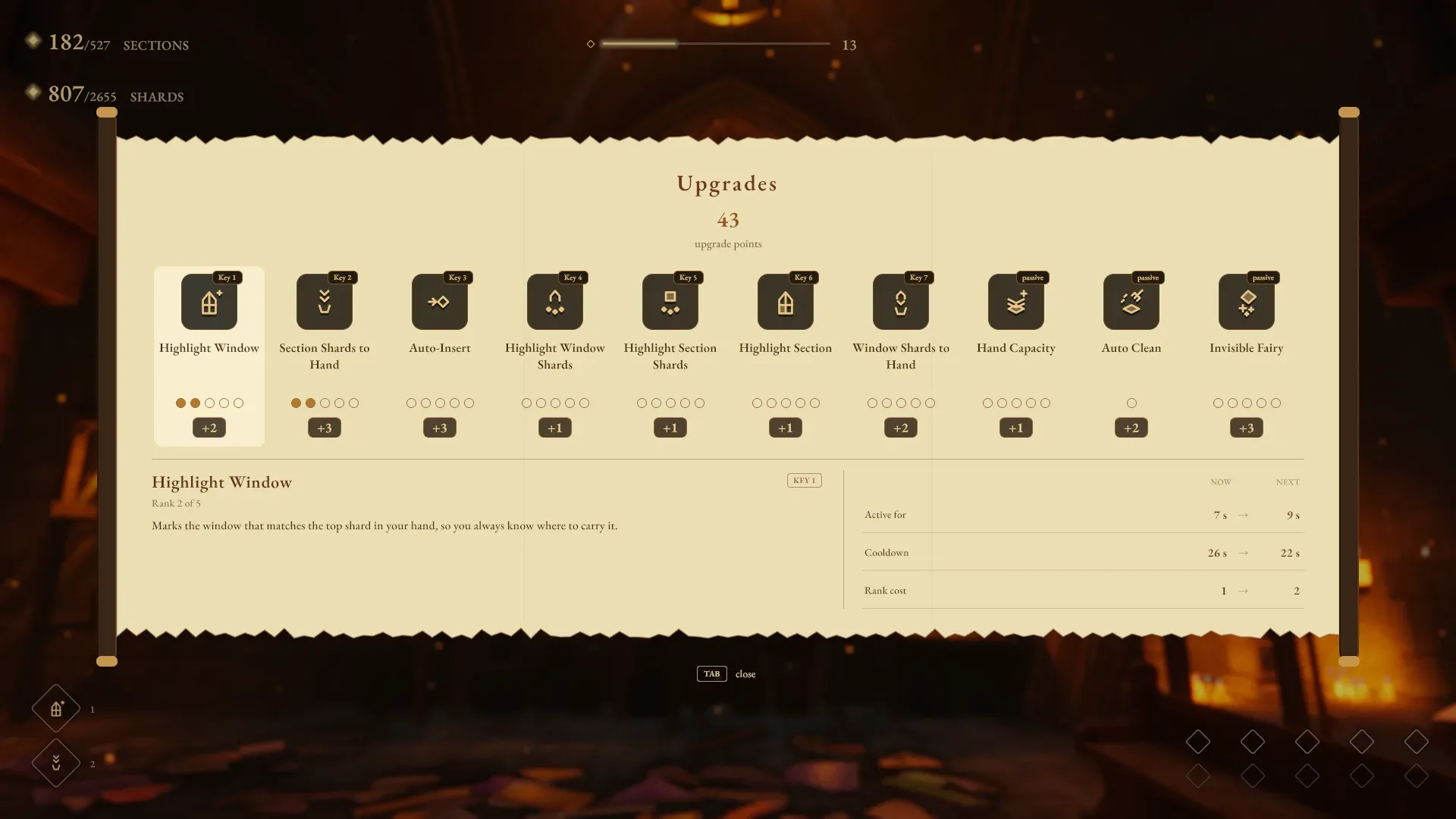
As the restorations progress, players can unlock 10 magical upgrades intended to make the process more enjoyable. The specific effects of those upgrades have not been detailed, so it is too early to assume exactly how they will change cleaning, sorting or assembly. Their inclusion nevertheless gives the project a progression layer beyond simply moving from one window to the next.
That is an important structural touch for a restoration-focused game. Repeatedly handling fragments is the point, but a series of unlocks can make the player’s work feel acknowledged over time. The upgrades are described as magical, which also suggests that the chapel’s atmosphere will extend beyond a purely literal repair simulation.
What is clear is the intended role of these additions: they are there to support enjoyment of the restoration process, not to introduce a punishment loop. The game’s stated design points toward a gentle sense of advancement, where finishing work opens up new possibilities while the core activity remains calm and focused.
The chapel’s story is embedded in its windows
Piece & Quiet also uses its stained glass as a storytelling device. Each completed window reveals part of the story of a mysterious master glassmaker. That narrative is delivered through the stained-glass imagery itself as well as handwritten notes.
It is a fitting approach for the subject matter. In this case, restored art is not merely a completion screen or a collectible to inspect after the fact. The act of rebuilding the image is tied directly to uncovering what it means. Players will first encounter the work in fragments, then gradually recover the visual context needed to see the full scene.
The handwritten notes create a second channel for that story. The combination gives the game two complementary ways to share information: images can convey symbolism, scenes and visual motifs, while notes can provide written perspective. The supplied details do not explain the identity of the glassmaker or the precise nature of the chapel’s mystery, and that uncertainty is part of the setup. The restoration is intended to reveal the answers over the course of the six windows.
For players interested in games where environment and activity carry the narrative, that structure is notable. The story does not appear separate from the main task; it is something recovered through it. Every finished window is positioned as both a solved creative puzzle and another chapter in the chapel’s history.
What “first-person” means for this kind of simulation
Piece & Quiet is a first-person game, meaning the action is viewed from the player character’s perspective rather than from an overhead camera or a distant third-person view. For a restoration game, that perspective can make individual pieces, surfaces and colors the primary focus of the screen.
The format is well suited to the scale implied by 2,655 fragments. A first-person view can place attention on the immediate work area: the item being cleaned, the pieces being sorted and the image gradually being rebuilt. The game is categorized as cozy, casual and simulation, labels that collectively communicate its stated low-pressure intent.
Cozy, in this context, points to a comfortable and unhurried mood rather than a formal genre with one fixed rule set. Casual signals accessibility and an experience that does not foreground severe punishment. Simulation indicates that the game takes inspiration from a defined activity—in this case, restoration—rather than presenting a conventional action-focused adventure. The available information does not claim a fully realistic conservation workflow, so the term should be read as a description of its restoration-centered interactive premise, not a promise of professional training software.
What players can expect at launch
Piece & Quiet: A Stained Glass Restoration is scheduled for PC via Steam on November 27, 2026. Its announced feature set includes six chapel windows, 2,655 pieces of glass to clean, sort and assemble, 10 magical upgrades, narrative discoveries through windows and handwritten notes, plus the choice between relaxed and timed play.
The game is aimed at players who find satisfaction in orderly, visible progress: a dark or incomplete picture becoming legible; a worktable becoming less chaotic; an old space regaining some of its lost character. Its promise is not escalation through danger, but concentration through craft.
That focus makes Piece & Quiet distinct from games that use collecting as an optional distraction around a larger adventure. Here, gathering, assessing and placing pieces is the adventure. The reward is not only that a window is complete, but that the player can finally see the image—and the portion of the glassmaker’s story—that had been broken apart.
For a different kind of practical game-world organization, see our GTA 6 personal vehicles guide.