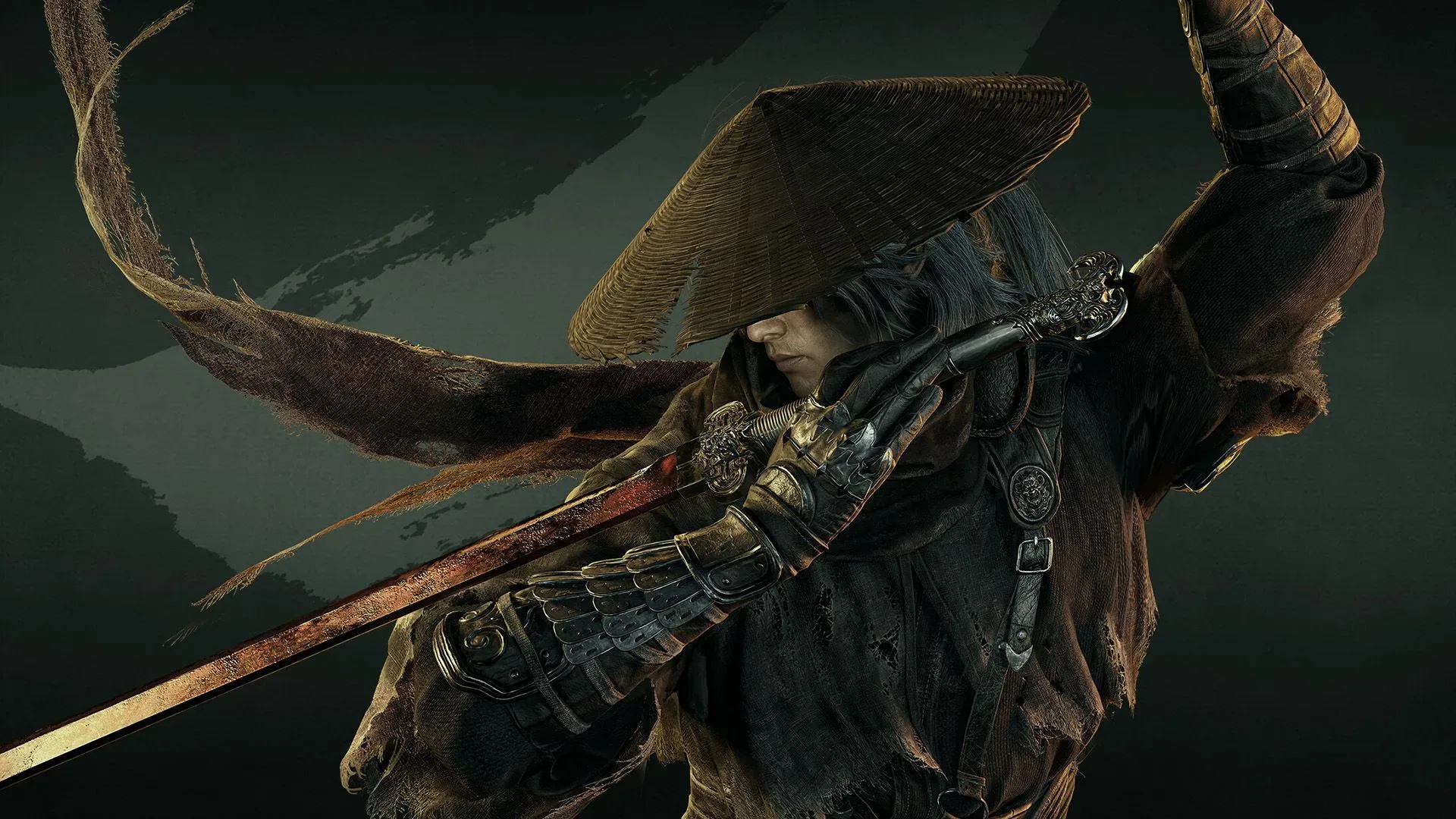
No Rest for the Wicked is preparing for a major structural change on its road out of Early Access. Moon Studios has detailed a new weapon-driven class system, a faction framework and a risk-heavy Cerim Core progression layer as parts of the action-RPG’s planned 1.0 release for PC and PlayStation 5 in March 2027.
The game is currently in Early Access on PC through Steam, where it has reached more than 2 million players. Its full-release update is described as roughly doubling the game’s size, with new areas to explore, enemy factions, bosses, loot refinements, combat changes, quality-of-life work and PlayStation 5 performance optimization also planned.
That is a substantial scope, but the most immediate design story is how character building is set to work. Rather than retaining the existing attribute system, the game is moving toward a model in which equipping a weapon changes the player into one of 24 possible classes. Traits can then be moved between those classes, creating a system intended to make equipment selection and character identity much more closely connected.
A class system built around the weapon in hand
In many action-RPGs, a class is chosen at the beginning, or a character’s role is defined primarily by permanently assigned attributes. The proposed No Rest for the Wicked approach makes the weapon itself the central switch. Pick up a different weapon, and the player’s class changes with it.
This does not necessarily mean every build becomes interchangeable. The key stated feature is that traits can transfer between classes. Moon Studios says the system contains 362 traits across 24 classes, with many options for filling trait slots. Weapon choice then adds another layer to the possible combinations.
Put simply, traits are character effects or capabilities attached to a build. The supplied examples point to sharply differentiated combat identities: electrically charged spears, stealth-oriented maneuvers capable of ending an encounter quickly, and “synergy crafting” that combines aspects of multiple classes in pursuit of powerful damage outcomes.
The important practical distinction is between a weapon merely being a damage tool and a weapon being the doorway to an entire playstyle. Under the new structure, changing weapons should also change the surrounding class toolkit available to the player. Trait transfers suggest that a player may carry favored elements of one class into another, rather than having to abandon every prior investment when trying a new weapon type.
There is still much that has not been specified. The outline does not establish how traits are earned, whether all trait combinations will be available immediately, or the exact limits on moving traits between classes. It also does not define every one of the 24 classes. Those details will determine how easily players can experiment and how much commitment a particular build requires.
What is clear is the design direction: Moon Studios is replacing an attribute-led system with one intended to make build experimentation more visible and more tangible. The gear choice that changes a character’s attacks will also change their class context, while transferable traits provide room to personalize the result.
Six factions bring questlines, vendors and traits
The 1.0 plans also introduce six factions that players can join and advance through. Each faction is set to have its own questline, new traits, unique vendors and unspecified additional elements.
Three groups have been named: the assassins of the Severed Hand, the knightly Sacrament Guard and the Unspoken. The names alone indicate distinct thematic identities, but their exact gameplay roles and the identities of the other three factions have not been detailed.
Faction systems generally matter because they can place build progression inside the game world rather than treating it as a purely abstract menu process. Here, faction membership is explicitly tied to quest progression, vendors and traits. If that relationship is maintained in the final structure, a player’s combat preferences may influence not only which weapon and traits they use, but also which goals and services they pursue in Isola Sacra.
“Unique vendors” is particularly notable in a game where collecting and crafting weapons and items is already part of the premise. The information available does not say what these vendors will sell, whether their inventories are faction-exclusive, or whether players can participate in more than one faction. Still, tying vendors to organizations gives the planned faction system potential relevance beyond narrative flavor.
For players returning from Early Access, the practical question will be how factions intersect with the redesigned classes. A faction can offer new traits, while a weapon determines class and traits can move between classes. That creates a possible three-part build loop of weapon selection, trait customization and faction advancement. It is a promising structure on paper, though the final balance will depend on how progression requirements, rewards and cross-class transfers are implemented.
Cerim Cores turn durability into a deliberate gamble
The new Cerim Cores system is focused on endurance and survivability. Cores can improve familiar character fundamentals such as health, stamina and focus. The latter is a resource whose exact in-game use has not been outlined here, but it sits alongside health and stamina as part of the system’s broader endurance framework.
More unusual Cores can alter combat behavior directly. “Feral” increases attack speed, while “Crimson” grants lifesteal, meaning a player regains health through dealing damage. Those are examples of modifiers that can encourage a more aggressive approach rather than simply adding a larger defensive buffer.
The trade-off is capacity. Going beyond a character’s Core capacity increases the damage taken from all attacks. That creates the core risk/reward decision: equip more or stronger effects for greater potential performance, but accept greater vulnerability whenever an enemy connects.
In a soulslike action-RPG, where positioning, timing and survival pressure are central to combat, an all-damage-taken penalty can be meaningful. A character pursuing extra attack speed or lifesteal may gain tools that reward constant offense, yet the increased incoming damage raises the cost of a mistake. Conversely, staying within capacity may produce a steadier, safer profile at the expense of pushing every possible modifier.
This is not simply a generic “power level” mechanic. It is a build-management system that asks players to decide how much danger they are willing to make part of their character. It may also interact in interesting ways with the weapon-class model: a faster or more damaging build could be paired with Cores that amplify its strengths, while a player who prefers consistency may prioritize health, stamina or capacity discipline.
The announced details do not identify capacity values, the total number of Cores, or whether capacity can itself be expanded. They also do not establish whether over-capacity penalties are fixed or scale with the degree of excess. Those particulars will be crucial for understanding whether exceeding capacity is an occasional high-risk option or a normal part of endgame-style optimization.
Why the 1.0 expansion matters
Moon Studios describes the 1.0 update as roughly doubling No Rest for the Wicked’s size. Alongside its new character systems, the release is planned to add explorable zones, entirely new enemy factions and bosses. Loot-system refinement, combat upgrades and quality-of-life improvements are also in the plan.
That combination matters because the changes are not being presented as isolated features. New places and enemy groups can provide the encounters that test the new class and Core choices. Faction questlines can give players structured reasons to develop particular traits and seek particular vendors. Loot adjustments can determine whether weapon-led class changes feel rewarding and readable over a long campaign.
Combat upgrades are planned, but no individual changes have been disclosed. Players should therefore avoid assuming specific revisions to enemy behavior, movement, parrying, weapon movesets or other mechanics until they are formally detailed. The same caution applies to the planned loot refinements: the direction is known, but the precise changes are not.
For the PlayStation 5 version, optimization is specifically part of the 1.0 plan. The game’s release is scheduled for both PC and PS5 in March 2027, rather than the console version arriving as a separate, undefined future step. Readers following the platform’s broader direction can also see the ongoing debate around PlayStation’s hardware future in this look at Sony’s digital-only ambitions.
Where No Rest for the Wicked stands now
No Rest for the Wicked is a dark, painterly soulslike action-RPG. Players take the role of a Cerim, a member of a holy order with mysterious powers, who is tasked with destroying the Pestilence on the island of Isola Sacra. The game combines its combat and RPG structure with weapon and item collection, crafting, character upgrades and a personal homestead.
Since entering Early Access, it has received multiple major updates that added co-op multiplayer, PvP duels and wider combat possibilities. Those existing modes matter as context for a more flexible build system, although no specific new multiplayer or PvP features were described as part of this class-and-faction reveal.
The game carries an ESRB Mature rating and a PEGI 18 rating. With more than 2 million players already reported in Early Access, Moon Studios is planning an unusually broad transition to 1.0: new content, a reworked progression foundation and a simultaneous PC and PlayStation 5 target.
The central promise is flexibility with consequences. Weapons are set to define classes, traits can travel between class identities, factions offer another source of progression, and Cerim Cores invite players to trade safety for extra potency. How those systems are tuned will decide the final feel, but the outline suggests a full release designed to give players more ways to make a Cerim their own—and more reasons to fear the cost of an ambitious build.