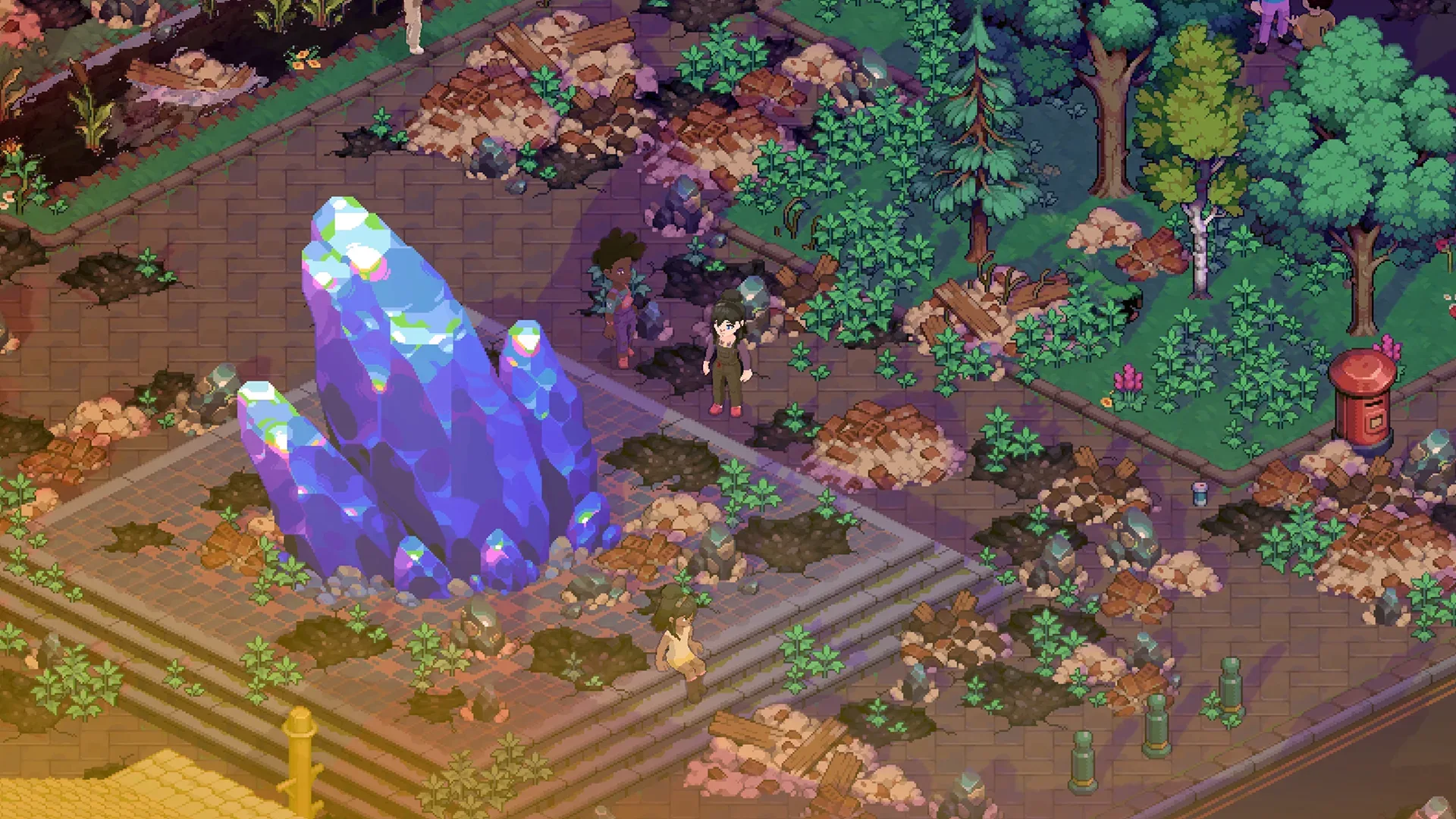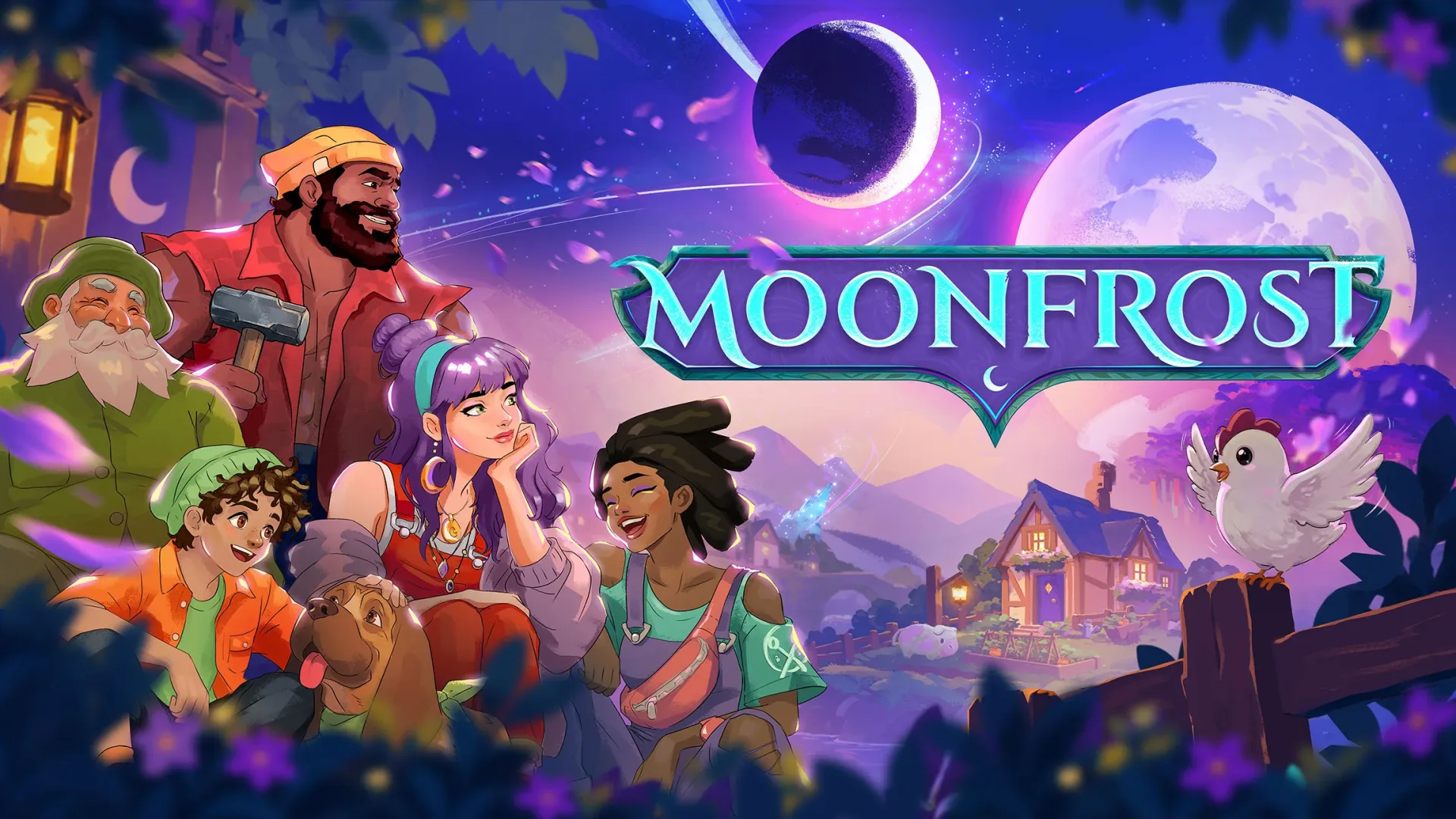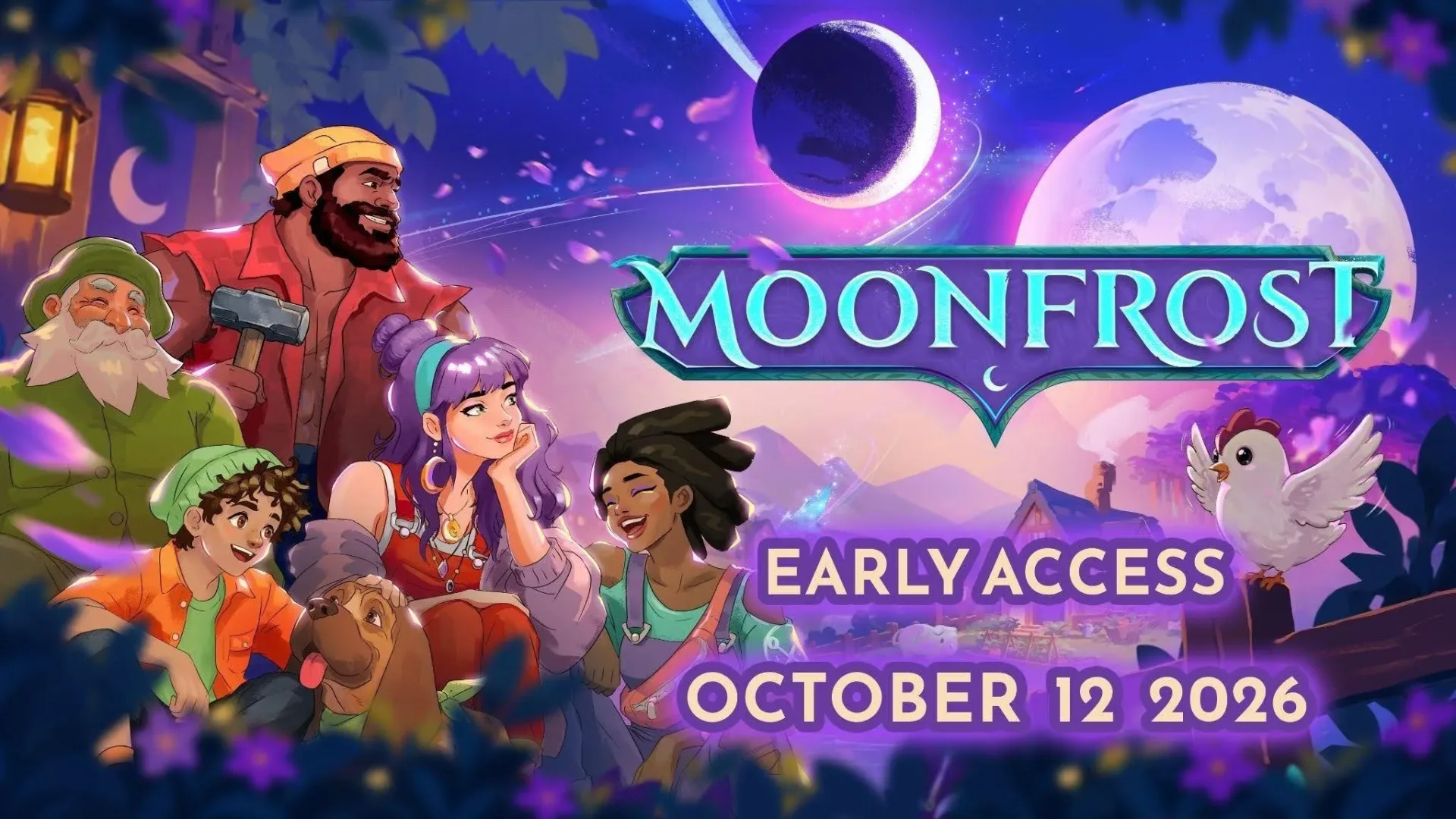
Moonfrost, the narrative-led cozy life-sim RPG from Oxalis Games, entered Steam Early Access on October 12, 2026. The PC game begins with a village in ruins after icy meteorites fell from a mysterious second moon. Players step into the role of a Frost Hunter, tasked with turning that damage into a functioning home again while investigating what the new moon means for the wider world.
It is available through Steam Early Access for $14.99 USD, £12.99 GBP, or €14.99 EUR. The premise gives its familiar farming, crafting and building activities an unusually direct purpose: this is not simply a blank plot to optimize, but a damaged settlement with homes, businesses and former residents to restore.
A cozy loop built around repairing a town
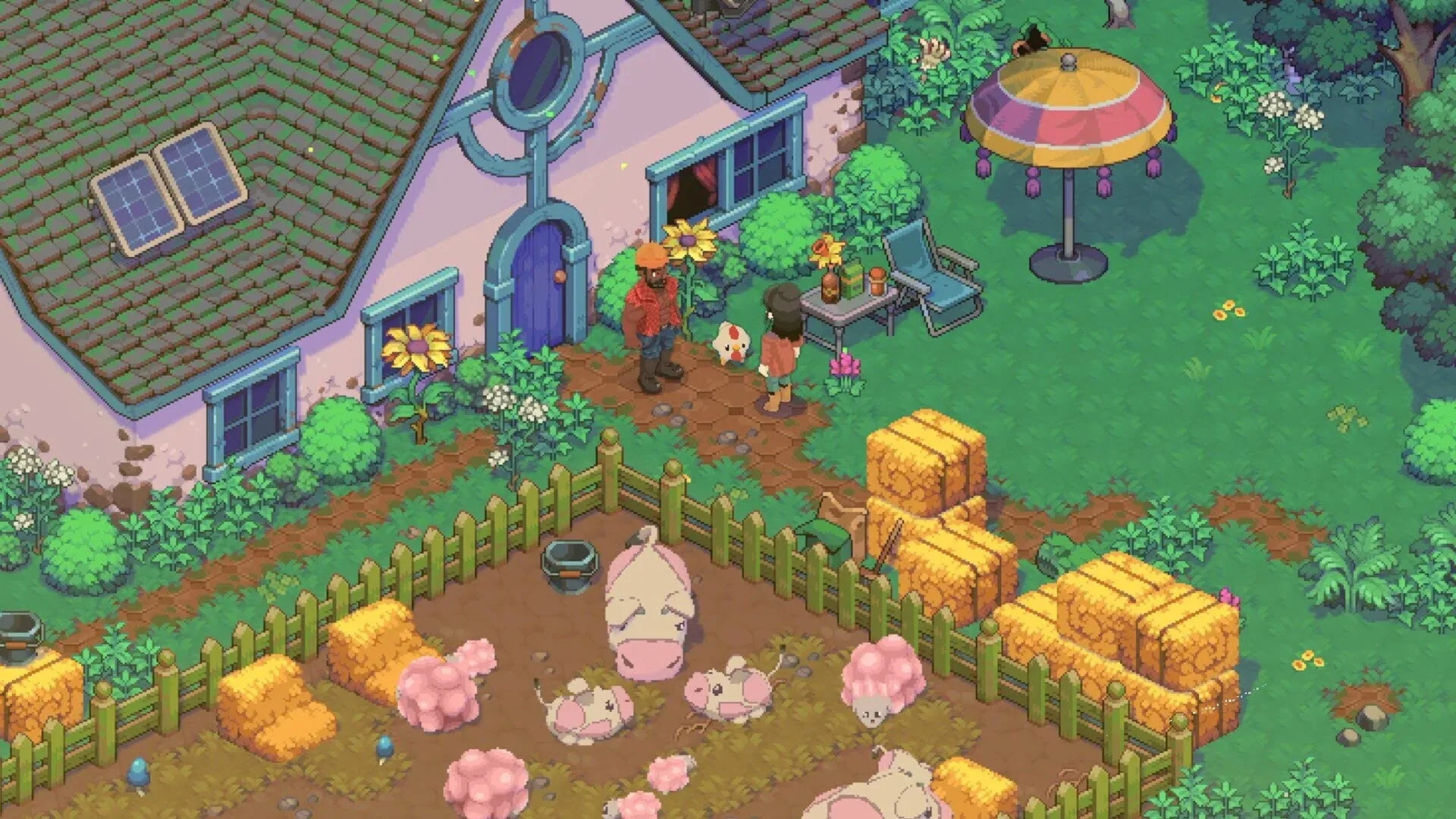
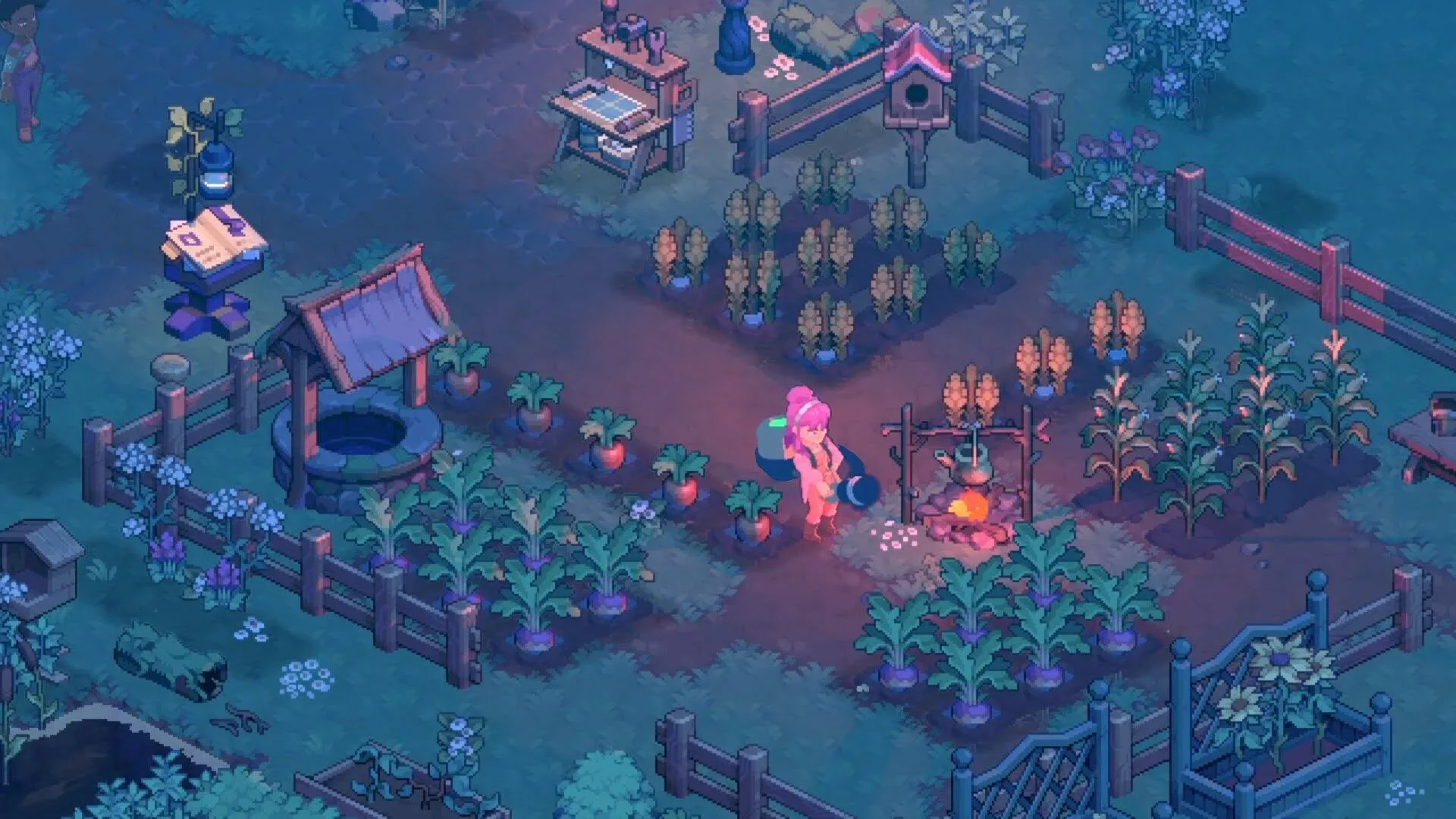
Moonfrost’s core activities cover much of what players expect from the life-sim format. Farming, fishing, foraging and material gathering feed into crafting, while construction and customization allow the player to change the village, their farm and their home. Animal care is also part of the game’s stated routine.
That routine is tied to progression rather than existing solely as decoration. Players complete quests and requests to gain access to tools and secure resources for later crafting. In practical terms, the game presents a chain of activities: gather what is needed, make goods, fulfill needs around the settlement, then use the resulting tools or funds to open further possibilities. Rebuilding homes and businesses, alongside bringing villagers back, places the town at the center of that cycle.
Life sim is a broad label for games structured around everyday systems such as planting crops, collecting supplies, caring for animals, arranging spaces and developing connections with non-player characters. Moonfrost uses those systems, but frames them around recovery after a catastrophe. The work of planting, crafting or renovating is meant to contribute to a community returning from upheaval rather than only expanding the player’s personal property.
The degree of personalization is another major component. The game includes customization for the player character, farm and home, as well as building construction and customization within the broader settlement. That distinction matters: personalizing a home is one form of expression, while restoring the village suggests a second layer where choices can shape the look and function of shared spaces.
The second moon supplies the central mystery
Moonfrost’s world was changed by a second moon and its icy meteorites. The impact has scarred the village, and uncovering the truth behind that moon sits alongside the repair effort. This gives the game a narrative thread that runs through its domestic activities, exploration and resource gathering.
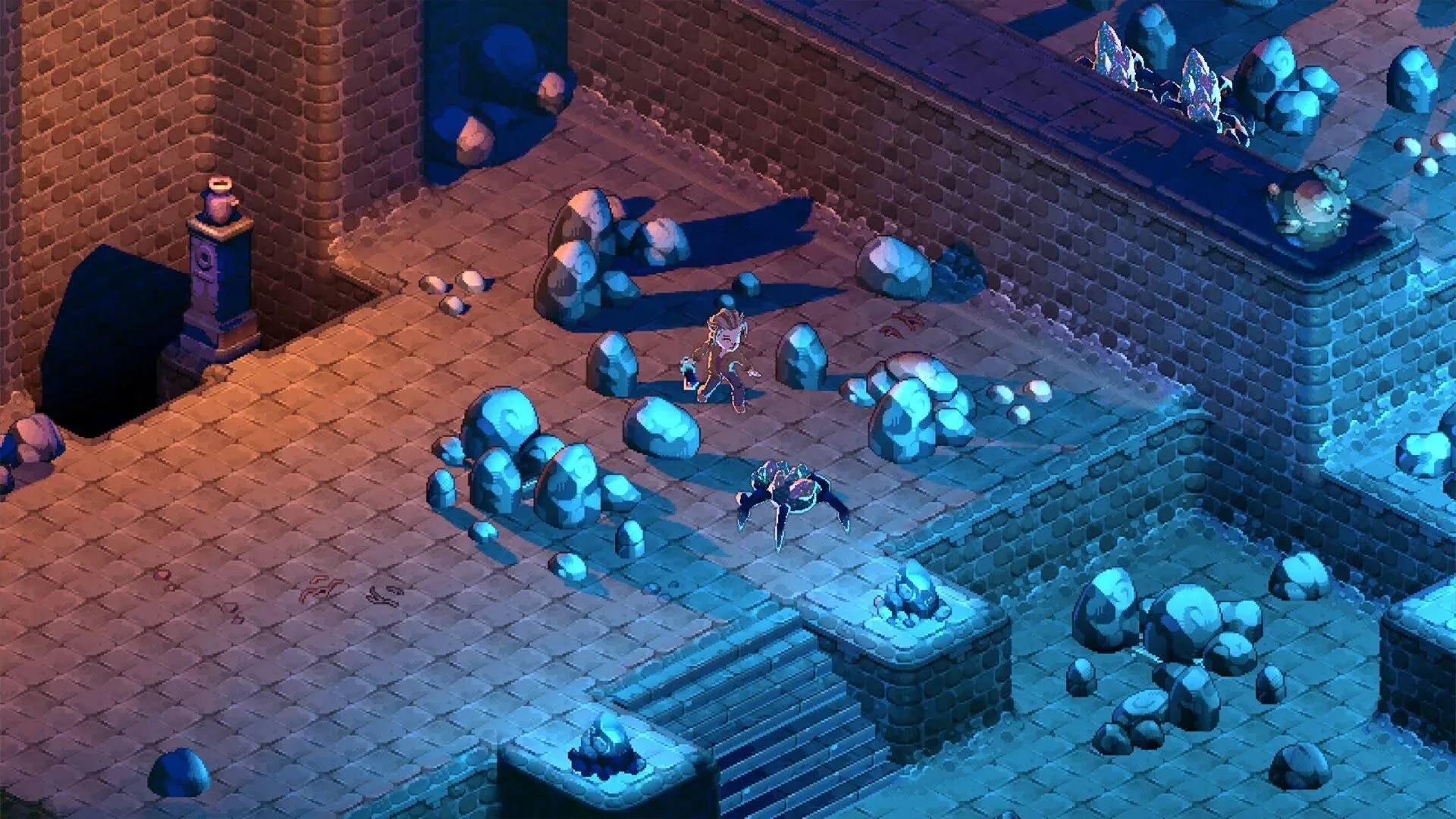
The setting also expands beyond the rebuilt streets and farmland. Ancient temples outside the village house combat encounters, traps and rare resources, with those locations connected to the world’s lore. Players are therefore moving between two very different rhythms: the deliberate, restorative work of tending to a community and more dangerous expeditions into old structures.
Temple challenges here refer to dedicated exploration spaces with hazards and opposition, rather than another variation on gathering in the village. Traps introduce environmental danger, combat encounters call for direct confrontation, and rare resources create a clear incentive to venture outward. Their connection to the lore means these areas are positioned as more than material-delivery zones; they are also part of how the game reveals its setting and its central mystery.
That split could be meaningful for players who want a cozy game that does not remain entirely pastoral. Moonfrost does not describe its temple combat in detail, so its exact structure, difficulty and frequency are not established. What is clear is that combat and traps are included alongside the gentler harvesting-and-building loop, not absent from it.
Villagers, friendships and romance are part of the rebuild
Relationships are presented as a core pillar rather than a small optional sidebar. Each villager has their own personality and an evolving story arc. Friendships and romances can be formed, and those connections influence how the community comes together.
That last point makes the town’s recovery more than a construction checklist. Restoring a building may be a visible marker of progress, but Moonfrost also treats the return of its people and the development of their relationships as part of the same process. The goal is not merely to fill empty structures with generic residents; the game is built around villagers with individual stories whose place in the community can change over time.
Dynamic relationships generally describes social connections that develop as players interact with characters rather than remaining fixed. Moonfrost specifically promises evolving arcs for its villagers and friendship and romance routes that affect the wider community. It does not specify the precise choices, thresholds or outcomes involved, so prospective players should not assume a particular dating-system format beyond those stated relationship options.
Oxalis Games has emphasized the community angle in its description of the release. Gina Nelson said,
“Moonfrost has always been about people coming together to fix something broken. Today we finally get to share that vision with everyone who waited for it. Thank you for sticking with us.”
The statement fits the game’s basic structure. The village is damaged, the Frost Hunter has work to do, and the residents’ relationships are framed as meaningful to how the settlement recovers. That creates a throughline between the game’s narrative premise and its day-to-day systems: gathering materials has an end point, construction has social context, and character interactions are linked to the town rather than isolated from it.
What Steam Early Access means for Moonfrost right now
Moonfrost is launching in Steam Early Access, meaning it is being sold in an in-development state on Steam rather than described as a finished release. The announced feature set identifies the game’s direction: village rebuilding, farming and other gathering activities, crafting, construction, animal care, relationships and romance, exploration, temple dangers, and a story centered on the second moon.
Early Access status is important context for anyone considering the current version. It signals that Moonfrost is available now, but it does not by itself establish what later additions, changes or final scope may be. The supplied details do not give a development roadmap, a full-release date, or a list of content that may change. Players interested in buying now should treat the available description as a snapshot of the project’s stated launch offering rather than a guarantee about every future update.
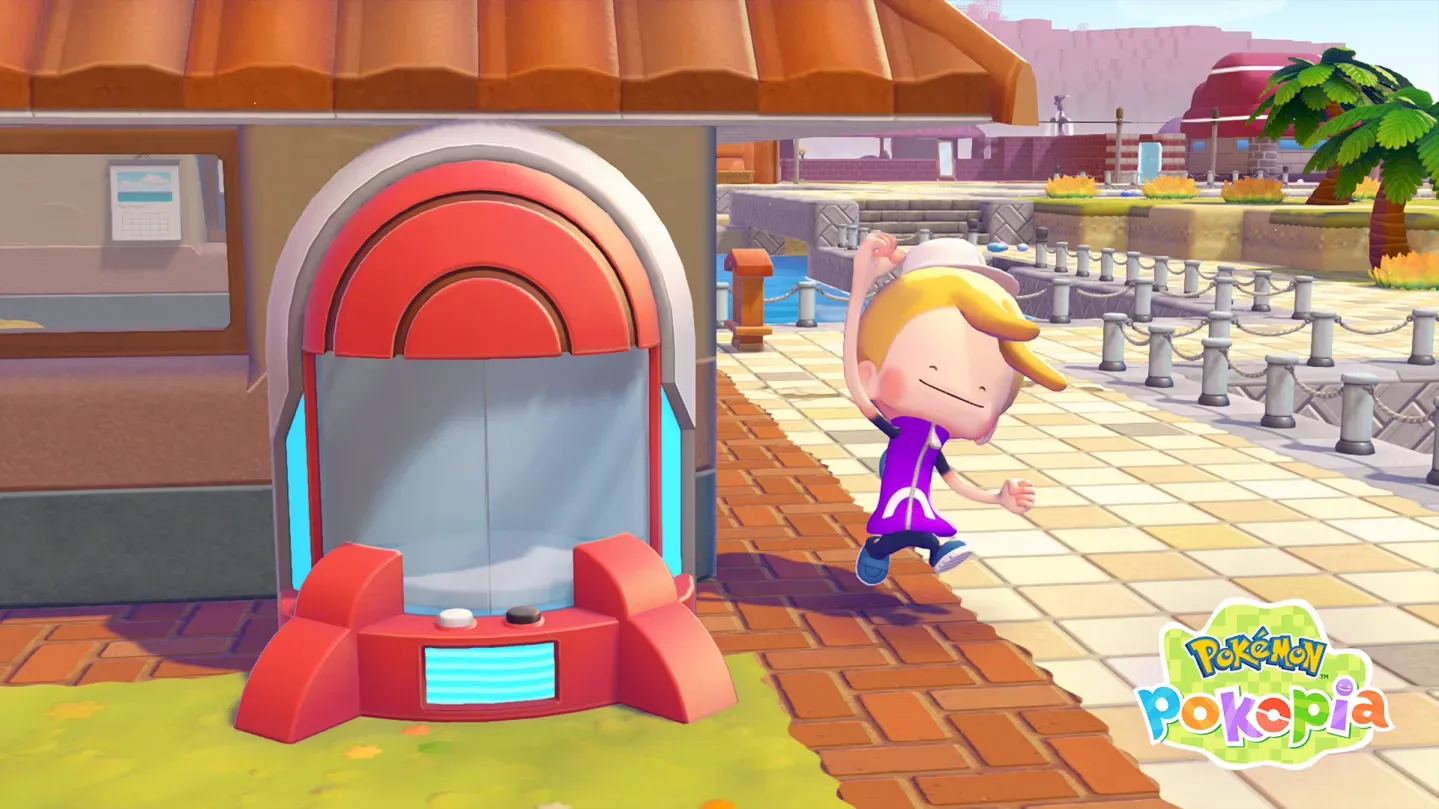
For those who follow building-oriented life sims, the broader appeal of improved construction tools is easy to see. Another recent example is Pokémon Pokopia’s update with bulk actions and smarter building tools, which illustrates why quality-of-life considerations can matter as much as decorative options in a game built around repeated placement and customization. Moonfrost has confirmed deep personalization and building systems, though it has not detailed its specific workflow or convenience features.
Who Moonfrost is positioned to suit
Moonfrost appears aimed at players who want more narrative motivation around traditional life-sim activities. The Frost Hunter’s work is not presented as endless self-improvement; it is explicitly connected to repairing a village harmed by the second moon’s meteorites. That premise may appeal to people who enjoy a town changing alongside their own farm and home.
It also has a clear fit for players looking for social systems with story weight. The villagers have distinct personalities and story arcs, while friendships and romances are said to influence communal recovery. Players who prioritize character-focused progression can expect relationships to occupy a central role in the concept.
Finally, the ancient temples set it apart from an entirely low-stakes farming routine. Their combat, traps and rare resources introduce an adventure layer that stands in contrast to fishing, foraging, harvesting and animal care. The balance between those modes remains something players will learn from the Early Access build itself, but the intended structure is clear: Moonfrost combines domestic rebuilding with riskier trips beyond town.
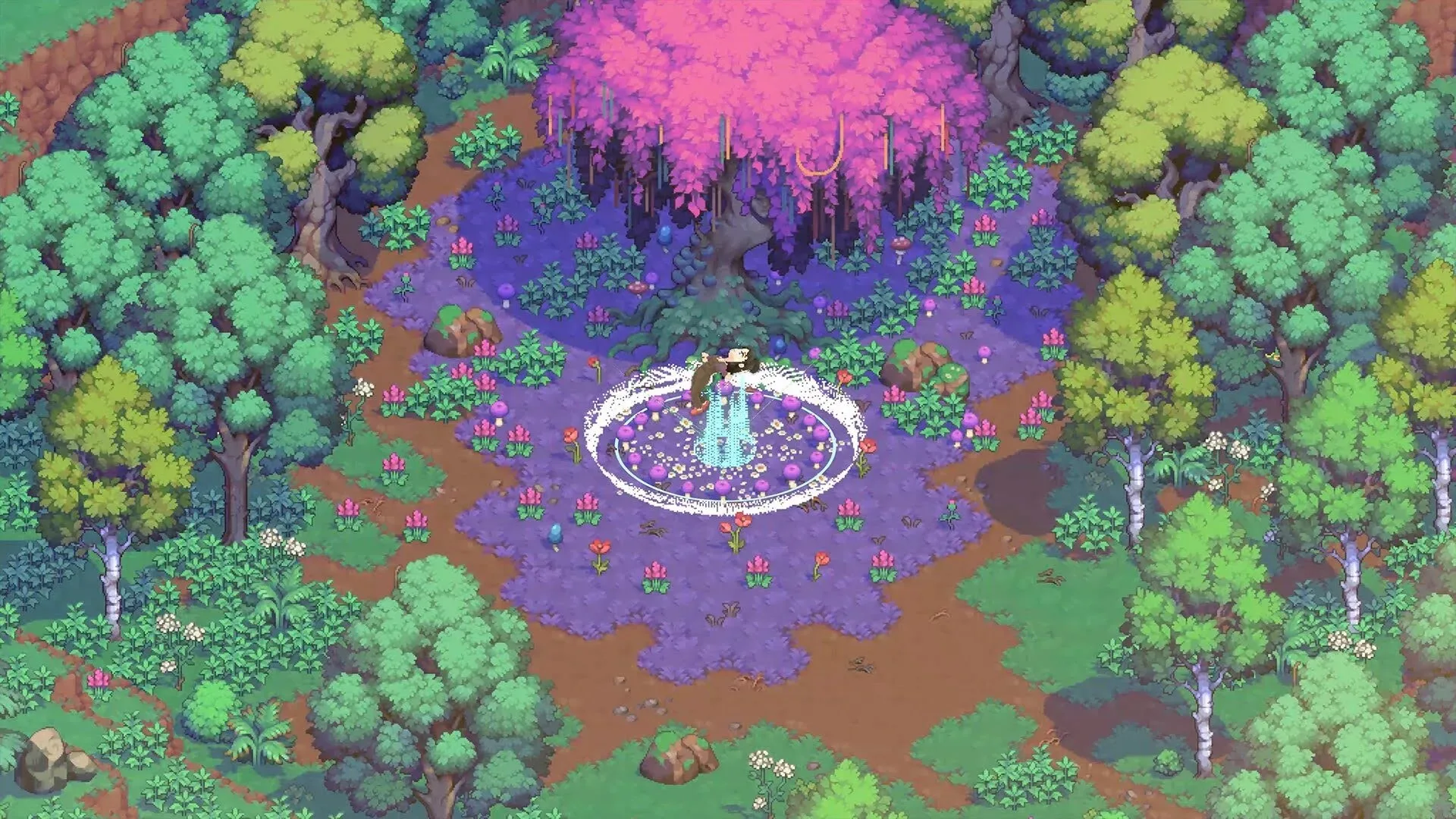
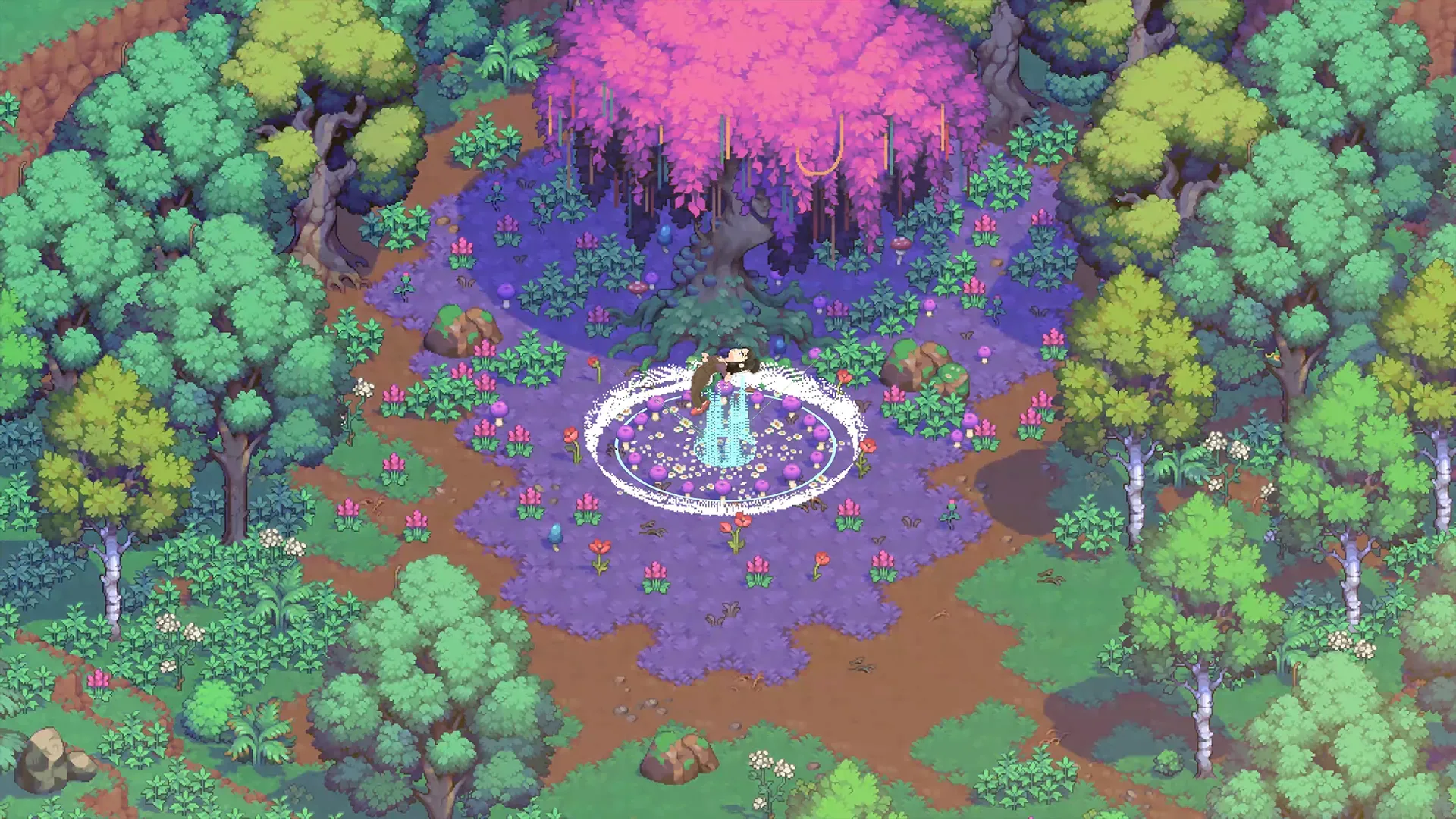
The game’s visual and audio presentation is described as next-generation pixel art, animation and music. Pixel art refers to artwork constructed with deliberately visible pixel-based forms, often paired with stylized animation rather than realism. Here, it is part of a broader package intended to support a world that moves from cozy village restoration to icy celestial mystery and ancient temple danger.
Moonfrost is available now on Steam Early Access for $14.99 USD, £12.99 GBP and €14.99 EUR. Its opening proposition is straightforward: cultivate and customize a life in a wounded settlement, help its people return and reconnect, then venture outside its borders to learn why a second moon brought icy devastation to the world.