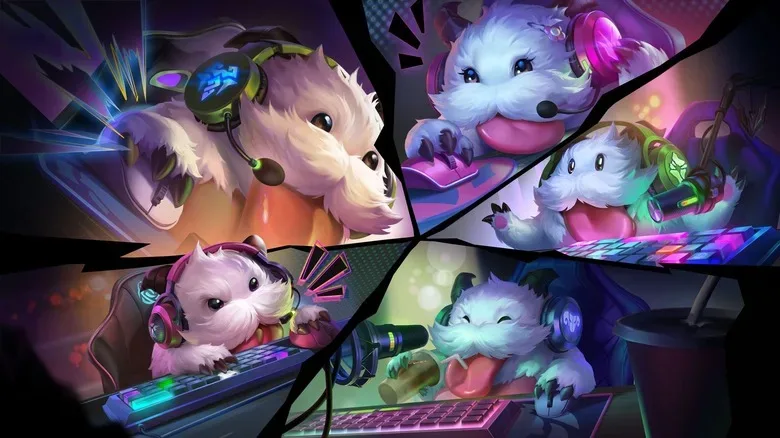
League of Legends has spent 17 years asking five strangers to execute intricate plans at high speed while communicating through pings, text, instinct, and the occasional all-caps emergency message. Riot Games is now preparing a major change to that long-standing arrangement: team-wide voice chat.
With Patch 26.20, League players in North America and Oceania are set to gain the option to speak with every teammate placed into their match. That is a substantial departure from the game’s existing voice setup, which has been reserved for premade groups—friends or other players who joined a lobby together before queueing. The initial regional rollout is limited, but Riot has indicated that Korea, Latin America, and Brazil could be considered later if the first phase performs well. Latin America and Brazil are distinct server regions in League of Legends.
It is a feature that will sound routine to players of many competitive multiplayer games. In League, though, its absence has been one of the title’s defining social and strategic quirks. The game is built around timing windows that can disappear in seconds: a jungle objective, an unexpected teleport, a roaming support, a tower dive, or a last possible disengage. Voice communication could make those moments easier to coordinate. It could also introduce another lane for conflict in a community already well acquainted with the costs of bad behavior.
Patch 26.20 changes who can communicate in a match
The key distinction is not simply that League is getting voice chat. Premade groups already have access to in-client voice communication. Patch 26.20 is designed to take that capability beyond the party lobby and into the full five-player team assembled by matchmaking.
That matters most for solo and duo players. A player entering a ranked match alone has traditionally been unable to use the game’s native voice system to call a play with the other three teammates. They may still rely on the extensive ping wheel, typed messages, or an external communication tool where applicable, but none of those methods matches the speed of a brief spoken callout during a fight.
In practical terms, team voice could help players establish simple shared intentions: contest an objective, give up an objective, wait for a cooldown, retreat after a won skirmish, or hold a wave before rotating. It is not a magic cure for bad decisions, and it will not turn every solo queue lobby into an organized competitive squad. But it could reduce the gap between what players see and what they can communicate before the relevant opportunity has passed.
League’s arrival at this point is notably late. The game launched in 2009, an era marked by the iPhone 3GS, a Black Eyed Peas-heavy pop landscape, and Barack Obama’s first year as U.S. president. Across those 17 years, League became one of the world’s most enduring competitive games without making full-team built-in voice a standard part of the matched experience.
Honor level 3 is the first moderation gate
Riot is not opening the microphone to every account without restrictions. Players will need to reach Honor level 3 or above in order to speak in team voice chat. Those below that threshold can listen, but cannot transmit their own audio.
Related coverage includes League of Legends Team Voice Chat Begins Rollout With Patch 26.20.
The Honor system is League’s player-behavior framework. It is influenced by conduct and post-game recognition from fellow players, and it has long operated as one of the game’s tools for encouraging more constructive participation. Tying speaking privileges to Honor level 3 turns that system into a direct access requirement for a prominent social feature.
The approach is easy to understand: voice can make coordinated play more immediate, but it can also make harassment more immediate. A gate based on demonstrated in-game behavior gives Riot a way to limit speaking access for accounts that have not met a baseline behavioral standing, while still allowing those players to hear their team’s calls.
There are unanswered questions that only the rollout can resolve. Listening-only access may still help a player follow a team plan, but it does not let them respond verbally in a clutch moment. Players may also scrutinize how quickly Honor changes after positive or negative behavior, whether the threshold feels attainable, and how enforcement handles voice-specific misconduct. Riot has said it intends to continue improving Honor so it more accurately reflects conduct during games, which will be central to confidence in the requirement.
Moderation, rather than technical availability, is likely to determine whether this experiment earns a broader regional expansion. A successful system needs to support the useful parts of spontaneous communication without simply giving frustration a faster delivery method. Clear reporting pathways, meaningful penalties, dependable voice quality, and behavior systems players consider credible will all matter.
Voice skins add a distinctly League-flavored twist
Alongside the wider chat rollout, Riot is planning “voice skins,” audio effects that alter how a player sounds in voice chat. The company says the effects are being designed to remain comprehensible when matches become noisy and chaotic.
That promise is important because intelligibility is the entire point of competitive voice. If a cosmetic effect turns a simple warning into a garbled sound at the moment Baron Nashor is being contested, the novelty will have defeated the feature. League’s fights already combine ability effects, game audio, pings, and potentially multiple people talking at once. The voice-skin concept has to preserve clarity before it can be a fun addition.
Specific voice skins have not been detailed. Given League’s enormous character roster, champion-inspired options would be an obvious fit, but that remains speculation rather than a confirmed plan. What is confirmed is the broader idea: Riot is treating voice not solely as a utility layer, but as another potential place for customization.
Patch 26.20 is also expected to include improved noise cancellation, quicker connections, and greater stability for voice. Those upgrades may prove more consequential than any playful vocal effect. Good noise suppression can keep keyboard clatter, room noise, and open microphones from overwhelming teammates. Faster connection behavior and stable service are equally crucial in a game where a delayed call can be no better than no call.
A cautious test for a famously intense competitive space
Early community reaction has been measured rather than unanimously celebratory. Some players see value in at least testing a feature that could improve cooperation. Others hope hearing teammates as people, rather than seeing them as anonymous icons and chat lines, might soften the mood of tense matches. That optimism is tempered by a sensible concern: League’s reputation for heated player interactions did not emerge from nowhere.
The feature will therefore be judged on more than whether a microphone icon appears beside the minimap. Players will assess whether it produces better calls, whether it remains optional and usable on their terms, whether the Honor condition is fair, and whether bad actors are dealt with promptly enough to protect the people using it in good faith.
For the wider PC gaming scene, it is also a reminder that competitive games are continually rebuilding the social systems around their core play. Performance, networking, community tools, and moderation can be as important to the day-to-day experience as a new character or balance adjustment. That wider technical conversation reaches well beyond League, as seen in projects that can turn unusual workloads into unexpected computing challenges, including Project P.I.T.T.’s accidental PC stress test involving 5,000 rubber ducks.
More music news is also on the horizon
Voice chat is not the only direction Riot has outlined for League’s next phase. The company has also said an upcoming act will place a stronger emphasis on music, with its first music-focused reveal due the day after this voice-chat update was discussed.
That tracks with League’s history of using music as part of its identity, from large promotional releases to character and event themes. Still, the details of the next reveal have not been specified, so players will need to wait to see whether it involves a new musical project, an in-game event, or something else entirely.
For now, Patch 26.20 is the immediate story. North America and Oceania will be the first proving ground for team-wide voice chat, with Honor level 3 serving as the price of speaking and voice skins adding an unusual customization angle. Seventeen years after League of Legends began, one of competitive gaming’s most conspicuous communication gaps is finally being addressed. Whether it becomes a lasting strategic upgrade—or a moderation headache with better noise cancellation—will depend on what happens after players start talking.