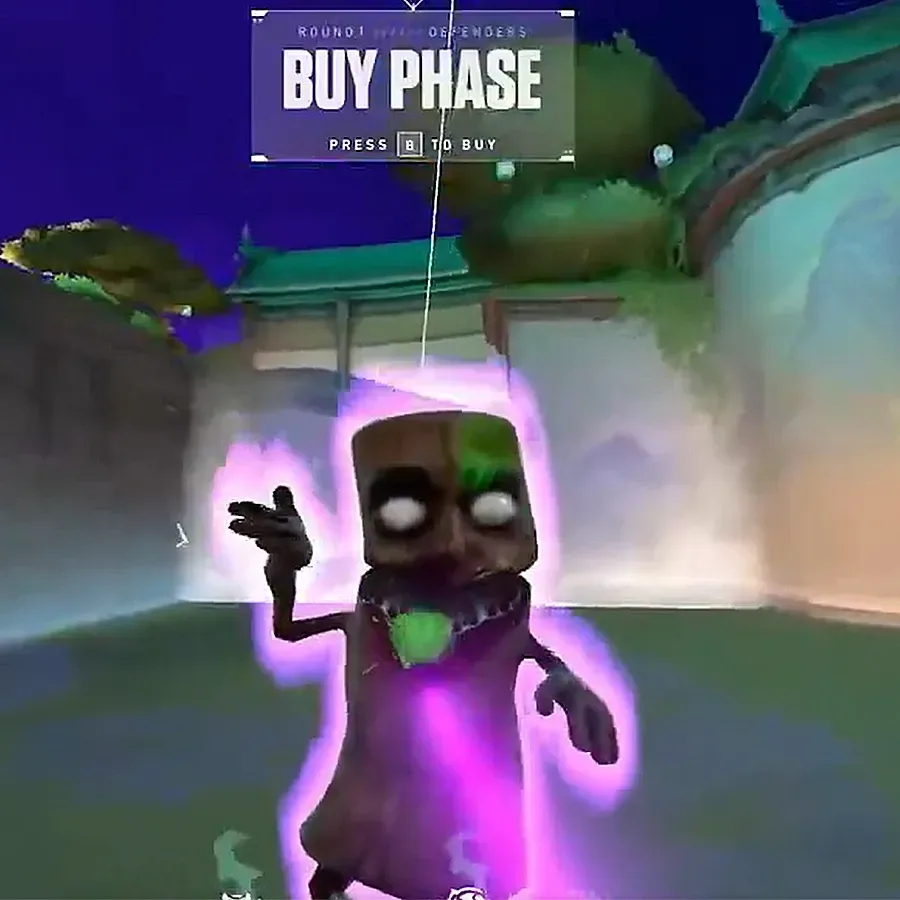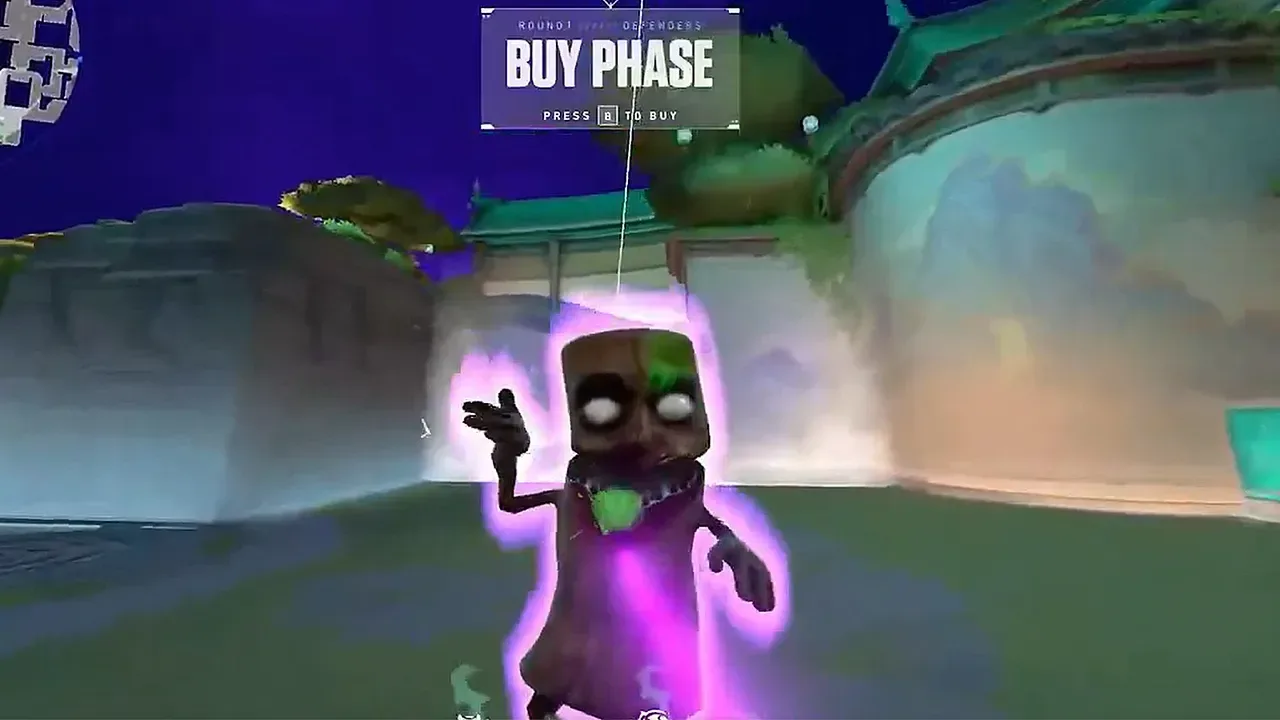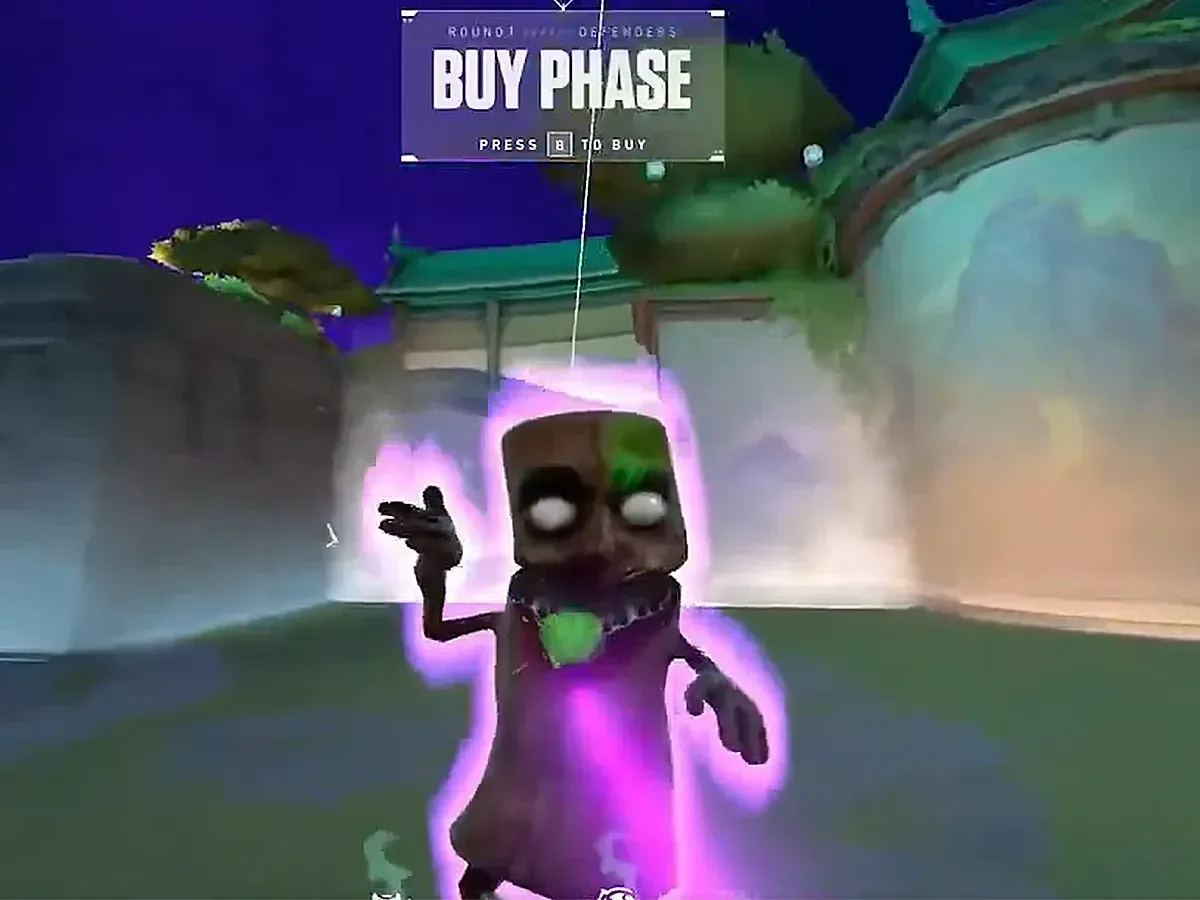
A bizarre Valorant cheating clip has ended with a ban, but the conversation it triggered is likely to linger well beyond the account’s final trip to the penalty box. Footage circulating on social media showed a player using what appeared to be an “Evil Tung Tung Tung Sahur” custom character model while effortlessly eliminating opponents through walls. Riot Games’ anti-cheat director Phillip Koskinas subsequently confirmed that action had been taken against the player.
The spectacle was unusually memorable even by the standards of online-game cheating videos. Rather than a subtle-looking suspicious aim clip or a scoreboard that invites endless argument, this one presented a deliberately grotesque visual wrapper around what looked like blatant cheating. The model drew from Tung Tung Tung Sahur, a viral internet meme, but rendered it as a menacing, distorted version. It was less “competitive shooter opponent” and more “cursed mascot that escaped from an algorithmic fever dream.”
For players on the receiving end, however, the weird costume was not the important part. The footage appeared to show the account tracking opponents through solid surfaces, then securing kills while aiming in directions that did not seem to line up with visible targets. Those details are consistent with wallhacks and automated targeting, although the full set of tools allegedly used cannot be determined from the clip alone.
The video made the cheating hard to ignore
The viral footage was shown from a third-person perspective that appeared to come from the cheater’s own setup. Enemy outlines were visible behind walls. Meanwhile, the character moved backward and fired in a way that seemed detached from conventional sightlines, only for opposing players to fall in rapid succession.
That visibility is central to why the clip spread so quickly. Cheating often becomes a dispute of impressions: one player sees an impossible shot, another points to latency, luck, a sound cue, a spectator bug, or an unusually skilled opponent. Here, the apparent tools were on display. The strange model ensured that viewers would remember it, but the outlines and improbable eliminations carried the real accusation.
It is worth retaining some caution around claims based solely on edited or limited footage. Video can establish that behavior looks highly suspicious; it does not necessarily reveal every component of a cheat setup or every circumstance surrounding a match. In this case, Riot’s confirmation of a ban gives the incident a far firmer outcome than an ordinary social-media callout. It does not, however, turn a single clip into a technical breakdown of every method involved.
Riot confirms a ban and names the broader challenge
Koskinas said the account had been banned and indicated that Riot had identified the player’s Riot ID, the cheat involved, and the number of matches played. He also dismissed the value of concealing the account’s identity after enforcement had occurred, while referring to the cheat with the wonderfully unflattering label “lowskill vibeslop.”
More significantly, Koskinas acknowledged the timing issue that sits at the heart of player frustration. His position was that detection can happen given time, but that Valorant’s free-to-play structure creates a continuing challenge. He also agreed that Riot needs a stronger preventive posture for open qualifiers.
Related coverage includes Valorant Bans Viral 'Evil Tung Tung Tung Sahur' Cheater After Wallhack Footage Spreads.
That distinction matters. A ban eventually removes an offender from the ecosystem, and it can help anti-cheat teams study methods that may be reused. But players and tournament participants are concerned with the damage before the ban arrives. A ruined ranked match is aggravating; a compromised open-qualifier result can alter a team’s path through an event, eliminate competitors, and leave no practical way to restore the bracket once later disqualifications occur.
One prominent analyst raised precisely that concern, pointing to the scenario in which a team loses a bracket match to a cheating opponent, only to learn that the offender is disqualified several rounds later. By then, the previously eliminated team may have no route back into the competition. The viral “Evil” model is memorable, but the potential competitive fallout is the far less funny part of the story.
Why Vanguard is back in the spotlight
The incident revived familiar arguments around Vanguard, Riot’s kernel-level anti-cheat system. Kernel-level software operates with deep access to a computer, a design intended to make certain cheat techniques more difficult to run or hide. Supporters view that access as a necessary response to increasingly sophisticated cheat developers. Critics argue that powerful client-side anti-cheat software raises privacy and security concerns and still cannot guarantee that cheats will be stopped before they affect live matches.
The viral clip gave both sides a ready-made talking point. Critics asked how such conspicuous behavior could occur in a game protected by a highly invasive anti-cheat approach. Others responded that no client-side system can promise immediate and permanent immunity against every cheat, especially in a free-to-play game where banned users may attempt to return through new accounts or changing hardware arrangements.
There is no simple “anti-cheat wins forever” switch. Detection is an adversarial process: cheat creators look for gaps, anti-cheat teams identify those gaps and issue countermeasures, and new workarounds eventually emerge. The realistic standard players want is not magical perfection, but quick intervention, meaningful deterrence, robust account and hardware enforcement, and systems that make exploitation expensive and unreliable.
Server-side protections and behavioral analysis are often brought up in these debates. Those approaches can examine outcomes and patterns that are difficult to explain through legitimate play, such as implausible tracking, reaction timing, movement, or accuracy across many games. They are not effortless solutions either. Aggressive automated enforcement risks false positives, while sophisticated cheaters can attempt to make their behavior resemble human inconsistency. Still, the discussion shows why players frequently want multiple layers of defense rather than confidence placed in one client-side tool alone.
Open qualifiers demand a different level of urgency
Competitive formats intensify every anti-cheat failure. In ordinary matchmaking, compensation for a compromised game may be limited, delayed, or unavailable. In a qualifier, an illegitimate win can reshape advancement opportunities for multiple teams. A later ban may uphold the rules in principle while failing to repair the practical harm.
Koskinas’ reference to improving prevention for open qualifiers is therefore the key takeaway from the response. It recognizes that enforcement after exposure is not always enough. Tournament organizers and developers need processes that prioritize rapid review of reports, identify anomalies before later rounds, and clearly define what happens when cheating is discovered after a match has concluded.
That broader tension is part of a familiar industry problem: systems must be stable, secure, and fair even while players and bad actors constantly probe their weak points. For a wider perspective on the pressures facing game makers, Joking Joystick has also examined why stability remains such a stubborn challenge in game development.
A viral joke with a serious aftertaste
“Tung Tung Tung Cheat-Hur” jokes were inevitable, and the absurdity of the skin made the clip easy to turn into a meme. Yet the reason it landed is that the apparent cheating was so brazen. Players do not need every offender to look like a haunted meme creature to be frustrated by an unfair loss; most would prefer that obvious cases never get the chance to become viral content at all.
The banned account is no longer the immediate problem described by the footage. Riot has confirmed enforcement, and the episode serves as another visible reminder that Valorant’s anti-cheat operation is actively responding to detected abuse. At the same time, the developer’s own acknowledgement of prevention gaps in open qualifiers leaves the larger issue open: detecting a cheat eventually is valuable, but competitive players want safeguards that stop the damage before a bracket, match, or evening of ranked play has already been wrecked.
For now, the Evil Tung Tung Tung Sahur reign of nonsense appears to be over. The anti-cheat debate it helped resurrect, unfortunately, is built for overtime.