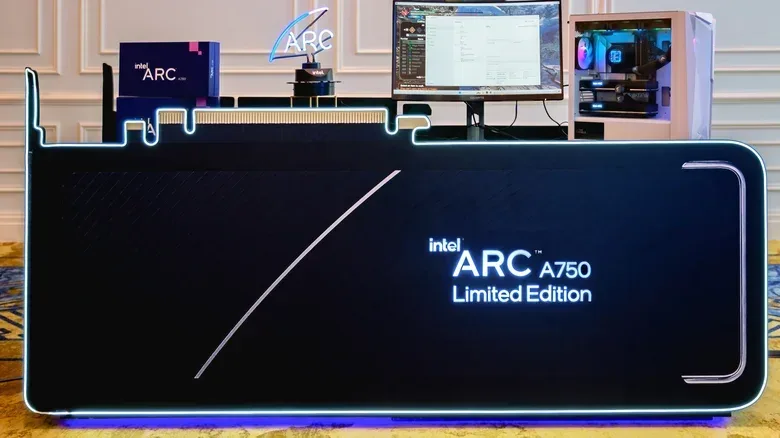
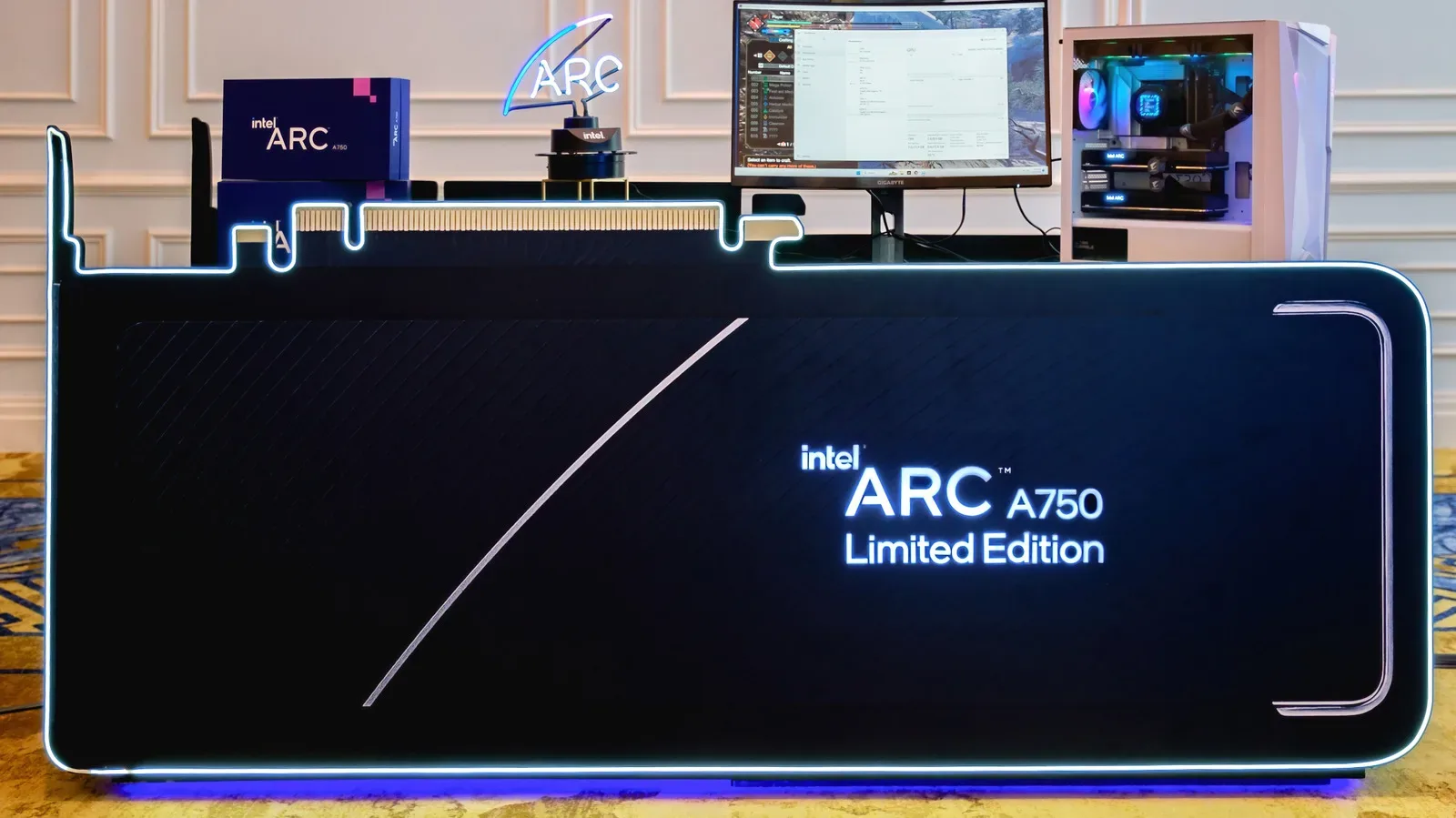
Intel Arc remains an unusual answer to the familiar PC-building question: “Which graphics card can I afford without turning the rest of the build into instant noodles?” It is not the route to no-compromise 4K gaming at 120 frames per second, and it does not need to be. In 2026, Intel’s GPU line has a much more focused appeal: budget-conscious players building for 1080p, with some room for 1440p, who want a capable card without shopping in the most expensive tier.
That clarity matters. A graphics-card purchase is rarely just about one benchmark chart. It is a balance of the games someone plays, the display they already own, the rest of the PC, pricing and stock. Intel’s Arc lineup entered a field long defined by AMD and NVIDIA, and its beginnings in 2022 were not smooth. But the platform has matured enough that dismissing every Arc card on the strength of its launch reputation would miss what the lineup now offers.
What Arc is—and what it is not trying to be
Intel introduced Arc with the Alchemist generation in 2022, then followed it with Battlemage in 2024. The naming has a game-class theme, while the Arc name gestures toward the story arcs of the games the cards are intended to power. The more important point for a buyer is that Arc is no longer merely Intel’s attempt to join the discrete-GPU market; it is a line with a recognizable place in that market.
That place is not at the extreme top end. Buyers looking for 4K at 120 fps should not interpret Arc’s improved standing as a claim that it goes head-to-head with an AMD 9070 or an RTX 5090. Those are fundamentally different targets. A good purchase decision begins by refusing to pay for performance a setup cannot use. A 1080p monitor, for example, does not become better simply because a card is designed to chase an altogether different 4K performance goal.
Arc’s central pitch is considerably more grounded: deliver strong frame rates at 1080p, remain viable for 1440p-oriented budget builds, and keep the total component cost under control. That may sound unglamorous beside flagship hardware, but it is exactly where practical PC gaming happens for many people.
Pricing and memory make the value case easier to understand
The most concrete reason to consider Arc is price. The lineup is described as broadly available through major retailers, rather than being a theoretical bargain that vanishes the moment a buyer tries to check out. Listed pricing spans from about $170 for the Arc A380 with 6GB of VRAM to roughly $329 for the Arc B580 with 12GB of VRAM.
VRAM, or video random-access memory, is memory located on the graphics card itself. It is used for graphics data such as textures and other assets needed while a game is running. It is not the same thing as system RAM, and it is not a magic measure of speed. A card’s overall performance depends on its full design, drivers and the game being played. Still, the amount of VRAM is a meaningful part of the specification conversation, particularly when buyers are weighing similarly priced options.
Intel’s cards stand out here because the range includes comparatively generous memory capacities, including the B580’s 12GB. That does not automatically declare it the right card for every player, but it strengthens the value argument in a segment where competing hardware can offer less memory per card. At the same time, the cost ceiling matters: the most expensive Arc option is characterized as often sitting below the least expensive choices from AMD and NVIDIA.
Related coverage includes Are Intel Arc GPUs worth buying in 2026?.
For a budget build, that gap can affect the entire parts list. Savings on the GPU may leave more room for system memory, storage, a better power supply or simply a lower final bill. None of those trade-offs can be solved with a universal recommendation, but they explain why a cheaper GPU is not automatically a compromise made in isolation.
The launch baggage was real
There is a reason Arc still invites skepticism. The 2022 launch was marked by poor drivers, system instability and significant performance penalties on systems whose BIOS did not support Resizable BAR. Those were not small footnotes. A graphics card is dependent on software as well as silicon; driver quality can determine whether a game performs as expected, whether it runs consistently, and whether a new buyer’s installation feels routine or frustrating.
Resizable BAR is a BIOS-level capability that changes how the CPU can access graphics-card memory. In this context, the practical takeaway is straightforward: Arc remains more sensitive to its presence than prospective buyers may expect. The performance penalties without it are still a concern, even though many of the other early driver and stability issues have been addressed.
That makes compatibility checking an essential step, not optional pre-purchase homework. Someone selecting Arc should verify BIOS support for Resizable BAR before treating a low price as the final answer. The card can be an excellent value only if it is placed in a system positioned to use it properly.
A practical Arc checklist
- Set the actual target: Arc is principally aimed at 1080p to 1440p gaming, not 4K at 120 fps.
- Check BIOS support: Confirm that the planned system supports Resizable BAR, because the downside without it remains relevant.
- Compare the complete build: GPU savings can be useful only when the rest of the PC is not neglected.
- Look at available VRAM alongside price: It is one meaningful part of a card’s value, though not its sole performance indicator.
- Match expectations to the model: An A380 with 6GB and a B580 with 12GB occupy different positions in the range.
Gaming performance: the B570 evidence points to a credible 1080p option
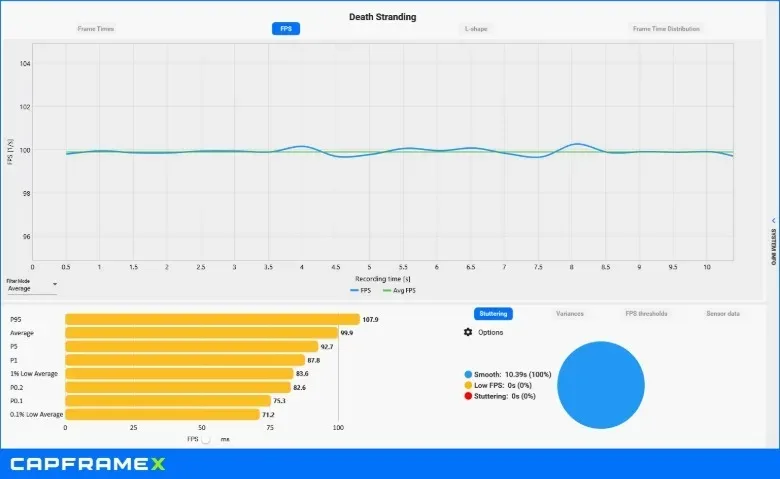
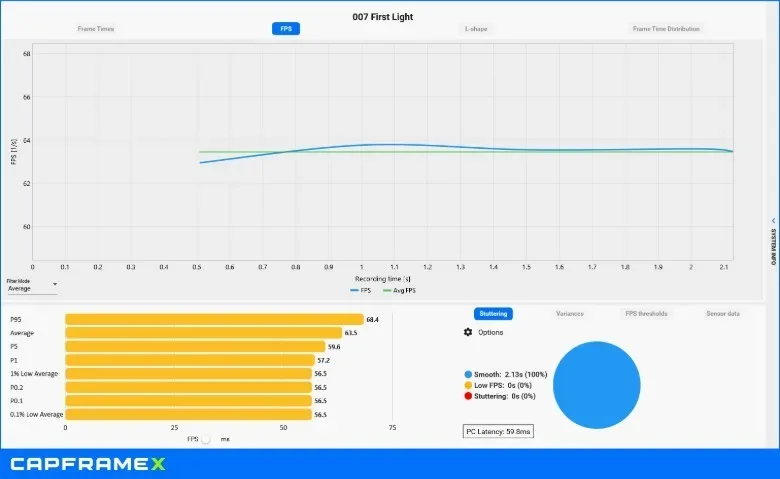
The improvement in Arc’s software position is most useful when it translates into games. Reported B570 testing paired the card with an older Intel Core i3-12100F and 16GB of RAM, a combination that helps frame the result as a budget-oriented setup rather than an unrealistically extravagant test platform. Across Death Stranding, Death Stranding: On the Beach, Star Wars Outlaws, Dead Island 2, Resident Evil Requiem, 007 First Light and Planet Zoo 2, performance was generally near 100 fps at 1080p with medium-to-high settings.
That is encouraging evidence for the use case Arc is actually chasing. It also avoids the common mistake of treating a lower-cost GPU as successful only if it defeats hardware designed for a much larger budget. Roughly 100 fps at those settings is a meaningful result for a player who wants responsive 1080p gaming from a more affordable system.
The especially demanding moments are worth noting. Open-world sections in Dead Island 2 and Death Stranding can put more pressure on a GPU than lighter scenes. The B570 was reported to continue providing strong performance in those areas. Planet Zoo 2 was also identified as deceptively demanding, making its inclusion useful context rather than another easy win for a benchmark list.
There are, however, appropriate limits on what can be concluded. These results concern a particular card, a stated CPU-and-memory pairing, specific games and a stated resolution and settings range. They should not be turned into a guarantee for every Arc model, every PC or every new release. Component balance still matters. A GPU works inside a system, not in a vacuum, and individual games have their own demands.
For readers still selecting peripherals around a PC build, choices at the desk can also shape the day-to-day experience after the frame-rate decision is made. Our look at mechanical versus membrane keyboards for PC gaming explains one of those separate, practical trade-offs.
XeSS is part of the proposition, but it needs plain-language context
Intel’s value strategy also leans on XeSS. This is an upscaling technology: rather than rendering every part of a game at the display’s full target resolution, it can render at a lower resolution and reconstruct the image. The goal is to ease the rendering workload and raise frame rates while preserving an image that is suitable for play.
Upscaling is especially relevant to cards aimed at value-focused players because it offers another lever besides lowering every graphics setting. In the reported view of Arc’s software capabilities, XeSS can outperform competing DLSS and FSR solutions. That is a promising claim, but it should be treated as situational rather than a permanent universal ranking. Results can vary by game, settings and implementation.
The useful buying lesson is not that one acronym settles a GPU purchase. It is that Arc has a feature designed to help its intended audience make better use of the performance it has. In a budget system, flexibility matters. If an upscaling option helps a game reach a preferred frame-rate target, that can be more valuable than chasing a specification-sheet victory.
Who should buy an Arc card in 2026?
Arc is a sensible choice for someone whose priorities are clear: they are building or upgrading on a budget, they play at 1080p or are considering 1440p, they can confirm Resizable BAR support, and they are comfortable comparing actual models instead of assuming every Arc card performs alike. The B570 evidence makes the argument particularly persuasive for players seeking a capable 1080p experience at medium-to-high settings without pairing the GPU with premium-tier ambitions.
It is also an appealing line for buyers who see VRAM as an important part of their comparison and who want a card that is generally in stock. Availability is not a trivial factor. A favorable price on unavailable hardware cannot complete a build, while a product that can be found at a reasonable price can.
Who should look elsewhere?
Buyers whose non-negotiable goal is 4K at 120 fps should look beyond Arc’s intended segment. So should anyone unable to satisfy the Resizable BAR requirement without accepting the associated performance drawback. A person shopping around a specific title with very particular settings needs should also compare that game directly, because broad category positioning cannot replace a relevant workload.
Arc’s story in 2026 is not that it has erased every difference between GPU vendors or taken over the flagship contest. It is that the line has grown past its troubled debut into a legitimate value option. With availability, pricing from the A380 to the B580, solid memory specifications on select models, much-improved software and evidence of robust B570 performance at 1080p, Intel has a credible answer for the player who wants the most sensible gaming PC rather than the most extravagant one.