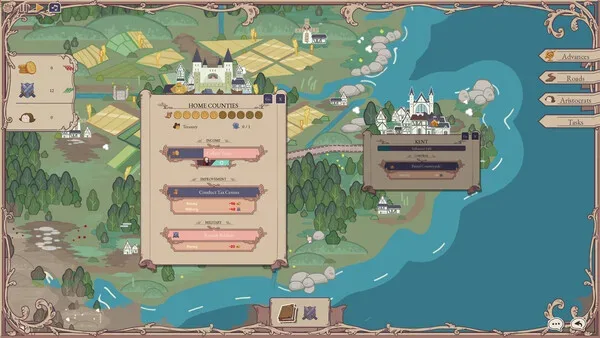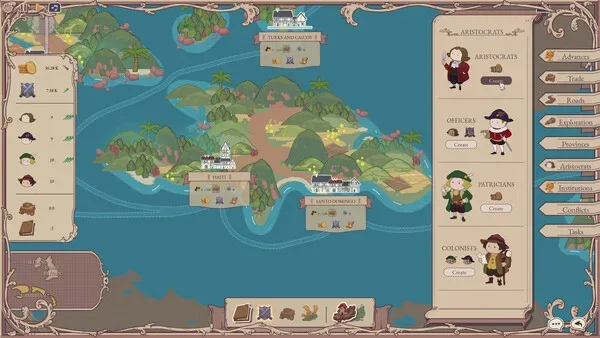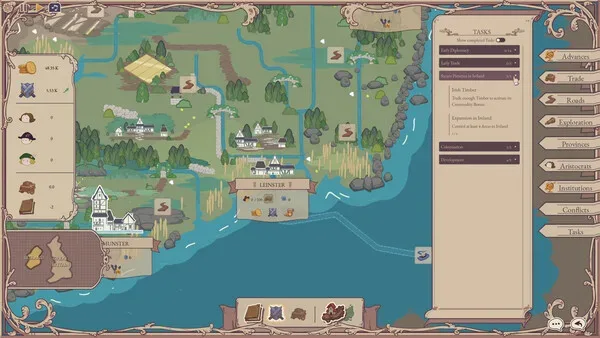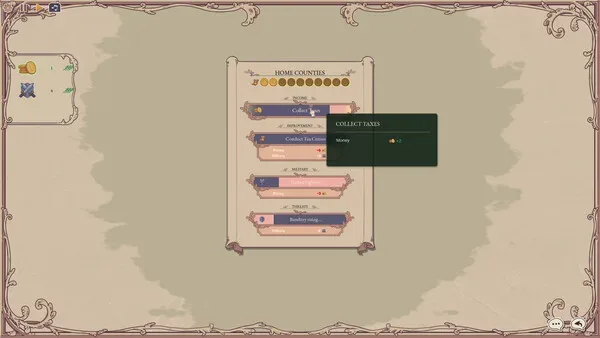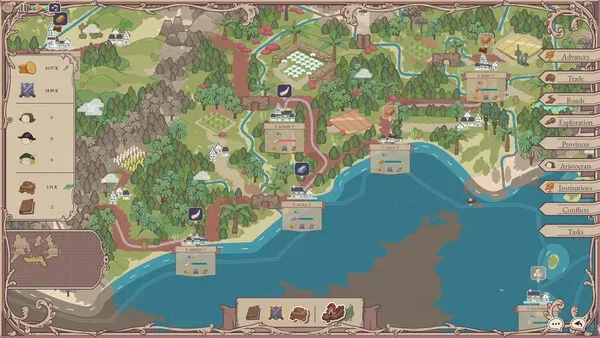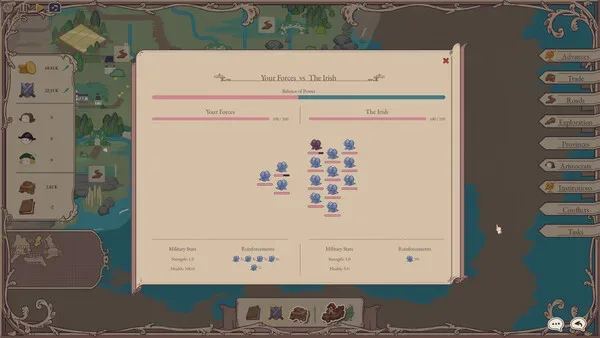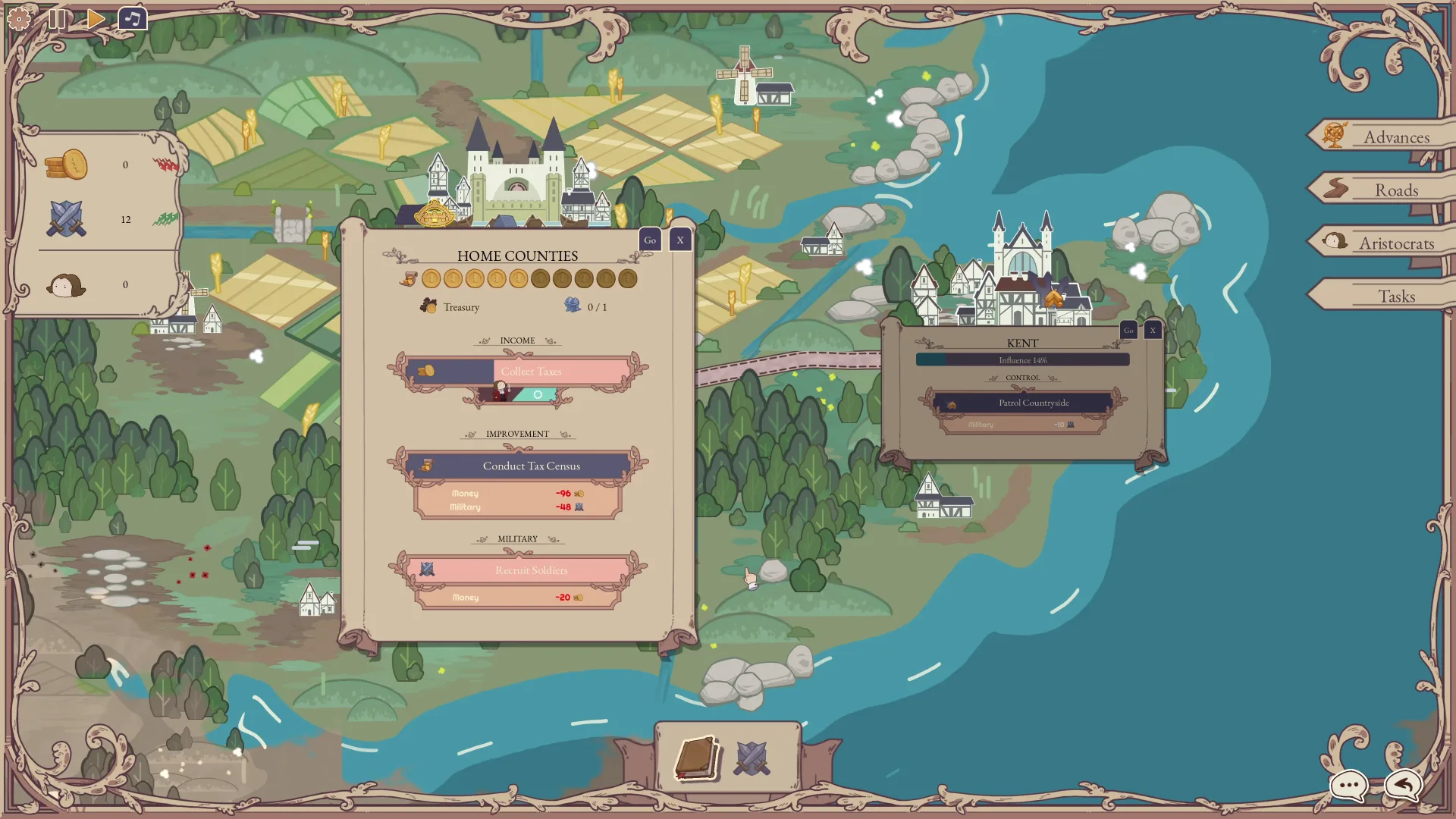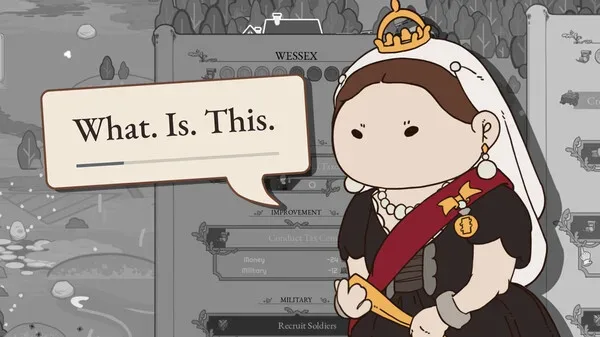
How Empires Work is scheduled to launch on Steam on November 3. The game presents itself as an incremental grand-strategy title focused on constructing the machinery that sustains an empire: taxing, trading, conquering and administering populations, then turning those processes into institutions able to operate across centuries.
The framing is intentionally imperial and unsentimental. Its stated objective is not simply to win a battle or expand a map, but to produce results for “Her Imperial Majesty” by making a growing state function. That puts administration at the center of the pitch alongside the more familiar grand-strategy verbs of expansion and commerce.
An incremental approach to grand strategy
Incremental games are generally built around compounding progress. Players begin with limited output or a small set of choices, invest in systems that raise that output, and eventually unlock processes that continue producing gains with less direct input. In How Empires Work, that structure is being paired with grand-strategy subject matter rather than a purely abstract production loop.
Grand strategy, meanwhile, usually describes games concerned with decisions at the level of a country, ruler or empire: resources, territory, diplomacy, governance, warfare and long-term development. How Empires Work’s description names tax, trade and conquest as key actions, but its distinctive promise is that those actions can be automated into durable institutions.
That distinction matters. A player may initially decide how to collect revenue, move goods or expand control, but the end goal appears to be a structure that no longer requires every task to be performed by hand. The empire is meant to become self-running—or at least more self-running—as its administration develops.
Institutions are the central idea
The game’s description repeatedly emphasizes institutions. In practical strategy-game terms, an institution is a continuing structure that handles a recurring function: gathering taxes, overseeing trade, enforcing authority or managing territory. The supplied details do not specify the exact interface, resources or rules behind these systems, so it is too early to treat them as confirmed mechanics beyond that broad role.
Still, the premise suggests a progression loop with a clear logic:
- Take direct actions connected to imperial growth, including taxation, trade and conquest.
- Use the resulting progress to establish systems that handle those responsibilities more efficiently.
- Automate routine processes through institutions.
- Expand the scale and duration of the empire’s operations across a longer historical span.
Automation can be especially consequential in a strategy game because it changes what counts as the player’s main job. Instead of spending the entire session repeating a successful action, the player’s attention can shift toward setting priorities, adjusting the underlying machinery and responding when a self-sustaining system produces an outcome that needs correction.
That also leaves room for meaningful trade-offs, although none have been detailed. A game about institutions can create tension through competing administrative goals: immediate revenue versus a broader commercial base, rapid expansion versus the burden of governing what has been taken, or direct control versus delegation. Those are possibilities inherent in the pitch rather than confirmed features, but they explain why the pairing of incremental design and empire management could be notable.
Conquest, subjects and the game’s language
How Empires Work explicitly includes the ability to tax, trade with, conquer and “civilise” subjects and foreigners. That wording places colonial and imperial power directly in the game’s stated vocabulary. It does not provide enough detail to determine how the title will portray the consequences of conquest or administration, or whether it will meaningfully examine the people placed under imperial rule.
For prospective players, the important point is that the game is not described as a neutral city-building exercise. It is explicitly about imperial systems and their expansion. The player is positioned as someone building an apparatus of authority, with subjects and foreigners described in terms of what the empire can do to them.
That premise may appeal to players who enjoy strategy games that make governance, extraction and territorial growth the core loop. Others may want to see more of the game before deciding whether its systems add depth beyond the rhetoric of imperial administration. The currently available description establishes the theme and the major action verbs, but does not establish the game’s tone beyond its brisk, demanding address to the player.
What “across centuries” could mean for the pace
The game is described as running its institutions “across centuries of history.” No starting era, end point, turn structure or historical setting has been provided, so that phrase should not be read as confirmation of a specific timeline. It does, however, signal an intended sense of long-duration development.
For an incremental strategy design, a centuries-spanning frame is a natural fit. Automation has more weight when players can see an early decision continue to shape later growth. A modest tax apparatus could become part of a larger fiscal machine; an initial trading effort could become a persistent economic structure; conquest could introduce new territory that requires its own administration. Again, the particulars remain unknown, but the announced premise is built around escalation from simple acts to enduring systems.
This long-view structure is also what separates the concept from strategy games centered solely on individual battles or short campaigns. The apparent goal is not merely to claim territory once. It is to create a mechanism capable of extracting, organizing and expanding over time.
Release timing and what is not yet confirmed
The Steam launch date is November 3. An embargo is set to lift on Monday, November 2 at 09:00 PST, 12:00 EST, 17:00 GMT and 18:00 CET. That timing indicates additional coverage or impressions may emerge shortly before release, but it does not itself confirm reviews, scores, pricing, system requirements or any particular launch-day content.
No other platforms have been identified. Steam is the only confirmed destination in the available announcement, so players interested in the game should treat PC availability through Steam as the confirmed release information and wait for official details before assuming a console version or other storefront release.
The announcement also does not list a price, release edition, feature roadmap, multiplayer mode, campaign format or accessibility options. Those omissions are not evidence that such elements will be absent; they simply have not been established here.
Why the Steam launch is worth watching
How Empires Work is arriving with a compact but specific hook: make an empire function so efficiently that its institutions carry on the work themselves. That idea brings together two types of play that can be complementary. Incremental design supplies the satisfaction of compounding systems, while grand strategy supplies the political and territorial context for deciding what those systems are meant to accomplish.
The main question after launch will be how much agency remains once automation takes hold. Effective automation should reduce busywork without eliminating consequential decisions. If the institutions are only passive multipliers, the imperial premise may remain largely thematic. If they require players to shape, direct and revise a growing administrative network, the game could turn its “machinery of empire” line into a more distinct strategic identity.
For a wider look at a current issue affecting the PC audience, see the debate around PC owners and gaming hardware pressures. For How Empires Work itself, the confirmed facts remain straightforward: it is coming to Steam on November 3, and it is built around taxation, trade, conquest and institutional automation over a centuries-long imperial arc.