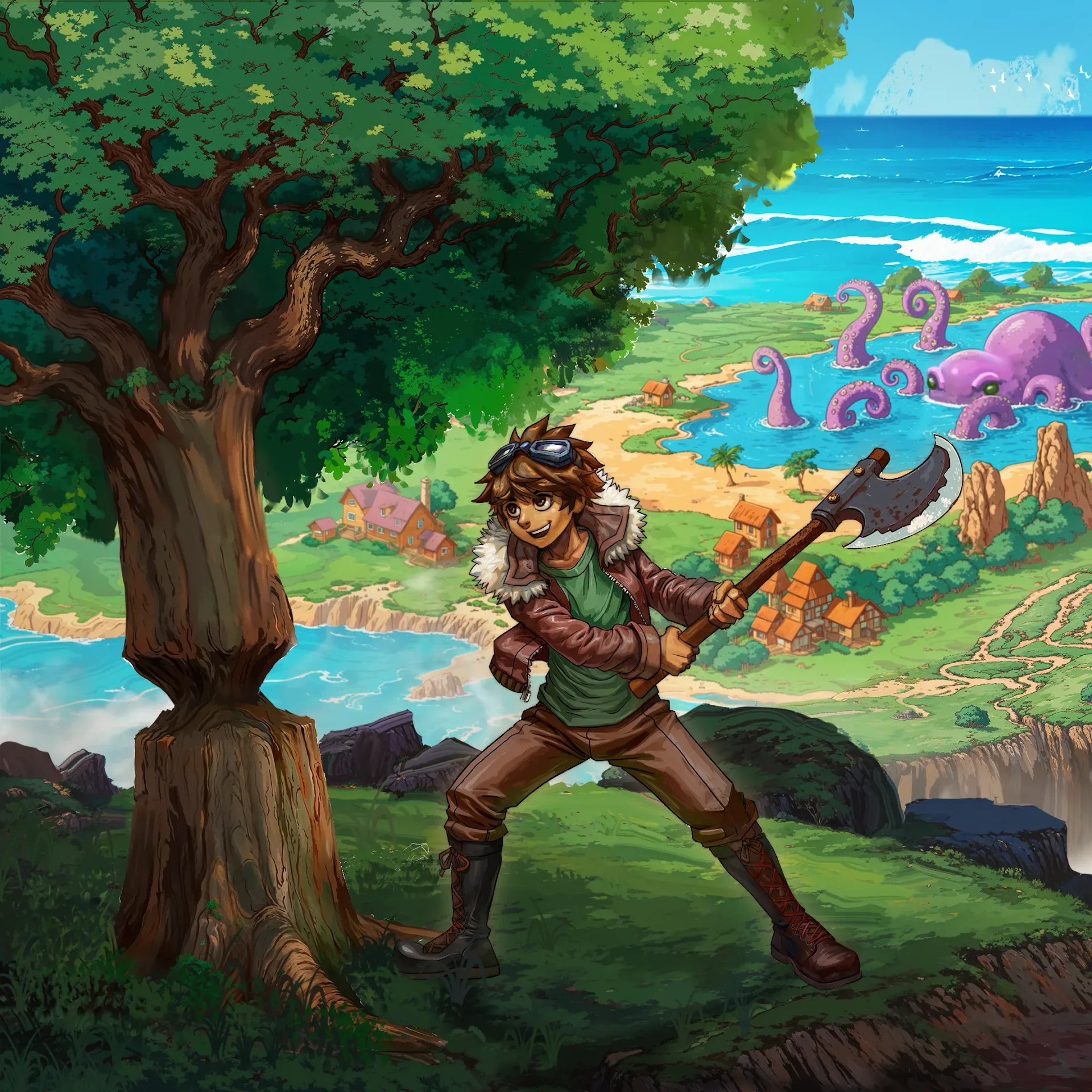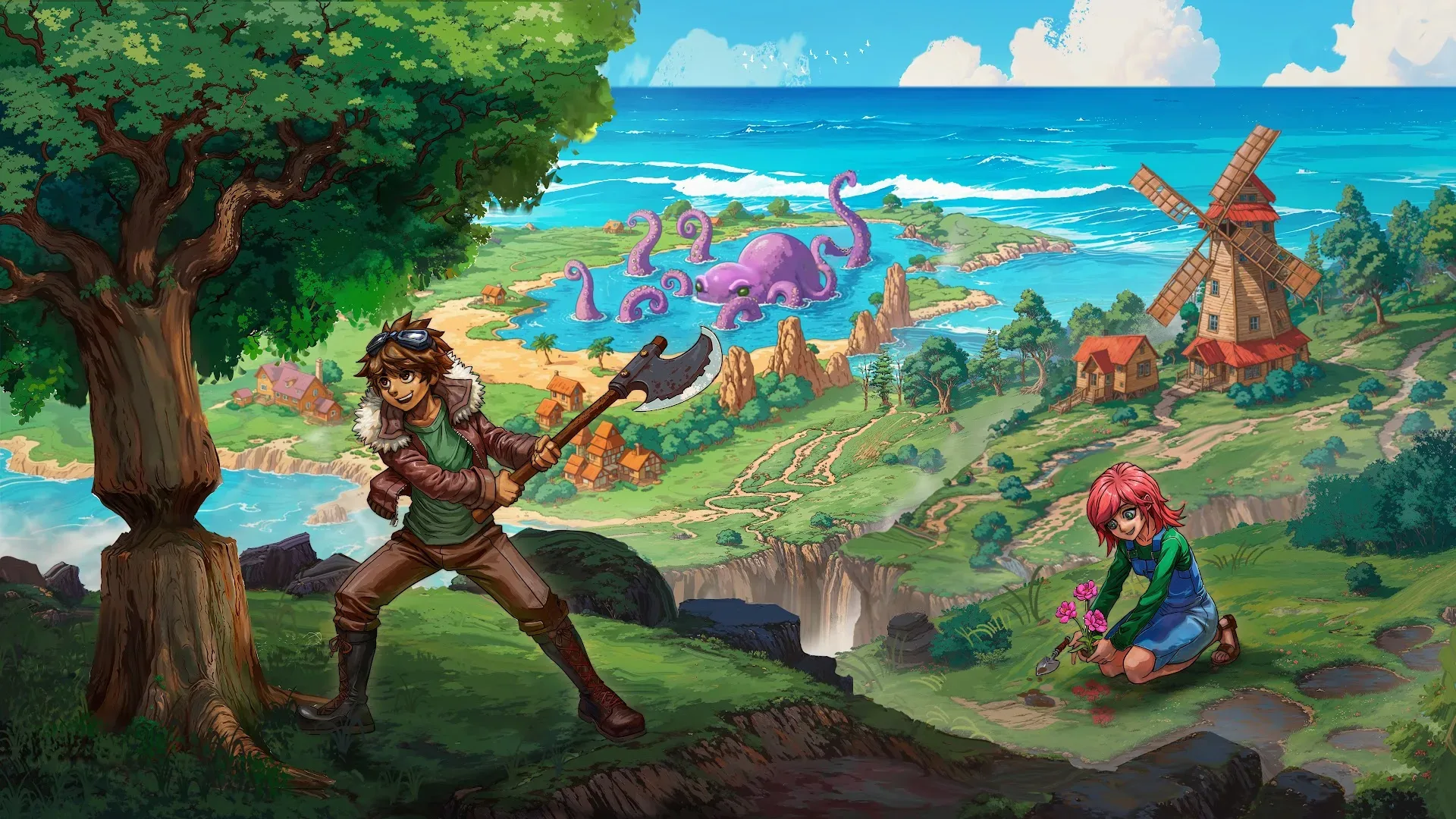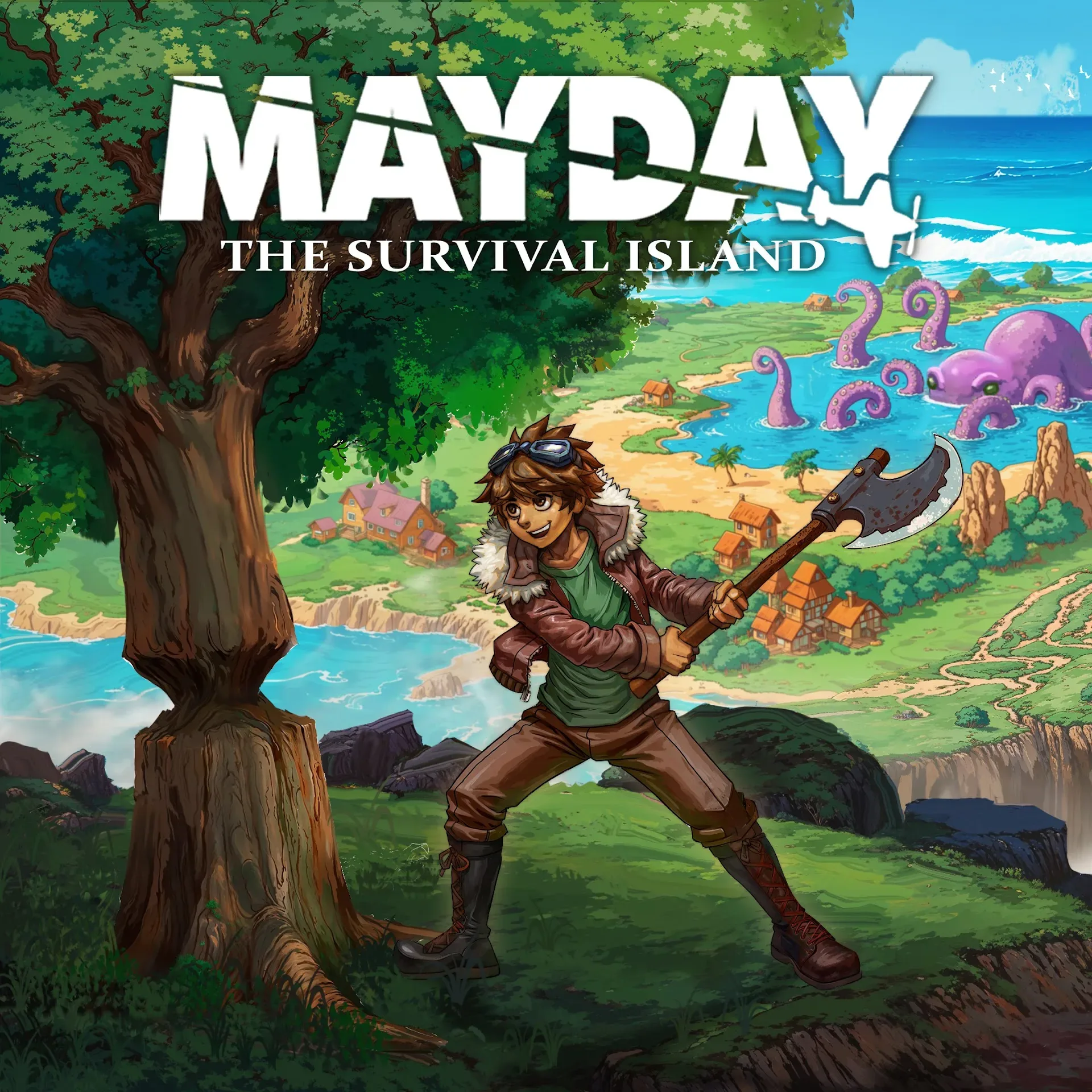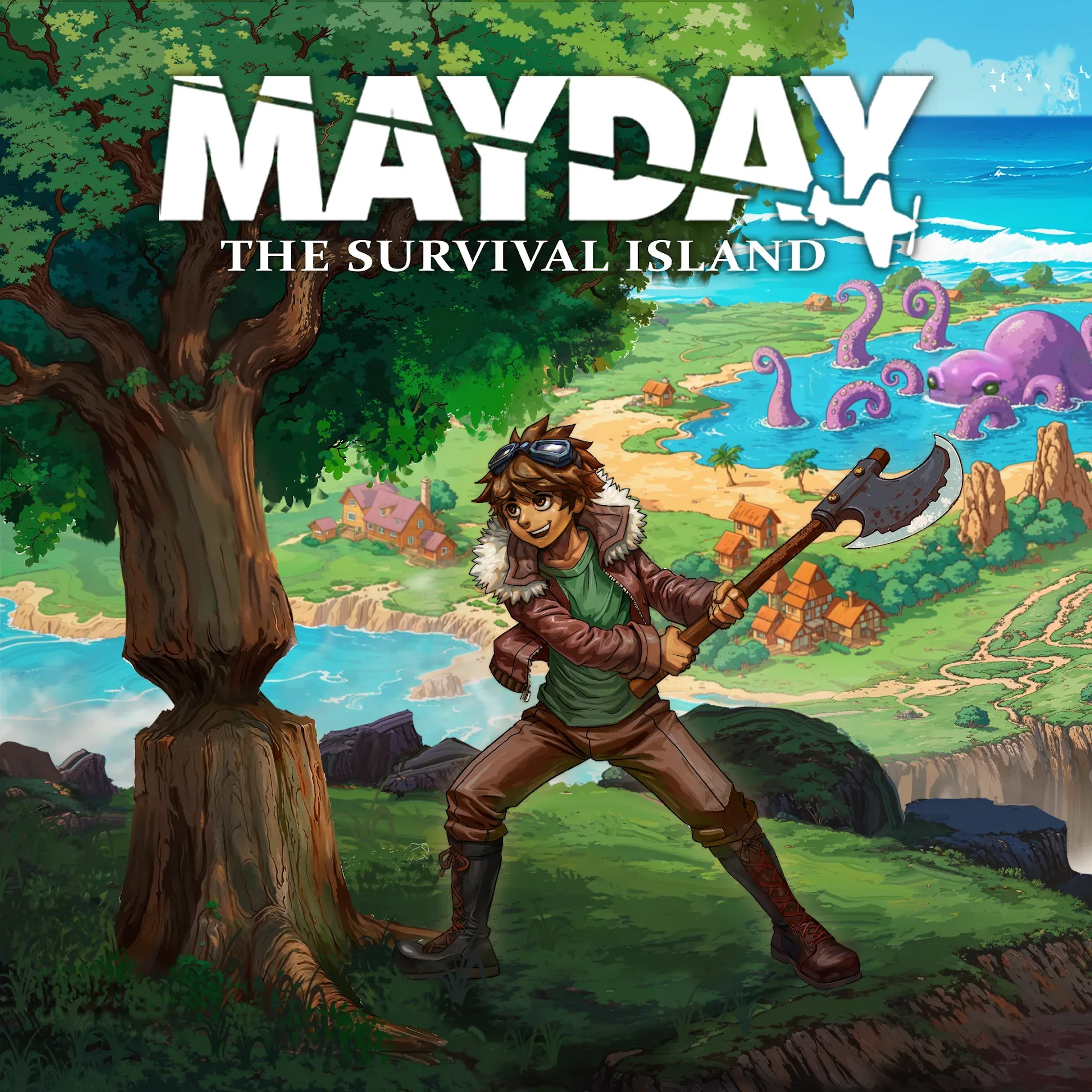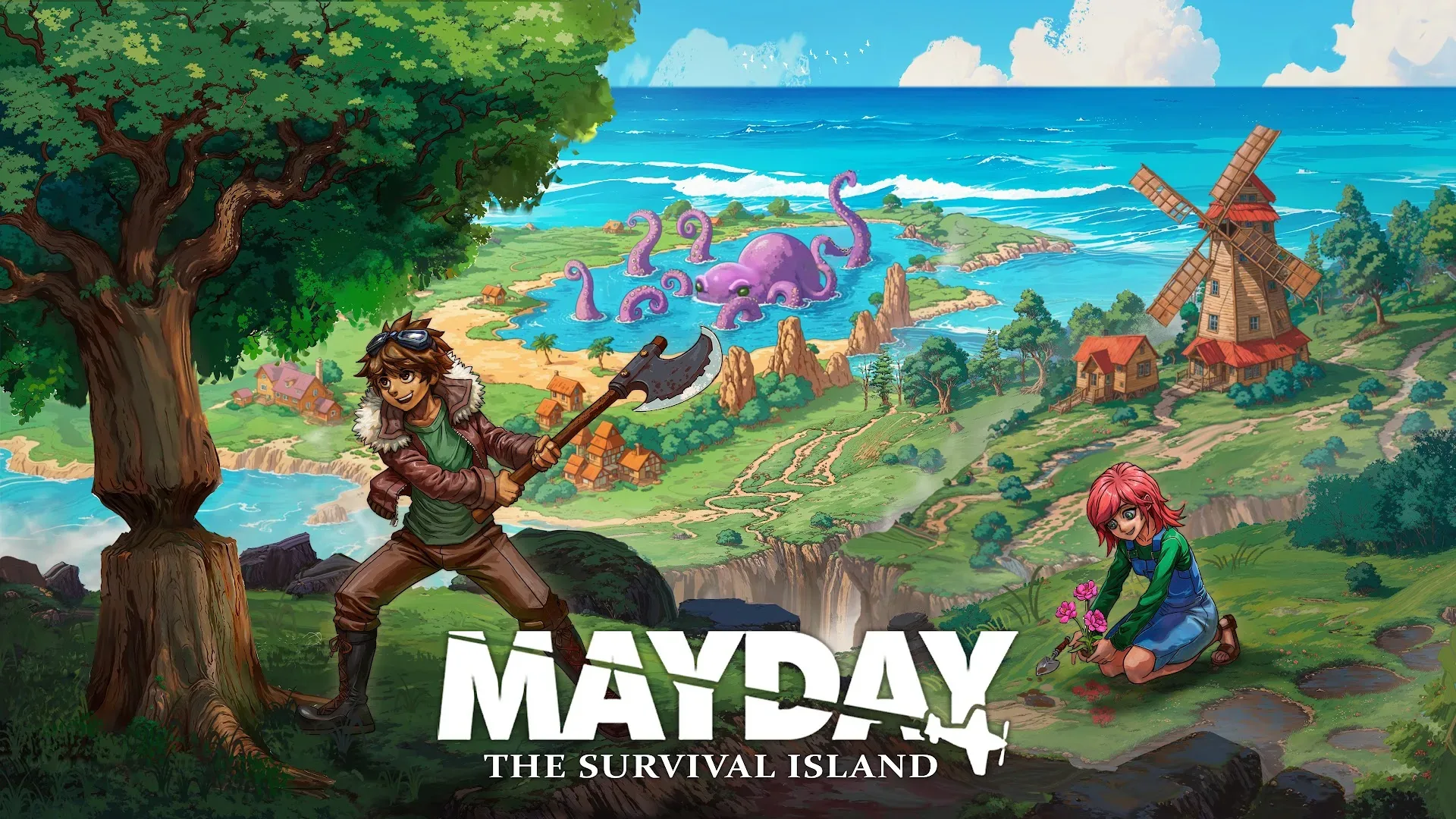
Mayday: The Survival Island is now available on Steam, bringing a hand-drawn survival adventure set across a 24-island archipelago. Developed by the three-person Brazilian team at Pequi Studios, the game begins after a crash leaves players stranded, with whatever reaches the shore serving as the basis for their first tools, supplies and shelter.
The immediate premise fits the familiar survival-game rhythm: gather materials, hunt, fish, build, and gradually turn a precarious landing spot into something sustainable. But Mayday’s stated structure puts equal emphasis on settling down and pushing outward. Players can grow crops, raise and herd animals including sheep and buffalo, cook food, craft through stations and recipes, sail to other islands, and investigate ancient-looking symbols, ruins and magical totems scattered around the chain.
It is available for US$13.99, with a limited-time 20% launch discount. Steam Achievements, Steam Cloud and full controller support are included. The game also supports English, Portuguese, French, Italian, German, Spanish, Japanese, Korean, Russian and Simplified Chinese, and is listed through the indie.io store as well.
A survival game where the house does more than look nice
Mayday’s defining progression idea is its Comfort system. In many building games, furniture and decorative pieces are largely an expression of player taste after the essential work is done. Here, placing walls, floors, furniture and decorations increases Comfort, and Comfort has direct effects on survival: it can increase health capacity and slow energy drain.
That makes the base more than a container for crafting stations. Choosing to build a fuller home can affect how long a player stays capable while exploring, gathering or confronting danger. The premise also potentially softens the usual divide between “efficient” construction and decorative construction. A carefully furnished shelter is not framed as wasted effort; it is part of the game’s practical survival economy.
In technical terms, this is a mechanical incentive: a game rule that rewards an activity with useful in-game advantages. The system gives the home-building loop a purpose beyond visual customization. The exact balance, thresholds and requirements for Comfort have not been detailed, so prospective players should not assume how quickly those benefits arrive or how substantial they are. What is clear is the intended role: domestic construction is one route into character progression.
Twenty-four designed islands instead of a procedurally generated map
The archipelago contains 24 hand-drawn islands, each described as having its own resources and biome identity. That distinction matters in a genre where maps are often procedurally generated—created through systems that arrange terrain and resources algorithmically rather than through entirely bespoke level design.
Mayday’s islands are not procedurally generated. The practical implication is that the world is designed as a fixed collection of places to learn and revisit, rather than a newly assembled map each time. Players will need to travel by sailboat among the islands because certain materials are not available everywhere. Resource planning, then, is meant to extend beyond the home shore: an upgrade may require a voyage to an island with the needed supplies.
The listed environments include misty swamps, bleached beaches, cemeteries and ruins. Those spaces are not only resource stops. Repeated iconography, carved symbols, ancient structures and magical totems point toward a mystery running beneath the survival routine. The game presents a non-linear choice between expanding a homestead and investigating those curiosities, so players are not described as being locked into one prescribed order of discovery.
Non-linear exploration does not necessarily mean every location is immediately accessible or every activity can be completed in any sequence. It means the central rhythm is intended to allow players to decide where to place their attention: improve security and supplies at home, seek out distant materials, or follow clues into the archipelago’s stranger landmarks.
Farming, animals and crafting form the longer-term loop
The opening week focuses on the survival basics of hunting, fishing, gathering and building. From there, Mayday expands into homesteading. Crops can be planted, while sheep and buffalo can be raised and herded. Cooking and crafting grow through the unlocking of additional stations and recipes.
This is a progression structure built around dependencies. Gathered materials support construction; construction supports new stations; stations and recipes broaden what can be made; farming and animal care provide another way to develop a stable settlement. The game’s survival systems are therefore not limited to keeping a hunger meter under control from one day to the next. They are presented as a route toward a more capable, better-equipped base.
The inclusion of sailing complicates that loop in a useful way. A player cannot simply assume their starting island has every resource needed to advance. Going after missing materials means deciding when to leave the safety of a built-up home, what to bring, and whether the immediate goal is a practical upgrade or an exploratory detour. Since Mayday also includes combat and potion brewing, the outward journey is positioned as more than a peaceful supply run.
Potion brewing is especially notable because it connects the survival and mystery sides of the game. It sits alongside combat as an activity for those investigating the archipelago’s secrets, though the available information does not specify individual potion effects, enemies, weapons, or combat systems. The strongest expectation to set is simply that fighting and alchemy are part of the experience, not that the game has a particular combat depth or structure.
What the game’s priorities appear to be
Mayday is not being framed solely as a harsh, minimalist survival test, nor solely as a cozy decorating game. Its systems connect those ideas: food, materials, shelter and travel underpin survival; crops, animals, furnishings and recipes develop the settlement; exploration introduces new biomes and resource needs; mysteries, potions and combat provide a reason to look beyond the perimeter of the farm.
The Comfort feature is the clearest example of this design philosophy. Rather than treating decoration as a late-game luxury, it explicitly associates a more complete home with greater health capacity and reduced energy loss. Players who usually prioritize a highly functional workshop over a furnished cabin may find a reason to do both.
Likewise, a fixed, hand-drawn 24-island world suggests an emphasis on authored places. The individual islands have been built around distinct resource distributions and visual environments, which should make the sailing loop about recognizing what a particular destination offers. That approach is different from relying on endless randomized terrain, though it does not by itself establish the total amount of content or replayability.
Pequi Studios is based in Goiânia, Brazil, and the three-person team says it hand-drew every island. During development, the studio also held local playtests with game development students. Those details help explain the project’s handcrafted scope: a smaller team has focused on a defined archipelago and the interactions between survival, home-building and exploration rather than presenting a procedurally generated world.
Steam features and where it fits among new PC releases
For Steam players, controller support matters in a game structured around gathering, building, sailing and combat, while Cloud support allows save data to carry across Steam installations tied to the same account. Achievements provide platform-level goals, although no achievement list or requirements have been detailed.
Mayday arrives amid a steady flow of smaller PC projects with strongly defined systems. For another upcoming Steam strategy release, see How Empires Work’s automated grand-strategy plans. The games occupy very different genres, but both illustrate how Steam remains a platform where focused independent teams can build around a particular gameplay hook.
For Mayday, that hook is the idea that survival competence is tied to a lived-in home and a wider chain of islands. The core question for players is likely to be how they prefer to spend their time: turning the first shelter into a well-appointed homestead, mapping the resource needs of far-off shores, tending crops and animals, or chasing the archipelago’s unsettling symbols and ruins. The game is designed to let those priorities coexist rather than force a single route through its island setting.