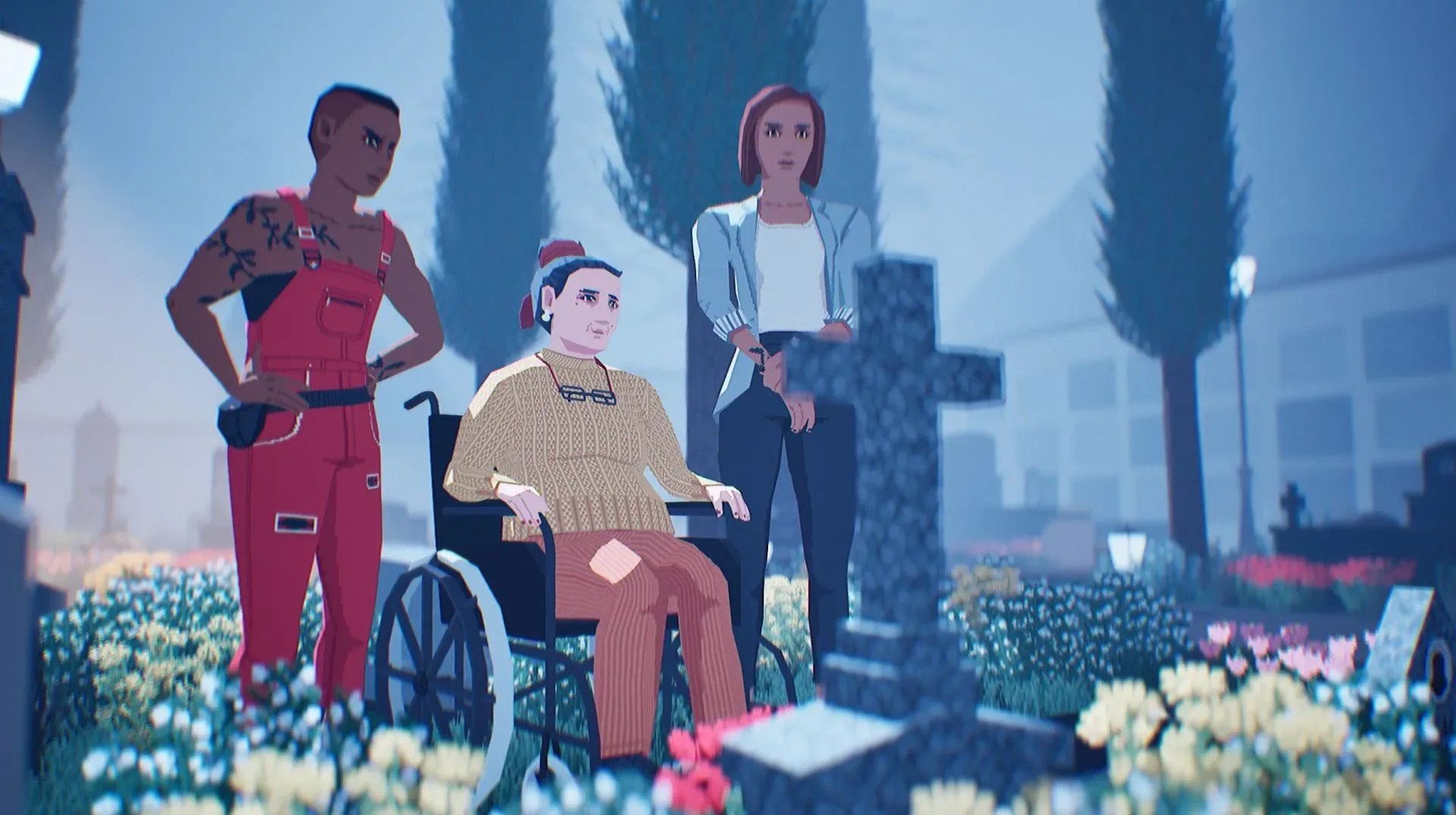
Virtue and a Sledgehammer has arrived on Steam for $15 with a deceptively direct premise: give protagonist Pratelle a massive hammer and let her tear through a town, one wall at a time. Yet the demolition is not simply a spectacle or a stress-relief loop. It sits beside a melancholy science-fiction story about bereavement, memory, personhood and the troubling possibility that a human mind might persist in another form.
That contrast is the game’s central appeal. Pratelle returns to her hometown after her mother’s death, taking the unusual route of confronting the past with a sledgehammer rather than anything resembling healthy coping. Her immediate objective is to find her sister, Nina, whose own intellectual preoccupation with consciousness appears deeply bound to what has happened to the town and its inhabitants.
It is an intentionally strange starting point, and the game apparently does not rush to make it comfortable. Pratelle retrieves her weapon from her car’s trunk while her mother’s body is also there, an early image that establishes the story’s dislocated emotional logic. Whether its events should be read as literal science fiction, allegory, or something suspended between the two is left substantially open to the player.
A town of walls, rubble and robots claiming to be people
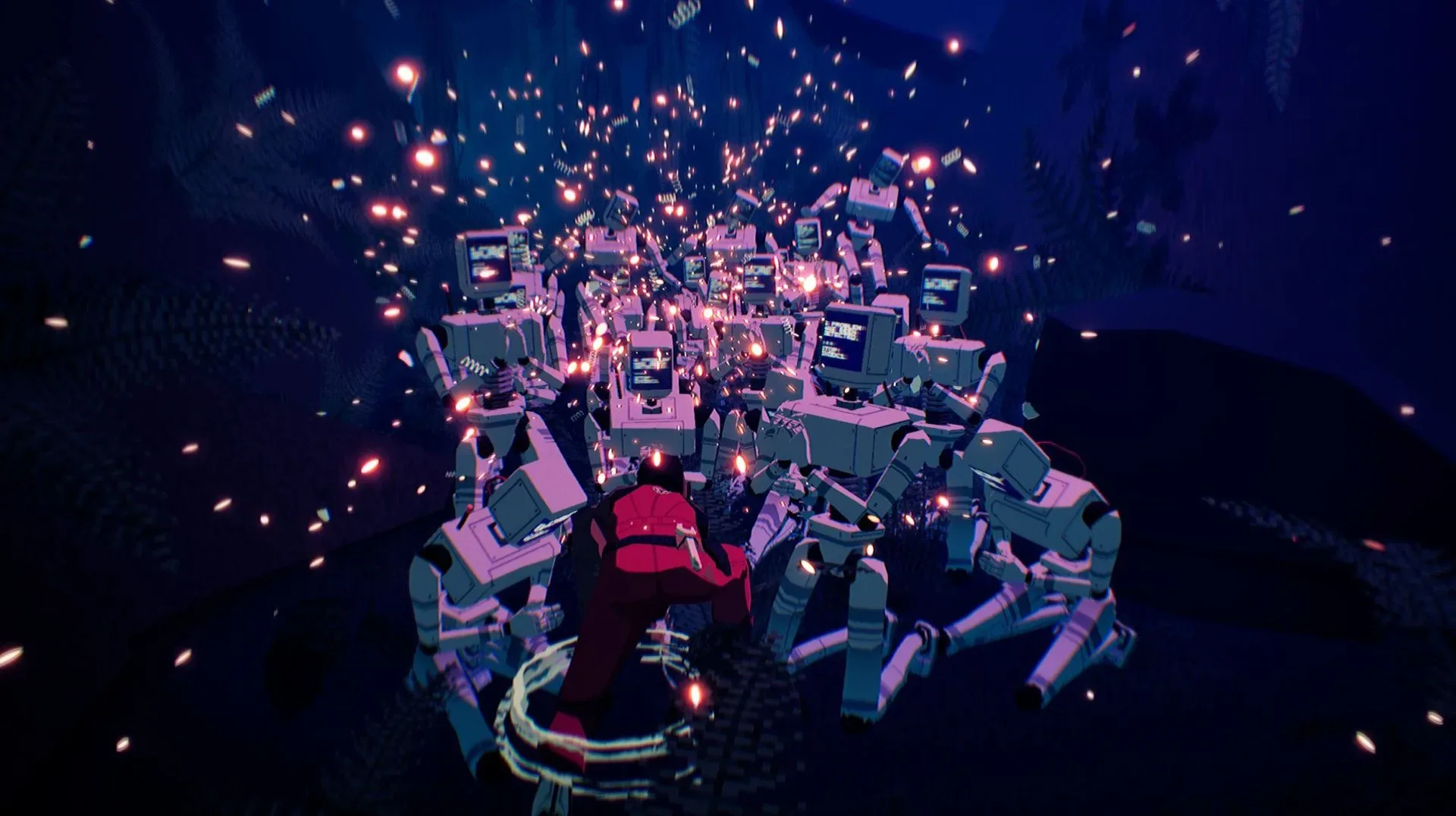
The hometown Pratelle enters is occupied by robots that claim to carry the consciousnesses of the people who once lived there. Some of these figures will speak with her. Some attack. Many react to the sight of the hammer by trying to flee or conceal themselves. The player’s decision to strike them or leave them alone is part of the moral tension, rather than a mere combat efficiency question.
That setup gives the game’s destruction a sharper edge. Knocking down a building in a conventional action game is usually a power fantasy: remove the obstacle, watch the physics, move on. Here, buildings, machines and memories occupy the same haunted space. The question underlying the robots’ claims is not merely whether artificial intelligence can imitate a person. It is whether continuity of memory or consciousness is enough to make something the same person at all.
That is a classic science-fiction concern, but the game puts it in a highly physical form. Pratelle can literally batter her way through the remnants of a life and a community while she tries to understand what, if anything, survives destruction. For a related example of games making movement through an unfamiliar environment feel emotionally threatening rather than routine, see our look at Silent Hill’s alley opening and the fear of continuing forward.
The hammer is not a decorative gimmick
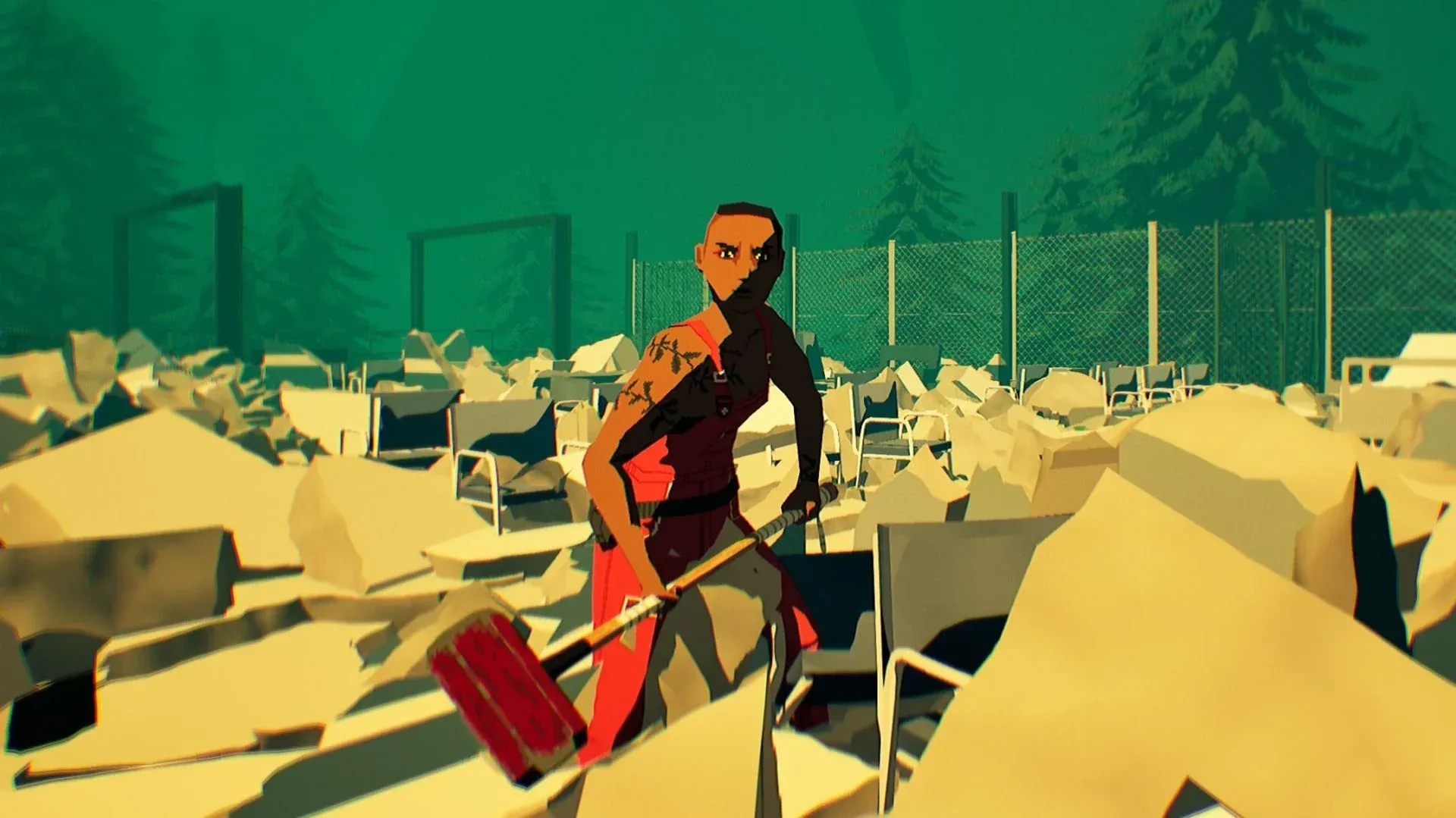
The sledgehammer is the game’s defining mechanical idea, and its handling sounds deliberately weighty. Pratelle does not sprint around the town with the breezy speed of a typical action hero; carrying the weapon makes her movement lumbering. Swings require commitment and preparation, lending individual impacts more presence than a rapid light-attack combo would.
There are three described levels of attack:
Related coverage includes Virtue and a Sledgehammer Turns Demolition Into a Haunting Search for Self.
- A quick jab can create space by shoving robots away.
- A charged arcing swing provides a bigger, more forceful strike.
- A longer-held overhead blow delivers the most dramatic damage against walls and metallic opponents.
That input structure matters because it makes destruction more than a visual effect. A tap, a committed swing and a fully charged strike have separate purposes. The jab gives Pratelle a defensive option; the heavier attacks turn the hammer into an instrument for breaching obstacles and dealing with threats. It is a compact move set, but one designed around anticipation, timing and the sensation of force.
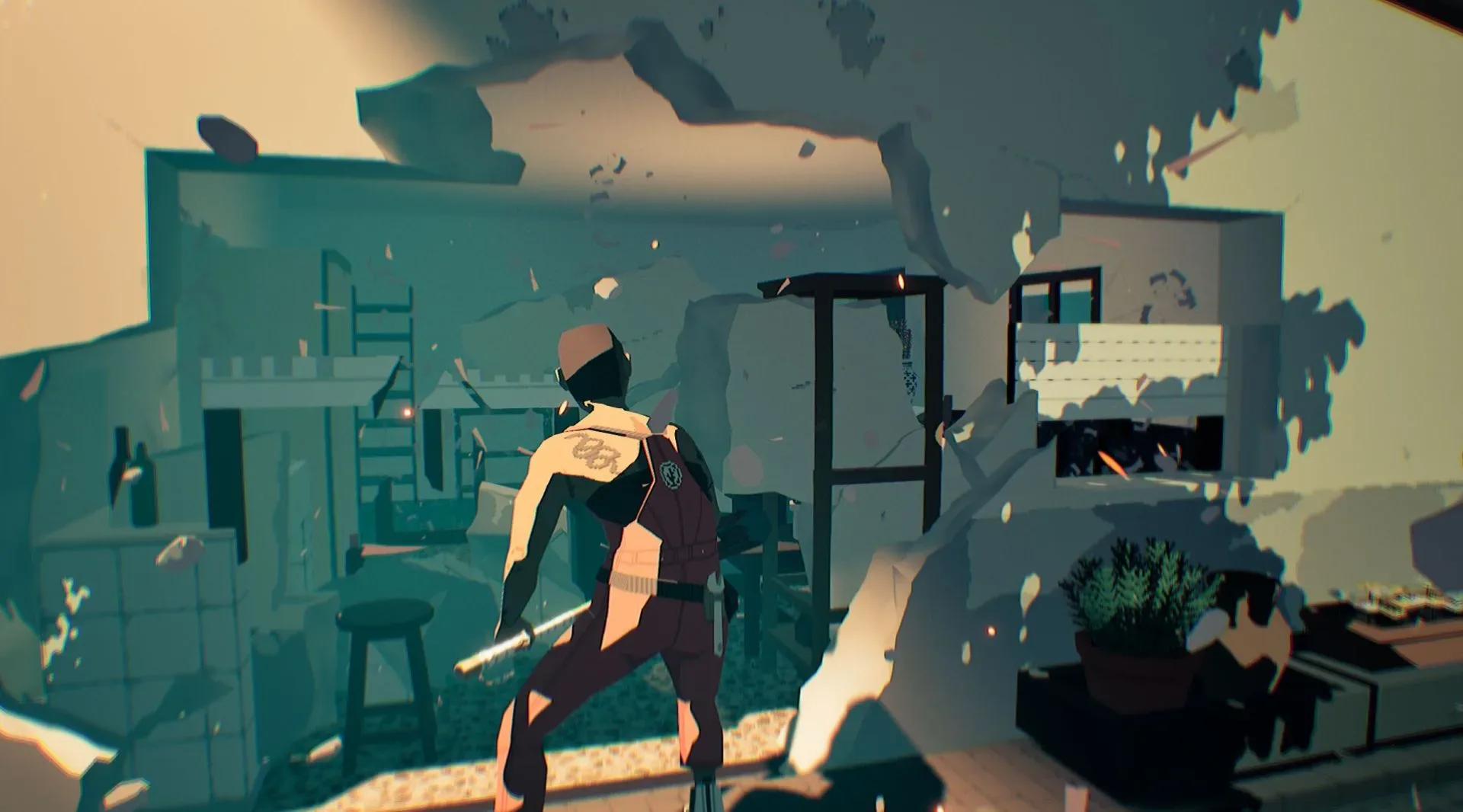
Buildings can collapse when enough of their structure is destroyed. Bricks, concrete and debris scatter outward after impact, then larger sections can come down around Pratelle. The result is positioned as a deliberately cathartic kind of demolition, one where the game lets its basic interaction carry much of the pleasure. There are not reports of a deep stack of crafting, loot or character-build systems layered over it. The point is to hit things, see a tangible response and continue into the story that the wreckage reveals.
This simplicity could be a virtue for players tired of every action game turning a straightforward tool into a sprawling progression tree. It also establishes a clear expectation: players seeking elaborate combat systems may find a narrower experience, while anyone drawn to a tactile destruction loop has a very specific reason to pay attention.
Memory is explored through color, danger and player choice
The game’s visual style combines stylized cartoon imagery with animation reminiscent of the PlayStation 2 era. Color also performs practical work. When Pratelle takes damage, the environment shifts toward red and black, becoming increasingly murky and unreal as she nears death. Rather than relying only on a conventional health display, the art direction communicates danger through the look and mood of the world itself.
There is no traditional healing process described. Surviving means getting out of danger for several seconds, after which Pratelle recovers. That choice may keep encounters moving while maintaining the tension of retreat: the player has to earn a reset through temporary safety rather than spend an item immediately.
Two types of memory-related discoveries shape the narrative. Strange red-and-black floating objects can be struck to fill a meter. Once it is full, Pratelle is sent to an unusual chamber of columns containing memories. Interacting with one permits the player to revisit an important scene and choose dialogue responses that help define who Pratelle was.
In other words, the game appears to treat recollection not as a fixed archive but as something the player actively interprets. The choices do not simply decide what Pratelle says in the present; they can establish the character of her past self. That is particularly fitting for a plot concerned with identity. If a person’s history can be revisited and reframed, the game asks, where does the authentic version of that person reside?
Blue-and-white memories, scattered throughout town, serve a different role. They provide plot-bearing flashbacks that help assemble the fraught relationships among Pratelle, Nina and their mother. The game thereby creates two complementary routes into its story: memories that invite choices and memories that reveal context. Exploration is useful not because it pads out a map with collectibles, but because it makes the family story more legible.
Content warning: grief, death and difficult subjects
Prospective players should know that the story addresses serious material. It includes suicidal ideation and euthanasia, alongside references to abusive relationships and depression. The premise itself is rooted in death and grief. These are not incidental flourishes around the demolition; they are central to why Pratelle is in the town and why the story’s questions of selfhood carry emotional weight.
The treatment is presented as more considered than merely using grim subjects for shock value, but players who find these themes difficult may still want to approach it carefully. The game’s surreal tone and destructive freedom do not erase the heaviness of its subject matter. Instead, they seem designed to sit in uneasy proximity: smashing everything may be cathartic, but catharsis is not presented as the same thing as resolution.
A focused four-hour story with an uneven final stretch
Virtue and a Sledgehammer is estimated to last around four hours, although a player determined to reduce every possible building to rubble could take longer. That concise length suits the game’s focused toolkit: demolish the environment, navigate hostile or fearful machines, locate memories and make choices that influence the eventual outcome.
The ending is described as nuanced and responsive to decisions made both earlier in the game and near its conclusion. However, the final section reportedly suffers from pacing problems, asking Pratelle to trudge through an extended stretch with relatively little to do. That is a useful caveat for anyone expecting the final act to escalate cleanly from the demolition and narrative revelations that precede it.
Still, a story-driven game with a limited running time can afford to be distinctive rather than exhaustive. Virtue and a Sledgehammer does not appear interested in disguising its modest mechanical scope. It bets instead that the specific sensation of a heavy hammer, the spectacle of collapsing structures and the unsettling questions posed by its robot-populated town can reinforce one another.
What players should expect
- Platform and price: Steam, $15.
- Estimated length: Around four hours, potentially longer for thorough destruction.
- Core play: Weighty sledgehammer attacks, destructive environments, robots, exploration and memory scenes.
- Narrative focus: Grief, family, consciousness, identity and player-shaped character interpretation.
- Important caution: The story contains suicidal ideation, euthanasia, allusions to abuse and depression.
Developed by Deconstructeam, the team behind The Cosmic Wheel Sisterhood and Gods Will Be Watching, the game fits a body of work known for unusual narrative premises. This time, the unconventional idea is wonderfully blunt: when the past will not stay buried, pick up a sledgehammer. The game’s more interesting proposition is that every satisfying impact may also leave the player asking what, exactly, they have destroyed.