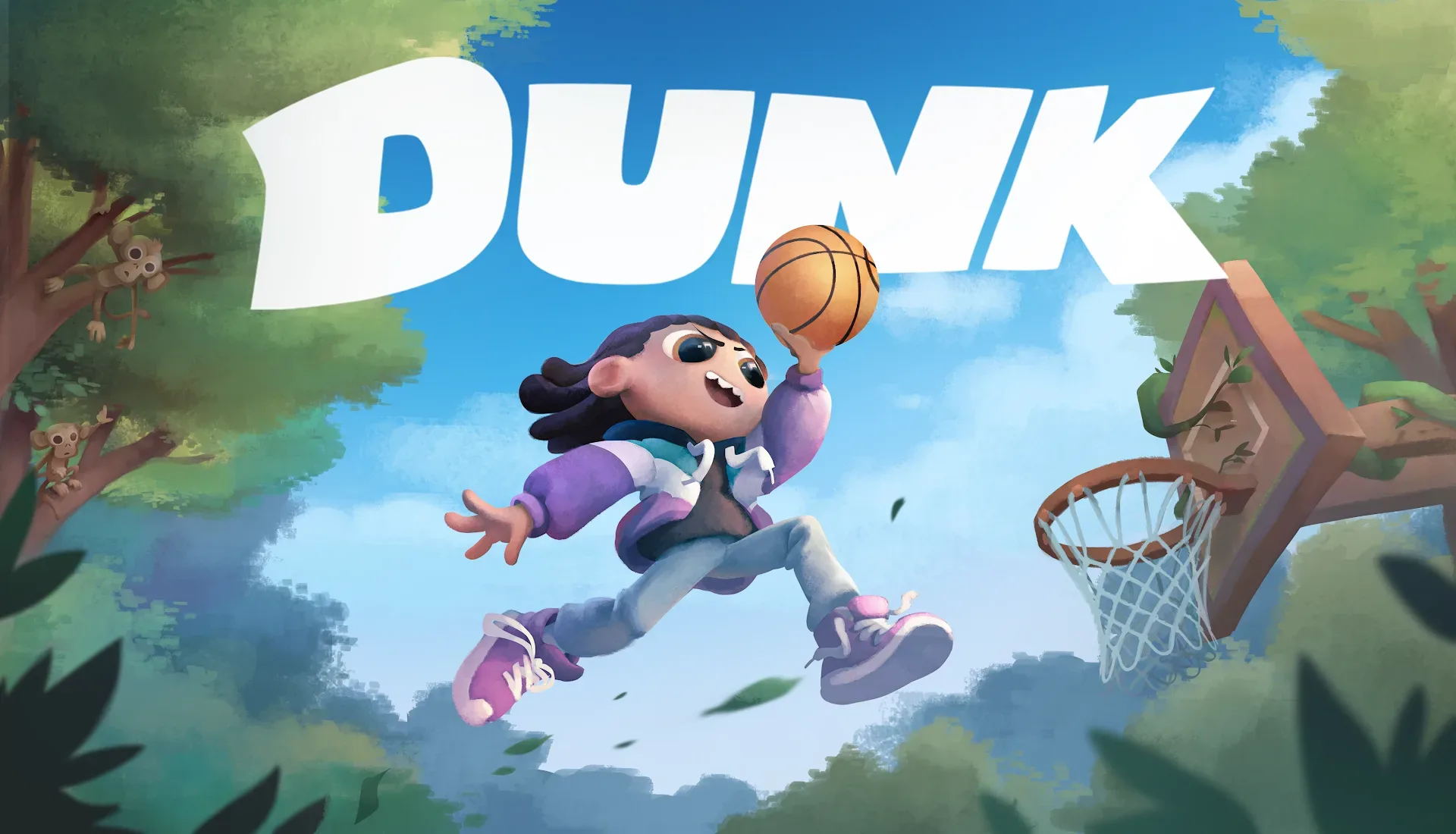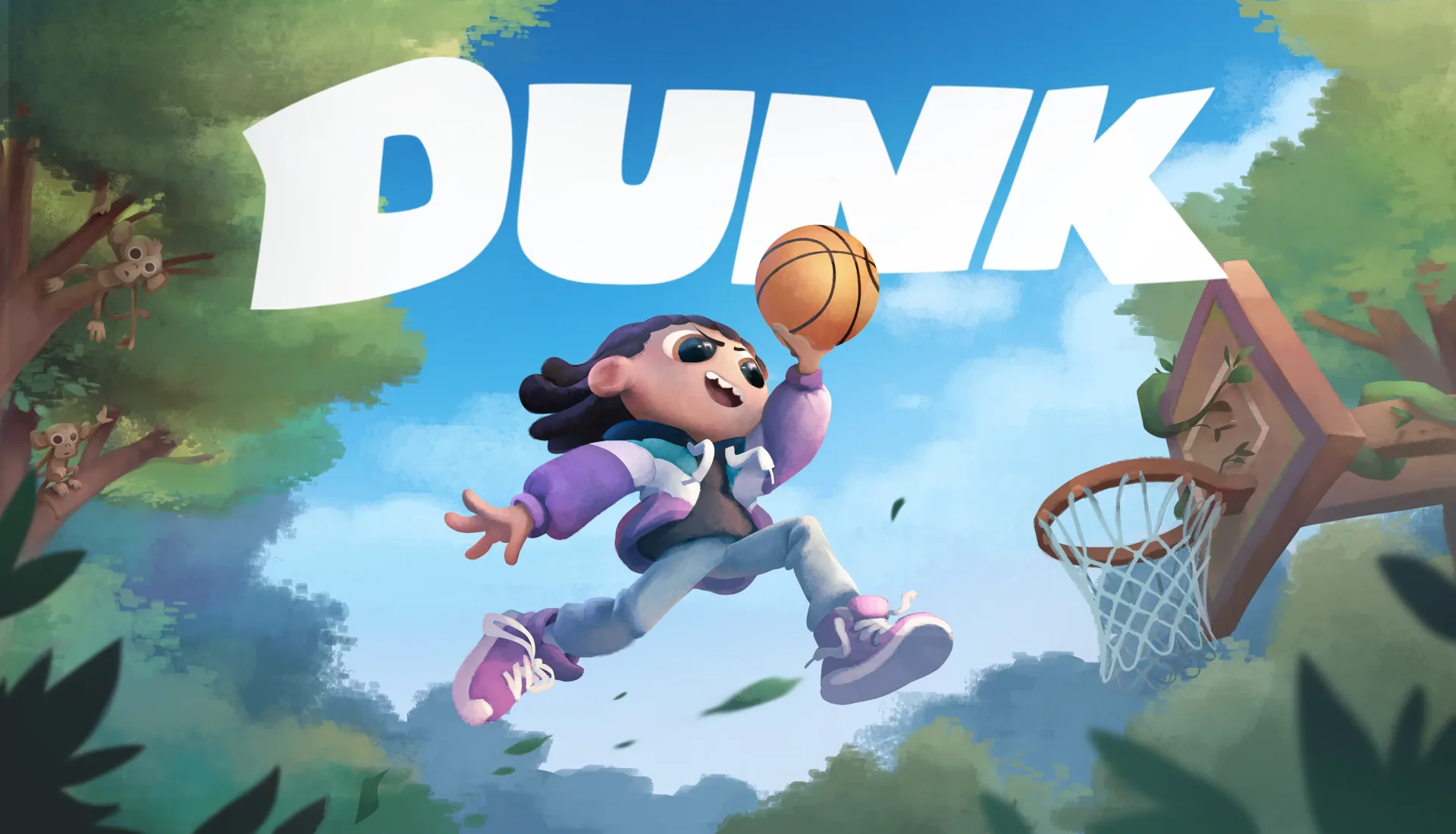
Katapult Games has revealed DUNK, a first-person arcade basketball game planned for PC through Steam in 2027. Its pitch is refreshingly direct: put players on the court, make the ball and bodies matter, and let skill, positioning, teamwork and the occasional horrifying miss create the story of each match.
DUNK will support 1v1, 2v2 and 3v3 games, with teams capped at three players. The game is intended for casual sessions with friends as well as competitive matches against rivals, and the announcement describes sessions supporting up to six friends locally or online. Solo challenges are also planned, providing a place to practice away from the social pressure of a live court.
A first-person perspective for basketball’s messy moments
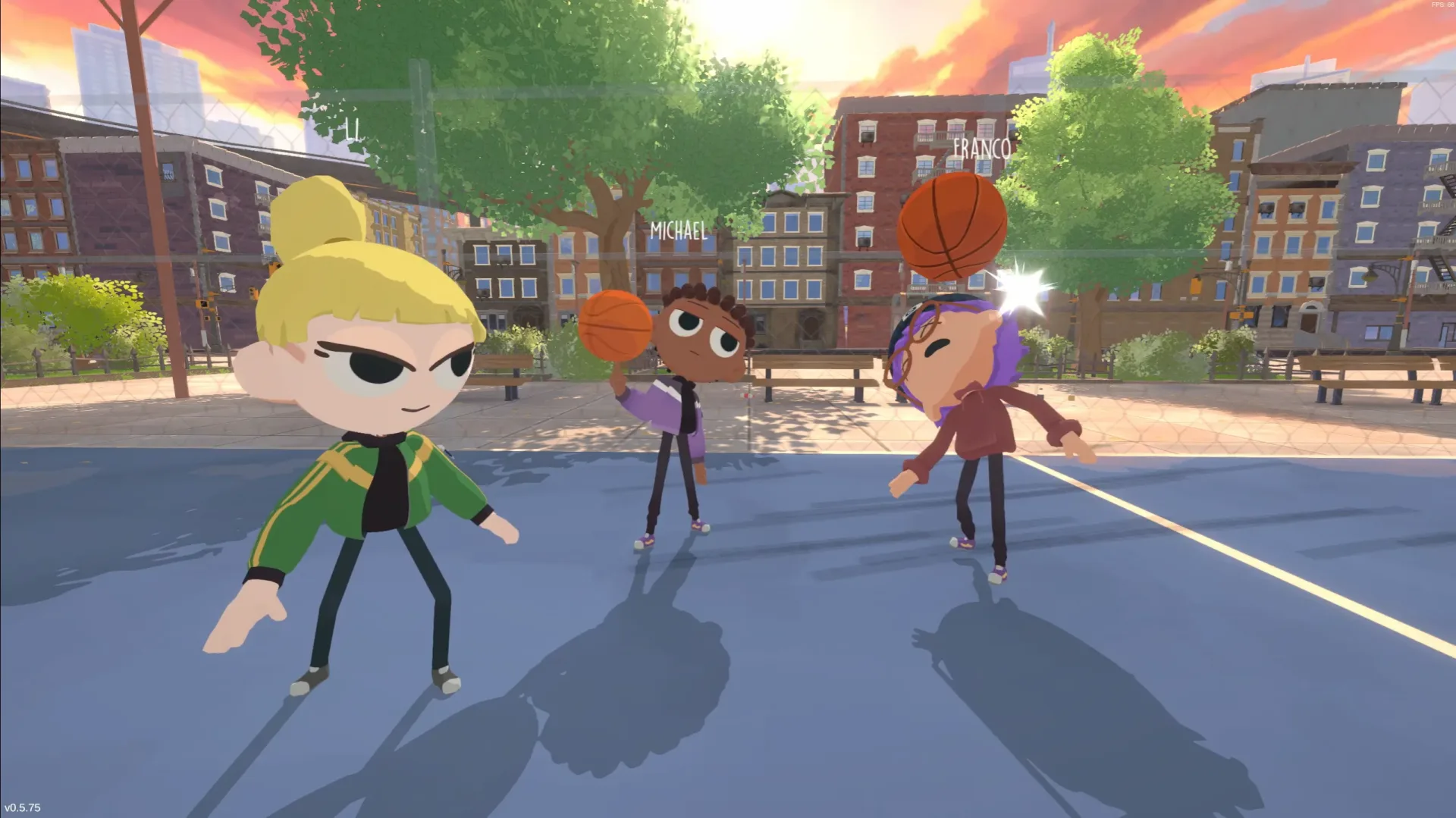
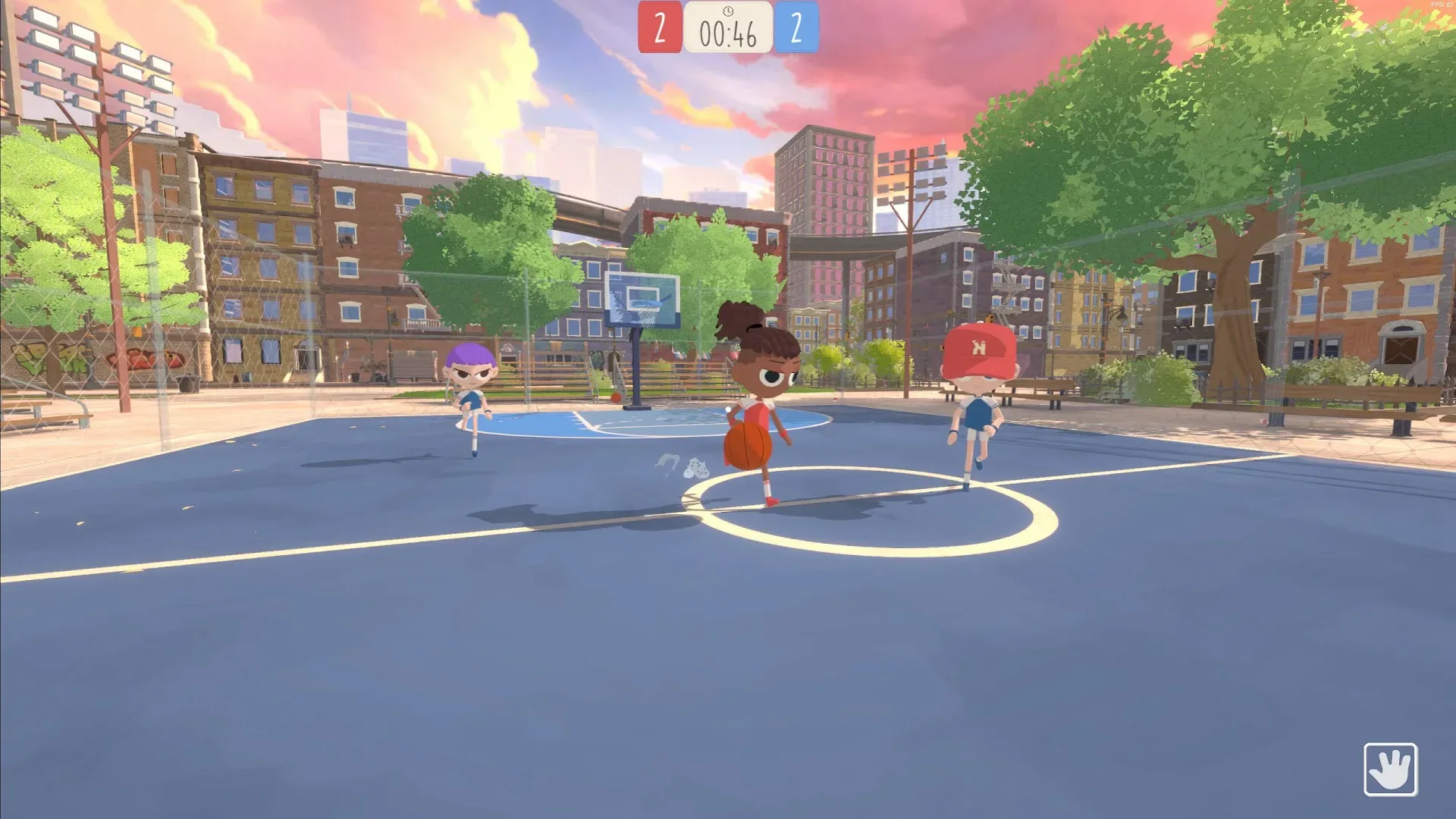
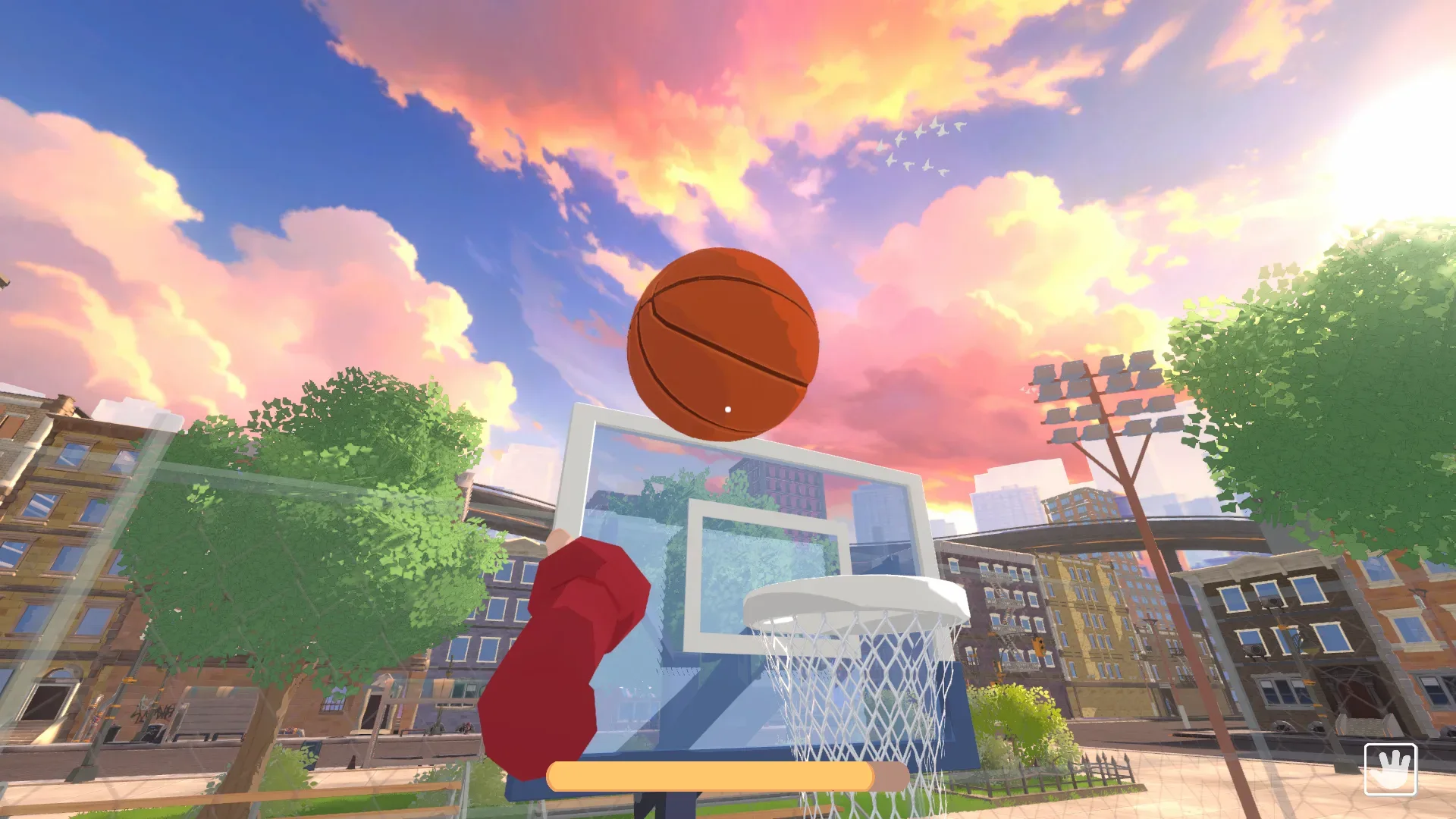
Most of DUNK’s stated identity comes down to its camera and its simulation priorities. It is a basketball game played from a first-person perspective, meaning players see the action through their own on-court viewpoint rather than controlling athletes from the usual broadcast-style angle. That can make awareness more demanding: finding a teammate, tracking an opponent cutting behind you, judging space near the hoop and locating a rebound are all matters of reading the court rather than simply seeing every player at once.
Katapult Games is also emphasizing measured, physics-driven interaction over standard scripted animations. In practical terms, a scripted animation is a pre-authored sequence that carries out an action in a fixed way once triggered. A physics-driven interaction instead places more importance on factors such as positioning, momentum, timing and contact. DUNK specifically calls out passes, rebounds and shots as physics-led parts of play.
That distinction matters because basketball is full of small variables. A pass can be clean, mistimed or poorly aimed. A rebound is often a fight for placement and reaction. A shot can be a clutch three-pointer, an emphatic dunk or a spectacular miss that instantly changes who has the advantage. DUNK’s approach suggests that those outcomes are meant to emerge from play rather than being smoothed into a predictable sequence.
That does not automatically make a game realistic; DUNK is explicitly positioned as arcade basketball. But “arcade” here appears to describe quick, accessible match flow rather than a lack of mechanical depth. The central promise is that players improve by learning the court: developing their shot timing, moving into useful spaces, anticipating rebounds and setting teammates up for better looks.
Small-team formats put decision-making front and centre
The announced formats—one-on-one, two-on-two and three-on-three—keep the number of players low. That has clear implications for how a match may feel. In a 1v1 game, possession and individual decision-making are immediately exposed. In 2v2 and 3v3, collaboration becomes more important, but each player should still have meaningful responsibility for coverage, passing options and rebounds.
For a game built around assists and positioning, fewer players can make communication especially valuable. A successful pass is not just a button press; it relies on the receiver being available, the passer recognizing the opening and the opposing side failing to close it in time. Likewise, a player moving without the ball can create an option for a teammate even without touching it. DUNK’s stated focus on teamwork points toward those choices being as important as highlight-reel dunks.
Related coverage includes DUNK Brings First-Person Arcade Basketball to Steam in 2027.
The game will include both casual and competitive multiplayer. The announcement does not detail ranking, matchmaking systems or competitive rules, so those elements remain unconfirmed. What is clear is the intended split in audience: players should be able to organize a lighter session with friends or take the court against rivals when they want a more serious match.
There is also an emphasis on quick games and rapid resets. That is a useful fit for a physics-driven sports game, where a turnover, a bad bounce or a missed attempt can be entertaining precisely because it is not a permanent disaster. Short reset time can keep players focused on the next possession instead of waiting through lengthy downtime.
Courts range from a schoolyard to the Moon
DUNK is not limiting its announced courts to a conventional gym. Katapult Games has named Schoolyard, Moon and Jungle as locations, each said to have gameplay quirks to master. The specific quirks have not been outlined, so it is too early to assume how each environment alters play. Still, the trio establishes an arcade-minded tone and indicates that learning a court may involve more than memorizing its visual look.
The Moon in particular is an intriguing name alongside the game’s physics focus, but no specific claims have been made about altered gravity or ball behaviour. For now, it is best understood as one of several confirmed court settings rather than a promise of a particular mechanic. The broader point is that map familiarity may matter: players will need to adapt to each court’s stated quirks while still mastering the fundamentals of passing, shooting, rebounding and positioning.
Proximity chat and courtside space lean into the social side
DUNK is also framing the court as a social space rather than just a menu-to-match pipeline. Players will be able to use proximity chat, a voice-chat system in which audibility is tied to where players are located relative to one another in-game. That can support practical callouts during a match, but it can also turn celebrations, playful taunts and post-miss disbelief into part of the moment.
The announcement says players can remain courtside after games, showing off cosmetics, perks and emotes. Cosmetics generally change a character’s appearance without necessarily affecting performance; perks usually refer to gameplay modifiers or benefits. DUNK has confirmed that both are present, but it has not explained what the perks do, how they are obtained or whether they apply in every mode. Those are important details to wait on before drawing conclusions about progression or competitive balance.
Emotes and social hangouts, meanwhile, reinforce the idea that the game wants room for players to linger after the scoreboard appears. That approach can be particularly effective in a small-team game, where a group may want several fast rematches without breaking apart its session. It also gives cosmetics a visible purpose beyond a character-selection screen.
Practice is planned, but the playtest is still ahead
For players who would rather learn without a live opponent waiting to steal the ball, DUNK includes solo challenges. The announcement does not specify the goals or structure of those challenges. Even so, their inclusion fits a game where aiming, movement, court awareness and ball control are all expected to benefit from practice.
An upcoming playtest is planned for media and players. No date, access process or broader participation details were provided in the announcement. As with any pre-release test, its purpose and exact contents should not be presumed until Katapult Games shares more.
The studio has released a trailer alongside the reveal, and the footage is the clearest currently available look at DUNK’s intended tone and court action. For another upcoming multiplayer project with a very different kind of team tension, see Marked For Mayhem’s co-op race built around betrayal.
What is confirmed—and what remains open
DUNK’s announcement establishes a focused foundation: PC via Steam in 2027; first-person arcade basketball; physics-driven passing, shooting and rebounding; 1v1, 2v2 and 3v3 formats; casual and competitive multiplayer; solo challenges; proximity chat; social spaces; cosmetics, perks and emotes; and courts including Schoolyard, Moon and Jungle.
Major questions remain. There is no exact release date, price, system requirements, detailed explanation of the court-specific mechanics, account of perk functionality, or full playtest schedule. There is also no announced console version. Those absences are not negatives so much as boundaries around what has actually been confirmed at this early stage.
For now, DUNK stands out because it is not simply promising basketball with an arcade presentation. Its central ambition is to make the first-person point of view and physics-led ball play the basis of the experience. If the game can make a smart assist feel as satisfying as a dunk—and make an ugly missed shot funny enough to prompt an instant rematch—it could find a strong lane for players who want their digital pickup games fast, social and a little unpredictable.