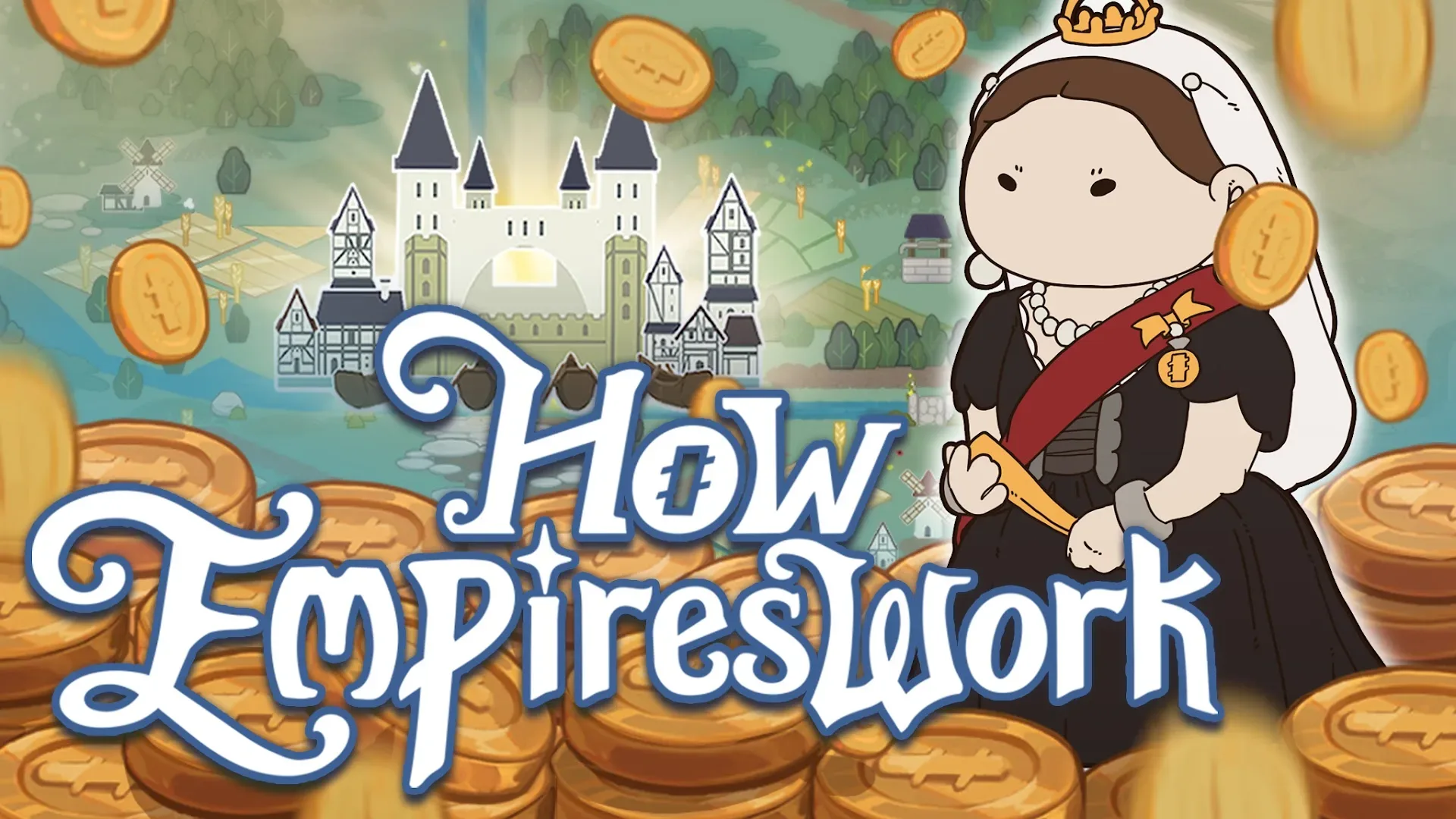
How Empires Work, the incremental grand-strategy game from Crow Cottage, is scheduled to launch on Steam on November 3, 2026. A Steam demo is available now, and a release-date trailer has been revealed for players who want a clearer look at its hand-painted map and expanding web of state systems.
The pitch is unusually specific: this is a game about constructing the machinery that permits an empire to function. It begins with straightforward player clicks, then moves toward automation as a small local domain develops into a far larger power. Rather than presenting growth as a single number climbing indefinitely, How Empires Work frames expansion around connected institutions: taxation, trade, colonization, labour, military forces and bureaucracy.
That combination places it at an interesting intersection of two strategy traditions. Incremental games generally make repeated actions productive over time, with automation eventually taking over tasks once performed manually. Grand strategy, meanwhile, is concerned with directing a state or large political power through systems such as territory, diplomacy, armies and resources. How Empires Work’s stated aim is to combine those ideas: the player starts by personally driving early growth, then creates institutions able to continue parts of that work across centuries.
From clicks to institutions
The early-game clicking is not described as the final objective. It is the beginning of a longer progression in which repeated activity can unlock automation. In practical terms, automation means a task or system continues operating without requiring every individual input from the player. The stated fantasy is not simply accumulating wealth or territory, but building a durable administrative structure that can perform the ongoing work of rule.
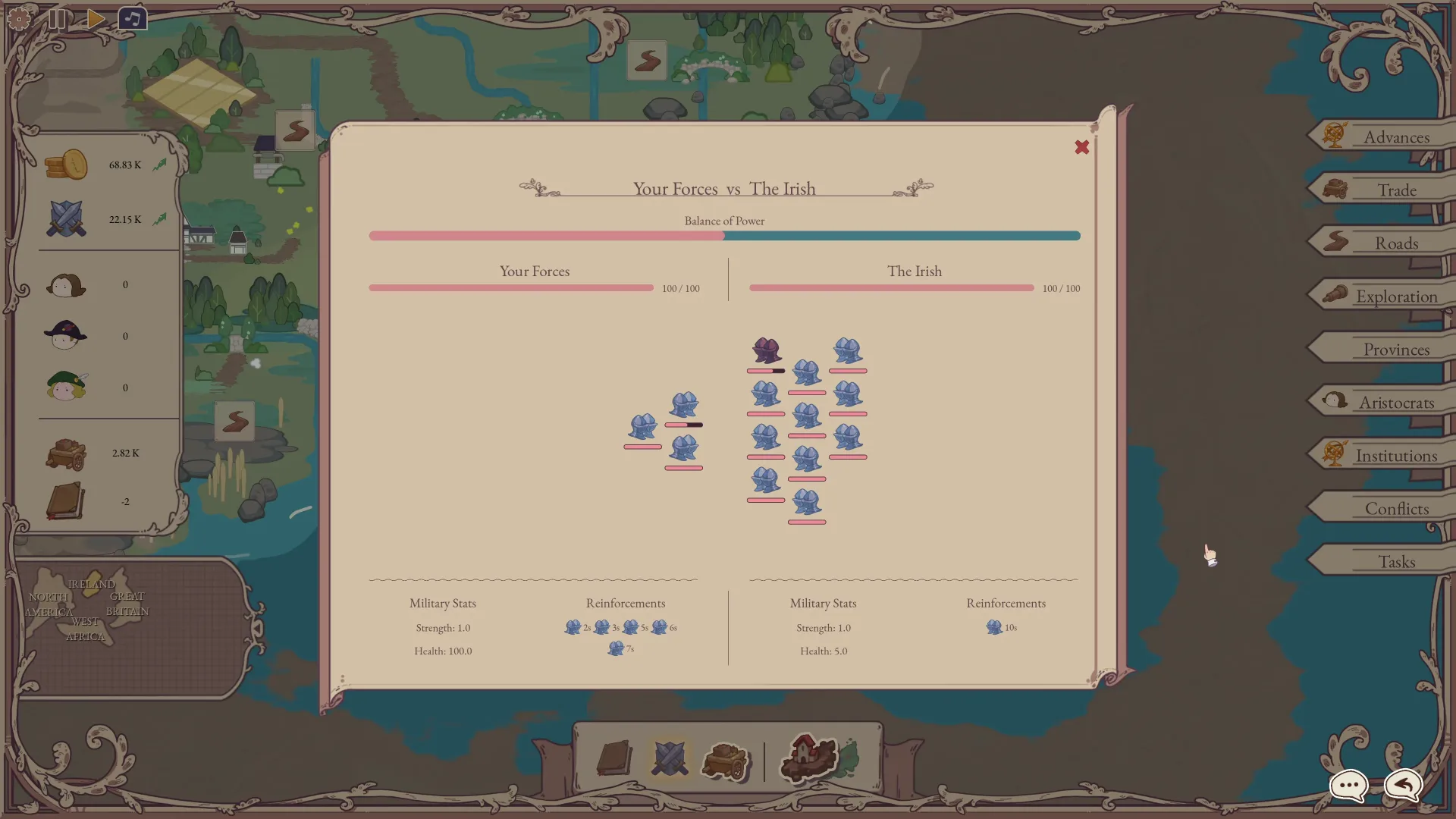
That focus gives the game’s systems more weight than a list of resource buttons. Taxation concerns the collection of income by the state. Trade concerns the exchange and movement of goods. Labour refers to the work that supports the wider economy, while bureaucracy is the administrative apparatus that organizes and carries out policy. Armies handle military power, and colonization is listed among the systems players will manage as their state grows.
All of those elements are part of the game’s empire-building model, but the supplied details do not establish exactly how individual rules will work, what limits they may have, or whether each system has a separate set of interface tools. Players should therefore treat the central structure—not unannounced mechanical specifics—as the key confirmed information: actions can be transformed into self-running institutions, and those institutions are intended to support an expanding state.
A grand-strategy map built around flows
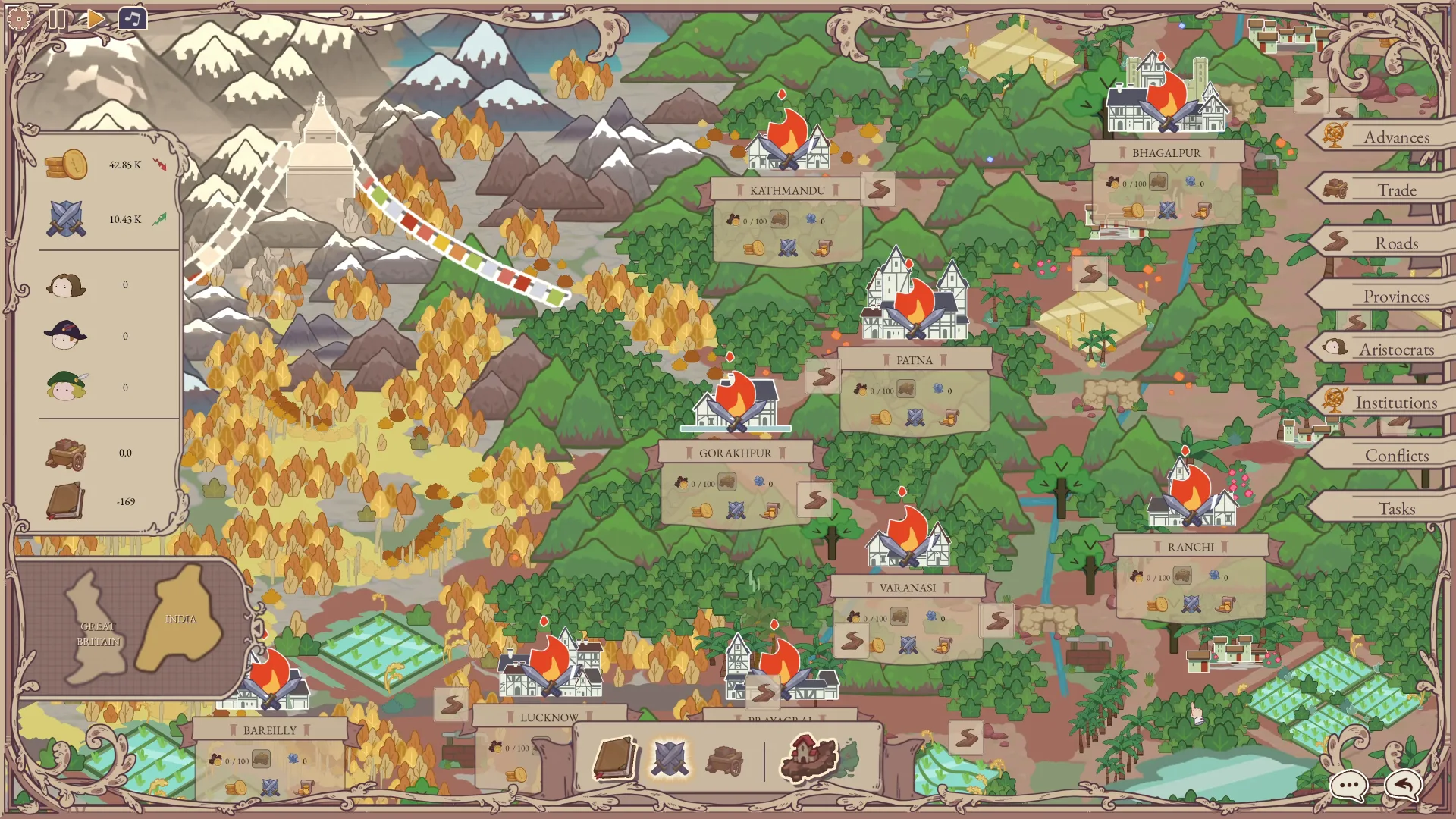
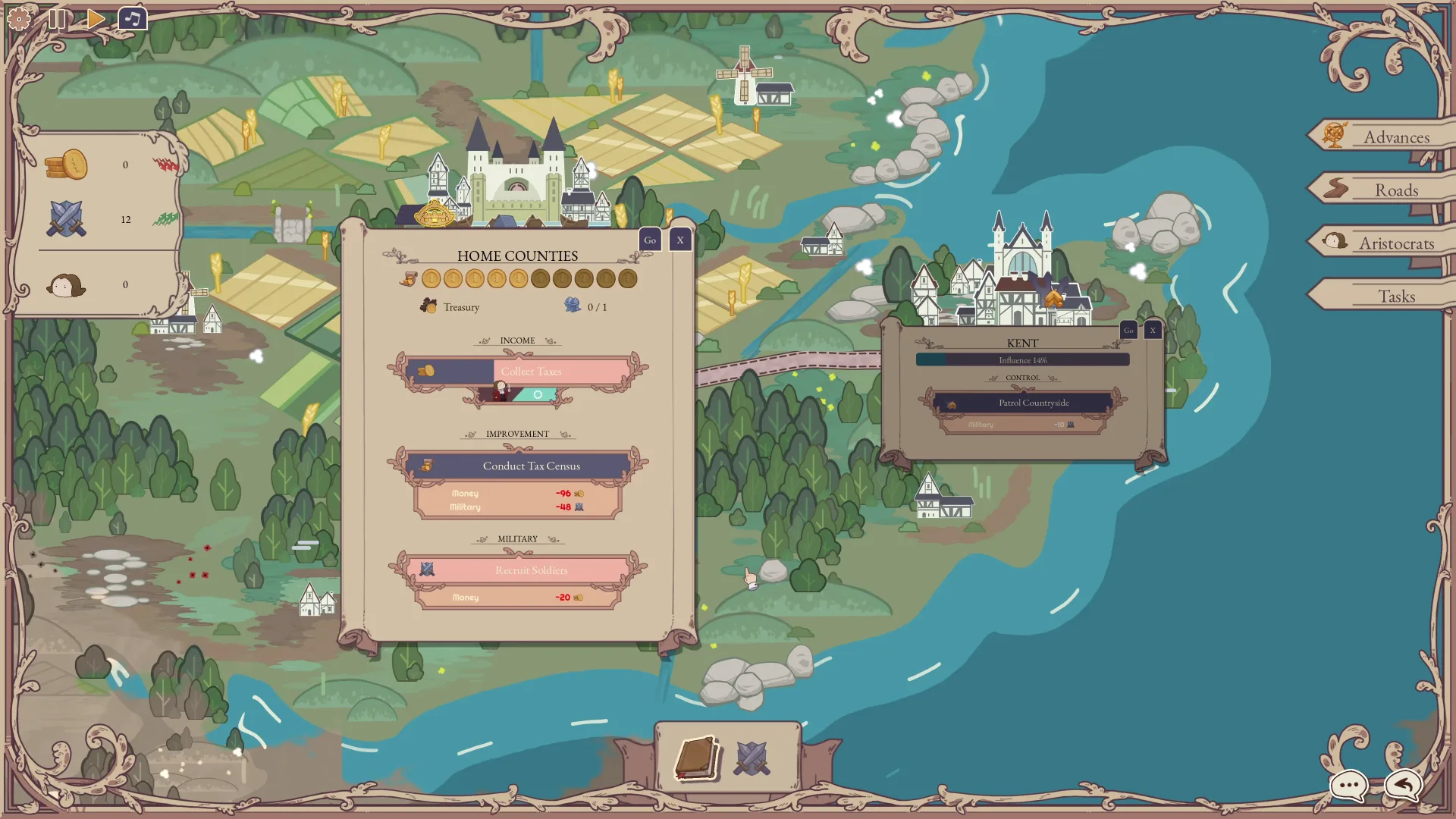
How Empires Work also includes province management, road building, trade, conquest and diplomatic options. These features suggest a strategy layer that asks players to think beyond their immediate treasury or output. Provinces are territorial units under a player’s direction; managing them normally means making decisions at a regional level rather than solely at the level of an entire empire. In this game, province management sits alongside infrastructure, commerce, diplomacy and military expansion as part of the confirmed feature set.
Road building is particularly notable in a game that foregrounds systems. Roads are infrastructure: networks that connect places and can make movement, commerce or administration legible as a strategic concern. The available information does not spell out the exact bonuses or constraints roads provide, so it would be premature to promise specific logistical effects. Still, their inclusion fits the broader idea of building not merely an army or a border, but the connective tissue of a growing political power.
Related coverage includes How Empires Work Marches to Steam on November 3, 2026.
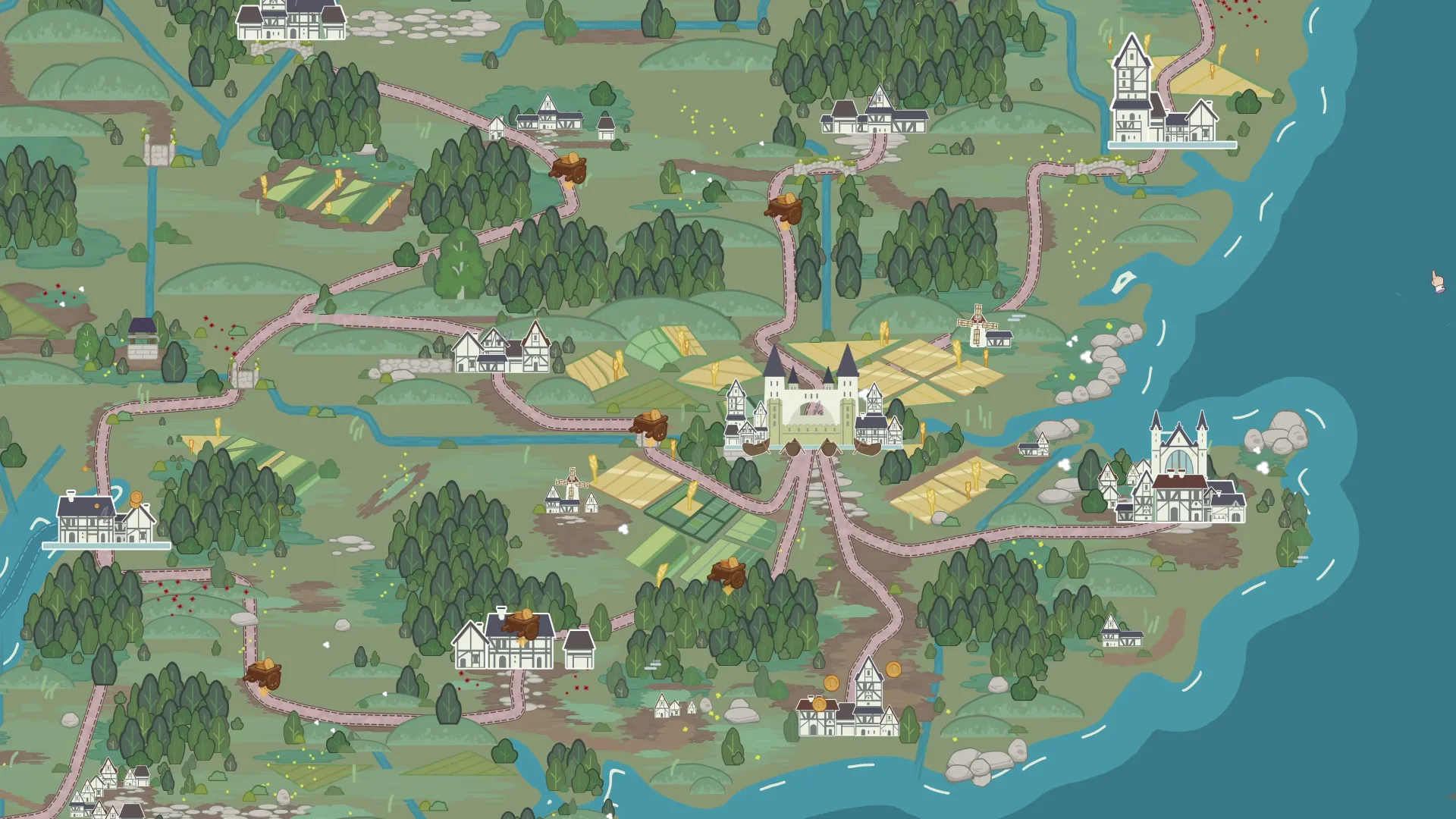
The game’s hand-painted world is designed to visualize flows of capital, commodities and armies. Those terms describe three different kinds of movement within the state. Capital is money or wealth used within the economy; commodities are tradable goods; and armies are military units moving through the world. Showing those flows on the map could make the empire’s systems more immediately readable: players are not only making an abstract policy choice, but watching the consequences represented across the world.
Visualizing movement matters because the game is explicitly about dependencies. Trade is not isolated from territory, and military power is not isolated from the broader work of governing. The confirmed description does not claim a particular level of historical simulation or realism, nor does it identify specific eras or civilizations. What it does establish is a historical sweep across centuries, during which the demands on the player’s state will evolve.
Growth will change the problems players face
One of the more important details is that systems and challenges change as the empire develops. That distinction gives progression a purpose beyond simply making numbers larger. A small lordship and a global power have different kinds of problems, and How Empires Work is built around that shift. Its later stages are expected to require new responses to internal troubles and rival powers.
Internal troubles are problems arising inside the player’s own realm; rival powers are external political competitors. Crow Cottage has not provided a detailed catalogue of either, so there is no basis to predict particular rebellions, diplomatic crises, factions or victory conditions. Still, the stated design direction is clear: establishing automation will not mean the player is permanently finished with decision-making. New scale brings new pressures, and institutions that solved an early problem may not be sufficient for a later one.
This is where the incremental and grand-strategy halves of the concept have the most potential to complement one another. Incremental progression can make expansion feel tangible as manual work gives way to systems. Grand strategy can then ask what those systems are for, where they operate, and how they affect relations with provinces and competing powers. Whether the final game balances those elements successfully remains a question for release, but the announced design is not simply an idle game wearing a map as decoration. It is structured around the administration and consequences of growth.
What the demo can clarify ahead of launch
The currently available Steam demo is the best official route for players who want to assess the game’s core loop before November. Based on the announced details, the most useful questions for prospective players are likely to be structural ones: how quickly does manual input give way to automation; how clearly are capital, commodities and armies represented; and how much attention must be divided among provinces, roads, trade, conquest and diplomacy?
Players interested primarily in empire management may also want to focus on the relationship between local choices and broader growth. The game starts with local lordships before reaching global power, so the transition in scale is central to its premise. The available description promises that systems will change as the state develops, but it does not specify the demo’s endpoint or which later-stage pressures it includes. A demo can establish the tone and foundations of a game without necessarily exposing its full progression.
The release-date trailer is another useful piece of preview material, especially for the visual side of the project. Its official video is available at this trailer link. For a broader look at the crowded early-November Steam calendar, readers can also see another Steam release arriving on November 3.
Confirmed release information
- Game: How Empires Work
- Developer: Crow Cottage
- Platform: Steam
- Release date: November 3, 2026
- Demo: Available now on Steam
- Core premise: Build an empire’s institutions, progressing from manual clicks to automation while managing taxation, trade, colonization, labour, armies and bureaucracy.
- Confirmed strategy features: Province management, road building, trade, conquest, diplomatic options and a hand-painted world displaying flows of capital, commodities and armies.
How Empires Work will arrive with an ambitious central question for a strategy game: not just how far can a state expand, but what systems must be built to keep that expansion functioning. The Steam demo is available ahead of the November 3, 2026 launch for those who want to see how its first clicks become institutions.