Hearth and Hamlet, the pixel-art incremental citybuilder from Phorust Studios and publisher Runic Forge, has received its first update since launching on Steam on August 19, 2026. Version 1.1 arrives during the Steam Autumn Sale, when the game is discounted by 20% through October 8.
The update is focused on quality-of-life changes and bug fixes requested by the community. Specific patch-note items were not detailed, so prospective players should treat V1.1 as a maintenance and usability update rather than confirmation of new buildings, systems, or content.
That distinction matters for a game built around incremental progression. In an incremental game, progress is designed to continue through repeated loops of producing resources, investing them into upgrades, and unlocking more efficient ways to develop a settlement. Small interface or usability frustrations can become especially noticeable when players revisit the same management screens often. Fixes aimed at those friction points can therefore be meaningful even when they do not fundamentally alter the game’s core structure.
A kingdom builder with idle progression at its center
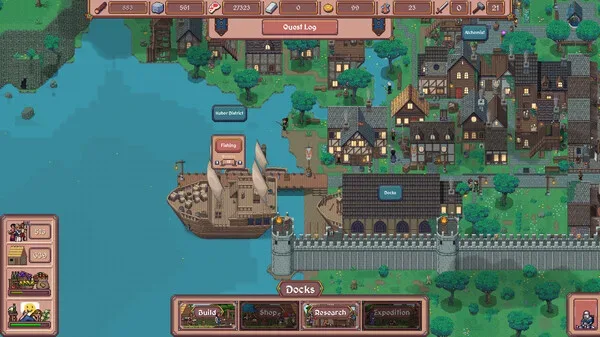
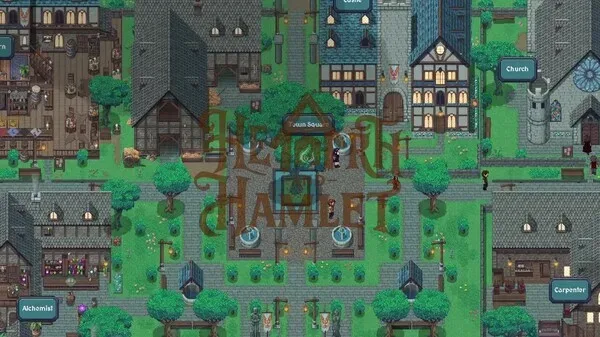
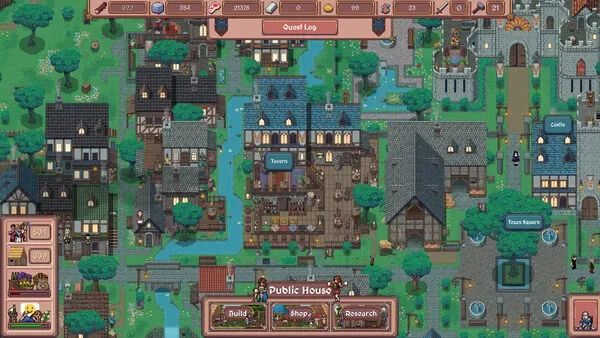
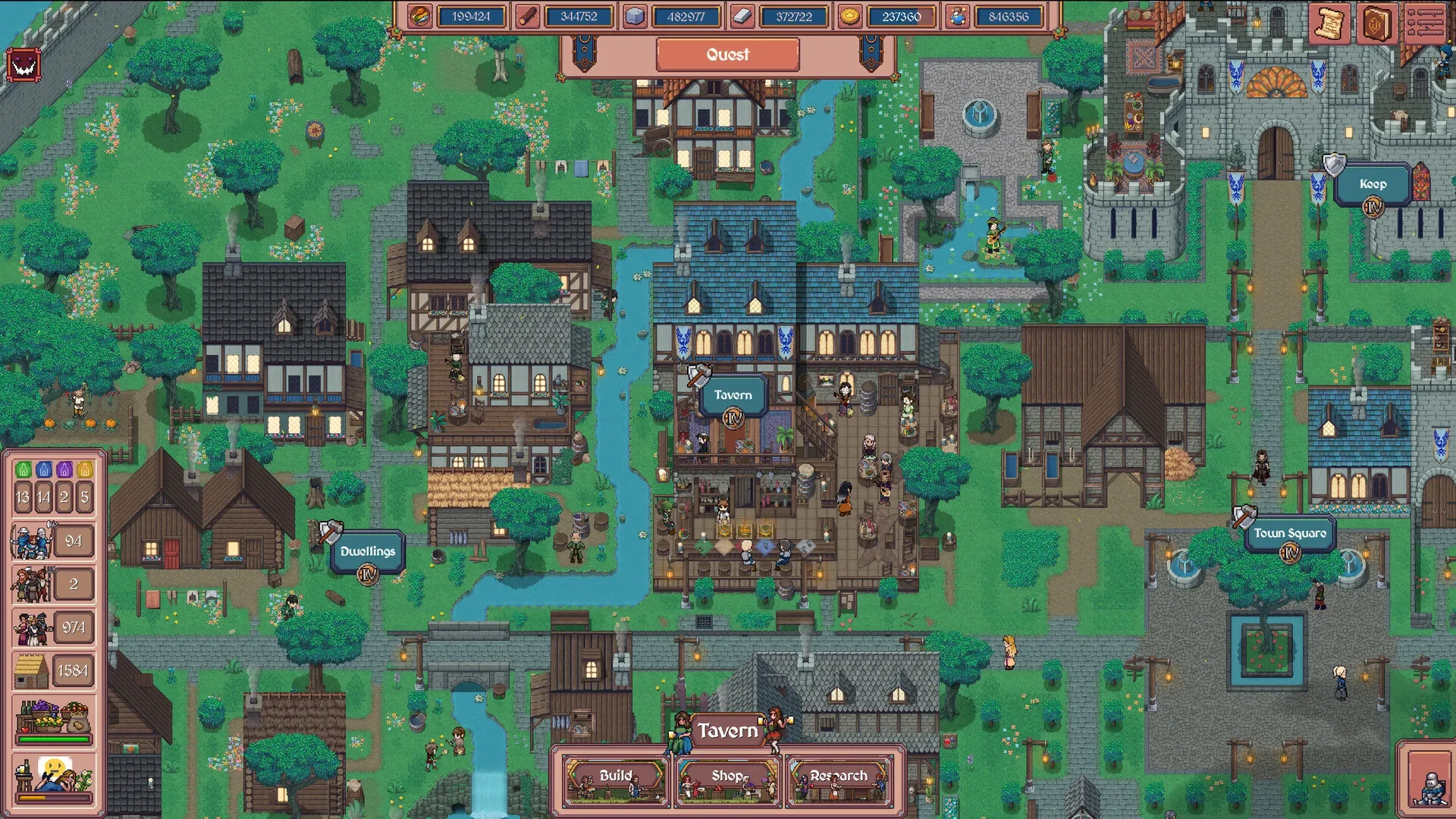
Hearth and Hamlet frames its citybuilding around a medieval, warm pixel-art world. Players are tasked with assigning workers and developing their civilization through construction, resource management, upgrades, research, trade, policy decisions, and defense.
Its building roster includes markets, town halls, barracks, banks, and magic academies. Those structures point to distinct parts of the settlement-management loop: markets suggest economic activity, town halls civic development, barracks military organization, banks financial growth, and magic academies a more fantastical branch of advancement.
The game also places importance on workers and citizens rather than treating construction as an isolated exercise. Players allocate workers, manage resources, establish trade and diplomatic policies, and account for citizen happiness. Happiness can provide production bonuses, tying the wellbeing of the population directly to the pace at which the kingdom develops.
That is a practical difference from a citybuilder solely concerned with placing structures. A player’s choices are presented as connected systems: labor affects output; output supports expansion; policies shape broader management; and happy citizens can strengthen production. The announced feature set also includes permanent research unlocks, meaning some research progress remains available as an enduring part of the player’s advancement.
What “incremental idle” means here
The terms incremental and idle describe a design approach centered on steady accumulation and layered improvement. Rather than asking players to constantly issue orders at every moment, this type of game commonly encourages them to establish productive systems, return to them, and choose the next upgrade or expansion.
Related coverage includes Hearth and Hamlet V1.1 Arrives Alongside 20% Steam Autumn Sale Discount.
For Hearth and Hamlet, that approach is paired with deeper city management. The game does not stop at gathering materials and erecting buildings: players can research technologies, engage with faraway lands through trade, determine trade and diplomatic policies, and recruit soldiers and guardsmen.
The military side adds a defensive responsibility to the otherwise relaxed kingdom-building premise. Soldiers and guardsmen are recruited to defend the civilization, while barracks form part of the construction options. The available description does not specify enemies, battle formats, or the exact demands of defense, but it does establish security as one of the systems a growing settlement must support.
For players looking at the sale, the clearest expectation is a blend of low-pressure progression and interlocking management decisions. The game is explicitly positioned as relaxing and satisfying, but it also features in-depth upgrade trees and policy management. “Cozy” in this case refers to the presentation and intended rhythm, not necessarily to the absence of strategic decisions.
A quick start and an early response cycle
Hearth and Hamlet reached 100,000 units sold within seven days of its August 19 launch. Nearly 50,000 of those units were sold in the first 24 hours. The game has also received strong player feedback since release.
Those early figures give useful context to the timing of V1.1. An initial post-launch update can be an important point for a management game because it addresses issues that only become obvious once a substantial audience begins building, optimizing, and revisiting its systems. The stated focus on community-requested fixes suggests that player feedback has been part of the update’s priorities, although the announced information does not identify the individual issues resolved.
The 20% promotion runs from October 1 through October 8 on Steam. It is a limited sale window, not a statement about a permanent price change. Anyone primarily waiting for detailed information on what V1.1 fixes should look for the game’s official update notes before making assumptions about a particular issue or mechanic.
Who may want to take a closer look
Hearth and Hamlet’s feature list is likely to appeal to players who enjoy watching a settlement become more productive over time, then reinvesting the resulting resources into longer-term upgrades. Its combination of worker assignment, permanent research, citizen happiness, policy selection, diplomacy, commerce, and defensive recruitment gives the game several decision layers beyond simple decoration or building placement.
- Citybuilding players can focus on the construction and resource-management side of a developing medieval settlement.
- Incremental-game fans can expect progression structured around upgrades, efficiency, and idle kingdom growth.
- Players who prefer a gentler visual tone may be drawn to its warm pixel-art presentation and relaxing framing.
- Management-game players may find the policy, trade, citizen-happiness, and labor-allocation systems the most relevant elements.
Its Steam setting also places it among a broader assortment of smaller PC projects with distinct approaches to atmosphere and systems. For another example of a cozy-oriented Steam game built around restoring a world, see The Regreening’s demo announcement.
What V1.1 does—and does not—confirm
Version 1.1 confirms that Hearth and Hamlet is now receiving post-launch support, beginning with usability improvements and fixes. It does not, based on the available information, confirm a roadmap, additional platforms, new gameplay modes, extra structures, expansion content, or future discount plans.
For existing players, the update is principally relevant as a round of requested refinements. For new players, the notable combination is that the game’s first update and the Steam Autumn Sale overlap: Hearth and Hamlet is available on Steam at 20% off until October 8, while its core promise remains an idle medieval kingdom that grows through workers, buildings, research, policy, trade, and defense.