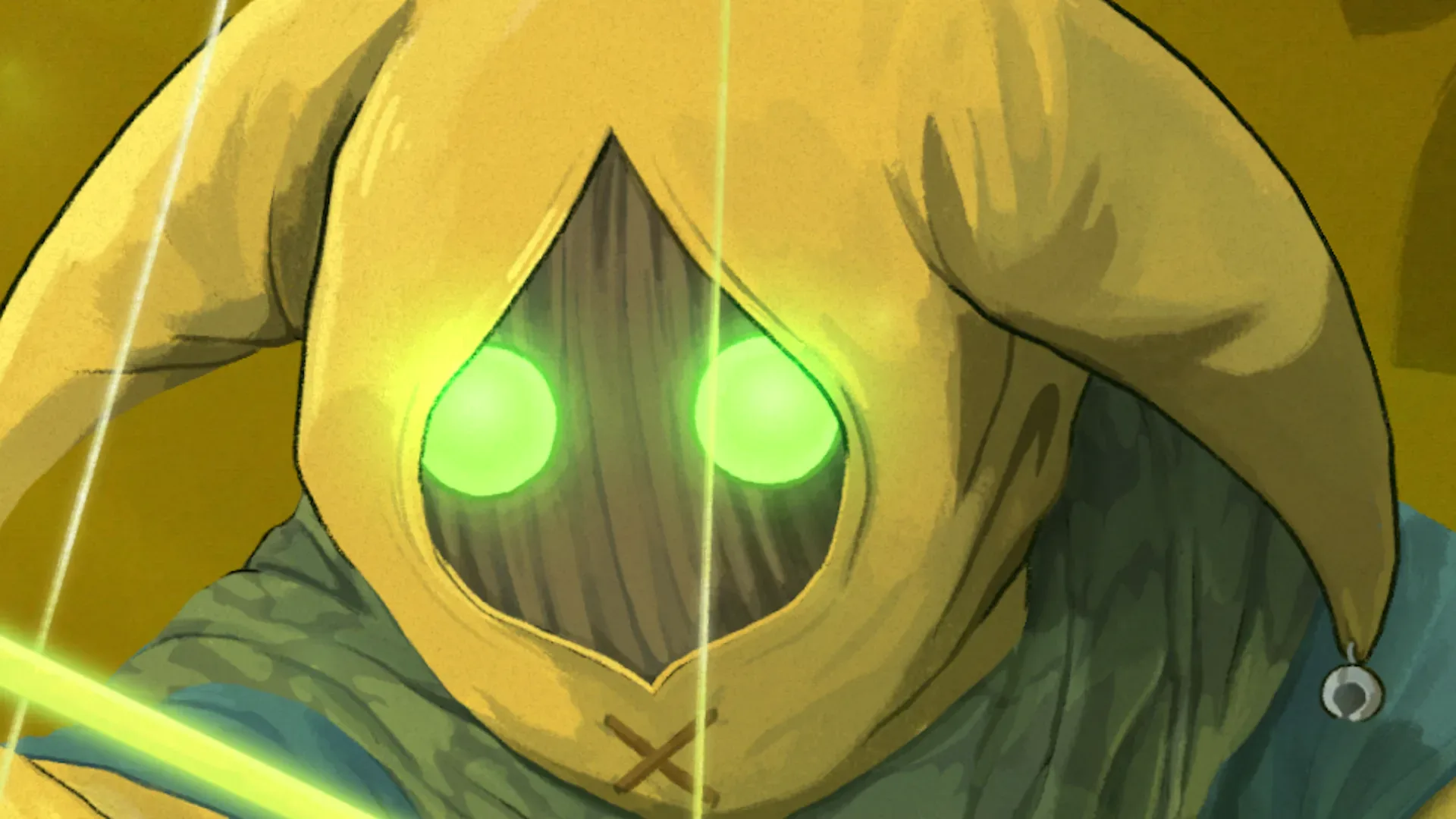

Night of the Idle Horde is now available on Steam. Developed by myradann and published by Ten Image Publishing, the side-scrolling incremental horror auto-battler puts players in charge of the zombie outbreak rather than the survivors attempting to stop it. Its central task is to grow an undead force, arrange it effectively and push it across a sequence of increasingly demanding survivor defences.
The game launched on November 16, 2026. Its premise combines several systems that are often treated separately: auto-battling, resource gathering, unit upgrades, formation management and short-duration powers. That mix means the game is not simply about watching an army advance. The player is asked to decide which undead to recruit, how to position them, when to spend powerful abilities and how to respond when a region changes the rules around them.
An incremental zombie army, not a single-character horror game
Night of the Idle Horde is structured around five Regions, each divided into five Zones. That establishes 25 Zones in total, with survivor resistance forming the obstacle between one section and the next. The game’s horror framing comes from the player’s role as manager of a growing zombie horde: brains and flesh are harvested as resources, while the army is expanded and upgraded to keep moving forward.
Incremental describes a progression format built around repeated gains that accumulate over time. In this case, those gains include the materials gathered from the game world and the improvements made to the army. The genre does not automatically mean that every choice is passive. Here, the supplied details point to an active management layer through formations, unit choices and Sigils, even as collection can be automated.
Auto-battler likewise does not necessarily mean hands-off. It generally refers to combat that proceeds automatically after units are deployed or organised. Night of the Idle Horde makes the preparation stage significant: players can organise formations while pushing forward, and the stated emphasis on positioning and Sigil timing suggests that selection and setup should matter as much as the horde’s raw numbers.
Six zombie types create the core tactical choices
Players can recruit and upgrade six zombie types. The launch details identify four examples that illustrate the intended spread of combat roles: Runners, Brutes, Spitters and Shamblers.
- Runners are the fast option, offering speed within the army.
- Brutes are the tanky option, built around absorbing punishment.
- Spitters provide ranged attacks.
- Shamblers supply numbers, leaning into the classic image of a massed zombie horde.
The remaining two types have not been detailed in the provided launch information, so their functions are not yet clear. What is clear is that the roster is intended to have distinct attack styles and synergies. In practical terms, a synergy is a relationship where units become more effective in combination than they would be independently. A durable front line can create space for ranged attackers, for example, while speedy units may serve a different purpose from a slow crowd of basic undead.
That broad division of roles gives formations a clear strategic purpose. A player facing a tough Zone may need a line capable of enduring survivor damage before an army’s other units can contribute. Conversely, piling every available unit into one role could leave an obvious weakness. The game’s design appears to make the undead army a composition problem: not just “how many zombies can be afforded?” but “which zombies are needed, and where should they stand?”
The ability to reorganise formations on the fly is especially notable in a side-scrolling format. Rather than committing permanently to an arrangement before a battle, players are able to adapt while progressing. The available details do not define every formation rule, but the feature indicates that moving units and changing the army’s shape are part of the intended decision-making.
Brains, flesh and automated collection
Brains and flesh are the game’s named resources. They are harvested to support the expanding undead operation, while rats, crows and chickens can automate collection. Automation is a natural fit for an incremental structure: instead of requiring a player to manually gather every item, designated creatures can take on resource duties.
That can make automation more than a convenience feature. When a game asks players to monitor unit upgrades, formations, regional modifiers and temporary abilities, reducing repetitive collection can leave more attention for decisions that affect the next push. The launch information does not state exactly what each resource buys or how each animal’s automation differs, so it would be premature to assign specific economy roles to them. Still, the basic loop is clear: build the horde, maintain the resources that support it, and advance through survivor-held territory.
The game also offers both full-screen play and Desktop Mode. No further technical description has been provided for Desktop Mode, but its inclusion signals a second way to view and manage the game rather than a different platform release. Players interested in games that maintain a constant progression loop may find that flexibility relevant, particularly given the presence of automated gathering.
The Infection Meter and the importance of Sigil timing
A major active system is the Infection Meter. Raising this meter allows players to deploy Sigils, described as powerful abilities with a short-term effect. The wording is important: Sigils are not presented as permanent army upgrades. They are temporary tools, which turns their timing into a resource-management question.
In an auto-battler, temporary powers can be the element that lets a player intervene when the normal battle flow is not enough. Using a Sigil too early may waste its limited impact before a dangerous section; holding it too long could mean the horde is overwhelmed before it can be used. Night of the Idle Horde explicitly frames strategic formation and Sigil timing as key to overcoming harder Zones, placing the feature near the centre of its difficulty curve.
The game’s regional structure adds another variable through Region Game Changers. These are modifiers that players must adapt to as they progress. Specific modifier effects have not been announced in the supplied material, but the term indicates that Regions are meant to affect play beyond serving as a new backdrop. A setup that works in one Region may therefore need adjustment in another.
This is where the game’s systems overlap: a Region Game Changer may encourage a different formation; that formation may change which zombie upgrades feel useful; a tough Zone may affect when a Sigil should be saved; and all of those choices take place within an economy supported by brains, flesh and automated collectors. The launch description promises a compact loop with several moving parts, rather than an idle game where numerical growth alone is the answer to every obstacle.
A future update could put a player-made Sigil in the game
To mark the launch, the team is inviting players to submit concepts for future Sigils. The strongest submission is planned to be implemented in a future update, with its creator credited in that update. The invitation is specifically for design concepts, not a guarantee that every submitted idea will be added.
It is a fitting request for a game where Sigils are positioned as short-lived but influential abilities. A useful concept will presumably need to work within the game’s existing balance of formations, zombie types, resources and Region Game Changers. The announcement does not set out submission criteria, a deadline or the final selection process, so prospective contributors should avoid assuming requirements beyond the stated plan for one best submission to be implemented and credited.
Community-driven ideas can be particularly interesting in a system with deliberately temporary powers. A new unit could reshape the full progression model; a Sigil, by contrast, can offer a sharp tactical option without necessarily changing the whole roster. That is analysis of the announced structure rather than confirmation of how the update will be balanced, but it helps explain why the feature is a natural place for player suggestions.
What the launch information does and does not establish
Night of the Idle Horde arrives with a clearly defined gameplay pitch: direct a zombie army through five Regions and 25 Zones, recruit from six undead types, gather brains and flesh, use animal helpers for automated collection, adjust formations and spend Infection Meter progress on Sigils. The available material also establishes Steam as the launch platform and identifies Ten Image Publishing as publisher and myradann as developer.
There are also useful limits to what has been disclosed. Although regional pricing was listed with the launch announcement in GBP, USD and EUR, exact figures are not included here. The specifics of the two unlisted zombie types, individual Sigil effects, Region Game Changer effects and the mechanics behind Desktop Mode have not been detailed. None of that prevents the central concept from being understood, but it does mean players should treat the broader system descriptions as the confirmed outline rather than fill in missing details themselves.
For PC players keeping an eye on strategy games built around repeatable runs and evolving decisions, there is a clear adjacent conversation in this look at balance concerns around Slay the Spire 2’s Fool. The games are not being presented as the same kind of experience, but both highlight how a small set of powerful choices can shape a broader progression loop.
Night of the Idle Horde is available now on Steam. Its basic promise is pleasingly grim: build a better zombie workforce, turn the survivors’ defences into a resource problem, and keep enough tactical control to make the horde’s automatic march feel like your plan rather than a disaster shambling off without supervision.