There are few faster ways to get PC gamers protective of their hardware than suggesting the RAM inside a personal computer would be better off somewhere else. That is the nerve Sam Altman touched in recent remarks about DRAM allocation, and Elon Musk has now added his own conspicuously simple response: “The people deserve to have their RAM too!”
Musk posted the line on X alongside a meme, turning an already viral argument into another public flashpoint in the rivalry between prominent AI figures. The joke lands because the disagreement is bigger than a single component. It has become a shorthand for a live anxiety among gamers and PC owners: whether the surge in AI infrastructure is making the machines people buy, upgrade, and control themselves more expensive or less attainable.
Altman’s underlying point was about efficiency during a supply-constrained period. In an interview, he argued that it is “quite terrible” for people to keep a limited global supply of DRAM installed in computers that may use it only a small percentage of the time. From that perspective, pooled cloud resources can be used more continuously than memory distributed across millions of largely idle systems.
That is a recognizable data-center argument. It is also precisely why the response from the gaming community has been so harsh. A personal computer is not merely a resource waiting to be centrally scheduled. It is a device purchased for private, immediate use—often for games, creative work, local files, modding, and applications that cannot be treated as an interchangeable background workload.
What RAM and DRAM actually mean in this argument
RAM, short for random-access memory, is a computer’s short-term working space. A game uses it to keep assets, world data, instructions, and other information readily available while it runs. More broadly, RAM helps a system keep multiple programs responsive without constantly relying on much slower storage.
DRAM, or dynamic random-access memory, is the common memory technology at the center of this discussion. In everyday conversation, people often say “RAM” when referring to the DRAM modules installed in a desktop PC or laptop. The distinction matters technically, but it does not change the practical issue for players: the memory in a home computer enables that computer to do work locally when its owner needs it.
Altman’s argument focuses on utilization—how much of a resource is actively used over time. A major cloud operator can assign capacity among many customers and workloads, potentially keeping hardware busier than a single home machine that sits unused between sessions. In a narrow accounting sense, that can make centralized capacity look more efficient.
But utilization is not the only value a piece of hardware provides. Personal memory is available without waiting for a remote allocation. It supports local performance, preserves flexibility over what software runs, and avoids making every task dependent on a remote service. For gaming in particular, the ability to launch a title on one’s own machine is not equivalent to requesting access to a shared resource somewhere else.
Related coverage includes Elon Musk Backs PC Owners as Sam Altman's RAM Comments Spark Gaming Backlash.
That gap—between global infrastructure efficiency and individual ownership—explains why many readers interpreted Altman’s comments as more than a dry observation about semiconductor supply. Online reaction has included jokes, memes, and direct objections from people who felt the phrasing implied that consumer hardware should give way to AI data centers. Whether or not that was the intended policy implication, it was the implication many people heard.
Why gamers see the issue as personal
PC gaming has long involved choices about a machine’s capabilities. Players decide how much memory they need, which graphics card suits their budget, what games stay installed, and whether to upgrade a system over time. That ownership is not simply sentimental. It is part of why a PC is useful: the buyer controls a general-purpose machine rather than only renting time on one.
Memory capacity can also affect how comfortably a system handles newer games and everyday multitasking. When a player has a game open while using voice chat, a browser, capture software, music, or other tools, RAM is part of the hardware headroom that keeps those activities running together. The exact needs differ by game and setup, but the principle is straightforward: locally installed memory serves the owner at the moment it is needed.
The backlash is therefore not only a response to potentially higher prices. It is a response to the prospect of a future in which consumer machines are treated as an inefficient use of components while large remote systems receive priority. Cloud computing can be useful, and many players already use online services every day, but usefulness is different from replacement. A cloud option does not automatically deliver the same control, predictability, or independence as a capable local PC.
That tension is particularly acute because the present concern is tied to an industry-wide AI buildout. The supplied reports describe an AI-driven scarcity of memory that has contributed to higher prices for graphics cards, consoles, and PC components. Sony, Microsoft, and Nintendo have each raised console prices amid what has been dubbed the “RAMpocalypse.” Nvidia’s RTX 5080 reportedly vanished from its marketplace, while the RTX 5090 was described as close to discontinued.
Those developments do not establish that one comment caused a hardware crisis; they plainly do not. They do, however, supply the context that makes Altman’s words combustible. Consumers who already perceive AI demand as intensifying pressure on gaming hardware are unlikely to welcome a claim that their own installed memory is an inefficient allocation of scarce supply.
Musk’s meme is easy politics—and an awkward contrast
Musk’s intervention is brief, funny, and calibrated for a social-media argument. “The people deserve to have their RAM too!” is a far more appealing slogan than a discussion about supply utilization. It frames PC owners as ordinary users defending what they bought against a remote corporate appetite for compute.
It is also worth separating the meme’s message from Musk’s own position in the AI economy. He is not a disinterested bystander to the cost of operating advanced AI systems. Reports say that users of Grok Bot complained about encountering limits earlier than expected, after which Musk said running the AI agent was “unsustainably high relative to revenue.” His follow-up characterization was that the company was “just being sensible.”
Grok Bot is described as an agent that runs autonomous tasks on virtual computers, which makes it more computationally demanding than a basic chatbot. It launched in beta in August and had paid weekly active users nearing 800,000 by late October. Some heavy users reportedly experienced lockouts and cancelled plans.
That does not invalidate Musk’s criticism of the RAM comments. It does reveal the common economic pressure beneath the exchange. AI companies want enormous amounts of computing capacity, and that capacity has real operating costs. If those costs exceed revenue, providers may ration usage. If component supply is tight, they may also compete intensely for hardware. Consumer buyers see the other side of the same equation when the equipment they want becomes harder to find or more expensive.
In that sense, the dispute is not solely Musk versus Altman. It is an argument about who should absorb the consequences of an AI infrastructure race: companies building data centers, customers subscribing to AI tools, or people buying personal devices and gaming systems.
What the console and PC pressure could mean
The reports point to particularly uncomfortable possibilities for the next hardware cycle. Microsoft is reportedly expecting a next-generation Xbox, codenamed Project Helix, to cost as much as $1,800. Sony has not announced its next-generation hardware, and analysts reportedly expect it may delay a launch as cost concerns persist.
These remain reported expectations and analyst views, not final public product plans. Still, they illustrate why gamers are watching component supply so closely. A console price increase is tangible; it changes who can enter a platform at launch. On PC, rising prices or unavailable parts can turn what should be a targeted upgrade into a delayed purchase—or force people to settle for less memory, a different graphics card, or an older build.
For consumers, the immediate practical lesson is not that personal RAM is about to disappear. Nothing in the available information says that. It is that memory has become a more visible part of the wider hardware equation. Buyers considering a system or an upgrade may want to distinguish between what they need now and what they can reasonably postpone, while keeping an eye on the availability of the whole build rather than fixating on a single component.
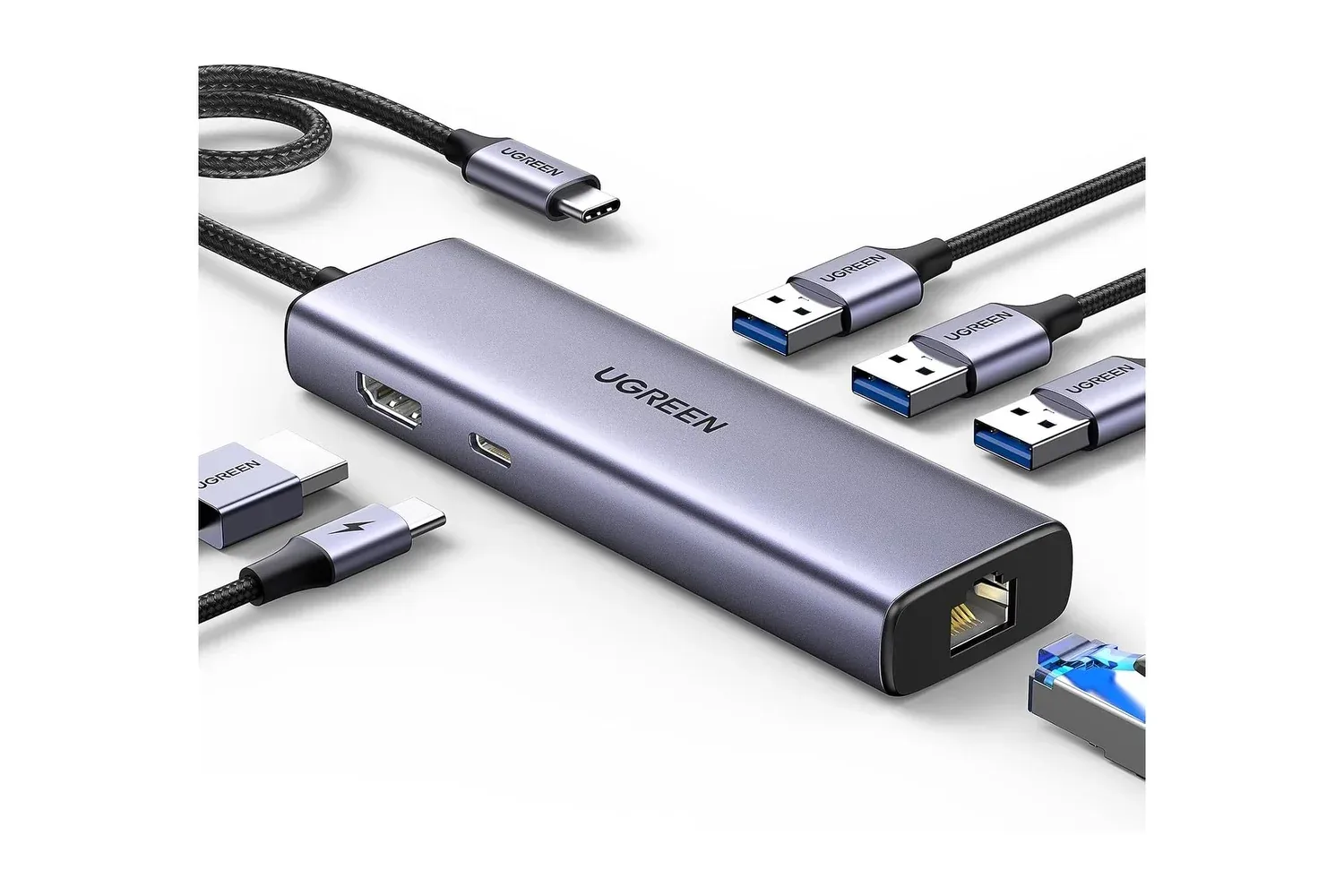
The rest of the setup matters too. Memory, storage, graphics hardware, ports, displays, and networking all shape how a PC fits into daily use. Even modest accessories can change connectivity options; for example, a recent USB-C hub listing shows the kind of peripheral choice that remains part of maintaining a flexible personal setup. That flexibility is exactly what centralized-computing rhetoric risks overlooking.
The real disagreement: efficiency versus agency
Altman’s comments identify a real systems-level question: how should limited high-demand hardware be deployed when data centers and consumer products both need it? His answer emphasizes aggregate use. The gaming backlash emphasizes agency—the user’s ability to own equipment, decide when to use it, and rely on it without negotiating with a provider’s capacity limits.
Neither word is trivial. Better utilization can matter during supply constraints. Yet private ownership also produces benefits that a utilization metric does not fully capture. A home PC may be dormant for part of the day, but its value is not measured only by the seconds its memory is active. It is measured by the capability it gives its owner when they choose to play, work, create, or simply keep their computing local.
That is why the joke has endured. RAM is a small, unglamorous component, but it has become a symbol of a much larger concern. Players are not reacting only to a technical claim about DRAM. They are reacting to a vision of computing that appears to treat consumer control as wasteful whenever a data center could put the same hardware to more continuous use.
Musk’s meme will not resolve memory supply, the economics of AI agents, or the escalating costs around gaming hardware. But it has crystallized the popular answer: whatever cloud providers need, people still expect the computers they own to remain theirs—RAM included.