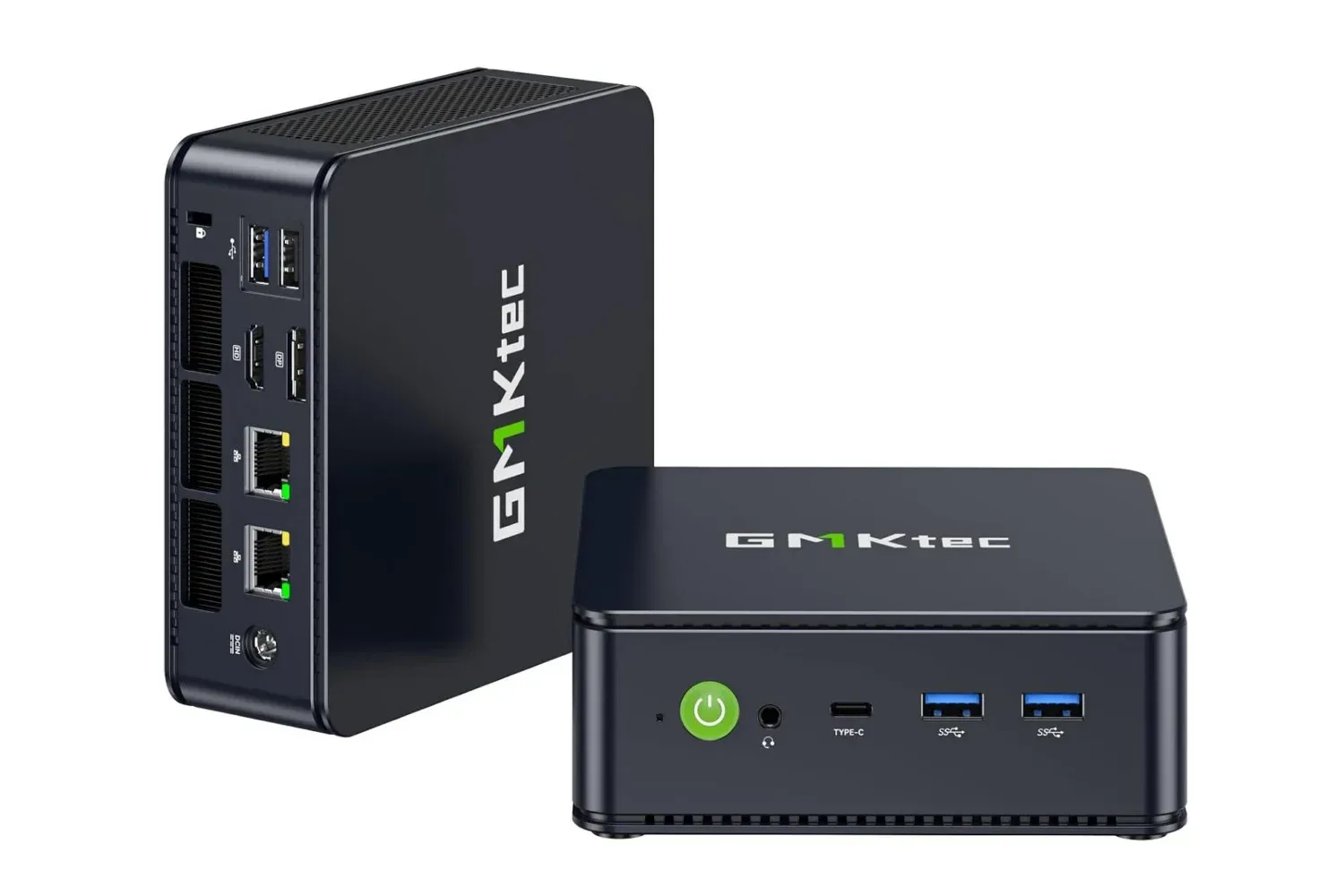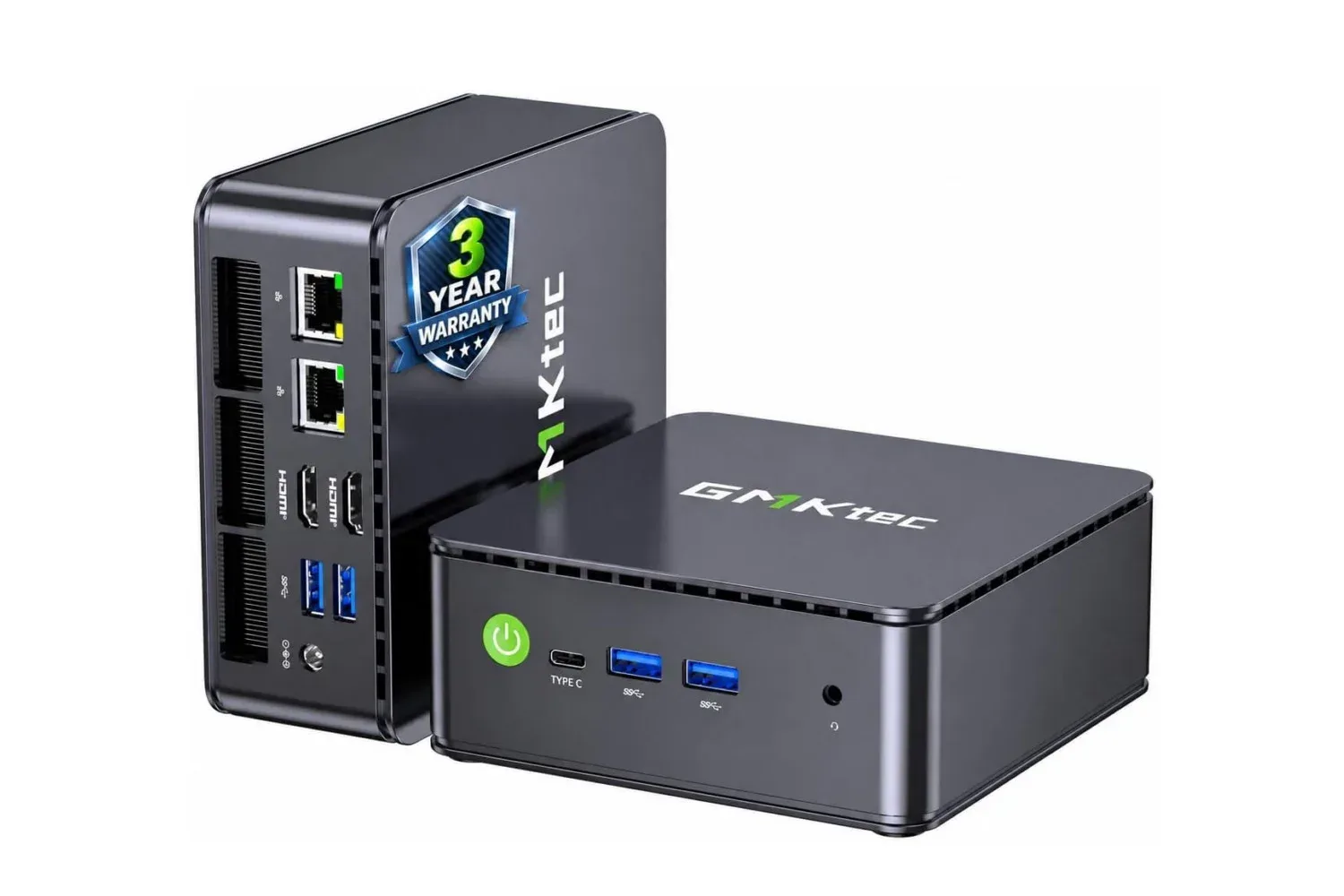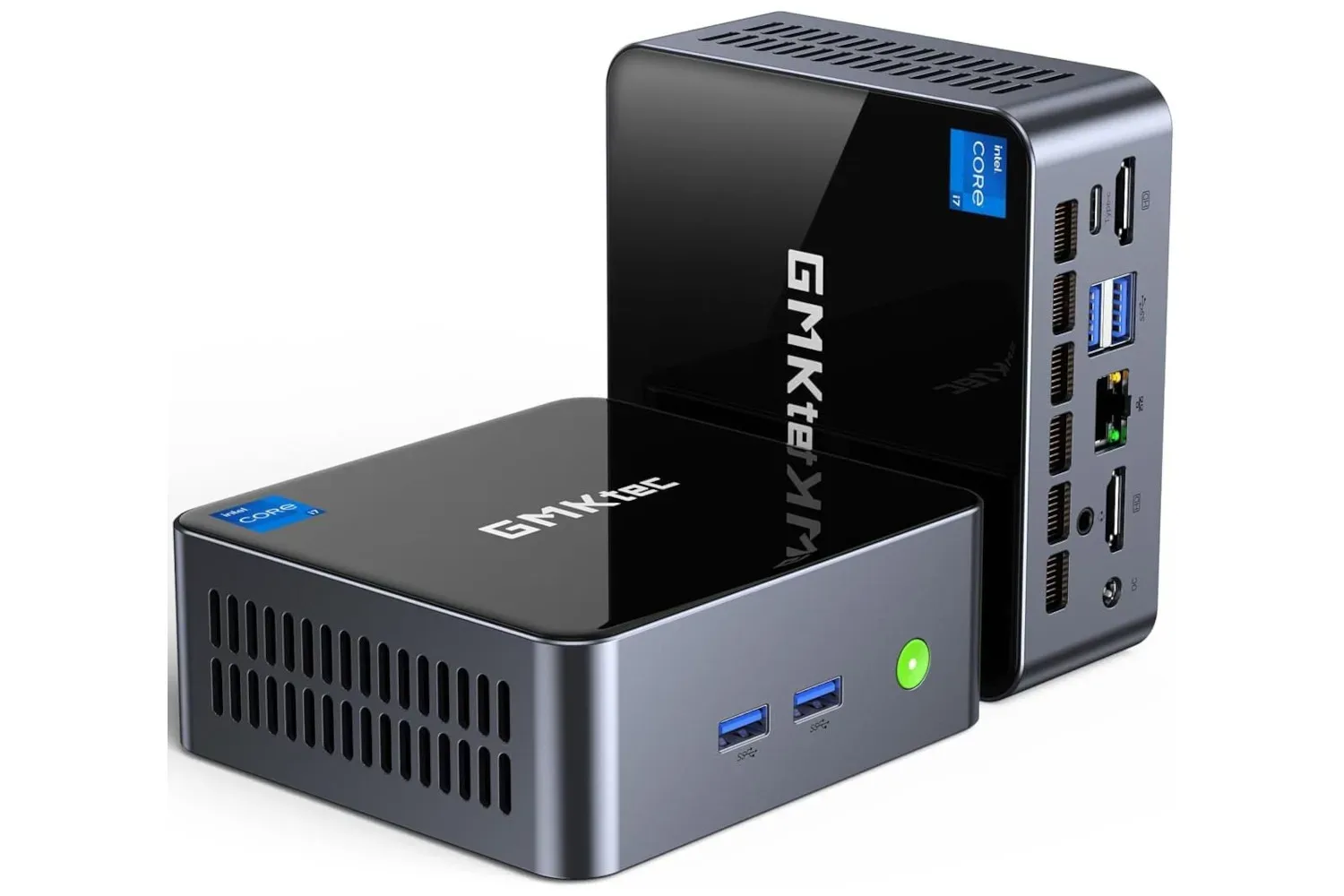
A compact desktop can make sense for PC players whose setup has more controllers, charging cables and unfinished games than available desk space. A GMKtec mini PC configuration is currently listed at $500, down from a stated regular price of $650. That is a $150 difference, or roughly 23%, though retailer pricing can change without notice.
The system pairs an Intel Core i7-1185G7 processor with Intel Iris Xe Graphics G7 96EU, 16GB of DDR4 RAM and a 1TB SSD. It also lists Wi-Fi 6 and Bluetooth support. On paper, that combination positions it as a small Windows desktop for everyday work, media duties and selective PC gaming—not a direct substitute for a full-sized machine built around a dedicated graphics card.
What is included in this mini PC configuration?
- Processor: Intel Core i7-1185G7
- Graphics: Intel Iris Xe Graphics G7 96EU integrated graphics
- Memory: 16GB DDR4 RAM
- Storage: 1TB SSD
- Wireless: Wi-Fi 6 and Bluetooth
- Display claim: support for up to three 4K monitors at once
“Mini PC” describes the chassis category rather than a fixed performance tier. The advantage is physical scale: this GMKtec unit is described as barely larger than a hand, making it easier to place beside a monitor or fit into a crowded office and gaming space. The trade-off is that small computers generally do not have the room or power budget associated with the large discrete graphics hardware used in high-end gaming towers.
Integrated graphics: the key gaming consideration
The Iris Xe Graphics G7 96EU is integrated graphics, meaning the graphics processor is built into the same processor package rather than being a separate graphics card. This matters more than the Core i7 name alone when judging gaming expectations.
The listed hardware should be more at home with older games and a backlog of less demanding titles than with current, graphically intensive releases. It can handle a fair number of games, but the available details explicitly caution that it will not keep pace with more demanding titles. Buyers who expect maximum settings, high frame rates or the latest visually ambitious PC releases should treat that limitation as central to the purchase decision.
That does not make the machine a non-gaming computer. It means setting the right target. For someone catching up on older PC games, using a living-room display, or wanting one small desktop that can cover work and lighter gaming, an integrated solution may be an appropriate fit. For someone shopping specifically to play the most demanding games, it likely is not.
Three 4K displays are not the same as 4K gaming
The system’s ability to output to as many as three 4K monitors is useful for productivity. A multi-display arrangement can put a game guide, chat client, browser, streaming controls or work documents on separate screens. The capability refers to display output—getting an image to multiple 4K panels—not a guarantee that games will run at 4K with demanding graphics settings.
This distinction is worth making because “4K” is often used as a broad shorthand for performance. In practice, a desktop can be capable of driving high-resolution displays for windows, video and general multitasking while still needing modest settings for games. Resolution asks the graphics hardware to render a certain number of pixels; demanding games can raise that workload considerably.
Related coverage includes GMKtec Core i7 Mini PC Deal Drops Compact Windows System to $500.
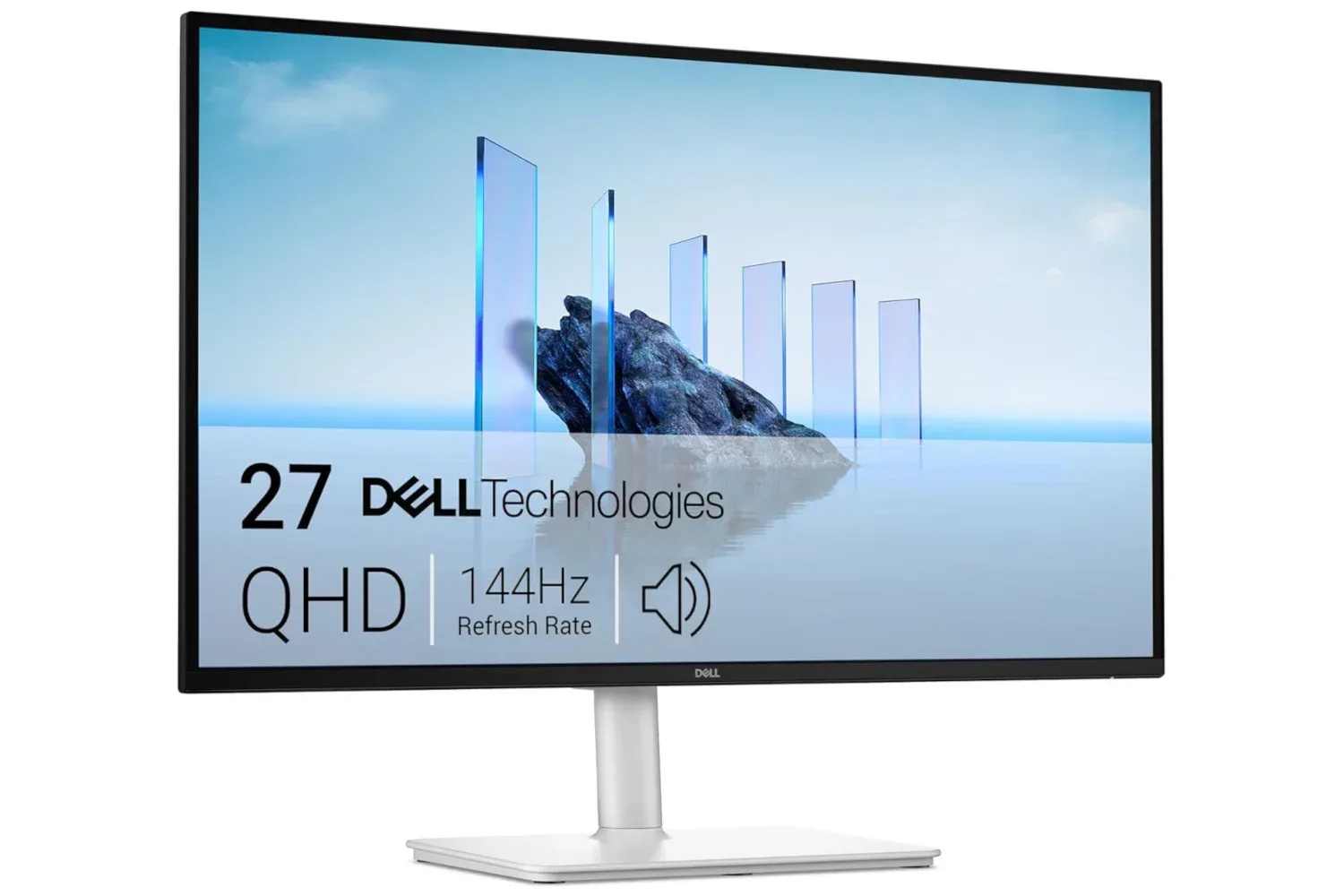
Anyone shopping for a panel to pair with a compact PC may also want to consider refresh rate and resolution separately. Our look at the difference between 144Hz and 1440p monitor specifications explains why those terms describe different parts of the experience: one concerns how often a screen can update, while the other concerns pixel count.
Why 16GB RAM and a 1TB SSD matter
The 16GB DDR4 memory allocation is another practical part of the configuration. RAM, or random-access memory, is short-term working space used by the operating system and active programs. It is distinct from the SSD, which is the longer-term storage location for installed games, files and applications.
For a PC meant to alternate between normal tasks and gaming, RAM helps with keeping multiple applications open at once. That could include a browser, voice chat and launcher alongside a game. The supplied specifications do not establish how this system performs in any specific game, so 16GB should be read as a hardware capacity rather than a promise about settings or frame rate.
The 1TB SSD is the more direct answer to capacity concerns. SSD means solid-state drive, a storage device with no moving parts. A 1TB drive leaves meaningful room for a collection of games and work files compared with smaller-capacity systems. It is still sensible to check the size of the particular games and applications a buyer expects to install, because storage demands vary widely.
Wireless flexibility for a small setup
Wi-Fi 6 and Bluetooth are useful inclusions for the intended compact, cable-light role. Wi-Fi 6 is a wireless networking standard, while Bluetooth can connect compatible peripherals such as controllers, keyboards, mice and headphones. Together, they can simplify placement if the mini PC is being used away from a router or if a buyer wants fewer wires crossing a desk.
A wired connection remains an option for people who prefer one, but the listed wireless support means an Ethernet cable is not required simply to get online. The same goes for many everyday peripherals: Bluetooth compatibility can reduce the need for separate wired connections, provided the accessories support it.
Who should consider the $500 listing?
The strongest case is a buyer who values a small footprint and wants an all-purpose desktop with credible specifications for lighter gaming. The Core i7 processor, 16GB of RAM, 1TB SSD, wireless support and multi-monitor claim make a reasonably balanced specification sheet for that purpose.
It is less compelling for buyers whose primary goal is running demanding games at aggressive graphical settings. Nothing in the provided specifications changes the fundamental limitation of relying on integrated Iris Xe graphics. That is the item to weigh first, before being persuaded by the small enclosure or the discount.
At the stated $500 price, the sale is $150 below the supplied $650 reference price. Since there is no indication of how long that listing will remain at this level, prospective buyers should verify the live price, exact configuration and seller details before checking out. The headline discount is useful, but suitability for the games and display setup a person actually plans to use is the more durable value test.
Shop the products
Check current price, model and availability at the retailer.