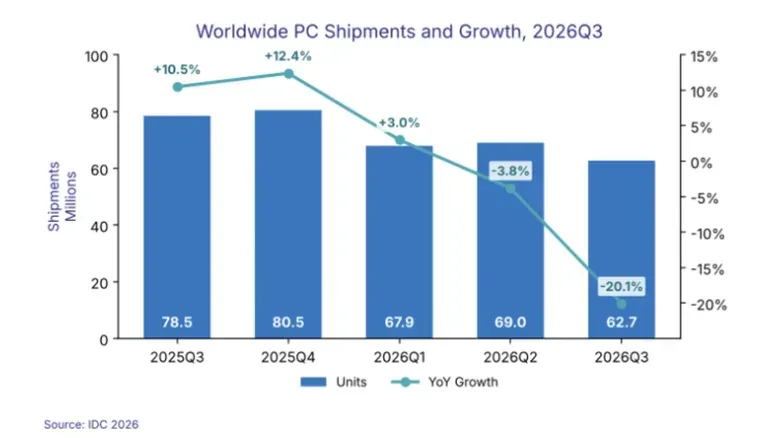
The worldwide PC market took a steep step backward in the third quarter of 2026. Global shipments totaled 62.7 million PCs, a 9.1% decline from the previous quarter and a 20.1% fall compared with Q3 2025.
Those figures matter beyond the spreadsheet. They describe a market in which the number of computers moving through retail and business sales channels is shrinking while the cost of buying one remains high. Supply problems and elevated pricing have been identified as central pressures, creating an especially awkward moment for anyone planning a new desktop, laptop, or component purchase.
What the shipment number does—and does not—tell us
A PC shipment is not necessarily the same thing as a computer purchased and switched on by an end user that same quarter. In industry reporting, shipments generally track hardware moving through the supply chain: from manufacturers into the channels that eventually sell to consumers and organizations.
That distinction is useful here. A lower shipment total signals softer market activity, but it also reflects caution among sellers. If retailers and distributors expect buyers to balk at today’s prices, they may order fewer systems rather than risk holding too much stock. The result can become self-reinforcing: weaker demand discourages inventory orders, while constrained supply and expensive parts make it harder for prices to fall enough to tempt hesitant buyers.
The quarter-to-quarter decline of 9.1% is notable on its own. The 20.1% year-over-year drop is the sharper warning, because it compares the latest quarter with the equivalent period a year before. In plain terms, the market moved substantially fewer PCs than it did in Q3 2025.
Why price is the center of the problem
High prices can suppress demand in a category where many purchases are deferrable. A computer that still handles work, school, browsing, and a player’s existing library may not feel like it needs immediate replacement. That gives households and organizations an obvious response when the upgrade price climbs: wait.
For gaming-focused buyers, that pause can be particularly frustrating. A system purchase is often a bundle of decisions rather than one clean transaction. Someone may be weighing a laptop against a desktop, an entire new build against a selective upgrade, or a fresh GPU against memory and storage changes. When core components become more expensive or harder to source, the entire plan can lose its value proposition.
The discussion around “RAMaggedon” points toward the memory side of that tension. RAM, short for random-access memory, is the fast working memory a computer uses while applications and games are running. It is distinct from long-term storage such as an SSD or hard drive. While a PC can technically function with limited RAM, too little working memory can constrain multitasking and affect how comfortably demanding software runs. That makes memory pricing a practical concern for both new-PC shoppers and people trying to extend an existing system.
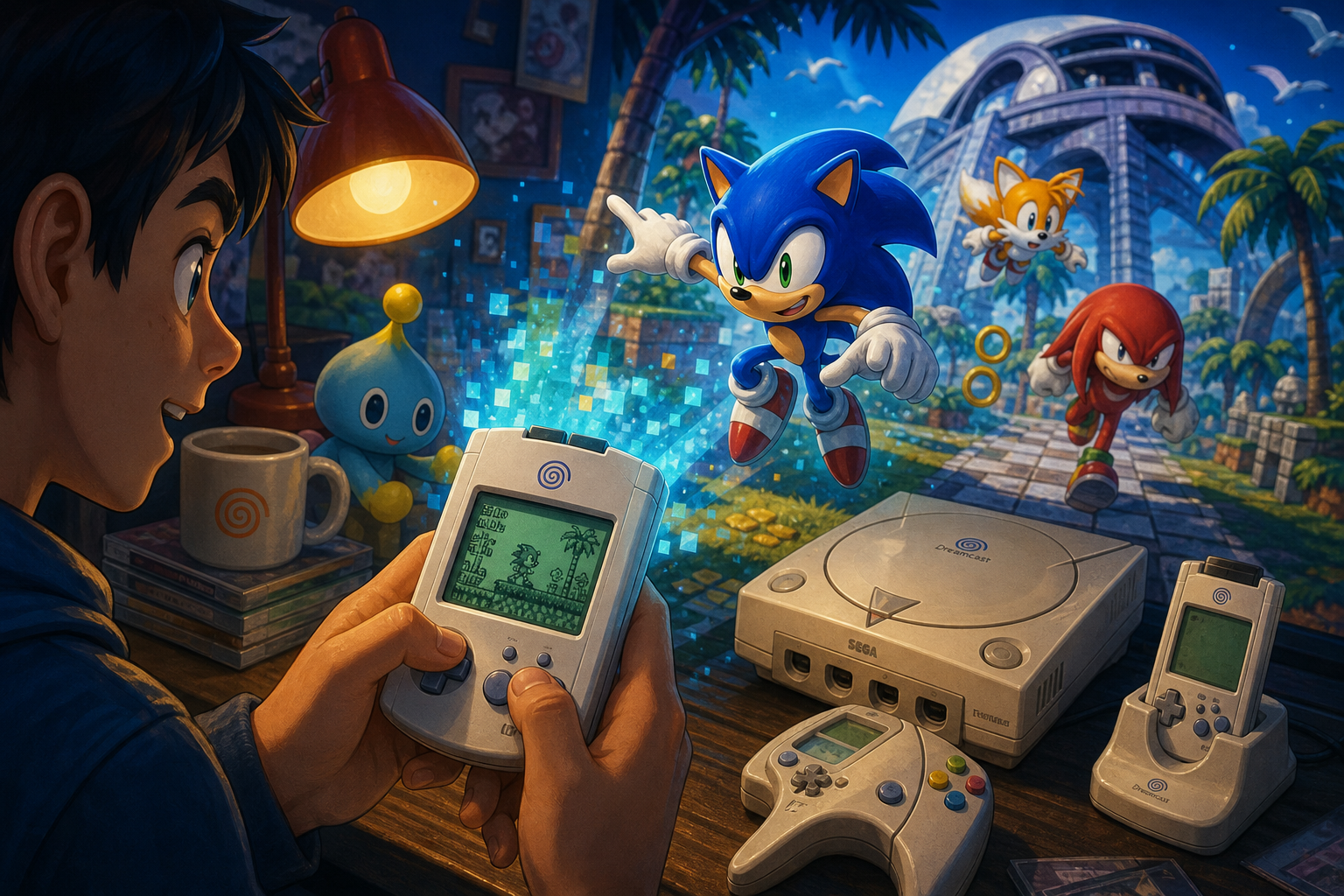
Memory has always been an unusually tangible part of the PC experience: unlike many sealed consumer devices, desktops often make targeted upgrades possible. The broader idea of a portable memory device with a personality is not exclusive to PCs, either; the Dreamcast VMU’s unusual role as both memory card and tiny game system remains a reminder that storage and memory hardware can become part of gaming culture, not merely a line item on a receipt.
Inventory anxiety could create selective deals
There is one potentially useful wrinkle for patient shoppers. Sales channels are reportedly concerned about carrying too much inventory into a market where expensive systems are already discouraging purchases. That concern could lead to promotions and limited short-term relief for consumers.
That is not the same as a promise of widespread bargain pricing. The expectation is that prices will remain elevated and will not return to where they stood a year earlier. A promotion may therefore be meaningful without being a return to the cheaper market buyers remember. A discounted configuration can still cost more than an equivalent machine did before the current pressure on pricing took hold.
The practical lesson is to judge a deal on the actual configuration and final price, rather than treating any sale label as evidence that the market has normalized. Buyers should be clear about the machine’s intended job before chasing a discount:
- Replacement buyers need to prioritize reliability and the applications they must run now.
- Gaming buyers should decide whether the limitation is truly the whole PC or a specific component.
- Component shoppers may find that a narrowly focused upgrade is more manageable than a full rebuild, though the value depends on current prices and system compatibility.
- Optional upgraders have the greatest flexibility to wait for a better offer or a calmer pricing environment.
None of those choices has a universal answer in a market like this. The important difference is between a purchase driven by need and one driven by the hope of a performance bump. If a current machine has become a genuine obstacle, waiting for an ideal market may be unrealistic. If it remains capable, the reported pricing outlook gives buyers a reason to avoid assuming an immediate upgrade is mandatory.
A decline after a brief stretch of growth
The third-quarter results follow the first reported decline in PC shipments in nine quarters, recorded in July 2026. Earlier in the year, the outlook for the full 2026 PC market had also been reduced. Together, those details suggest the Q3 result is not an isolated wobble.
It is tempting to read a falling shipment total as automatically good news for bargain hunters: fewer sales should mean cheaper products. Hardware markets are not that simple. If the same environment includes supply issues, rising costs can outweigh the pressure created by weaker demand. Sellers may have less room to lower prices, and manufacturers may be less willing or able to supply the kinds of configurations buyers want at former price levels.
That is why a contraction in units and elevated consumer prices can coexist. Demand is soft because systems are costly, but systems do not suddenly become inexpensive merely because fewer are being shipped.
What to watch in the next few quarters
The near-term risk is that the outlook deteriorates before conditions improve. Broader macroeconomic conditions are also described as worsening, adding another layer of uncertainty to a market already coping with supply constraints and price resistance.
For buyers, the most sensible signals to monitor are straightforward: whether promotions become more common, whether they apply to genuinely useful configurations, and whether component costs begin to ease in a sustained way. A one-off discount can help someone with an urgent need; it does not by itself establish a healthier market.
For the PC industry, the harder task is restoring demand without letting inventory pile up. Channels may reduce that inventory through promotions, but price relief appears likely to be limited. The current forecast is not for a quick return to the pricing environment of a year ago.
In short, Q3 2026 brought a severe annual decline in worldwide PC shipments at the same time buyers continue to face expensive hardware. Anyone who finds a suitable deal and needs a machine now may have reason to act. Everyone else has a less exciting but potentially wiser option: keep the current system running, watch prices closely, and avoid mistaking a difficult market for a once-in-a-generation upgrade opportunity.