The Dreamcast VMU was officially a memory card, but that description misses the reason it remains one of Sega’s most distinctive ideas. The small controller-mounted device stored saves, displayed game information, ran simple software and could briefly function as a separate handheld. It made the Dreamcast feel less like a sealed console and more like a collection of connected personal devices.
This history follows the VMU from its Japanese VMS identity through its launch software, regional rollout, limitations and later influence. The central question is not whether every Dreamcast game used it in the same way. They did not. The more useful question is why Sega gave removable storage its own screen and processor, and what developers discovered when they treated that hardware as part of the game rather than as an invisible utility.
Before the Dreamcast: the VMS was already a product
In Western markets, Sega called the accessory the Visual Memory Unit, or VMU. In Japan, the device was known as the Visual Memory System, commonly shortened to VMS. The Japanese identity reflected a broader idea than ordinary backup storage: this was a memory device with its own display, controls, clock and software functions.
A Godzilla-themed VMS reportedly appeared in Japan on July 30, 1998, before the Dreamcast console’s Japanese launch on November 27. Its preloaded virtual-pet-style software made the accessory an early demonstration of the idea that a Dreamcast memory device could have a life away from the main machine. The chronology matters. The standalone concept was part of the peripheral’s identity before most players had connected one to a Dreamcast controller.
Sega’s own historical material records several software-equipped Visual Memory products, including the Godzilla version, and notes that these units could also function as ordinary memory cards. That combination helps explain the VMU’s unusual position. It was simultaneously a required piece of Dreamcast storage, a small software carrier and a promotional object that could be sold on its own.
A memory card designed to be noticed
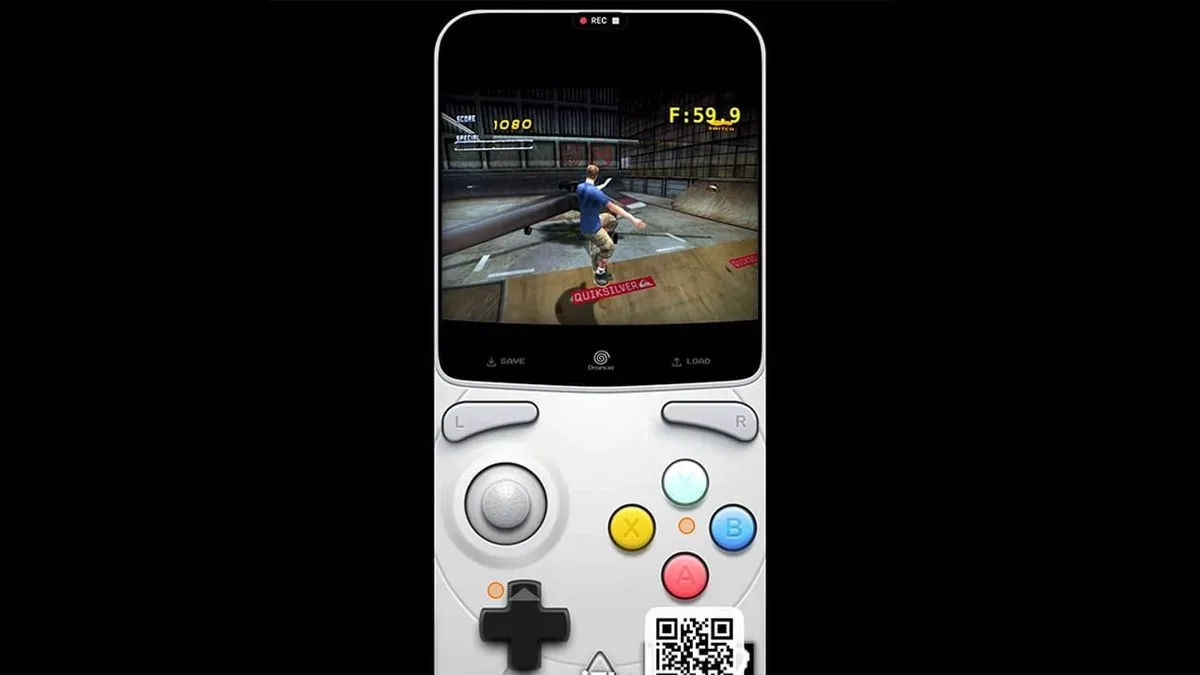
The VMU connected to the Dreamcast controller, placing its small monochrome LCD close to the player’s hands. Its face included a directional pad and A and B buttons, along with mode and sleep controls. A speaker produced simple sounds, while a clock supported functions that continued away from the console. Two CR2032 batteries powered the screen, sound and detached operation.
The controller’s two expansion sockets allowed players to connect two VMUs or combine a VMU with another accessory. That arrangement could let one unit hold save data while another showed a separate game screen or handled a supported companion function. It also created a visual distinction between public and private information: the television could show shared action while the player’s own controller displayed something intended for one person.
The physical design was clever because it avoided requiring a second television. It was also constrained by its location. The screen was small, monochrome and close to the controller rather than positioned like a modern tablet. Sega had created a personal display, but not a general-purpose second monitor. Every useful result depended on developers designing graphics and interactions specifically for that narrow space.
The storage problem hidden inside the big idea
The standard VMU contains 128 kilobytes of flash memory. System and file-management data occupy part of that total, leaving approximately 100 kilobytes for user files. Dreamcast software represented usable capacity as 200 blocks, with each block holding 512 bytes. Sega’s consumer manual presented the simpler 200-block figure, while technical documentation explains the larger underlying memory map.
That capacity was reasonable for a conventional late-1990s memory card but tight for a device that wanted to behave like a miniature game system. A save file could be modest; a playable side activity needed code, graphics and persistent progress. The VMU therefore made storage visible in a way ordinary cards did not. Players could see the accessory’s promise and its limits in the same menu.
This tension explains why the VMU experience varied so much from game to game. A title that used the unit for a small status display had a different technical burden from one that transferred a character or installed a self-contained minigame. The 200-block figure was not merely a capacity specification. It was the boundary within which Sega’s companion-device experiment had to fit.
The screen as secret information
One of Sega’s strongest arguments for the VMU was privacy. In a conventional multiplayer game, every player often sees the same television image, making hidden selections difficult. A controller-mounted display can show information only to the person holding that controller. Contemporary Dreamcast coverage highlighted this possibility, especially in sports games such as NFL 2K, where play selections could be kept away from opponents.
That use was less flashy than a portable pet or an animated character, but it addressed a genuine design problem. The VMU could show a play choice, alert or other piece of information without interrupting the shared television action. It made the controller an information channel rather than a passive input device.
The idea also suited Dreamcast’s broader identity. Sega presented the console as connected, expressive and technically ambitious. A private screen gave multiplayer sessions a small amount of asymmetry: players could share the same match while receiving different information. The limitation was adoption. Developers had to decide what deserved privacy and build a separate interface for it, so the feature remained an option rather than a universal standard.
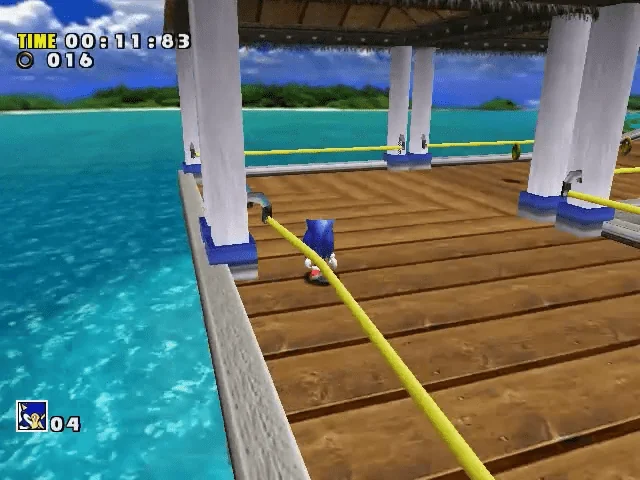
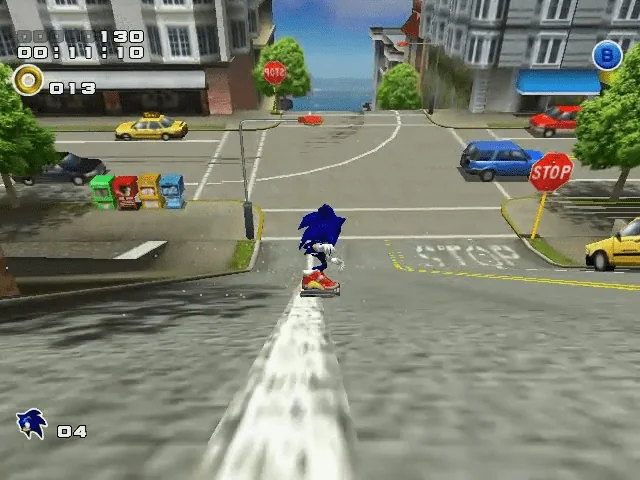
Sonic Adventure turns a Chao into a companion
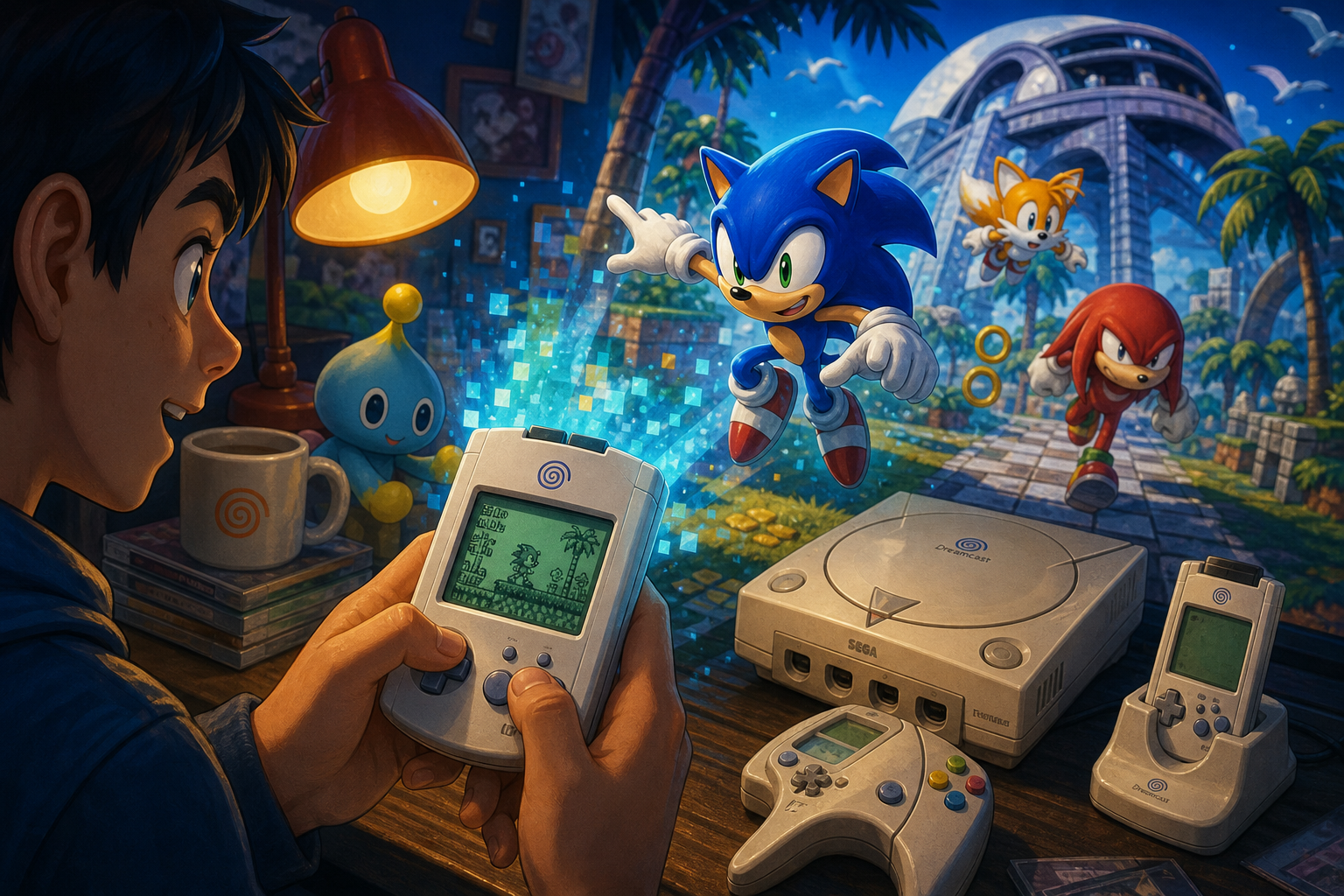
Sonic Adventure offered the VMU’s most recognizable character-based experiment through Chao Adventure. The game’s manual explains that Chao data could occupy a large portion of the VMU’s available space, illustrating that this was more than a decorative screen feature. A Chao could be transferred from the Dreamcast game to the VMU, where the player could engage with a separate set of activities before returning it to the main game.
The appeal came from continuity. The Chao was a character associated with the player’s progress, and the VMU made that relationship feel portable even though the device was extremely limited by modern standards. Its buttons, display and speaker were enough to suggest an independent little world. The main game remained the larger experience, but the accessory gave the character a second context.
Sonic Adventure 2 developed the same concept with Chao Adventure 2. That follow-up showed both the strength and the narrowness of Sega’s approach. The VMU was excellent at extending a persistent character into a compact side activity, but it was not powerful enough to duplicate a console game. Its best role was therefore complementary: a small extension that made the player’s existing progress feel more personal.
Skies of Arcadia and the companion-game model
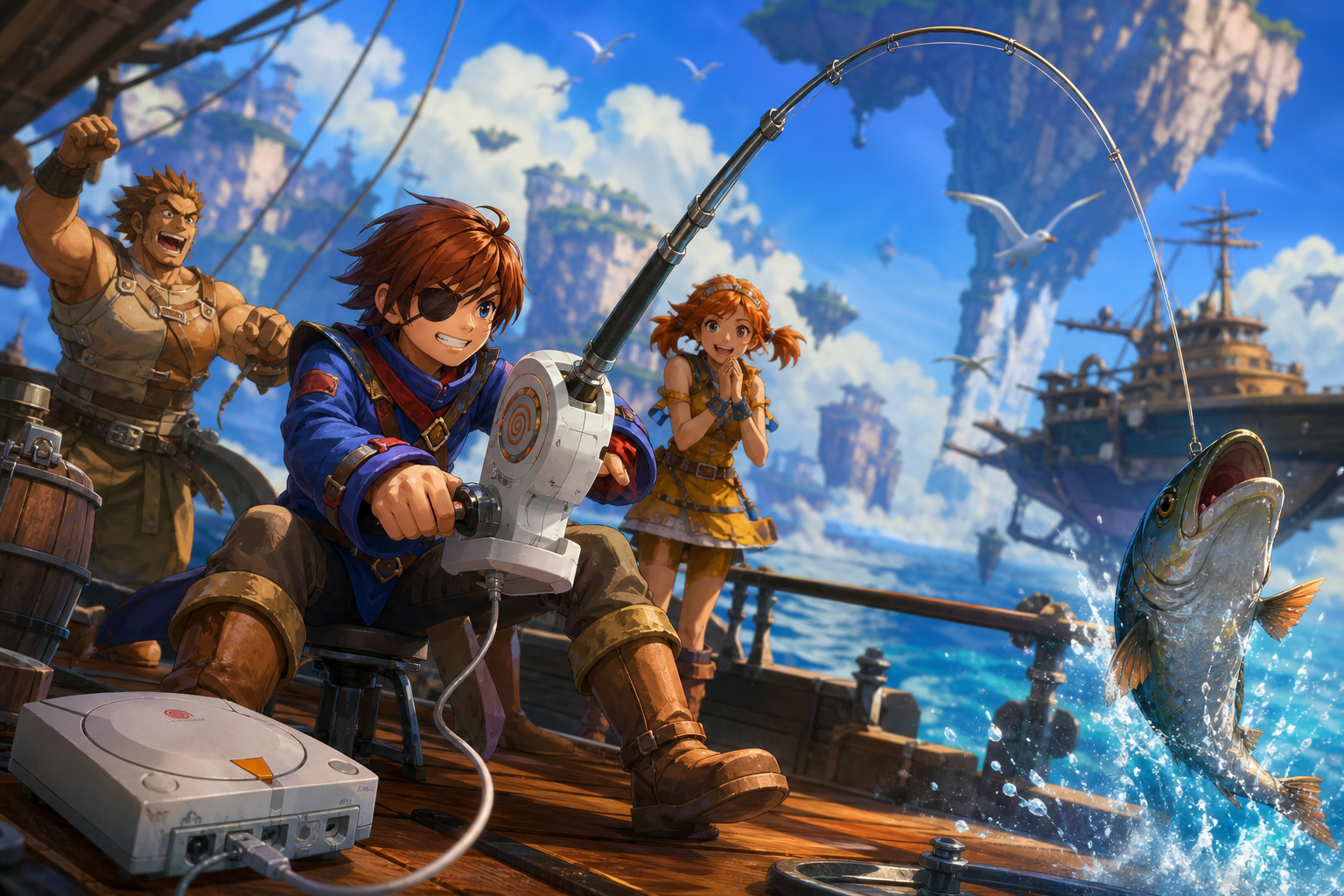
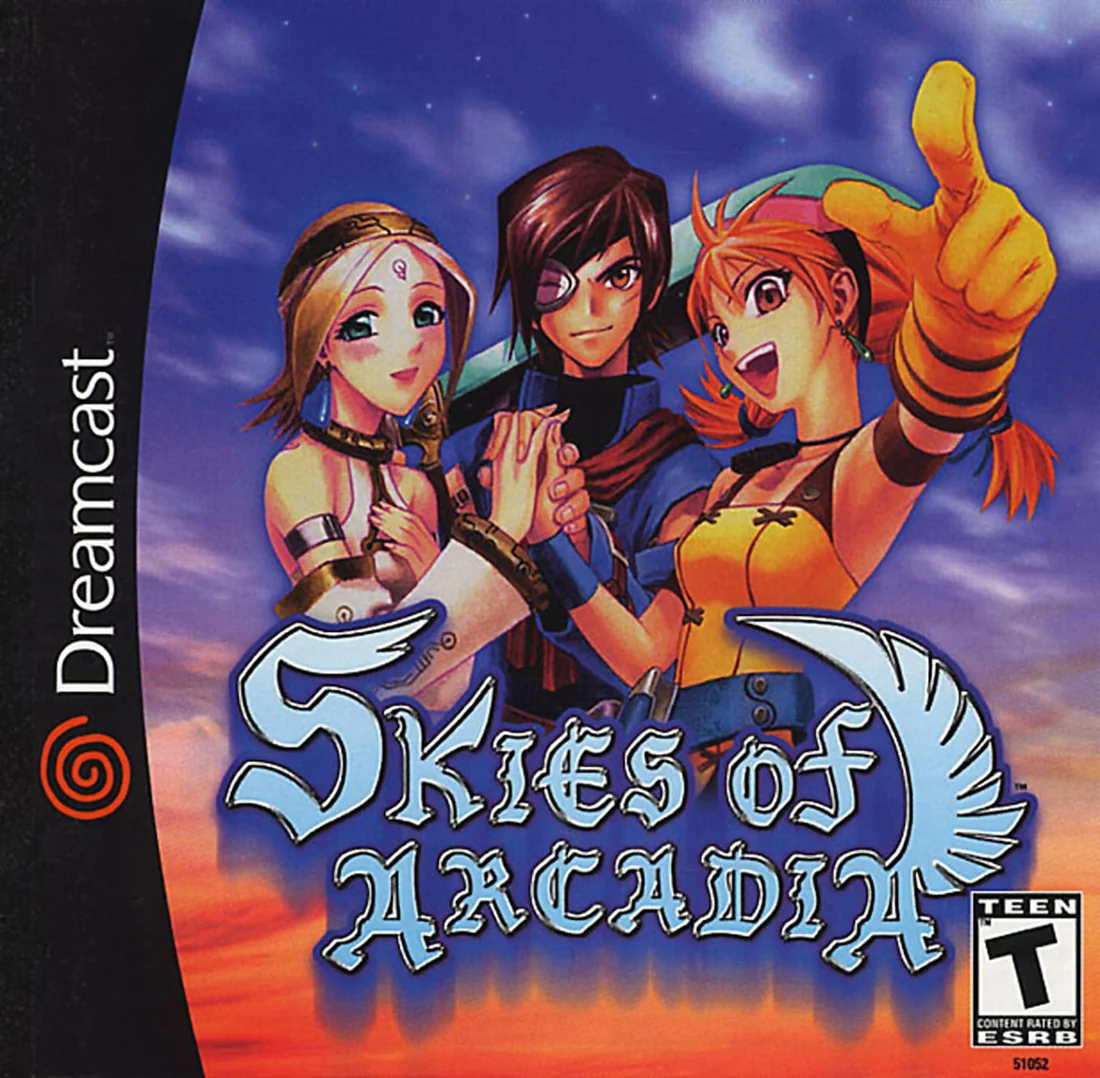
Skies of Arcadia pushed the VMU toward a more explicit companion-game role. Pinta’s Quest linked the small device to the larger role-playing adventure, giving players a separate activity connected to the main game. The game’s manual describes downloading the executable to a VMU, sending Pinta out on a quest, and later returning him so the experience, money and items could be transferred back to the Dreamcast game.
That documentation also identifies the storage requirement for Pinta’s Quest and separates it from ordinary save data. The manual explains that the minigame needed 83 free blocks, a substantial portion of the VMU’s user area. This is a useful example of the accessory’s design tension: the VMU could become a companion platform, but the companion software had to compete with saves for a very small amount of space.
The approach had a clear tradeoff. A companion activity could make a long role-playing game feel richer between television sessions, but it also required players to understand the relationship between two interfaces. The VMU was most convincing when the small activity had a reason to exist, not simply because Sega had provided a screen.
Beyond minigames: information, atmosphere and alerts
Not every meaningful VMU use involved a standalone minigame. Developers could place status information, alerts, maps, inventory details or other data on the LCD. The screen could also animate while the game was running, giving the controller a small visual identity even when the player was not actively reading it.
These applications reveal a more flexible side of the hardware. A minigame demanded rules, graphics and progression. A status display could improve the main game without competing with it. A private map or alert could also use the player’s attention differently from the television. The VMU’s value depended less on raw screen complexity than on choosing information that benefited from being separated from the main image.
Examples across the Dreamcast library show that developers used the device for health displays, counters, statistics, weapon information, clocks and other supporting functions. These were not all equally substantial, but together they demonstrate that the VMU was not defined only by its portable minigames. It could act as a second display, a private interface, a data carrier or simply a visual extension of the game.
Regional rollout and two names for one idea
The Dreamcast launched in Japan on November 27, 1998, followed by North America on September 9, 1999, and Europe on October 14, 1999. Western packaging and documentation generally used VMU, while Japanese materials commonly used VMS. The underlying hardware concept was shared, but regional software, manuals and promotional language did not always present its capabilities in exactly the same way.
That rollout placed the accessory inside three different launch conversations. In Japan, the VMS had already appeared as a product associated with standalone software. In North America and Europe, the VMU helped distinguish Dreamcast from competing consoles by giving its controller a screen and its memory card a visible identity. Coverage at the time treated it as both a practical accessory and a miniature handheld, an unusual combination for a launch peripheral.
The European launch itself was delayed from September 23 to October 14, 1999. Sega used the VMU’s software capabilities in launch promotion as well: a special invitation for the European launch party took the form of a VMU containing a small game. The detail is revealing because it shows the device functioning not only as hardware sold alongside a console, but also as a piece of event marketing and branded software distribution.
The timing also limited the experiment. Sega’s commercial window for the Dreamcast was short, and developers had to prioritize features that could be understood quickly by players and publishers. The VMU arrived with a strong concept, but the industry did not have unlimited time to discover which applications were worth the extra development effort.
What developers had to build
VMU support was not automatic. A developer needed to plan for the unit’s memory, monochrome graphics, buttons, sound and connection to the Dreamcast’s Maple peripheral interface. A screen layout had to remain readable at a very small resolution, and any standalone software had to fit within the remaining file space alongside saves and system data.
Technical documentation describes the VMU as an 8-bit device with separate storage, LCD and clock functions. That architecture made the unit more capable than a passive memory card, but it also meant that developers were supporting a small additional computer. A title could use the VMU as a conventional card and avoid most of those unusual design demands. Another could create a custom interface, a private-information system or a companion game, but that choice required planning and testing an additional interaction model.
The strongest uses treated the VMU as part of the game’s structure. Chao activities connected a character between systems. Skies of Arcadia connected a companion activity to a long adventure. Sports games could use the screen to separate player decisions. Weaker or more superficial uses were naturally less memorable because the device’s limits became visible without a corresponding design payoff.
Reception: impressive, inconvenient and inconsistent
Contemporary reporting often praised the VMU’s ambition. It was easy to understand why a screen, buttons and a speaker on a memory card attracted attention. The device made the Dreamcast feel technologically adventurous and offered a feature that was immediately visible whenever a controller was picked up.
The same design produced practical complaints. The LCD was tiny and monochrome. Batteries were needed for detached play and sound. The 200-block capacity was restrictive when saves competed with downloadable or standalone software. Most importantly, the device’s usefulness depended on whether a particular game supported it meaningfully. A player could own the same impressive-looking accessory and encounter anything from a valuable companion feature to an ordinary save-card experience.
Those limitations make broad claims about reception unreliable. The VMU was memorable and frequently discussed, but that does not mean every player found it essential or that every developer adopted its possibilities. Its mixed reception came from a real design tradeoff: Sega made storage more capable and expressive, then accepted the cost of maintaining a small, battery-powered software platform attached to a controller.
The contrast between the VMU’s marketing appeal and its uneven software support was especially important. The accessory was easy to demonstrate in a magazine photograph or launch presentation, but its value could only be judged over time, game by game. The most successful titles gave the player a reason to look down at the controller. Others left the hardware performing the same invisible storage job as a conventional memory card.
Legacy: a second screen before the second-screen era
The VMU anticipated several ideas that later became familiar: private multiplayer information, companion devices, portable progression and a screen that changes the meaning of the main display. Its importance does not require a direct claim that a particular later product copied it. The documented features are enough to show that Sega was exploring these relationships before second-screen hardware became common.
Its influence was also limited by its architecture. The VMU was closely tied to the Dreamcast controller and Maple interface, and its strongest software assumed that specific relationship. Reproducing the idea on another system requires more than adding a small LCD; it requires software that understands the accessory as both storage and an independent participant.
That is why the VMU’s legacy is best understood as a design proposition rather than a commercial template. It asked developers to consider what could happen when a console game had a personal screen in the player’s hands. The answer was sometimes a secret play call, sometimes a Chao, sometimes a companion quest and sometimes only a save icon. The range was uneven, but the question was unusually productive.
Why the VMU still matters
The Visual Memory Unit mattered because it made an invisible part of console gaming visible. Save data normally disappears into a card or internal chip. Sega turned that storage into an object with a display, controls, sound and a small amount of independence. The result was not a true replacement for a handheld, but it did let a Dreamcast game follow the player beyond the television in carefully limited ways.
Its shortcomings are part of the history rather than reasons to dismiss it. Capacity, batteries, screen size and inconsistent support kept the idea from becoming a universal feature. Yet those constraints also forced the most successful software to be specific. Chao Adventure, Pinta’s Quest and private sports information worked because they gave the VMU a role that a normal memory card could not fill.
The Dreamcast’s final console era ended before Sega could fully explore that role. Even so, the VMU remains a compact expression of the company’s late-1990s design philosophy: powerful arcade-style play on the television, personal information in the controller and a willingness to make an accessory feel like a platform of its own.
The VMU was never simply a memory card with an extra screen. It was Sega’s attempt to make storage interactive, private and portable without taking the main game away from the television. Its most successful uses treated the device as a companion rather than a miniature Dreamcast.
That ambition explains both its charm and its limits. The hardware offered possibilities that conventional cards could not, but every possibility required careful development within a tiny technical envelope. The VMU’s lasting achievement was not that it became standard. It was that, for a short period, Sega made the memory card part of the game’s personality.