Gaming has gained a new dictionary entry, and it is wonderfully unpolished. “Friendslop” has been added to Collins Dictionary as a label for a kind of casual co-op game made to be played with a group of friends. The term arrives alongside “mogging”, the slang verb selected as Collins’ Word of the Year.
The newly recorded definition of friendslop is specific: it describes a low-budget, independently produced video game designed for casual group play. That wording matters. It does not define a formal genre with a fixed set of mechanics, a particular camera perspective, or an obligatory monster that screams through proximity chat. Instead, it captures a recognizable social use for games: get some friends together, enter a strange situation, make a plan of dubious quality, and see whether the result is triumph, calamity, or a clip everyone brings up for the next six months.
It is a term that is jokingly dismissive on its face, but that does not automatically make it an insult. “Slop” is frequently used online as shorthand for something messy, disposable, or churned out without care. In “friendslop,” the joke is more affectionate and more precise. The experience can be rough around the edges, silly, inexpensive-looking, or deliberately chaotic—and still be exactly what a group wants from a night of co-op play.
What “friendslop” means in practice
The dictionary definition draws boundaries around the idea without turning it into a checklist. Two ingredients are central: independent, lower-budget production and casual play with friends. The games associated with the word tend to foreground social interaction over immaculate presentation or a lengthy solo campaign. Their appeal is often inseparable from the people in the session.
For more context, explore Amazon’s Alexa Tablet 8 Is Listed From $200, With Storage and RAM Options for Streaming and Games.
That distinction is useful because multiplayer is an enormous category. A competitive shooter, a carefully scheduled raid game, and a puzzle adventure can all support multiple players, but they do not necessarily produce the same atmosphere. Friendslop, as the emerging label suggests, is about a lower-pressure space where the group’s improvisation becomes part of the entertainment.
That can mean coordination, but it can also mean gloriously bad coordination. Players may have to share information, navigate an unpredictable environment, recover from accidents, or simply cope with the consequences of somebody’s impulsive idea. The design may provide the rules, hazards, tools, and objectives. The friends provide the stories.
Emergent moments are especially important to understanding why this label has stuck. In games, “emergent” describes events that arise from systems interacting with player choices, rather than a moment that is rigidly scripted to happen one way. A dropped item in a dangerous spot, an improvised rescue attempt, a misunderstood callout, or a last-second solution can become memorable precisely because it was not prewritten as a cinematic set piece.
Related coverage includes 'Friendslop' Enters Collins Dictionary as 'Mogging' Takes Word of the Year.
That does not mean every game placed under the friendslop umbrella is mechanically simple. A seemingly goofy co-op game can require communication, spatial awareness, problem-solving, and a shared understanding of risk. But the term frames those challenges as fuel for a collective experience, not merely as a test of individual performance.
The games attached to the label
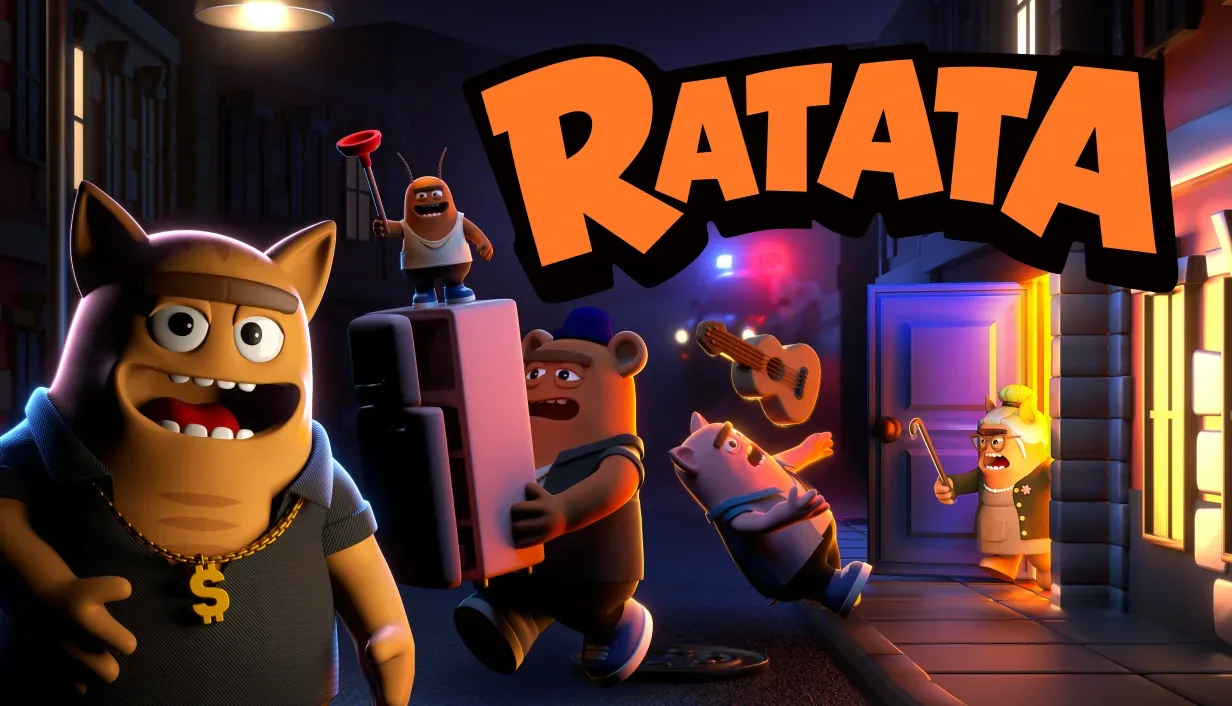
Several games have already been associated with friendslop: Big Walk, Peak, Gamble With Your Friends, Lethal Company, and R.E.P.O.. They are not interchangeable, and the label should not flatten their individual ideas into one blob of “co-op chaos.” What links them is the way their social play can become the point of the session.
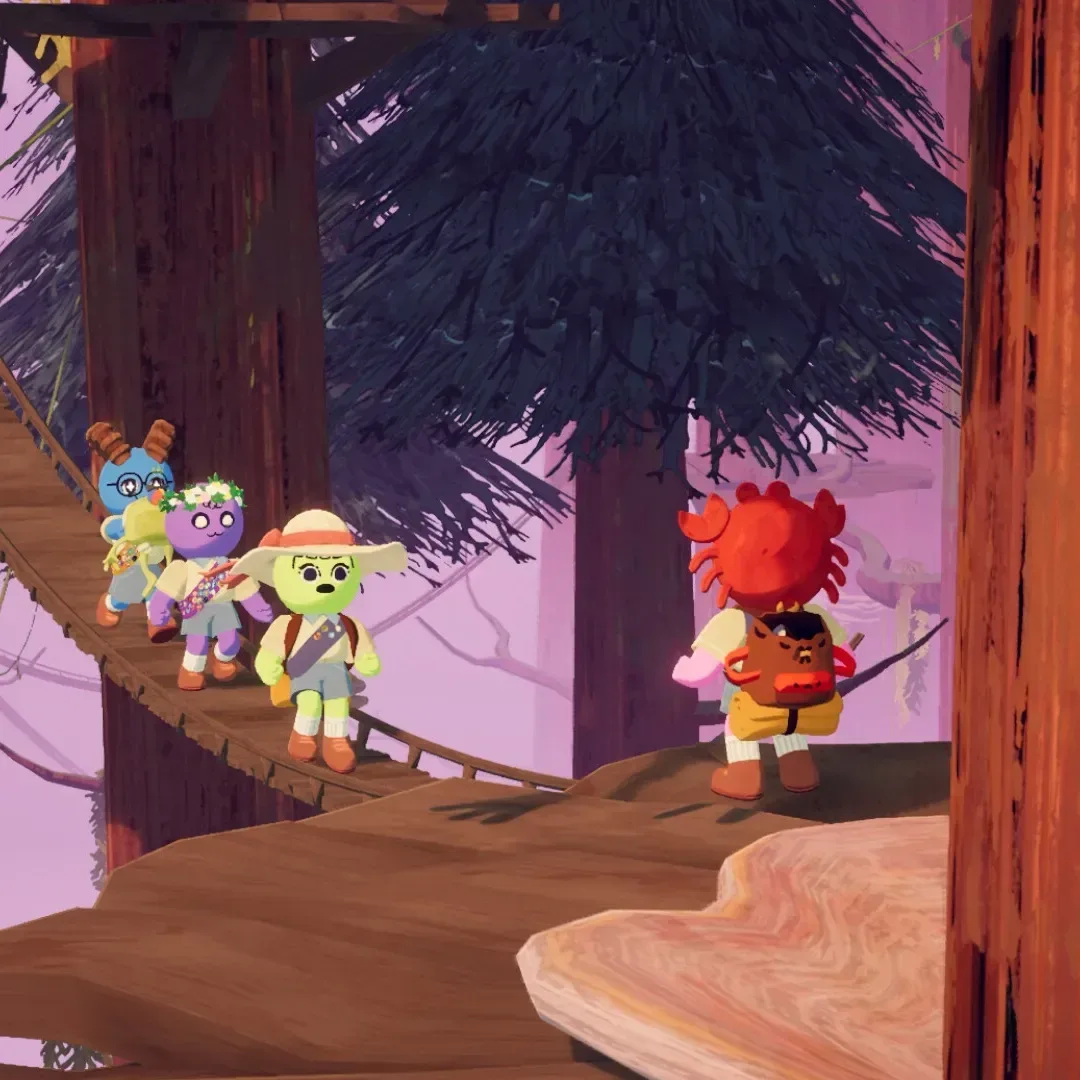
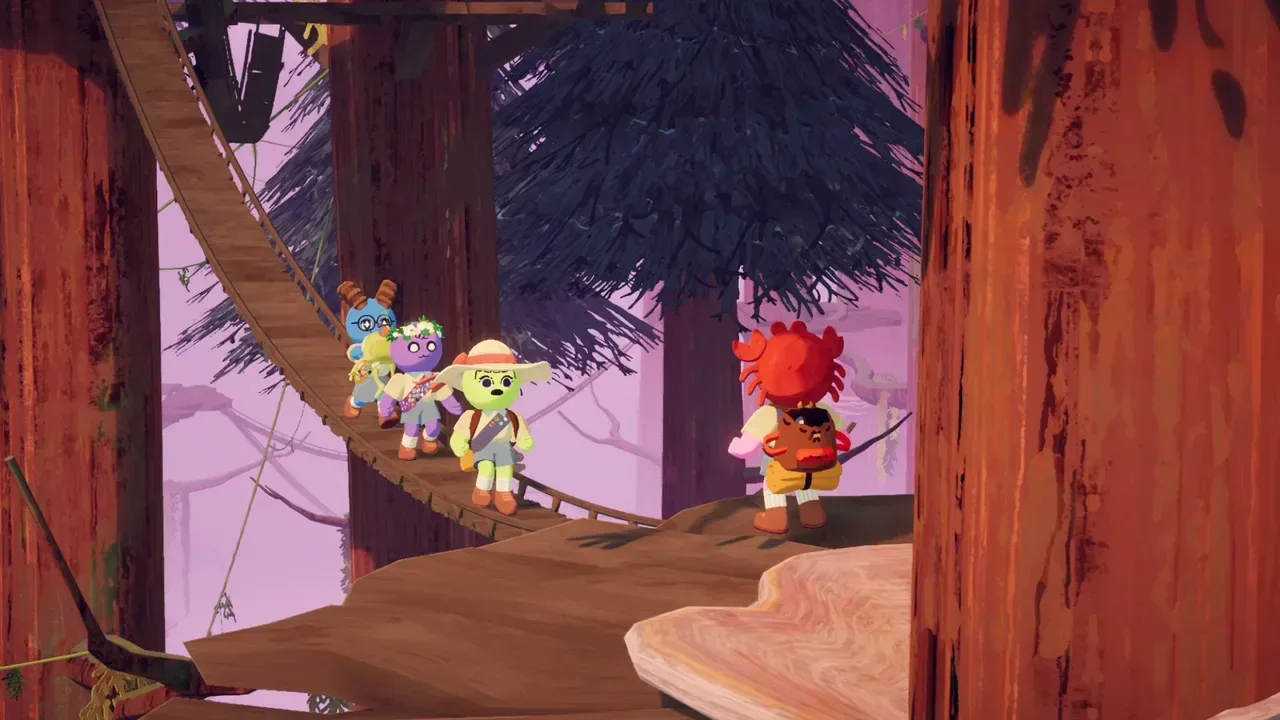
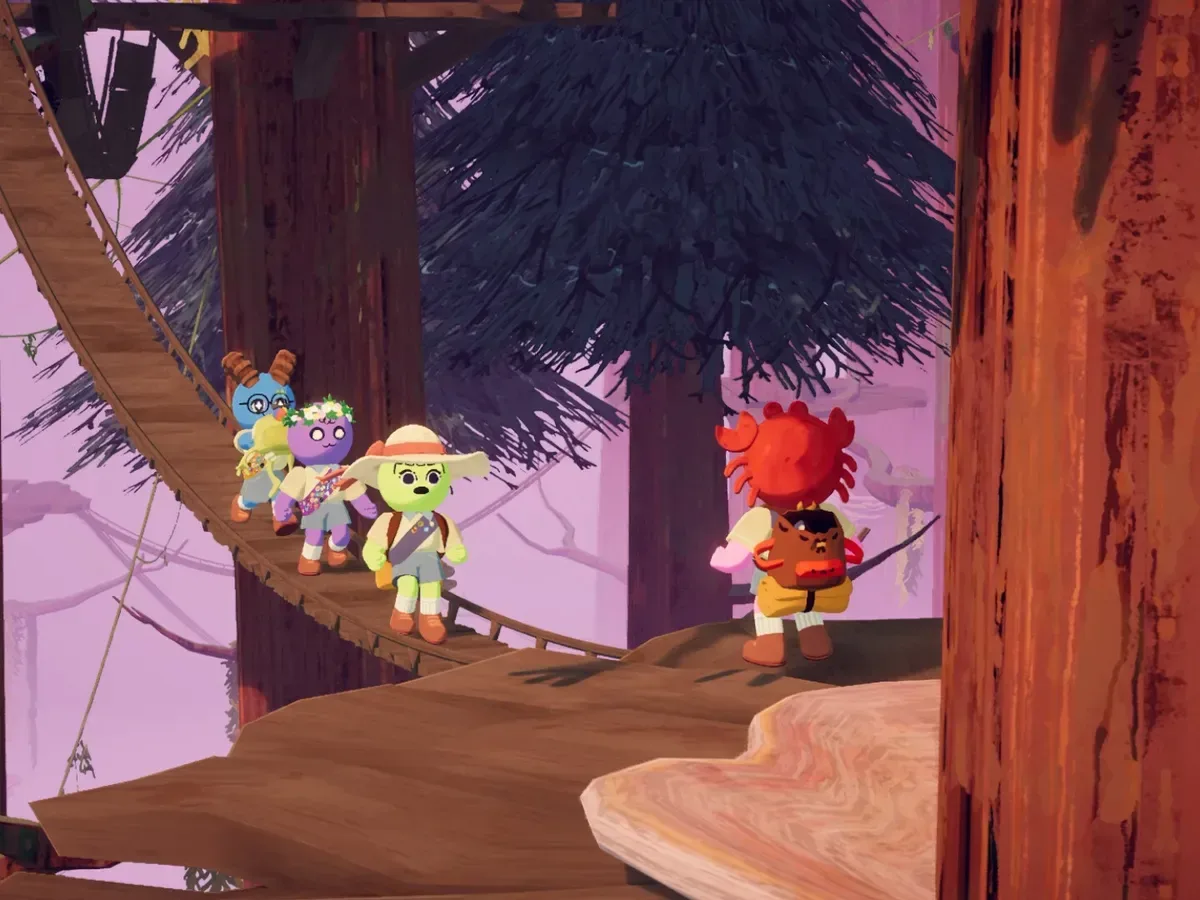
Big Walk is a particularly helpful example because its reported appeal lies in exploration, puzzles, and the relationships players build while navigating its open world. Its co-op structure can create situations where friends lose one another, use a flare to locate the group, recover equipment after a fall, and develop shared language for objects and puzzle-solving. Those are systems-driven experiences, but they are also personal stories created by the players involved.
That makes “bring friends” more than marketing boilerplate in this context. Some games are enjoyable with a group because they offer more firepower or divide jobs efficiently. A friendslop game may need friends for a different reason: the awkward communication, mutual discovery, accidental sabotage, and eventual coordination are integral to its texture. The game is not simply being played alongside other people; it is being shaped by them.
The cited group of games has also found substantial audiences on Steam, with millions of sales collectively noted for the popular examples, while similar concepts have generated many imitators on Roblox. That visibility helps explain why a playful community term could become established enough to be recorded. A word needs repeated use and a recognizable pattern of meaning before it can describe more than a single in-joke.
A dictionary entry is recognition, not a design rulebook
Collins’ inclusion of friendslop should not be read as an official certification that a game is, or is not, friendslop. Language works in the opposite direction. People use a term, bend it, argue over it, and apply it to enough similar things that its meaning becomes legible. Lexicographers then track usage and patterns to describe how the word is functioning.
That process is worth separating from the idea of a company inventing a category. The dictionary’s definition records a live piece of gaming language. It does not prescribe how independent developers must make co-op games, nor does it settle whether every game with a low-poly look, a goofy physics mishap, or voice chat belongs in the same bucket.
There is a practical reason to keep the term loose. “Low-budget” refers to production scale, not quality. Independent games vary enormously in scope, polish, ambition, and technical complexity. Likewise, “casual” describes the intended mode of play in the definition, not a guarantee that every objective will be easy. A game can invite an informal group hangout while still asking players to learn systems and solve demanding problems.
The phrase also underscores how much language around games comes from communities rather than marketing departments. A tidy genre tag can tell a potential player about mechanics—survival, puzzle, horror, simulation. Friendslop tells them something else: this may be a game whose best feature is what happens when the group starts reacting to it.
For players trying to decide whether the label is useful, the sensible question is not “Does this title pass a purity test?” It is “Will this game give our group room to discover, communicate, mess up, and laugh together?” If the answer is yes, the word may communicate more than a conventional storefront genre label.
Why “mogging” won the bigger language battle
Friendslop may have made the dictionary, but it was mogging that took the Word of the Year honor. In common slang usage, to mog is to outshine or outclass someone or something in a given area. It can be applied to appearance, height, money, social standing, performance, or practically any other comparison someone wants to make.
It is often exaggerated and ironic. Saying that one person “mogged” another may be a genuine boast, a teasing insult, or an intentionally over-the-top bit. Its flexibility is likely a major reason it travels so easily across online spaces. The subject and category can change, while the basic meaning—someone came off as decisively superior—remains understandable.
Collins managing director Alex Beecroft described the selection as an example of younger generations adopting a word and reshaping it into humorous slang. That is a useful companion to the friendslop entry. Both terms show language responding to the environments where people spend time: group chats, streams, game communities, social video, and the wider internet. One supplies a broad, portable way to describe winning a comparison. The other names a particular kind of shared gaming experience.
The surrounding additions make the range of modern word formation even clearer. Collins also included “fricy,” used for food that is both fruity and spicy, and “P(doom),” an estimate of the probability that artificial intelligence could cause the collapse of human civilization. Those examples do not belong to the same cultural lane, but they demonstrate the same dictionary function: documenting terms once their repeated usage has given them a stable enough meaning.
The useful part of a silly name
Friendslop is a deliberately unserious word for a sincerely valuable form of play. It recognizes that not every beloved game night needs to be polished into an esports match, a prestige narrative, or a carefully optimized hobby. Sometimes the draw is a strange world, a few systems that bounce off each other, and friends willing to make a mediocre plan with complete confidence.
For developers, the label points toward an opportunity without providing a formula. Building games that produce memorable social stories requires more than adding online multiplayer. Players need reasons to communicate, opportunities to help or complicate each other’s efforts, and enough unpredictability for a session to feel distinct. For players, it offers a compact way to explain why a game may be worth gathering a group even when a trailer cannot fully convey the appeal.
And for everyone who has spent an evening turning a minor co-op mishap into a legendary group anecdote, the term is now officially on the books. Friendslop may not have mogged its way to Word of the Year, but it has earned something arguably more useful: a name for the beautiful mess.